I spent 15 years training Marines in hand-to-hand combat, and my rule was simple: never lay a hand on a civilian. That rule had carried me through deployments, riots, drunken confrontations outside bars near military bases, and even ugly moments overseas where fear made ordinary people unpredictable. But the rule shattered the moment I saw my daughter lying in a hospital bed because the man who claimed to love her had beaten her badly enough to send her to the ER. I drove straight to his gym before I even allowed myself to think about consequences.
His name was Dustin, a cocky MMA fighter I disliked from the first handshake. The first time he walked into my house, he acted like the world already belonged to him. He spoke too loudly, stared too aggressively, and carried himself with the careless confidence of a man who had never truly been humbled. My daughter Marcy used to laugh easily, but after a few months with him, her smiles no longer reached her eyes. She started wearing turtlenecks in the middle of summer, and whenever I asked if she was okay, she answered too quickly, as if she had rehearsed the lie beforehand.
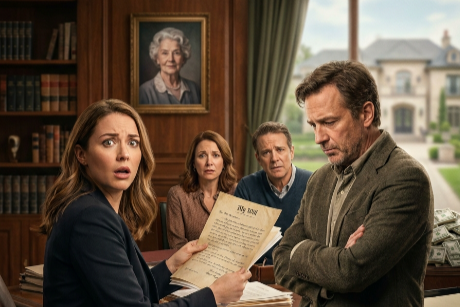
My wife Ellen, who had worked as a nurse for over twenty years, noticed the bruises before I did. One night during dinner, after Marcy had gone upstairs, Ellen leaned closer to me and whispered carefully, “I saw finger marks on her arm while she was helping me wash dishes. Those weren’t accidents.” Hearing that felt like swallowing broken glass. The father inside me wanted to storm across town immediately, but the Marine in me understood something equally important: rage without discipline only creates more damage. So instead of reacting blindly, I started quietly looking into Dustin’s life.
The deeper I dug, the uglier the truth became. Dustin was not just another arrogant fighter with anger problems. He fought professionally under the protection of his uncle Victor Marino, a man whose name appeared constantly in whispers involving gambling, extortion, and organized crime. Nobody ever openly accused Victor of anything because people who crossed him either disappeared or suddenly changed their stories. Dustin moved through town like a spoiled prince protected by fear, and that protection had convinced him he could hurt people without consequences.
One rainy night Marcy finally broke down completely. She arrived at our house shaking so hard she could barely speak, and when Ellen wrapped a blanket around her shoulders, she started crying uncontrollably. “Dad, please don’t do anything,” she begged through tears. “He said if I leave him, his uncle will hurt all of us. He said they know where you work, where Mom shops, everything.” I held my daughter tightly while fury burned through my chest like fire. No father should ever hear terror like that in his child’s voice.
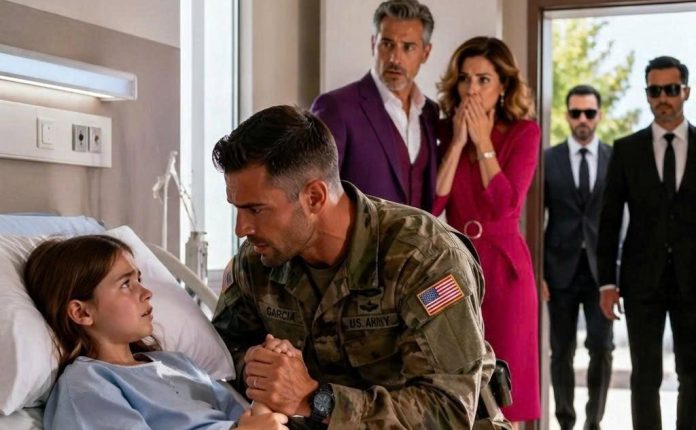
The call I dreaded came two nights later while I was closing my workshop. Ellen’s voice sounded hollow and exhausted through the phone. “Marcy’s in the emergency room,” she whispered. “Concussion, bruised ribs, split lip. She told the doctors she fell down the stairs.” For a few seconds I could not breathe properly. The world narrowed into a tunnel, and every instinct inside me screamed for violence. But instead of driving to the hospital first, I turned my truck toward Dustin’s gym because some part of me already knew exactly who had done this.
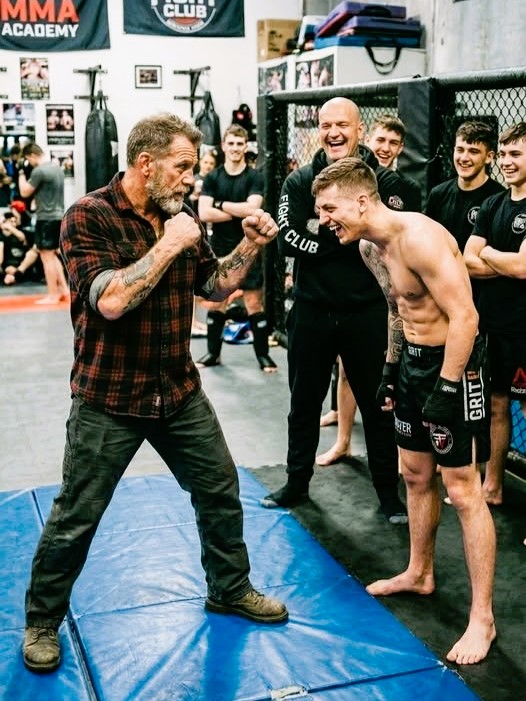
The gym smelled like sweat, rubber mats, stale energy drinks, and testosterone-fueled arrogance. Loud music pounded through the speakers while young fighters crowded around the cages pretending to be warriors. Dustin stood near the ring laughing with his coach and several training partners, completely relaxed, as though my daughter had not spent the last hour vomiting blood in a hospital. When he noticed me entering, his grin widened with mock amusement. “Well, well,” he said loudly enough for everyone nearby to hear. “Looks like Daddy came to visit.”
His coach, a bald man covered in neck tattoos and old scars, looked me over dismissively. To them I probably appeared soft—a middle-aged carpenter with gray in his beard and extra weight around his stomach. He laughed openly before saying, “What are you going to do, Grandpa? Give us a lecture about respecting women?” Several younger fighters snickered behind him. They saw age and assumed weakness because they had spent their entire lives mistaking appearance for capability.
I stopped a few feet away and spoke quietly enough that everyone had to strain slightly to hear me. “You put your hands on my daughter.” Dustin smirked without hesitation. “Your daughter’s clumsy,” he sneered. “And she needed to learn respect.” The moment he said those words, something cold settled inside me. Not blind rage. Something calmer and far more dangerous. Around us, his friends slowly spread out, circling me with the confidence of men who believed numbers alone guaranteed victory.
The coach stepped closer and folded his massive arms across his chest. “Here’s what’s going to happen,” he said. “You turn around and walk out before somebody gets hurt.” I smiled then, the same controlled smile I once wore in combat zones when enemy fighters underestimated the Marines standing in front of them. “I spent fifteen years training Force Recon and MARSOC operators in close combat,” I replied calmly. “You’re going to need more than three boys from a local gym.”
The room changed instantly after those words. The laughter faded first. Then came silence. Experienced fighters recognize posture, eye contact, and balance instinctively, and suddenly the coach realized the old carpenter standing in front of him moved differently from ordinary men. Dustin’s confidence flickered for half a second before arrogance pushed it aside again. One of his larger friends stepped forward aggressively and cracked his knuckles. “You threatening us, old man?” he demanded. I looked directly at him and answered, “No. I’m warning you.”
Dustin shoved me hard in the chest, trying to provoke me publicly in front of everyone watching. That was his mistake. Fifteen years of military conditioning took over before emotion could interfere. I trapped his wrist, rotated my hips, and drove him face-first into the mat so fast the crowd gasped in unison. His shoulder twisted painfully beneath my hold, and suddenly the cocky fighter who had terrorized my daughter was screaming helplessly into the canvas. The entire exchange lasted less than two seconds.
One of his friends rushed me immediately afterward, throwing a wild punch fueled more by ego than skill. I slipped inside the strike, slammed my palm into his jaw, and swept his legs out from under him. He crashed backward into a heavy bag stand hard enough to collapse it sideways. Another fighter hesitated after seeing that, finally realizing this confrontation was not unfolding the way they expected. Across the gym, the coach’s expression transformed from amusement into calculation.
Dustin staggered back to his feet, humiliated and furious. “Kill him!” he screamed at the others, his face twisted with rage. Hearing that word changed the atmosphere completely. The coach heard it too. The younger fighters stepped backward instinctively because suddenly this was no longer posturing or gym intimidation. Dustin had crossed into something uglier. He charged me again properly this time, using actual technique instead of emotion, but anger still clouded his judgment. I countered his attack, drove my knee into his ribs, and slammed him flat onto the mat again.
When I looked up afterward, the entire gym had gone silent. Nobody laughed anymore. The coach stared at me carefully before speaking in a completely different tone. “You taught at Camp Pendleton, didn’t you?” he asked slowly. I said nothing, but recognition spread across his face anyway. “My cousin trained under you before Fallujah,” he muttered. “He said there was one instructor nobody could beat during demonstrations.” For the first time all night, fear appeared in someone else’s eyes instead of mine.
Dustin, humiliated beyond reason, stormed toward the back office and returned seconds later holding a pistol. Several fighters immediately backed away, cursing under their breath. Even the coach looked alarmed now. Dustin pointed the gun directly at my chest with trembling hands while sweat rolled down his forehead. “You embarrassed me,” he hissed. I remained completely still because panic only makes armed men more dangerous. “If you pull that trigger,” I said quietly, “your life ends tonight whether I survive or not.”
Before anything else could happen, the front doors burst open and three detectives stormed inside with weapons drawn. “Drop the gun!” one of them shouted. Dustin froze in shock. My wife had called an old friend in law enforcement named Ray Delgado immediately after contacting me from the hospital because she knew exactly where I would go. For several horrifying seconds Dustin looked like he might actually start shooting, but then his coach stepped forward and said quietly, “It’s over.” The pistol slipped from Dustin’s hand onto the mat floor.