“Alistair requested that all recognition be deferred because he believed that the work itself was the only reward that mattered,” Sir Alaric explained.
He gestured toward a small leather box sitting on a mahogany table that was decorated with both the American and British flags.
Inside the box was a heavy medal made of gold and silver that was engraved with the words “For Service Beyond Borders.”
There was also a final letter from my grandfather written in the blocky military script that I had seen on every birthday card since I was a child.
He wrote that he had declined the honor years ago so that it could one day serve as a bridge for me to find my own purpose.
“If you are holding this medal, it means you have proven your character through quiet service rather than through the pursuit of rank,” the letter stated.
The letter instructed me to deliver the medal to its rightful place and promised that the Queen would understand my arrival.
Sir Alaric led me to a private sitting room that was bathed in the soft glow of the afternoon sun filtering through the garden windows.
Queen Alexandria was sitting in a blue armchair, and she possessed a sense of calm that seemed to anchor the entire room.
“Your grandfather was a dear friend who spoke of your potential during every visit we shared over the last twenty years,” she said softly.
I felt a lump form in my throat as I realized that the man I thought was distant had actually been watching me from afar with immense pride.
She explained that Alistair believed true honor was found in the shadows where no one was looking to give a round of applause.
“I understand that you have been given a choice to either return to your old life or to take up the mantle he left behind,” the Queen remarked.
I looked at the medal in my hand and admitted that I was not yet sure if I was strong enough to carry such a heavy legacy.
She studied my face for a long moment and told me that a soldier does not inherit a legacy but instead chooses to carry it forward every day.
“Your grandfather left a unfinished mission in your country, and he trusted that you were the only one who could complete it,” she added.
After I left the palace, the rain had stopped and the air felt clean as I asked the driver to take me to the royal archives.
We arrived at St. James’s Palace where the archives were hidden beneath the ground in a series of climate-controlled vaults.
Sir Alaric used a special key and my own military credentials to open a heavy steel door that led to a private storage area.
Inside was a single metal trunk that was marked with my grandfather’s name and his final rank of Four-Star General.
When I opened the lid, the scent of old paper and the faint aroma of the cherry tobacco he used to smoke filled the small room.
I found journals that detailed missions in Berlin and intelligence operations in Eastern Europe that had never been declassified.
He had spent decades working with British intelligence to rebuild villages and rescue families that had been caught in the crossfire of forgotten wars.
“Leave no one behind,” was written at the top of every page in his journals as a reminder of the code he lived by.
I found a photograph of a young Alistair standing next to a young Queen Alexandria, and both of them were wearing mud-stained uniforms.
On the back of the photo, he had written that true allies never truly retire from the fight for what is right.
As I dug deeper into the trunk, I found a folder labeled “Operation Remembrance” which contained records of a massive private foundation.
My grandfather had been using his own wealth to fund a relief effort for veterans and their families for over thirty years.
“The foundation has gone dormant recently because the administrative rights were transferred to your father,” Sir Alaric noted with a frown.
I opened a second folder that contained bank statements and wire transfer records that had been compiled by royal auditors.
My heart sank as I saw that Lawrence had been draining the foundation’s accounts to pay for the estate’s luxuries and his own failed investments.
Millions of dollars meant for wounded soldiers and their children had been rerouted into shell companies and marble renovations for the Pennsylvania house.
“The Queen chose not to intervene because she believed it was a family matter that required a Rhodes to set right,” Sir Alaric said.
He explained that the one-way ticket was not just an invitation to London but a call to arms to save my grandfather’s true work.
I spent the next morning in the Royal Treasury Office with a young assistant named Beatrice who helped me review the legal documents.
“It is a tragedy to see such a noble cause treated like a personal bank account,” Beatrice said as she handed me a cup of strong tea.
I felt a cold clarity settle over me as I signed the papers that would initiate a formal audit of the family’s American accounts.
My hands did not shake as I realized that I was finally doing the work I was meant to do since the day I joined the Navy.
On the flight back across the Atlantic, I kept the leather case with the medal in my lap and watched the clouds drift beneath the wing.
I looked at my reflection in the dark window and saw a woman who was no longer defined by the low expectations of her parents.
I drove straight from the airport to the Ashwood Hills estate and pulled my car into the driveway just as the sun was beginning to set.
Lawrence was standing near his new Italian sports car and looked at me with a smirk that suggested he thought I had returned to beg for money.
“I hope the British weather was as miserable as your prospects for the future,” he joked while he adjusted his sunglasses.
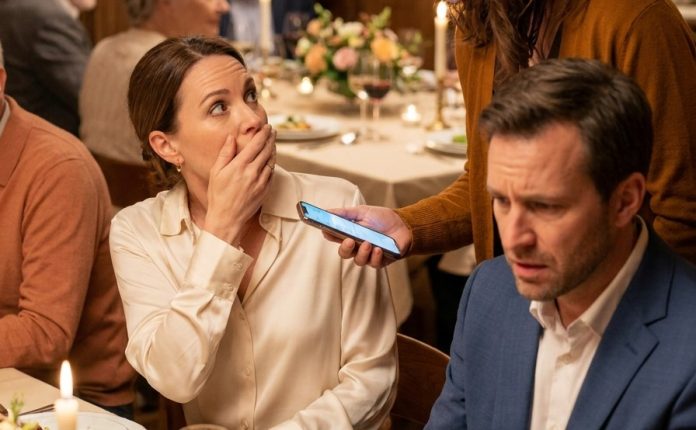
I did not answer him but instead walked into the house and requested that the entire family meet me in the dining room for dinner.
My mother asked if I had seen any famous landmarks, and I told her that I had spent most of my time discussing family business at the palace.
Lawrence let out a loud laugh and told the table that I had clearly lost my mind during the long flight over the ocean.
I leaned forward and began to describe the “Operation Remembrance” foundation and the specific accounts that had been emptied over the last year.
The color drained from my father’s face as I mentioned the specific shell companies he had used to hide the stolen funds.
“You have no idea what you are talking about, and I suggest you stop making accusations before you lose your place in this house,” Lawrence hissed.
I pulled out the copies of the royal audit and laid them on the table for my mother and Timothy to see.
My brother looked at the numbers and then at our father with an expression of genuine shock and realization.
“You didn’t just take the inheritance; you took the money meant for the men who served with Grandfather,” Timothy whispered.
I told them that I had already met with the royal attorneys and that the foundation was being officially reinstated under my sole control.
Lawrence stood up and slammed his hand on the table while he shouted that I had no legal right to interfere with his management.
“I have every right because Grandfather left me the only thing that actually mattered in his will,” I said firmly.
I explained that the foundation’s charter gave me the power to remove any administrator who was found guilty of moral or financial failing.
My father tried to argue that he was only protecting the family’s future, but his voice lacked the conviction it had possessed only hours before.
“It does not look like protection; it looks like a betrayal of everything that name on the gate stands for,” I told him.
I walked out of the room and left them to deal with the reality that their era of unearned luxury was coming to a swift end.
The next morning, I visited Mr. Barnaby at his office and presented him with the documents from London.
He read through the papers in complete silence and then looked at me with a profound sense of relief in his eyes.
“Alistair told me that you were the only one who would have the courage to follow the trail to the very end,” the lawyer admitted.
I signed the final transfer papers which effectively froze my father’s access to any of the joint family accounts associated with the Rhodes name.
That evening, my phone rang with a call from Lawrence, and his voice sounded like it had aged twenty years in a single day.
“You have ruined our reputation in this town, and I hope you are satisfied with what you have done,” he growled.
I told him that reputation was something he had sacrificed long ago when he decided to steal from the vulnerable.
He asked how he was supposed to explain the sudden loss of the vineyard and the private jet accounts to his business partners.
“Tell them the truth for once, or tell them that the General finally came home to collect his debts,” I replied before hanging up.
I stood on the balcony of my hotel room and looked out at the lights of the city, feeling the weight of the mission finally settling into my bones.
The inauguration of the new headquarters for the Rhodes-Pemberton Trust took place in a dignified hall in the heart of the capital.
The room was filled with men and women in uniform who had traveled from all over the country to see the foundation reborn.
I stood backstage and looked at the portrait of my grandfather that had been placed near the podium.
Sir Alaric appeared at my side and told me that the turnout was a testament to the man Alistair had been when no one was watching.
“It is time for the world to see the face of the person who carried the light through the storm,” Sir Alaric said with a smile.
I walked to the microphone and looked out at the sea of faces, many of which bore the scars of service and the weariness of long struggles.
I spoke about the journals I found in London and the secret history of a man who believed that the greatest deeds required no signature.
“My grandfather taught me that we are not defined by the wealth we inherit but by the burdens we choose to carry for others,” I told the crowd.
When I finished my speech, the silence in the room was more powerful than any applause I had ever heard in my life.
An old soldier in the front row stood up and saluted me, and slowly, the rest of the room followed his lead.
That night, I received a text from my father that simply said he had watched the broadcast and was starting to understand his mistakes.
I did not reply immediately because I knew that words were easy but the work of redemption would take a lifetime.
Six months later, the spring flowers were blooming across the hills of Pennsylvania as I drove back to the family estate.
I was wearing my dress uniform because I was meeting a group of veterans who were touring the new memorial garden on the property.
I found my father near the back of the estate, and he was not wearing a suit but was instead dressed in work clothes covered in dirt.
He was kneeling by my grandfather’s grave and was carefully planting white lilies in the fresh soil.
“I didn’t think you would want to see me here after everything that happened,” Lawrence said without looking up from his work.
I told him that the garden was meant for everyone who wanted to honor the memory of the man buried beneath the stone.
We stood together in the quiet air for a long time, and for the first time in my life, there was no need for performance or lies.
He reached into his pocket and pulled out a small wooden box that looked like it had been handled many times.
“Alistair gave this to me when I was young and told me to open it only when I truly understood the value of a single life,” Lawrence explained.
He handed the box to me and I opened it to find a silver chess piece in the shape of a queen.
I realized then that my grandfather had been playing a very long game, and he had known exactly who would end up holding the piece.
“The Queen is the most powerful piece on the board, but she only exists to protect the kingdom,” I whispered to myself.
Lawrence asked if there was still room for him to help with the new housing project the foundation was starting in the coastal valley.
“I am not going to give you a position of authority, but I can give you a shovel and a place on the crew,” I told him.
He nodded slowly and said that he would be honored to start at the bottom and learn what it actually meant to serve.
I watched him walk back toward the garden shed with a posture that was finally beginning to lose its rigid arrogance.
That evening, I drove out to the jagged cliffs overlooking the Atlantic where the water crashed against the ancient stones.
I held the silver chess piece in my hand and thought about the journey that had started with a single envelope in a library.
I was no longer the girl who was looking for a place to fit in; I was the woman who had built a place where others could find peace.
The stars began to appear in the sky, the same stars that had guided Alistair through the dark nights of his secret wars.
I realized that the mission would never truly be over, but for the first time, I was not afraid of the long road ahead.
I turned back toward my car and drove into the night, ready for the work that was waiting for me in the morning.
THE END.