My son told me I wasn’t on the list at my granddaughter’s wedding. I told him it was fine, turned back through the white flowers I had paid for, went home in silence, and opened the file with my name on every page. The next morning, he received a letter that changed everything.
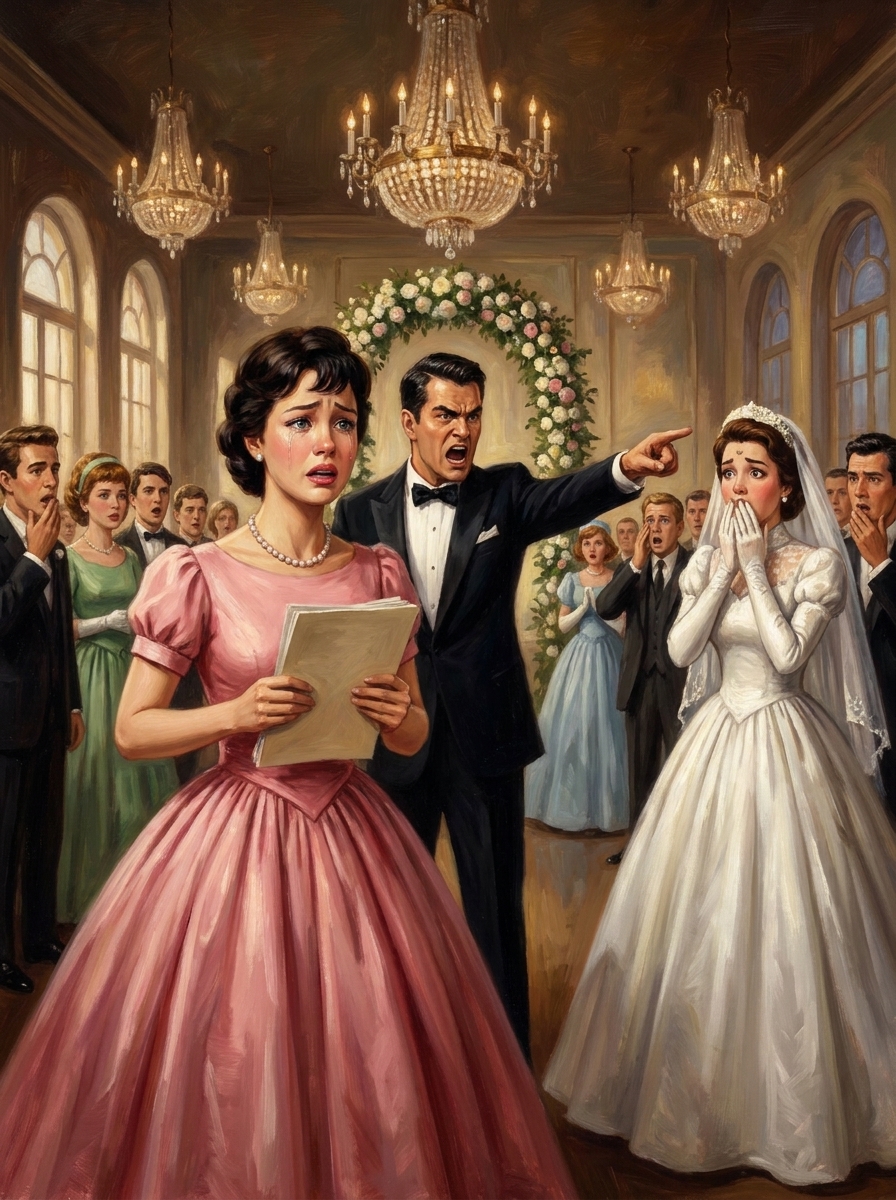
My son stopped me beneath the white flowers at the entrance to my granddaughter’s wedding and said, with the careful smile people use when they want something rehearsed to sound routine, “Mom, you’re not on the list.” Around us, guests in pressed suits and satin dresses went briefly still, the violin kept floating through the garden, and the valet lane glowed under twinkle lights I had paid for. I told him, “It’s fine, son.” Then I turned, stepped back through the arch I had financed, rode home in silence, opened the file with every contract in my name, and made one call that ensured the next morning would begin very differently.
I had spent six months helping build Clara’s perfect day. Not the kind of help people mention lightly over coffee, as if they mailed a gift and offered an opinion about napkin colors. Real help. Checks written from my account. Vendor calls returned before lunch. Guest counts balanced with the caterer. Linen upgrades approved after Susan changed her mind twice in one week. I signed the venue contract, paid the florist, confirmed the tasting, and stayed up late one Tuesday comparing invitation paper because Clara said she wanted cream stock with deckled edges that felt old-fashioned and elegant in the hand. When she leaned over my kitchen table, smiling like she was ten again and asking my opinion, I believed I was being included because I was loved. I did not understand I was also being used because I was dependable.
That is the danger in being the reliable one in a family. People stop asking whether something is fair. They only ask whether you will handle it. And because you love them, because you remember scraped knees and Christmas mornings and school recitals, you say yes before you examine the shape of the request. Richard had always known that about me. He had known it since childhood, long before he learned how to wear polished manners over selfish instincts. He knew that if Clara needed help, I would give it. He knew that if Susan sounded overwhelmed, I would step in. He knew that if there was any way to make the day easier, prettier, smoother, I would quietly become that way.
The morning of the wedding, I dressed slowly and with care. Pink silk dress. My mother’s pearls. A touch of French perfume I reserve for milestone days. I wanted Clara to see a grandmother who looked proud, steady, and joyful. I wanted to sit in the front row, dab at my eyes when the music started, and remember the little girl who once stood on a chair in my kitchen stirring rice pudding with both hands because the spoon was too big for one. I wanted to watch her begin her marriage with all the hope I had once carried into mine. I had even tucked a handwritten note into my purse to give her later, something tender and private for after the photographs and champagne.
The driver who took me to Green Valley Estate smiled when I got in. “Big celebration today?” he asked. “My granddaughter’s wedding,” I said, and I heard the warmth in my own voice. I remember looking out the window at the late afternoon light touching the trees and thinking, This is one of those days you survive long enough to earn. The kind of day you tell yourself makes every sacrifice feel worthwhile. By the time we reached the stone entrance, the place looked like something out of a glossy magazine spread. White flowers climbing the arch. Small lights woven through old branches. Guests greeting one another in soft evening colors. The kind of polished American wedding people pin to boards for months and call effortless, never seeing the labor and money stitched underneath it.
And there, at the check-in podium, stood my son Richard in a tailored dark suit, with Susan beside him in emerald satin, greeting guests as if they had built the entire evening themselves. I stepped forward, smiling despite my nerves. “Richard,” I said, “everything looks beautiful.” He did not hug me. He did not even shift his weight as if to welcome me. His hand went to the guest list on the podium. He glanced down, then back up, and the warmth left the evening in one clean stroke. “Mom,” he said, loud enough for the nearest guests to hear, “you’re not on the list.”
At first I thought he was joking, or perhaps trying to be clever in some clumsy way before surprising me with a corsage or walking me inside. But then I looked at Susan. She did not look surprised. She looked prepared. Not happy exactly, but settled, like a woman who had already rehearsed this ugly little scene in her head and was relieved it had finally begun. That was the moment something inside me stopped shaking and went completely still. “What do you mean?” I asked. Richard gave a small sigh and said, “There must have been a mistake with the invitations.” A mistake. I had reviewed the invitation list with Susan at my own dining table. I had paid for those invitations. I had sealed some by hand. I had mailed a stack myself. So when my son said the word mistake, he was not explaining anything. He was hiding behind a word flimsy enough to be polite and vague enough to avoid truth.
A few heads turned. A cousin lowered her eyes. A neighbor I had known for twenty years pressed her lips together and studied the flower wall like it had suddenly become fascinating. I could feel humiliation gathering in the air like static, and for one dangerous second I understood how easily grief or rage can make a woman destroy her own dignity in public while everyone watches and later says they understood. But something older than anger rose in me. Something steadier. I adjusted my necklace and said, very softly, “All right. If that’s how it is, it’s all right.” Richard blinked, almost disappointed. Susan’s expression changed for only a second, but I saw it. She had expected begging, outrage, maybe tears. What she got was composure. I turned, walked back under the arch I had paid for, past the quartet I had selected from a video link, and toward the waiting car.
The driver opened the door and paused when he saw my face. “Did something get left behind, ma’am?” he asked. “Yes,” I said, getting in. “A version of me they were counting on.” He did not ask another question. Good drivers understand silence better than many relatives. The ride home passed in a blur of lights and reflections. I watched the city slide by and felt the evening peeling away from me in layers. Shock first. Then shame. Then, underneath both, a hard clean line of clarity. Betrayal always hurts most when it confirms something you had almost admitted to yourself before but kept forgiving anyway.
My apartment was quiet when I got home, so quiet I could hear the faint hum of the refrigerator from the kitchen. I stood in the dark living room without turning on the lamps. The dress that had felt elegant an hour earlier now felt theatrical, as if I had dressed for a role in somebody else’s celebration. I slipped off my heels, set down my clutch, and looked at the framed photograph of my late husband on the bookcase. Robert had been gone eight years, but some nights his absence still entered a room before I did. He would have understood the silence in that apartment. He would have recognized it as the silence I kept only when I was wounded and thinking clearly at the same time.
I did not cry first. That mattered to me. I went to my study and opened the file cabinet. The cream folder was exactly where I had left it: Clara’s Wedding. Inside were the venue agreement, catering invoices, floral design estimate, lighting upgrade authorization, dessert table contract, music deposit, chair-rental addendum, transportation receipt, and wire confirmations. Every important page carried my name, my signature, my account, or some written acknowledgment that I had paid. I laid the papers out in neat rows across my desk. If they wanted to behave as if I had been incidental, the paperwork told another story. The paperwork said I had not merely contributed. I had underwritten.
Then I picked up the phone and called Martin Hayes.
Martin had been my attorney for more than thirty years. He handled closings for Robert and me, helped with the sale of our small manufacturing business, updated my will after Robert died, and still answered calls with the kind of calm precision that made panic feel embarrassing. He picked up on the second ring. “Mrs. Parker,” he said warmly. “Big day today.” “It was,” I replied. “Now I need you in my living room tomorrow morning.” He paused only long enough to hear my tone. “Understood,” he said. “Nine o’clock?” “Nine will be fine.”
That night I finally cried, but not for the wedding itself. Not even for being turned away in front of guests. I cried because mothers spend so many years telling themselves that the difficult moments with their children are phases, pressures, mistakes, bad influences, temporary selfishness, stress, immaturity, then adulthood, then marriage, then money trouble, then misunderstandings. We rename the wound at every age so we do not have to admit the deeper thing: sometimes the child you raised becomes a person who calculates your love as a resource. Richard had not humiliated me impulsively. That was what hurt most. This had been planned. Discussed. Agreed upon. My exclusion had been managed like a seating decision.
At nine the next morning, Martin sat in my living room with a legal pad on one knee and my file spread across the coffee table. He wore a navy suit and half-moon glasses and asked me to tell the story from the beginning without embellishment. I did. Every meeting. Every payment. Every conversation with Susan. Every time Clara had called me crying over floral shortages or menu changes or the rehearsal timeline. Every recent distance from Richard that I had excused as wedding stress. Martin listened without interrupting until I finished. Then he placed both hands on the armrests and said, “This is cleaner than they realize.” “Cleaner?” I asked. “Yes,” he said. “Because almost everything is documented in your name. That means they did not merely insult you. They accepted financial obligation and then excluded the primary contracting party from the event. Depending on the vendors and the terms, some services were effectively obtained under false pretenses if you were materially misled about your role.”
He drafted the first letter in front of me. Formal. Precise. Not emotional. It demanded immediate reimbursement of the sums I had personally paid for services rendered in reliance on representations that I would be included as a principal family host and participant. It listed line items. Venue deposit. Final floral payment. Catering installment. Music. Lighting. Stationery. Transportation. It also placed them on notice that any attempt to dispose of wedding gifts or trust-related family assets connected to earlier transfers from Robert’s estate would trigger broader review. Richard had no idea how much Martin knew about the financial arrangements I had quietly made for him over the years. A mother knows where too many bones are buried because she was the one covering them to begin with.
The envelope was messengered before noon.
Richard called at 1:17.
I watched the phone ring on the table before answering. “Mom,” he said, and he sounded breathless in a way that instantly told me the letter had landed. “What is this?” “It is a letter from my attorney,” I replied. “I can see that,” he snapped. “Why would you do something so extreme?” Extreme. There is always something obscene about hearing a person call your response extreme after they have spent months creating the conditions for it. “You barred me from the wedding I paid for,” I said. “You and Susan made a public decision. This is my private one.” He began talking quickly then, claiming emotions were high, that there had been confusion, that Susan was trying to avoid tension, that Clara was stressed, that I was overreacting, that nobody meant for me to be embarrassed. He never said sorry. Not once. People reveal themselves most clearly in the first crisis after their cruelty is challenged.
“Richard,” I said when he finally paused, “did you know my name was on the venue contract?” Silence. Then, more quietly, “Susan handled most of that stuff.” “Did you know my account paid for the flowers over your daughter’s head when you told me I was not on the list?” Another silence. “Mom, this is not the time—” “No,” I said. “Yesterday was the time. You chose your time. This is mine.”
Susan called twenty minutes later, crying before I even spoke. I have learned not to trust tears that arrive only after paperwork. She said it had all been a misunderstanding, that security had been instructed to limit entrance because of “last-minute guest complications,” that Richard had been under pressure, that Clara had been emotional, that perhaps there had been a miscommunication with the list. I let her speak until the lies grew tired in their own mouth. Then I said, “Susan, you sat in my kitchen and chose invitation paper with me. You know there was no mistake. You wanted me gone, but you also wanted my money to stay. Those two desires are no longer compatible.” She stopped crying at once. That, more than anything, told me the tears had been negotiation, not remorse.
By late afternoon, Clara herself called.
That call hurt in a different way because Clara had once been the soft place in my heart where Richard’s harder edges could not reach. She sounded wrecked, her voice hoarse from either crying or arguing. “Grandma,” she whispered, “please tell me this isn’t because of me.” I closed my eyes. “Did you know?” I asked. “I knew they said there was tension,” she said, stumbling through the words. “Mom told me you might decide not to come because of all the family stress. Then before the ceremony everything got chaotic and—” She stopped. “And what?” I asked. Her silence answered me before her voice did. “I saw Dad stop you,” she said at last. “I was in the bridal room window. I thought maybe there had been some mix-up and they were fixing it. Then by the time I understood, the music had started.” I said nothing. “I’m sorry,” she whispered. “I should have stopped it.” “Yes,” I said gently. “You should have.”
She began to cry then, the real kind, the kind that sounds ashamed rather than strategic. She said she had felt trapped, that Susan had spent months saying I was controlling, that I always used money to influence decisions, that if she let me have too much role in the wedding, nothing would belong to her parents anymore. I listened because this, finally, sounded true. Not true in the sense of justified, but true in the sense of motive. Susan had built a story in which my generosity became interference, my support became power, and my visible role became a threat to the image she wanted projected. In that story, removing me at the door was not cruelty. It was reclaiming the event. People can do terrible things once they rename them as fairness.
“I loved helping you,” I told Clara. “That was never control.” “I know that now,” she sobbed. “I know.” But knowledge that arrives after the damage does not erase the damage. It only proves the damage mattered.
By evening, Martin had already heard from Richard’s lawyer. That moved faster than I expected, which meant fear had entered their house quickly. There was immediate concern, Martin told me, about the possibility of vendor disputes, reimbursement claims, reputational fallout, and a separate matter involving a trust transfer Robert and I had established years earlier for Clara’s future. Most of the family did not know the trust existed in detail. Richard had certainly never understood its structure because he had never bothered to learn what he assumed would one day drift his way regardless. The trust’s discretionary final release, however, required my sign-off as surviving grantor on certain supplemental distributions beyond the educational portion already used. Clara’s first-home fund was part of that supplemental release.
The next morning, Richard came to my apartment.
I almost did not let him in, but curiosity is stronger than dignity more often than people admit. He looked terrible. Not movie-star terrible with stylish stubble and soulful regret. Truly terrible. Shirt wrinkled, eyes bloodshot, jaw tense from a sleepless night. He stood in my doorway holding himself with the rigid politeness of a man who knows he has walked into a room where he no longer has authority. “Can I come in?” he asked. “You’re already here,” I said, and stepped aside.
For a few seconds he simply looked around, perhaps noticing for the first time that my apartment did not resemble the sentimental, harmless life he had reduced me to in his mind. Books lined the walls. Robert’s clock ticked over the mantel. My desk was visible from the hallway, still covered with papers. I offered neither coffee nor comfort. He sat on the edge of the sofa and clasped his hands together. “Susan went too far,” he said first. Cowardice nearly always enters the room wearing blame for someone else. “Did she force your mouth open at the podium?” I asked. He flinched. “No.” “Did she write the checks from my account?” “No.” “Did she stop you from calling me last night to apologize before the lawyer did it for you?” He looked down. “No.”
At last he said the one sentence I had not expected to hear honestly. “I didn’t think you would do anything.”
There it was. The truth stripped of perfume. Not that he thought I would forgive him. Not even that he believed I would understand. He believed I would absorb it. Quietly. Like mothers do. Like grandmothers do. Like older women in families are expected to do once everyone has grown used to their steadiness as free labor and emotional padding. I sat across from him and felt something cold but useful settle into place. “That,” I said, “is the first honest thing you’ve said to me.”
He tried then. He said weddings are stressful. He said Susan felt judged. He said I had strong opinions. He said Clara was caught in the middle. He said perhaps they had handled it badly. The language kept slipping toward shared fault because selfish people cannot fully apologize without experiencing it as self-erasure. “You humiliated me publicly after privately accepting my money,” I said. “That is not mishandling. That is character.” He covered his face for a moment. When he looked up, I saw anger finally edging out panic. Good. Anger at least is more honest than pleading. “So what now?” he asked.
“Now,” I said, “you reimburse me. Fully. Not because I need the money. Because you need the lesson. Then you explain to your daughter exactly what you did and why. Then you stop telling yourself this is about one wedding.” He stared at me. “And Clara?” “Clara can decide for herself whether adulthood begins today or not.”
What followed over the next two weeks moved through lawyers, accountants, and three family phone trees that lit up like power lines after a storm. Some relatives called to say I had done the right thing. Others said I should let it go for the sake of peace. One sister-in-law suggested that “public legal pressure” over a wedding was excessive, as if public humiliation at the entrance had been intimate and tasteful. Clara came to see me alone on the fourth day. She stood in my kitchen, still pale from the aftermath of her honeymoon cut short by family chaos, and apologized properly this time. No excuses. No passive voice. She said, “I let other people rewrite what you meant to me because it was easier than confronting them.” That sentence saved something, though not everything.
I asked her one question. “When you looked down from that window and saw your father stop me, why didn’t you come?” She cried again, but answered. “Because I was afraid if I walked out, my mother would make the whole day collapse.” “And now?” I asked. She wiped her face. “Now I know the day had already collapsed.” That was the first moment I believed she might become a better woman than the family politics around her had encouraged.
Richard and Susan eventually agreed to a settlement. Every major wedding expense I had covered was reimbursed. It took selling a boat Richard could not really afford and draining an account Susan preferred to call untouchable. Good. Lessons should leave marks. Martin ensured the agreement was written tightly enough that they could not later reinterpret it as voluntary generosity. The trust disbursement for Clara was not canceled, but restructured so that future funds bypassed her parents entirely. That part angered Richard most because money routed around him felt like a judgment, which of course it was.
Months later, the photographs from the wedding circulated online. White flowers. Candlelight. Clara smiling bravely in lace. Richard and Susan polished and posed. Anyone looking from the outside would have thought it had been a flawless evening. But I know what sits just beyond the frame. A grandmother turned away from an arch she paid for. A son who confused silence with weakness. A daughter-in-law who wanted status without gratitude. A bride learning, too late, that neutrality in the face of cruelty is its own kind of participation. Families specialize in preserving images and misplacing truth. That is why paper matters. That is why letters matter. That is why consequences matter.
I still keep the cream folder in my file cabinet, though now it contains more than invoices. Martin’s letter. Settlement documents. Revised trust instructions. A handwritten apology from Clara on thick ivory stationery. I do not keep it because I enjoy remembering what happened. I keep it because women like me are too often told to move on from wounds that were carefully inflicted. People say forgiveness as if it should come before accountability, as if grace is most beautiful when it protects the wrong person. I no longer believe that. I believe love without self-respect becomes permission. I believe silence can be noble, but only for a moment. After that, silence begins helping the wrong side.
The strangest part is this: I did not lose my son at the wedding entrance. I lost the illusion of him. The real loss had been unfolding for years in smaller choices I kept excusing. The call not returned. The borrowed money treated as obligation-free. The holidays rearranged around Susan’s moods. The subtle way gratitude disappeared and expectation took its place. That night under the flowers was simply the first time the truth stood in public where I could no longer edit it into something kinder.
If I regret anything, it is not the letter. It is that I spent so long confusing endurance with love. Mothers are taught to endure almost anything and call it devotion. But devotion without boundaries trains people to mistake your heart for open access. The letter Richard received the next morning did not destroy the family. It exposed the part of it already rotting. There is a difference.
Clara still visits. Not as often as before, but honestly now. Sometimes we bake. Sometimes we sit in the living room with tea and talk about marriage, money, resentment, and the dangerous things people inherit from their parents without examining. She once asked me whether I would ever forgive her father. I told her forgiveness is not a door other people get to force open because they dislike the sight of consequences. Some wounds close. Some relationships recover in altered form. Some remain true only at a distance. Time does not decide that. Character does.
As for Richard, he calls on birthdays. He sounds careful now. Not warm, not easy, but careful. We both understand something we did not before: I am not the woman waiting at the edge of family events hoping to be let in. I am the woman who built enough of my own life to leave when dishonor enters the room. That knowledge changed him more than any shouting could have.
The morning he opened that envelope, the color drained from his face because for the first time he understood that love is not the same thing as permission. He had counted on my silence the way some people count on gravity. He believed I would swallow the insult, protect the image, and keep financing the comfort of people willing to erase me from the picture. Instead, he got a letter, a bill, a reckoning, and a future rearranged by the very woman he had tried to dismiss beneath white flowers.
And that changed everything.