
The receipt fell out of my husband’s coat while I was sewing a loose button back onto the sleeve because he said we couldn’t afford to replace it. It landed face-up on the kitchen floor, thin and harmless-looking, the kind of paper most people would overlook without a second thought. But I froze the moment I saw the hotel name printed across the top in dark ink, followed by a total so high it made my chest tighten. For three months, I had been watering down soup, reusing tea bags, and telling our children that this was just a “tight season.” I had been cutting corners so carefully that even fruit had become something I bought with guilt. And there, lying at my feet like a confession my husband never meant to make, was proof that while I was counting coins, he had been spending nights in places he could not explain.
I didn’t pick it up right away. I just stood there with the sewing needle still in my hand, staring at that strip of paper as if looking at it long enough would force it to become something innocent. A mistake. A friend’s receipt. A business expense. Anything but what my body already knew. The kitchen was quiet except for the soft hum of the refrigerator and the cartoon voices drifting in from the living room where our youngest was watching television, unaware that something inside our home had just cracked wide open. There are moments when truth does not arrive gradually. It enters like lightning—clean, merciless, impossible to put back. That was one of them. In less than a minute, the life I had been defending with sacrifice began to look like a stage set built around my ignorance.
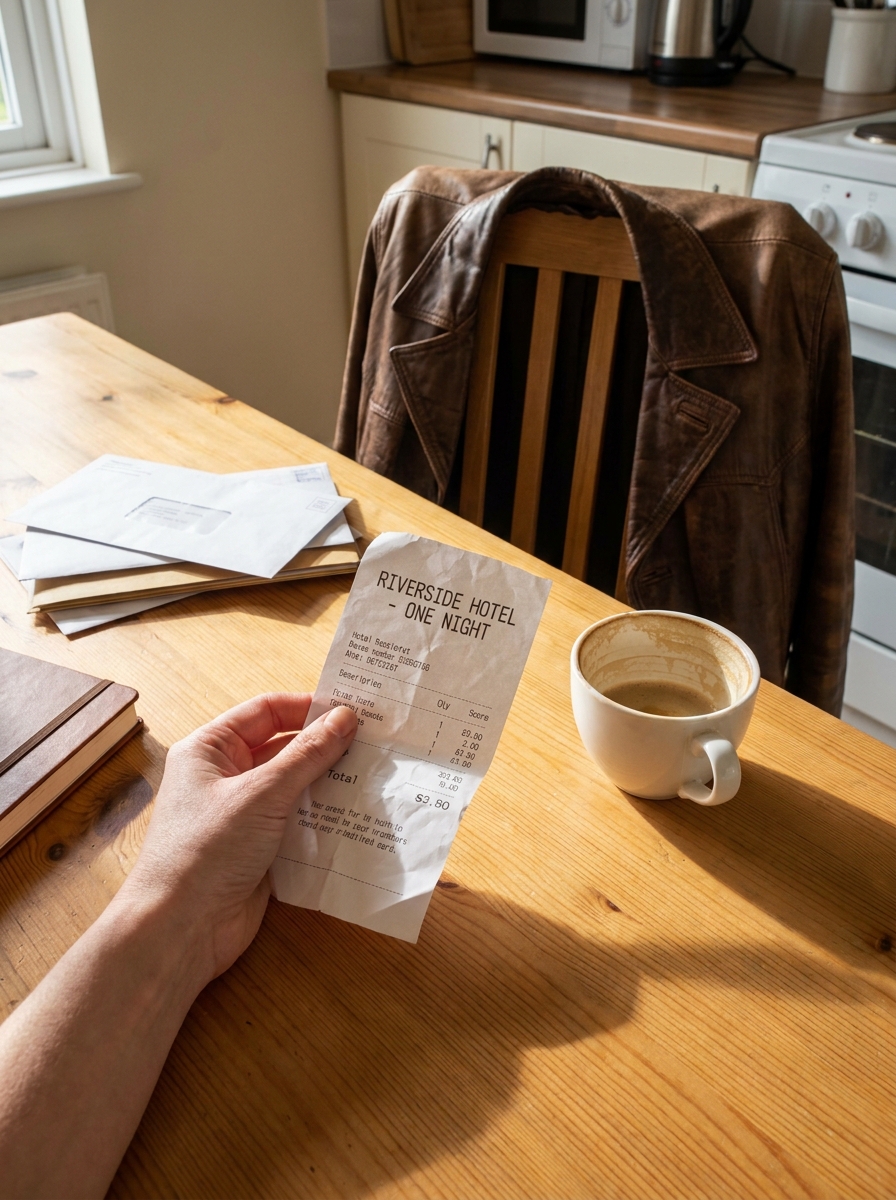
I bent down eventually, but my hands were shaking so badly I almost tore the paper in half. The date was from a Thursday night two weeks earlier—the same Thursday my husband texted to say work had “blown up” and he would be staying late at the office. I remembered that night with humiliating clarity. I had fed the children alone, smiled when they asked where Dad was, and told them he was working hard for all of us. Later, after they were asleep, I sat at the table under the weak yellow kitchen light and paid what bills I could, moving tiny amounts between accounts like a woman trying to stop a flood with her bare hands. I remember skipping dinner because I wanted to make the groceries last. He knew where I was that night. He knew what I was doing. And still, he checked into a hotel and let me thank him for “working so hard” when he came home the next morning.
That was the first wound—not even the possibility of another woman, but the realization that my loyalty had been used as cover. I had loved him in practical ways. In tired ways. In invisible ways that wives often do without being noticed. I had stretched meals, postponed needs, mended clothes, softened stress for the children, and carried the quiet emotional labor of making scarcity feel survivable. And while I was doing all of that, my husband was spending money and lying with the confidence of a man who thought my trust would protect him better than honesty ever could. That is what betrayal really is in marriage. Not only the affair. Not only the secret spending. But the terrible theft of one person’s faith in the life they believed they were building together.
The worst part was that once I held that receipt in my hand, memory started rearranging itself around it. Every excuse he had made over the past year began to glow with a new ugliness. The times he said we could not afford school photos. The times he sighed when I mentioned replacing our broken microwave. The times he looked almost offended when I asked whether we could buy our daughter the dress she wanted for a school event. I had mistaken his control for stress, his secrecy for burden, his irritability for exhaustion. Women in long marriages do that more often than people admit. We translate red flags into temporary difficulties because the truth costs more than we think we can bear. But once the lie cracks, you can never quite go back to innocence. Suddenly the whole past looks like a room that had been dimmed on purpose.
I told myself I needed more proof, but the truth is I already had enough proof to know my marriage was not what I thought it was. Still, pain has a strange way of bargaining with reality. I wanted something that would let me hate him cleanly, without ambiguity, without the desperate little voice inside me still trying to preserve the man I married. So I started checking what I had never checked before. Statements. Charges. Dates. Those cold, practical details that seem lifeless until they begin telling the story your spouse never intended you to read. Within an hour, I found restaurant charges in neighborhoods he had no reason to be in, two more hotel payments hidden among normal expenses, and transfers from our joint account that matched nights he had claimed overtime, client dinners, and emergencies. I sat at the kitchen table with my laptop open, the receipt beside me like a blade, and felt the floor of my life disappear inch by inch.
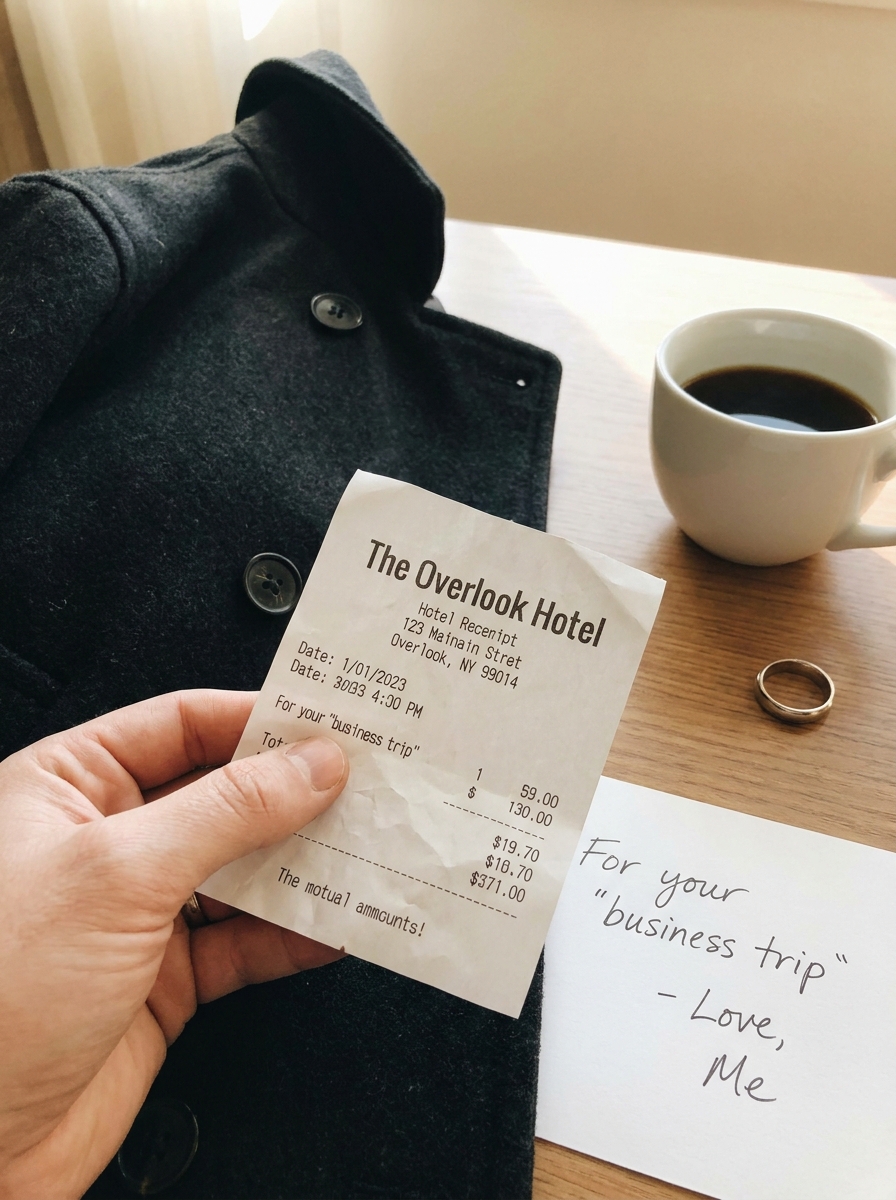
By the time he came home that evening, I was no longer confused. I was devastated, humiliated, and unnervingly calm. There is a kind of stillness that comes when heartbreak passes the point of panic and enters clarity. I had made his favorite meal out of habit, then thrown it away untouched before he walked in. I had bathed the children, folded laundry, answered emails, and moved through the motions of ordinary life with the knowledge that nothing about it was ordinary anymore. When the front door opened, he stepped inside smiling faintly, carrying the same face I had trusted for years, and I realized something almost unbearable: betrayal does not always wear a cruel expression. Sometimes it looks exactly like the man you built your world around.
“Take off your coat,” I said.
He looked at me strangely, then laughed a little, as if I were being dramatic over something trivial. But when I placed the receipt on the table between us, the color left his face so quickly it was almost frightening. In that moment, I didn’t need another word. I knew. Not because he confessed immediately, but because guilt has its own silence. He stared at the paper, then at me, and what filled the room was not misunderstanding, not surprise, not innocence falsely accused. It was exposure. The children were asleep upstairs. The dishwasher hummed in the background. Somewhere outside, a car passed. The world kept moving, and inside my kitchen—the same kitchen where I had stood patching his coat because we “couldn’t afford” a new one—my marriage finally told the truth.
At first, he reached for the flimsiest lie. A coworker. A meeting. The wrong receipt in his pocket. But deception loses its rhythm when it has been dragged into the light. I asked him the hotel date. Then the restaurant charges. Then the transfers. One by one, his explanations collapsed under the weight of their own stupidity. Eventually, he sat down and rubbed both hands over his face, as if exhaustion were the real tragedy in the room. Then came the sentence I think I will always hate the most: “It just happened.” As though affairs happen the way rain does. As though hotel rooms book themselves, money moves by accident, and lies grow legs and walk into a marriage without being invited.
She was younger. Of course she was. Younger, freer, untouched by the years of responsibility I had spent helping him survive. He met her at work, he said, and at first it was just talking. Then lunches. Then drinks. Then “someone who made him feel seen again.” I remember laughing when he said that, not because anything was funny, but because the cruelty of it was almost too perfect. Seen again. I had been seeing him for years—through job stress, family funerals, debt, disappointments, illnesses, the long unglamorous grind of adulthood. I had seen him at his weakest and stayed. I had seen him fail and defended him. I had seen him when there was nothing charming about life, nothing exciting to perform, and I had still called that love. But the woman who met him after all the hard building was the one who made him feel seen. That was when I understood that betrayal is not only disloyalty. Sometimes it is cowardice in search of admiration.

What made it monstrous was not only that he had another woman. It was that he financed his escape with money I had fought to protect. He used the same account I balanced with fear. The same income I stretched until it felt elastic. The same household budget that had required me to say no to myself, no to our children, no to ordinary comforts that make life bearable. While I was repairing, rationing, sacrificing, and adjusting, he was paying for hotel rooms, dinners, and gifts wrapped in secrecy. It wasn’t just infidelity. It was theft with romance layered on top. He did not merely take intimacy elsewhere. He used our family’s labor to decorate the betrayal.
He cried eventually, but by then his tears felt insultingly late. He said he never meant to hurt me like this. He said he had been unhappy, lost, disconnected, overwhelmed. He said our marriage had felt empty for a long time. That last part might have mattered if he had ever chosen honesty before dishonor. But a marriage does not become empty because a wife is not enough. It becomes empty when truth is replaced with secrecy and effort is redirected into lies. If he had been unhappy, he could have spoken. He could have asked for help. He could have left with decency. Instead, he chose the path that allowed him to keep a loyal wife at home while borrowing excitement elsewhere. That is not confusion. That is selfishness with rehearsed excuses.
The days after the confrontation were uglier than the discovery itself. Not louder—uglier. Because now the betrayal had weight, shape, and consequences. I still had to wake the children, pack lunches, answer questions, and stand in a grocery aisle deciding what we could afford while knowing part of our hardship had been manufactured by my husband’s appetite for deception. Every ordinary task felt contaminated. I found myself staring at shampoo bottles, cereal boxes, utility bills, and thinking of the hotel receipt folded in my drawer. I thought of the nights I had gone without. The times I had smiled through financial stress because I believed we were a team. The small humiliations of believing a lie so deeply it reorganized your whole life.
For weeks, I kept replaying one memory in particular. Our son had asked for a pair of shoes for basketball season—nothing flashy, just a decent pair that would not wear out after a month. My husband said no. Too expensive. Not right now. I remember telling our son we’d make it work later, that sometimes grown-up timing is complicated, and then going to the bathroom and crying because motherhood can feel like apologizing for limits you did not create. Now I knew that same month included hotel charges and restaurant dinners for another woman. There are betrayals that break your heart, and there are betrayals that insult your motherhood, your sacrifices, and the dignity of your whole home. This was both.
What changed me most was not his affair. It was the collapse of my self-doubt. For years, I had questioned myself before I questioned him. I had wondered whether I was too emotional, too suspicious, too needy, too concerned about money, too dramatic about distance. Betrayal has a way of clarifying every place where your instincts tried to save you and your loyalty talked you out of listening. Once the truth surfaced, I stopped begging to be reassured by a man who had used reassurance as a management tool. I stopped asking questions he answered only to buy time. I started gathering facts, documents, statements, passwords—every piece of reality I had once been made to feel unqualified to understand. Knowledge became a kind of revenge, but cleaner. Not revenge meant to wound him. Revenge meant to return me to myself.
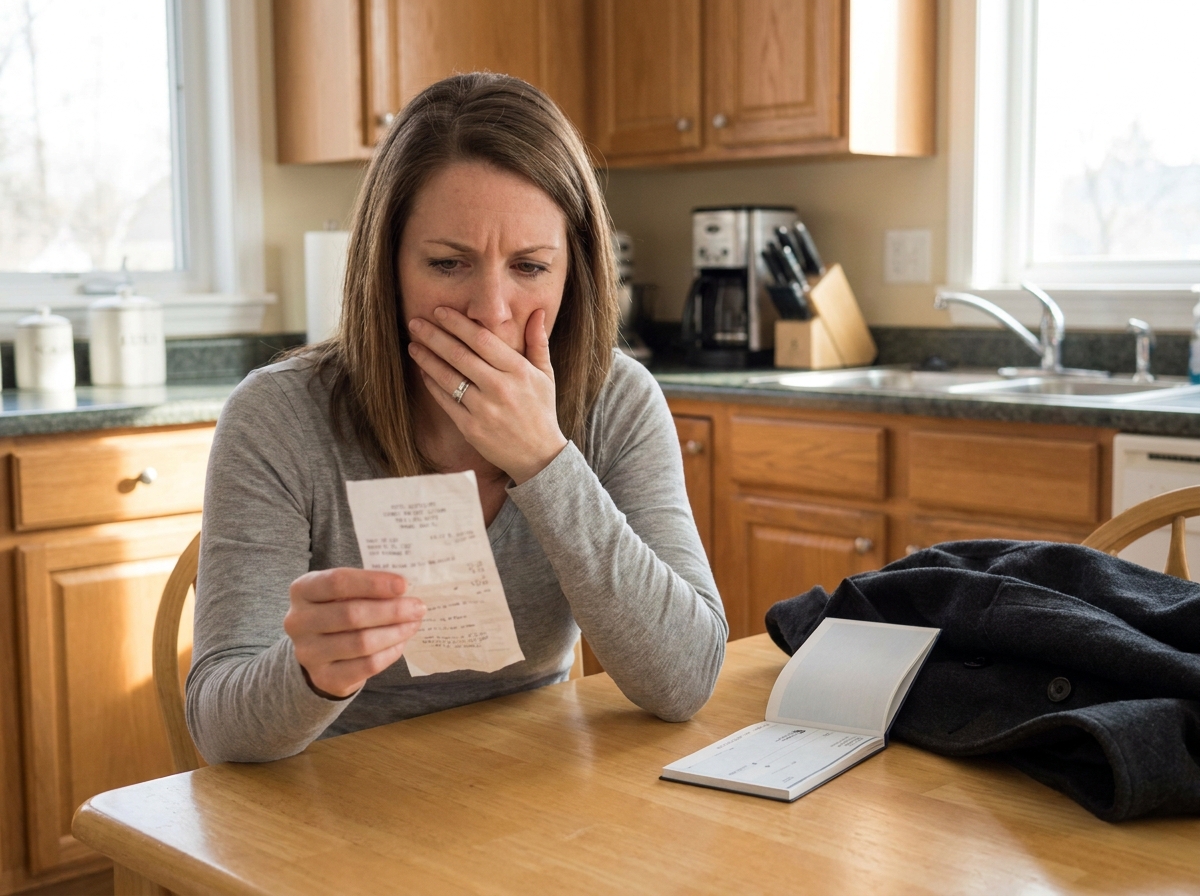
And that, more than anything, is what he did not expect. He expected tears, maybe screaming, maybe a scene dramatic enough to let him play the tired man caught in a mistake. What he did not expect was the quiet, terrifying dignity of a woman who finally sees the whole pattern. I did cry. I cried in the shower, in the car, in a locked bathroom while the children watched television downstairs. But when I stood in front of him, I was no longer the wife patching sleeves and apologizing for expenses. I was the woman who knew exactly what had been done to her. I knew the money. I knew the lies. I knew the dates. And once a betrayed wife stops doubting her own reality, something inside the marriage shifts forever.
I wish I could say I walked away untouched by comparison, but that would be dishonest. I looked at myself in the mirror and saw exhaustion where she likely saw possibility. I saw stretch marks, stress, years of labor, and the face of a woman who had spent too much time making a home hospitable for someone who preferred fantasy. But eventually, painfully, I understood this had never been about me lacking something. It was about him wanting the illusion of being new again without paying the moral cost honestly. Men like that do not leave because a younger woman is better. They leave because another woman reflects back a version of themselves unburdened by accountability. That is not love. It is vanity with a pulse.
In the end, the hotel receipt was not the thing that ruined my marriage. It was simply the paper trail of a ruin already in progress. The marriage had been cracking every time he lied about money, every time he chose secrecy over truth, every time he let me carry burdens he was secretly making heavier. The receipt only gave shape to what my spirit had been struggling to name for months. And painful as it was, I am grateful for it now in the strangest way. Because without that small, stupid piece of paper falling onto the kitchen floor, I might still be stitching together the life of a man who was busy unmaking mine.
My husband thought he was hiding hotel nights inside the folds of an old coat. What he was really hiding was the full measure of his character. And when the truth finally slid out into the light, I realized something that saved me long before healing ever did: I had not lost a good marriage in that moment. I had lost access to a lie. And however brutal that felt at first, truth was still the first honest thing he had given me in a very long time.