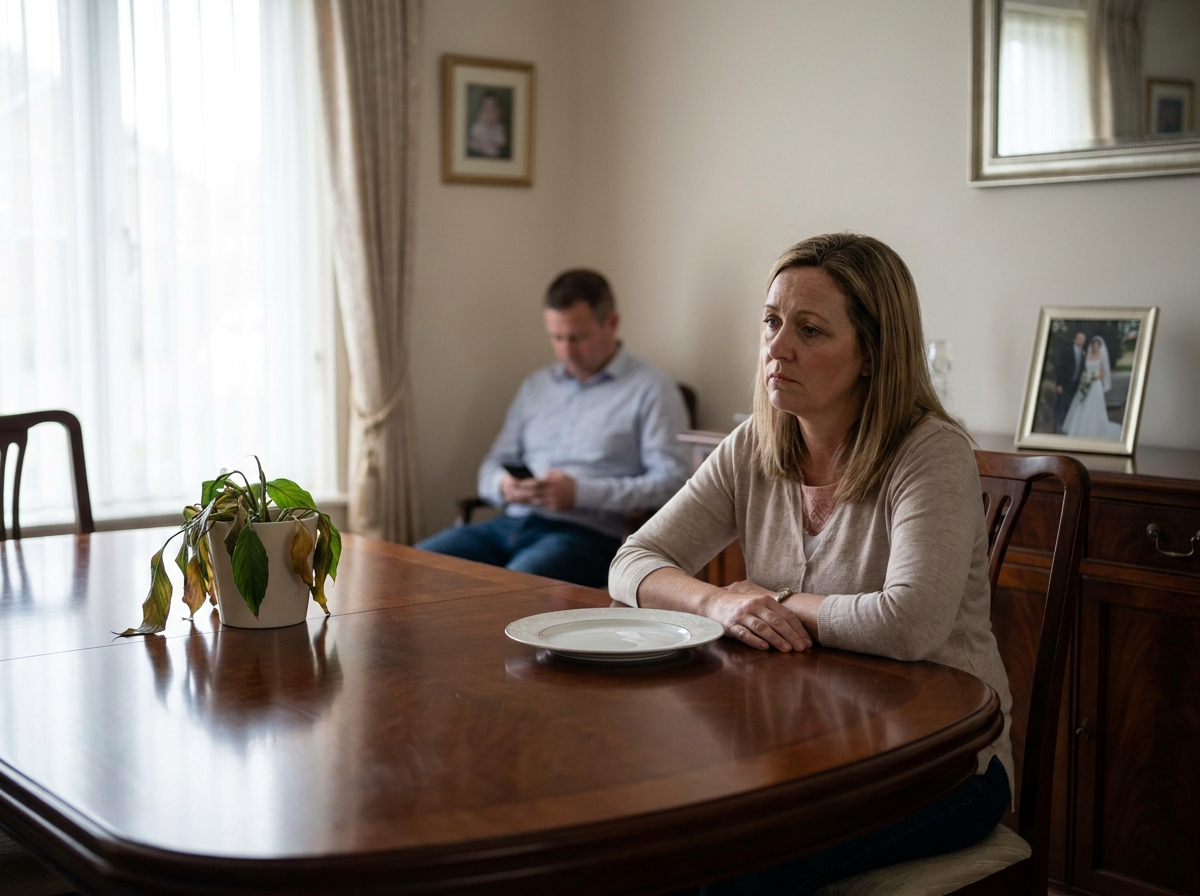
The cruelest part of betrayal is that it rarely begins with a confession. It begins with absence. With a delayed response, a distracted nod, a silence that stretches too long, a smile that no longer reaches you, a marriage that starts feeling cold before it ever becomes openly broken. That was how it happened to me. My husband did not wake up one morning and announce he had fallen for someone else. He simply began leaving me emotionally hungry while carrying on as if our life together was still intact. I was standing inside a marriage that looked normal from the outside while something sacred was being slowly transferred elsewhere.
For a long time, I could not have explained what was wrong in any way that sounded dramatic enough to justify my pain. He was still coming home. Still paying bills. Still asking practical questions about the week. Still sitting at the same table, sleeping in the same bed, moving through the same routines. But emotionally he had become thin, distracted, and strangely unreachable. I would speak and feel him listening only halfway. I would try to share something personal and watch his attention drift. His body was there, but his inner life had begun living somewhere I could not follow. When a husband starts loving another woman, the wife often feels it first not through proof, but through a quiet starvation she cannot yet name.
I blamed stress in the beginning because that explanation was easier to survive. He had work pressure. We both had responsibilities. Life had become demanding in all the usual ways, and I told myself this was simply adulthood doing what it does to long marriages. But then I started noticing changes that did not fit ordinary exhaustion. He cared more about how he looked. He laughed at his phone in private. He became protective of small details that once would have meant nothing. He no longer seemed irritated only at life; he seemed specifically impatient with me, as though my presence interrupted something more interesting happening elsewhere. That particular kind of indifference can bruise a wife more deeply than open anger.
I remember one evening standing in the doorway of our bedroom while he changed his shirt for what he called a casual work dinner. He looked almost youthful in a way I had not seen in years—not because time had reversed, but because attention had. He checked himself in the mirror twice. Adjusted his collar. Reapplied cologne. There was an energy in him that I had been begging marriage to return for months. And none of it was for me. I stood there holding folded laundry and felt something sink heavily inside my chest. You can survive many things in marriage, but it is hard to survive becoming invisible while your husband rediscovers brightness for someone else.
The woman was younger. Of course she was. I found that out later, but I think some part of me already knew. Not because youth is inherently threatening, but because the kind of man who seeks escape instead of honesty often chooses someone who reflects back a simpler version of himself. Someone who does not know his full history. Someone who meets him after responsibility has already worn him down and sees only the pieces he wants displayed. A younger woman did not carry the weight of our real life—mortgage worries, family burdens, years of compromise, the ordinary erosion and rebuilding that marriage requires. She got charm without history. I got history without tenderness.
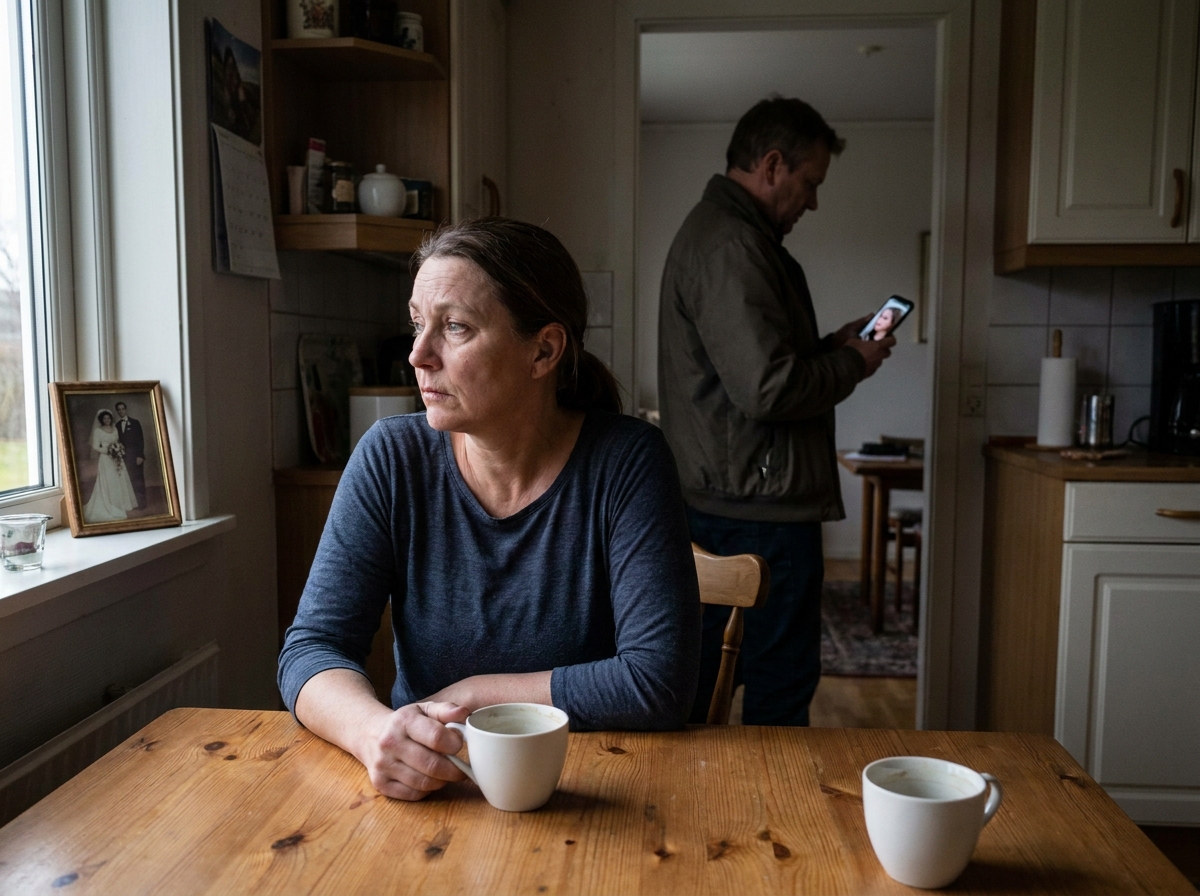
The first real proof came through something small. It always amazes me how life hides its largest truths inside the tiniest openings. A social media notification flashed on his tablet while he was in the shower. I had no intention of snooping when I picked it up, only the half-conscious impulse to clear the screen and put it aside. But the message preview showed enough to freeze me: Still smiling about last night. My entire body reacted before my mind did. I knew, immediately and completely, that I was looking at the edge of something I had not wanted to believe.
When I opened the thread, I found exactly what my heart had been dreading and my pride had been avoiding. Conversations filled with flirtation, private jokes, emotional intimacy, and the kind of anticipation that used to belong to us. He had not just been talking to her. He had been turning toward her. Telling her things about his day he no longer told me. Complaining about stress in a tone that invited her comfort while refusing mine at home. Sending warmth, humor, and emotional energy into a connection he still had the audacity to pretend was harmless. Even before anything physical is confirmed, this kind of betrayal already changes a marriage. Because love is not only betrayed in bed. It is betrayed in attention.
I confronted him that night, and the look on his face when he realized I knew was not heartbreak. It was exposure. That distinction matters. A remorseful man grieves the pain he caused. An entitled one panics over the collapse of control. He said she was just someone who understood him. He said they were talking because things had been difficult between us. He said nothing physical had happened at first, as though emotional betrayal should count less because it leaves no lipstick on a collar. But emotional abandonment inside a marriage can be just as devastating. Maybe more. Because the wife feels herself losing her place in invisible ways long before she can prove what is happening.
What destroyed me was not simply that he wanted another woman. It was that he left me emotionally starving while pretending we were still working on our marriage. He let me keep trying. Keep initiating. Keep hoping. Keep sitting across from him at dinner wondering what else I could do to bring warmth back into our home. All the while, he was investing his tenderness somewhere else. That is what made the betrayal feel so deep. He was not honest enough to leave. Not decent enough to confess. But he was willing to let me live in confusion while he slowly detached from me in secret.
When the full truth surfaced, I learned their connection had gone further than messages. Meetings after work. Long lunches disguised as scheduling issues. Touches that “just happened.” Then eventually, the line every betrayer claims they never planned to cross. By then, I almost felt numb. The affair itself hurt, yes, but the emotional architecture around it hurt more. He had built another relationship while draining ours of light. He had created intimacy with her by withholding intimacy from me. It felt as though I had been watching our house go dark without knowing someone else was being warmed by the electricity he had stolen.
She was younger, but over time I realized that was not the real point. The real point was that she met him in a version of himself untouched by the full cost of life. She saw curated charm. I had lived the unpaid bills, the stress, the illnesses, the obligations, the aging, the disappointments, the years when love had to become labor. Instead of honoring the woman who stood beside him through all of that, he chased the reflected glow of being seen as exciting again. That was not romance. It was cowardice dressed as awakening.
For a while, I let her youth wound me. I looked in the mirror too long. I examined lines in my face, the heaviness in my eyes, the version of my body shaped by real life rather than fantasy. Betrayal does that. It invites innocent people into cruel comparisons. But eventually I understood something I wish all wounded wives knew sooner: another woman’s age is not an explanation for a husband’s lack of integrity. Men do not cheat because youth appears. They cheat because character fails. A faithful man notices temptation and creates distance. An unfaithful man turns attention into permission and then calls it confusion.
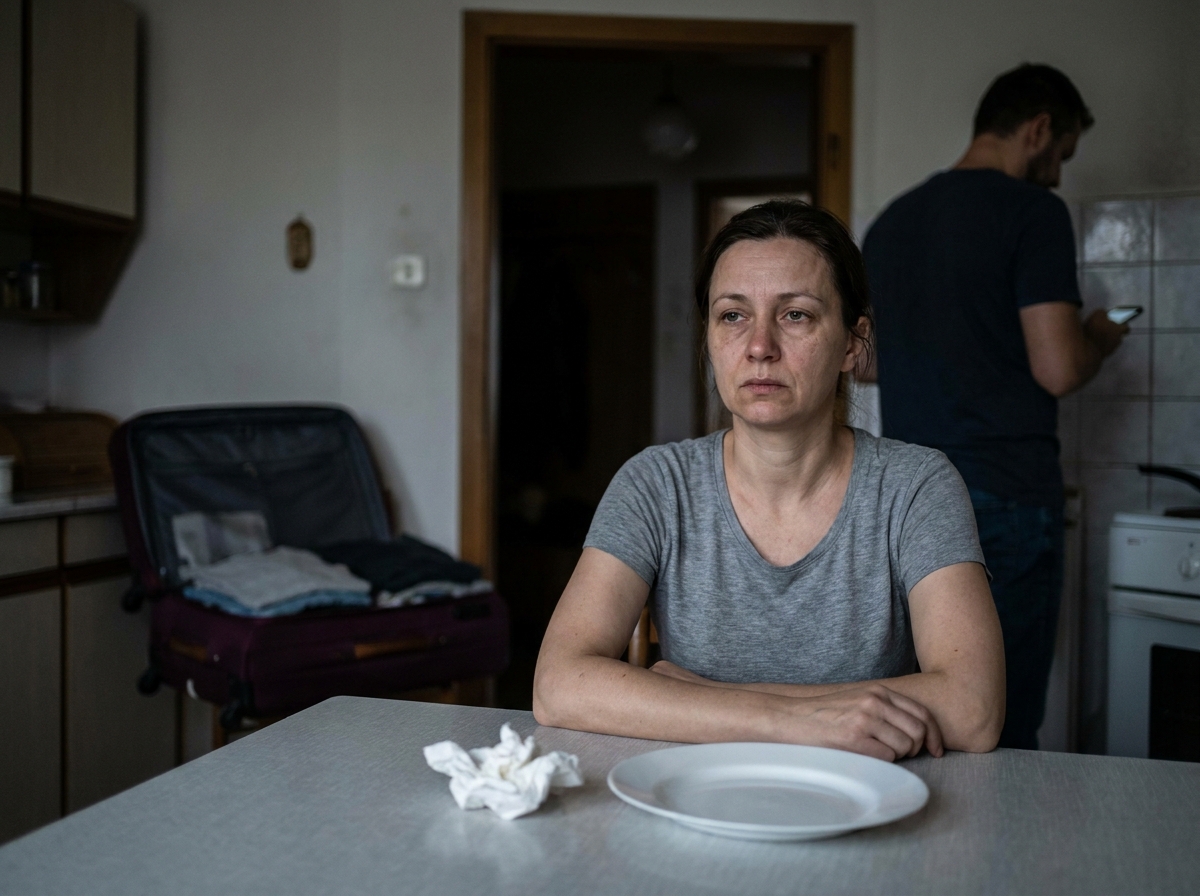
What did he say when everything was exposed? All the usual things, though none of them were enough. He said he felt lost. He said he did not mean for it to happen. He said he still cared about me deeply. He said our marriage had been struggling for a long time. That last one almost made me laugh from the sheer cruelty of it. Yes, our marriage had been struggling. But because he was secretly feeding another connection while leaving me to wonder why love felt so one-sided. He did not merely respond to distance. He manufactured more of it.
There is a grief that comes with realizing you have been faithful not only to a person, but to a false reality. I had been trying to save a marriage he was already emotionally leaving. I had been adjusting, forgiving, hoping, and staying soft in places where he had already hardened. When I understood that, something in me changed. The desperation left first. Then the begging. Then the need to be chosen by someone who had already shown me the poverty of his choosing. Pain remained, but it no longer came with confusion. Clarity is cold at first, but eventually it becomes a kind of shelter.
I will not pretend I healed quickly. I did not. I cried in parked cars, in bathrooms, in grocery store aisles after seeing something ordinary that reminded me how ordinary my own life had looked before it broke. I mourned not only the marriage, but the years I had spent believing emotional neglect was something I could solve if I were patient enough, loving enough, understanding enough. That is another lie betrayal tells wives—that if we had been more radiant, more attentive, more desirable, less tired, less busy, less human, maybe he would have stayed fully ours. But fidelity is not a reward for perfection. It is a decision rooted in integrity.
In time, I stopped asking why he loved her and started asking why I had accepted so little for so long. That question changed my life more than any explanation he ever offered. Because the affair, painful as it was, exposed something bigger than his disloyalty. It exposed how often I had made myself emotionally available to someone who offered me leftovers. It showed me how easily women can confuse endurance with love, silence with peace, and hope with responsibility for another person’s choices. I was not responsible for his betrayal. But I became responsible for what I accepted after the truth.
My husband fell in love with a younger woman, but before that happened, he let me starve emotionally in my own marriage. That is the part I will never soften for anyone’s comfort. He withheld warmth, attention, honesty, and effort while expecting me to remain loyal to the shell of what we had been. In the end, the affair did not destroy a perfect marriage. It exposed a broken honesty that had been widening for longer than I knew. And painful as that truth was, it gave me something I no longer had to beg for: reality.
Now, when I think about that season, I do not only remember the humiliation. I remember the awakening. I remember the exact moment I stopped measuring my worth by whether a dishonest man could still see it. I remember understanding that a wife is not meant to compete with secrecy for affection. She is not meant to live on emotional scraps while her husband plays devotion elsewhere. She is not meant to shrink herself to make betrayal easier to survive.
He thought falling in love with someone younger meant he had found something new. What he really revealed was something old and unfinished inside himself. And I, the wife he left emotionally starving, eventually discovered something stronger than being chosen by him. I discovered what it meant to choose myself after the truth had finally made that possible.