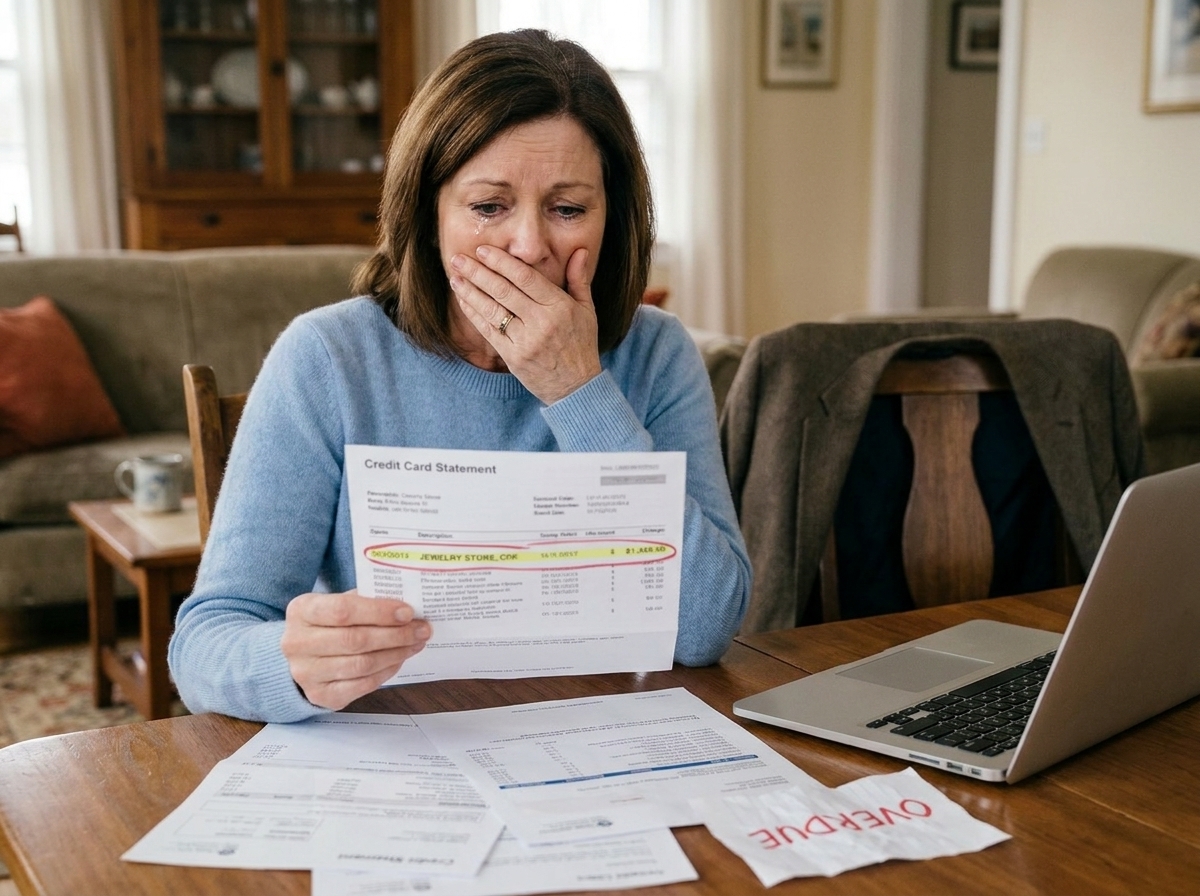
For years, I believed my husband every time he told me we were struggling. I believed him when he said we had to cut back, when he told me not to buy anything unnecessary, when he reminded me that bills were piling up and that we needed to be careful. I lived with guilt over every small purchase. If I bought new shoes, I felt selfish. If I ordered takeout after a long day, I felt irresponsible. I learned to stretch groceries, delay my own needs, and act grateful for whatever little was left after rent, utilities, and debt. I thought we were building a future together through sacrifice. I didn’t know I was the only one sacrificing.
My husband controlled the money in our marriage almost from the beginning. At first, it seemed practical. He said he was better with numbers, more organized, more disciplined. I didn’t argue because I trusted him, and trust, in marriage, often disguises itself as cooperation. If he said he had paid something, I believed him. If he told me we couldn’t afford a vacation, I accepted it. If he said we needed to postpone fixing something in the house, I adjusted. I thought that was what being a supportive wife looked like—understanding, flexible, willing to go without when times were hard.
There were signs, of course. Looking back, I can see them clearly now, but at the time they passed through my life like small shadows I refused to name. He became more protective of his phone. He started getting irritated when I asked simple questions about the bank account. Sometimes he came home with an expensive shirt or a new watch and brushed it off like it had been discounted. Other times he’d claim a work dinner had been “covered by the company,” though the stories around those evenings never sounded complete. I noticed the inconsistencies, but marriage teaches many women to doubt themselves before they doubt the man they love.
I remember one particular night when our daughter needed money for a school trip. It wasn’t a ridiculous amount, just enough that it mattered to us at the time. I asked my husband if we could make it work, and he sighed the way he always did when money came up, as if I were asking for something extravagant instead of something important. He told me we needed to be realistic. He said we had to stop pretending we had money we didn’t have. Our daughter ended up staying home while her classmates went. She smiled and said it was fine, but I saw the disappointment in her face. That image still burns inside me because while he was denying his own child a memory, he was spending freely somewhere else.
The truth began revealing itself by accident, not because he confessed and not because I suddenly became suspicious enough to investigate like some detective in my own marriage. It started with a receipt. A small, glossy receipt tucked into the pocket of a jacket I was hanging up for him. I only noticed it because it slipped out onto the floor. It was from a jewelry store I had never been inside. I stared at it for a long time because the amount made no sense. We had argued two weeks earlier about replacing our broken microwave. He had said it wasn’t the right time. Yet here was proof that he had spent hundreds of dollars on something from a jewelry counter.
When I asked him about it, he didn’t look ashamed. He looked annoyed. That was the first crack inside me. A guilty man might panic. A sorry man might explain. But an entitled man becomes irritated when his lie is interrupted. He told me it was for a coworker’s retirement gift, some group purchase he had fronted temporarily. The answer came too fast, too smooth. I wanted to believe it because the alternative was uglier than I was prepared to face. So I nodded, even while a part of me quietly started waking up.
After that, once the trust cracked, I began noticing more. Charges that didn’t fit our life. Withdrawals I couldn’t explain. Payments to restaurants we never visited together. A hotel charge that he claimed was related to a work conference I had never heard about. When I asked for access to the full accounts, he turned it into a fight about respect and privacy. Privacy. In a marriage where I had spent years accounting for every grocery receipt while he moved money through the shadows like I had no right to ask. That word changed something in me. Honest husbands do not weaponize privacy to hide family finances from their wives.
What hurt almost as much as the money was the humiliation of realizing how carefully he had trained me to feel guilty. While he played the role of the burdened provider, I had become smaller and smaller inside my own home. I stopped asking for things. I wore old clothes longer than I should have. I clipped coupons. I said no to lunches with friends because I didn’t want to “waste” money. He watched me live that way. He watched me deny myself in the name of our family while he was spending on dinners, gifts, and secrets I knew nothing about. That kind of betrayal goes beyond dishonesty. It is theft of trust, dignity, and years you cannot get back.
I finally found the truth in the ugliest way possible. Not from a bank statement. Not from a confession. From a message. He had fallen asleep on the couch with his phone in his hand, and the screen lit up with a name I didn’t know followed by words I will never forget: Miss you already. Thank you again for tonight. My body went cold before my mind could even catch up. There are moments in life when reality does not enter gently. It crashes through the door and rearranges everything you thought you knew. That was one of them.
I opened the messages with shaking hands. There it was. Weeks, maybe months, of flirtation, meetings, gifts, excuses, affection that should have belonged nowhere outside our marriage. There were dinner reservations. Compliments. Inside jokes. Hotel plans disguised as work obligations. And woven through it all were references to money—him paying for her nails, helping with her rent once, buying her a bracelet because she’d had a stressful week. I remember staring at the screen and thinking not just He is cheating on me, but He is cheating on our whole life. He was giving another woman the security, generosity, and tenderness he kept telling me we could not afford.

When I confronted him, he tried every version of the truth except the full one. At first he minimized it. He said it wasn’t serious. Then he blamed loneliness. Then stress. Then our marriage. Then my supposed emotional distance. It was almost impressive how quickly he reached for excuses before accountability. That is another cruelty of betrayal: the unfaithful person often wants sympathy for the pain they caused. He spoke as if he had drifted into this by accident, as if the lies, the spending, the secrecy, the manipulation of finances, and the emotional investment in another woman were all just symptoms of being misunderstood. I stood there listening to him and realized that the affair was not the only betrayal. The lies had become his character.
I asked him one question he could not answer honestly without exposing himself completely: “How long were you going to let me think we were broke?” He looked away. Not because he didn’t hear me. Because he had no answer that could make him look decent. That silence told me more than any argument could. He had been willing to let me carry stress, guilt, and limitation for as long as it benefited him. He was comfortable watching me worry as long as it funded the life he wanted in secret. Some betrayals are impulsive. This one was sustained. It required planning. Repetition. Choice.
The days after that confrontation were some of the hardest of my life. Not because I still didn’t know the truth, but because knowing it changed the past. Every denied request, every budget lecture, every cold refusal suddenly looked different. I remembered birthdays where he said money was tight. I remembered special occasions made smaller because he insisted we needed to be careful. I remembered crying alone once because I thought I had failed as a wife by not contributing enough financially. All that time, the problem had not been scarcity. It had been deception. There is a specific kind of grief in realizing you were loyal inside a story someone else had secretly rewritten.
What shocked me most was how betrayal rearranges self-worth if you let it. For a while, I found myself asking ugly questions. Was she younger? Prettier? Easier? Did he spend on her because she made him feel admired in ways I no longer did? Those questions are poison, but they come anyway. Infidelity has a way of dragging innocent people into comparisons they never deserved to make. But over time I understood something important: his choices were not proof of my lack. They were proof of his emptiness. A decent man facing marital unhappiness speaks, seeks help, or leaves honestly. He does not drain the family, lie to his wife, and play the hero in another woman’s life with money built on deception.
Once the shock settled, something stronger began to rise in me. Clarity. I stopped begging for explanations that would never restore what he had broken. I started gathering documents. Account statements. Payment histories. Screenshots. Proof. Not because revenge interested me, but because reality now mattered more than emotion. For too long I had lived inside his version of our life. I was done being managed by his story. I wanted facts. I wanted control over what had been hidden from me. I wanted my future back, even if it no longer looked like the marriage I had once fought to preserve.
He cried eventually. Men like that often do, but usually after consequences arrive. He said he had made mistakes. He said he never meant to hurt me this deeply. He said he still loved me. But love without integrity is just a performance, and by then I had seen too much backstage. I had watched him choose another woman with the money meant for our home. I had watched him make me feel guilty for needs he was happy to meet elsewhere. I had watched him defend secrecy more fiercely than he defended our marriage. Whatever he felt, it was not the kind of love a wife can safely build her life on.
People sometimes imagine betrayal as one dramatic discovery followed by one dramatic decision. Real life is quieter and heavier than that. You still wake up. You still make coffee. You still answer texts. You still fold laundry while your chest feels split open. The ordinary world keeps moving even when your private world has collapsed. That is what made the pain so surreal. I was grieving in a kitchen where I had spent years stretching meals to fit the budget he lied about. I was washing dishes with the same hands that had signed school forms, packed lunches, and tried to build a good life with a man who had been quietly investing elsewhere.
In the end, what hurt me most was not only that he loved another woman badly. It was that he used our money, our sacrifices, and my trust to do it. He did not simply betray me romantically. He betrayed the structure of our family. He put another woman inside the space that was supposed to protect his wife and child. He financed the illusion with the very resources he claimed were too limited for us. That is not just cheating. That is a collapse of moral responsibility.
I wish I could say I recovered quickly, that I stood up the next day stronger and untouched. I didn’t. I broke in private many times. I replayed conversations. I questioned my instincts. I mourned the marriage I thought I had. But slowly, painfully, I began to understand that discovering the truth had not destroyed me. Living under the lie had been destroying me already. The truth was brutal, but it was also the first honest ground I had stood on in a very long time.
Today, when I think about that season, I no longer define it only by what he did. I define it by what I learned. I learned that trust without transparency is dangerous. I learned that financial control can become emotional control when one spouse is kept in the dark. I learned that a woman should never be made to feel guilty for asking honest questions about the life she is helping build. And I learned that betrayal says everything about the betrayer’s character and nothing about the betrayed person’s worth.
My husband said we were broke. The truth was worse than that. We were not broke. Our marriage was. I just didn’t know it yet.