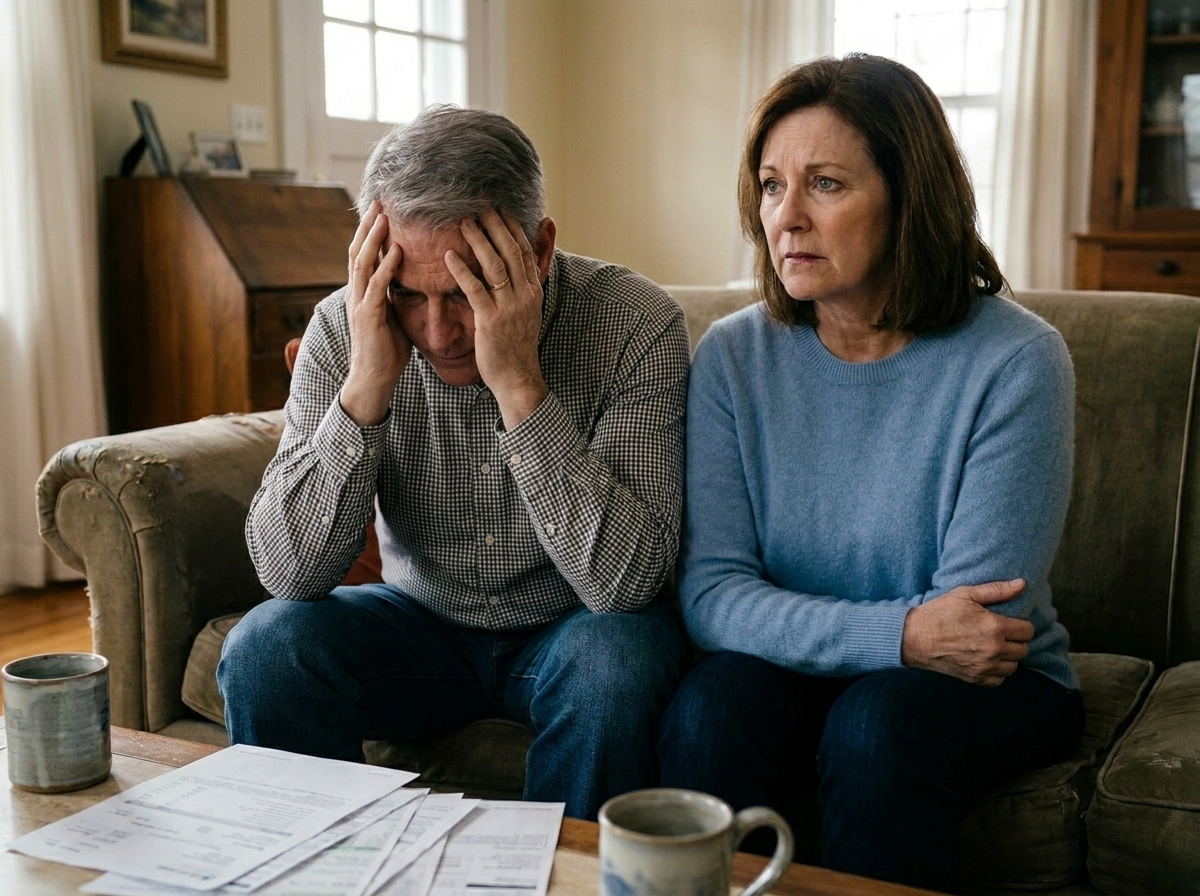
When people talk about lasting marriage, they often focus on endurance as if staying is the same as thriving. They admire the number of years, the photos, the anniversaries, the proof that two people remained under the same roof through life’s changes. And yes, staying matters. Commitment matters. But what I learned in my own marriage is that a spouse can stay and still suffer quietly, can remain loyal and still feel lonely, can keep the vows and still wonder where the tenderness went. Love survives many things, but survival alone is not the same as closeness. That difference took me years to understand.
My spouse and I built our life in the least glamorous way possible—slowly, imperfectly, and with more hope than resources. We did not enter marriage as experts on communication or emotional maturity. We entered it like many real people do: in love, sincere, and deeply unprepared for how much ordinary life can test even two good-hearted people. In those early years, we believed love would make difficulty easier. In some ways it did. But in other ways, difficulty exposed parts of us that love alone did not automatically heal—fear, defensiveness, exhaustion, unresolved pain, and the instinct to protect ourselves even from the person closest to us.
The hardest years were not hard for one reason. They were hard for many at once. Financial strain. Work instability. Family pressures. Health concerns. Grief. Fatigue. Uncertainty about the future. One thing after another seemed to arrive before we had recovered from the last. We became the kind of couple who always had something urgent to handle, some new problem to solve, some fresh reason to postpone rest. We told ourselves this was temporary. Once things settled down, we would reconnect. Once we got through this season, we would have more time for each other. But one season became another, and another, until postponing emotional closeness became part of how we lived.
At first, I admired how strong my spouse seemed. No matter what happened, there was always movement, always action, always another task being handled. My spouse carried so much without complaint that I almost forgot there was a human heart underneath all that competence. I leaned on that strength, and perhaps without meaning to, I also added to its burden. I thought love meant appreciating what was being done. I did not realize that appreciation alone is not enough if a spouse feels more useful than cherished. Looking back, I can see how we both became trapped inside roles. My spouse became the one who pushed through. I became the one who tried to hold the emotional center alone. Neither role was sustainable.
What made it painful was that we did not stop caring. If anything, we cared so much about keeping life from falling apart that we neglected the relationship holding it all together. We still acted like partners. We still problem-solved well. We still stood on the same side when challenges came from outside. But inwardly, the marriage had become more functional than intimate. There were nights when we went to bed exhausted without touching. Mornings when we exchanged information but not affection. Weekends lost to errands, obligations, and recovery. We were together constantly, yet connecting rarely.
One evening, I found myself staring at my spouse across the living room and thinking something that immediately made me feel guilty: I miss the person you used to be. The guilt came because the thought was not entirely fair. Life had changed both of us. Hard years reshape people. Pain matures them, responsibilities compress them, and repeated stress can leave even loving spouses emotionally flatter than they once were. The person I missed was not gone because of indifference. That person had been carrying too much for too long. Still, the grief was real. I missed laughter that came easily. I missed being looked at with softness instead of fatigue. I missed a version of us that did not seem so permanently braced.
I kept most of that grief to myself because I did not want to sound ungrateful. My spouse was doing so much. Working hard. Holding things together. Showing up in practical ways again and again. What right did I have to say, “Yes, but I still feel lonely”? That is one of the cruel tricks real-life marriage can play on a person. You start minimizing your own emotional needs because the other person’s visible effort seems more important. But hidden loneliness does not disappear just because you can explain it away. It settles deeper. It starts coming out sideways—in impatience, oversensitivity, disappointment, and the quiet ache of feeling emotionally underfed.
The breaking point came during a conversation that began as nothing. We were discussing a simple household issue, something forgettable, and suddenly I started crying. Not graceful tears. The kind that surprise you and make you feel both exposed and ridiculous. My spouse stopped mid-sentence and just stared at me. I remember saying, through embarrassment, “I know you’re here, but I don’t feel like I have you anymore.” The moment the words left my mouth, I wanted to take them back. They sounded dramatic, maybe even unfair. But they were true. And truth, once spoken, changes the room.
My spouse sat down. For a long time, neither of us said anything. Then came words I had not expected: “I don’t know how to be anything except tired anymore.” That sentence broke my heart in a different way. Until then, I had been so focused on what I was missing that I had not fully seen the degree to which my spouse was depleted. Not uncaring. Depleted. There is a difference. One is about the absence of love. The other is about the collapse of energy, hope, and emotional access under the weight of real life. My spouse had not stopped loving me. My spouse had stopped knowing how to reach me while drowning quietly inside the demands of adulthood.
We talked for hours that night. About stress. About resentment. About fear. About the ways both of us had felt alone without admitting it. About how easy it had become to assume the worst of each other because neither of us had enough energy left to explain ourselves well. I confessed that I had begun measuring love by emotional availability because I was so hungry for reassurance. My spouse confessed that love had become tangled up with responsibility, that providing and carrying and handling had become the main language of devotion. We were both loving each other through our own instincts, and both missing what the other person needed most.
That realization did not instantly heal us, but it gave us direction. We began rebuilding our marriage around a simple question: what makes each of us feel deeply cared for in real life, not in theory? The answers were humbling. I did not need perfection. I needed attention. Warmth. Follow-through. Unhurried presence. My spouse did not need more criticism disguised as disappointment. My spouse needed room to be human, to be weary without being treated as emotionally absent on purpose, to be seen as more than a machine for holding life together. We had both been starving, just in different ways.
So we changed what we could. We protected small rituals. Morning coffee together, even if only ten minutes. A walk after dinner when possible. A habit of checking in before discussing practical matters. We made a rule that not every conversation could begin with a task. We started naming appreciation out loud instead of assuming it was understood. We allowed ourselves to say, “I’m overwhelmed,” before overwhelm turned into coldness. These changes were not glamorous, but they were profound. Love returned not as intensity, but as accessibility. We became easier for each other to reach.
I also had to let go of a fantasy I had quietly been clinging to—the idea that if we healed, marriage would somehow feel the way it did in the beginning. It didn’t. It felt older. Softer. Less sparkling, perhaps, but more truthful. We were no longer two idealistic people imagining life together. We were two tested people deciding, again and again, to remain emotionally available in the middle of reality. That version of love is less exciting to describe, but more meaningful to live. When your spouse has seen you worn down by life and still chooses to keep showing up with honesty and care, the bond becomes less performative and more secure.
There were still hard days. There still are. Some seasons remain heavy. Stress still knocks on our door. Tiredness still affects our tone. We are still imperfect, still learning, still capable of missing each other even with the best intentions. But now we notice faster. We repair sooner. We understand that disconnection is not something to normalize or romanticize as “just marriage.” It is something to address with courage before it hardens. That may be one of the most important things a spouse can learn: closeness does not maintain itself. It must be protected with the same seriousness people give to work, finances, parenting, and all the other responsibilities that so often push marriage to the edge.
What changed me most was realizing that my spouse did not need to become a completely different person to love me well. Nor did I. We needed awareness, honesty, and gentleness. We needed to stop translating every tired moment as rejection. We needed to stop assuming love should be obvious without being expressed. And we needed to stop waiting for life to become easy before investing in each other. Easy may never come. Real marriages are built in the middle of unfinished stress, not after it disappears.
When I look at my spouse now, I do not see the polished idea of love I once carried in my head. I see someone human. Someone who has been stretched, frightened, burdened, and worn thin by life. Someone who has also chosen, repeatedly, to stay in the work of loving me. And I think that is what makes long-term marriage meaningful. Not that two people escape hardship. Not that they never disappoint one another. But that they keep returning to truth when distance tries to settle in and call itself normal.
I know there are people in long marriages who read stories like this and quietly recognize themselves. They are still together, still committed, still doing what needs to be done—but deep down, something tender has gone quiet. They may feel guilty for wanting more because on paper the marriage still stands. But emotional hunger in a committed relationship is real. A spouse needs more than loyalty in structure. They need to feel reached for. Known. Considered. Safe. Seen. These are not childish desires. They are part of what keeps marriage alive on the inside, not just intact on the outside.
If I had to sum up what the hardest years taught me, it would be this: love changes, but that does not mean it weakens. Sometimes it deepens by losing its illusion. Sometimes a spouse loves you most faithfully not when life is easy and affection is effortless, but when both of you are exhausted and still willing to turn back toward each other. That willingness is sacred in real life. It does not make for dramatic stories, but it saves ordinary marriages every day.
And maybe that is the kind of love worth honoring most. Not the kind that never trembles, but the kind that keeps choosing honesty over avoidance, tenderness over pride, and connection over habit. My spouse and I stayed together through the hardest years of our lives, yes. But more importantly, we learned that staying is only the beginning. The real work—the holy work, the life-giving work—is learning how to keep loving each other truthfully after life has taken away every easy version of love we thought we understood.