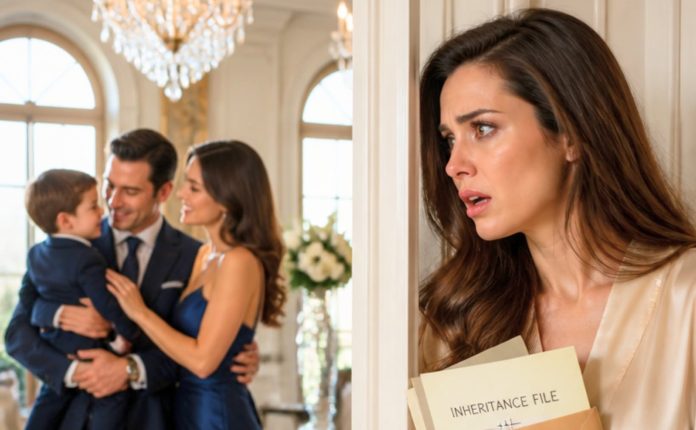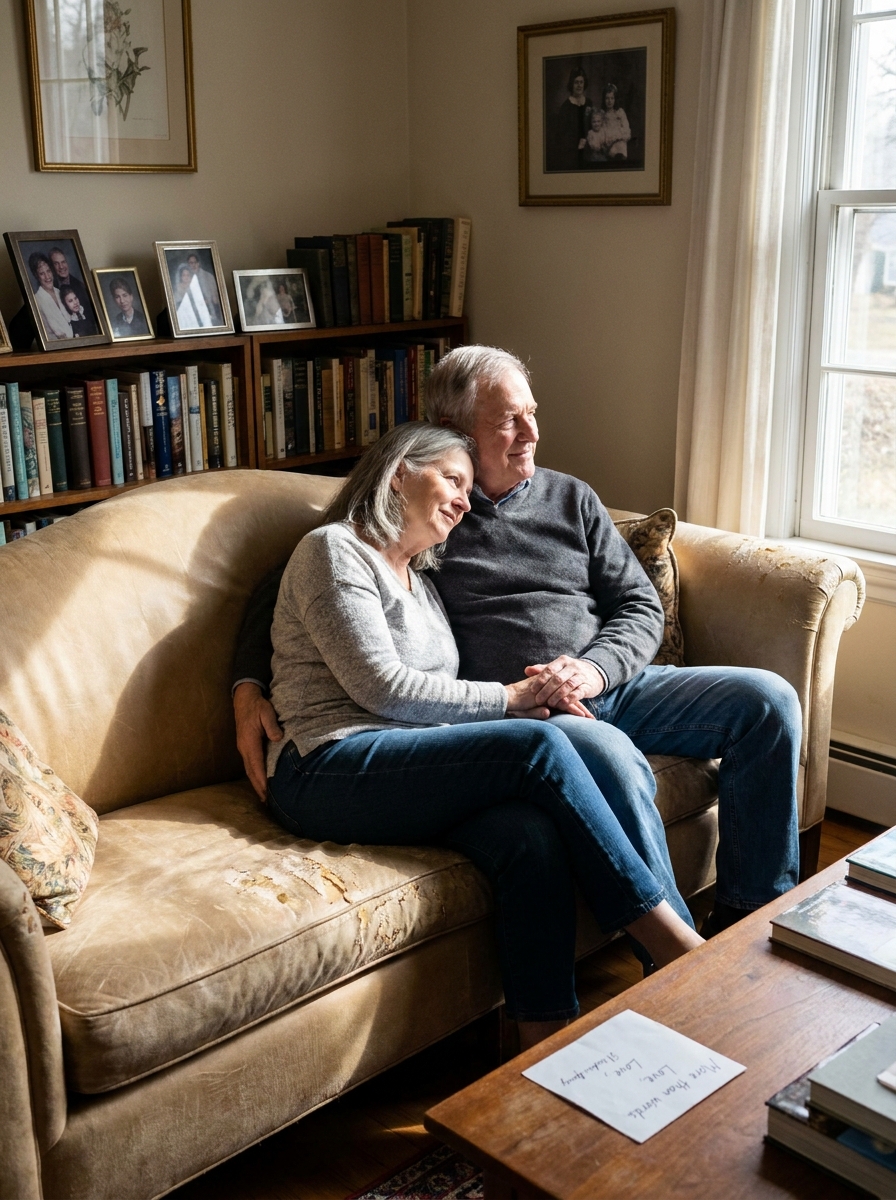
People often think the hardest part of marriage is the big thing—the betrayal, the shouting, the dramatic moment when one person walks out and the other is left staring at a closed door. But in real life, for many couples, it is not one explosion that shakes the foundation. It is the quiet. It is the routine. It is the slow fading of warmth in the small places where love used to live. That was what happened to us. My spouse and I did not wake up one morning hating each other. We simply became tired in the same house, passing each other like workers on different shifts, carrying invisible burdens neither of us knew how to name.
When we first got married, everything felt simple, even when it was difficult. We were not rich, not especially organized, and definitely not the kind of couple who had it all figured out. But there was tenderness in our chaos. We could laugh over burnt dinners, stay up late talking about impossible dreams, and hold each other through the uncertainty of starting a life together. Back then, love felt visible. It sounded like long conversations, looked like spontaneous hugs in the kitchen, and lived in the way we reached for each other without thinking. I believed that kind of closeness would always come naturally if two people truly loved one another.
Then real life arrived the way it does for most married people—not all at once, but steadily. Bills grew. Responsibilities multiplied. Work followed us home. Family pressures crept into weekends. Stress settled into our bodies and made us less patient, less present, less gentle. We still loved each other, but love began competing with deadlines, exhaustion, laundry, dishes, appointments, and the thousand small interruptions that adulthood places between two people sharing the same life. We were no longer newlyweds looking at each other with wonder. We were two adults trying to survive the week.
At first, I told myself it was just a season. Every marriage goes through dry periods, I thought. Every spouse becomes distracted sometimes. But what unsettled me was not only the distance; it was how ordinary it started to feel. We stopped sitting together after dinner. We stopped asking deeper questions. Our conversations became logistical: Did you pay that bill? Can you pick this up? What time is your meeting? Did you call your mother? We became efficient partners, but emotionally we were fading. The home still functioned, but the relationship inside it felt as if it were slowly running out of air.
The moment that hurt me most was not dramatic enough to make a good story if you told it quickly. One evening, as my spouse was heading to bed early after a long day, I said, “Love you.” There was a pause, then a tired “Mm-hmm.” It was small. Barely noticeable. But I noticed. I noticed because once upon a time those words came back instantly, warmly, almost playfully. That night they did not. I stood alone in the kitchen staring at the half-cleaned counter, feeling foolish for how much two missing words could sting. But in marriage, the smallest things often carry the biggest meaning.
After that, I became more aware of everything. The lack of eye contact. The distracted nods. The way our hugs became brief and absent-minded. The way my spouse scrolled through a phone while I spoke. The way I, too, had started holding back because rejection in marriage cuts differently from any other kind. When the person who once felt safest becomes emotionally far away, it creates a loneliness that is hard to explain. You are not alone, yet you feel unseen. You are chosen, yet you feel unclaimed. You are married, yet your heart quietly asks whether you still matter the way you once did.
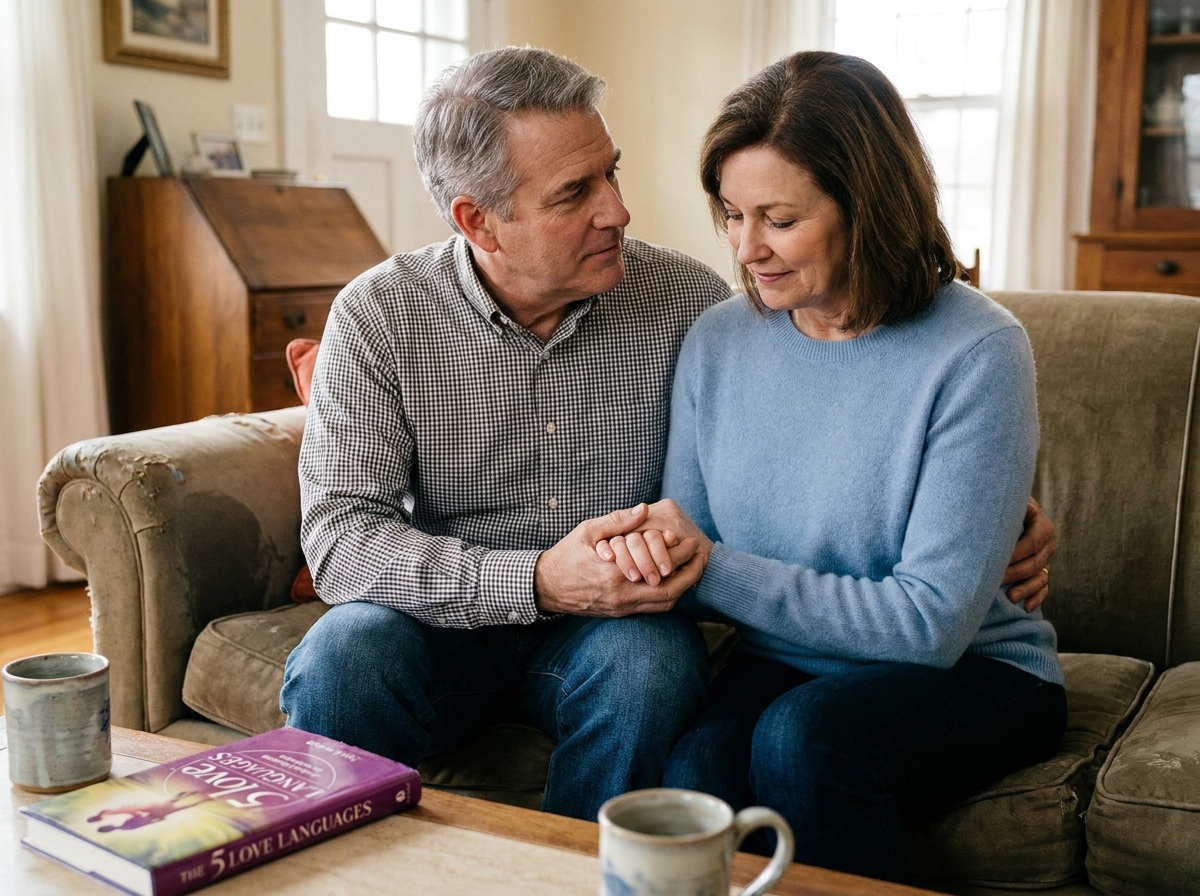
I wish I could say I handled that season with maturity and grace, but the truth is I became reactive. I took things personally. I made sharp comments disguised as jokes. I kept score in my head. If I was the one always initiating affection, I stopped. If I was the one asking questions, I grew silent. I wanted my spouse to notice my pain without me having to expose it. Like many people in real marriages, I wanted to be understood without the discomfort of being vulnerable. Instead of saying, “I miss you,” I became cold. Instead of saying, “I feel hurt,” I became critical. Distance on one side began producing distance on the other.
One night, after a pointless argument over something neither of us will probably remember for the rest of our lives, I sat in the bathroom and cried quietly so no one would hear me. I was not crying because of the argument itself. I was crying because I suddenly realized I was grieving a version of us that I did not know how to get back. It is a strange thing to mourn a marriage that still exists. The photos are still on the wall. The rings are still on your hands. The schedule is still shared. But something precious feels missing, and you start wondering whether this is just what long-term relationships become if you stay in them long enough.
The next morning, I expected more silence, maybe lingering tension, maybe another day of emotional avoidance. Instead, my spouse walked into the kitchen, looked more tired than angry, and asked, “Are we okay?” I almost said yes out of habit. Many spouses do. We learn to protect the structure even when the inside is breaking. But something in me was too exhausted to pretend. So I said, “I don’t think we are.” That sentence changed everything—not instantly, not magically, but honestly. For the first time in a long time, we stopped discussing our schedule and started discussing our marriage.
What came out in that conversation surprised me. My spouse did not say, “I stopped caring.” My spouse said, “I’m overwhelmed all the time and I feel like I’m failing at everything.” Then more came. Work pressure. Financial fear. Emotional burnout. The crushing belief that there was never enough energy left to be fully present for anyone. I had interpreted distance as rejection. My spouse had been experiencing it as survival. That did not erase my hurt, but it gave it context. And context matters in marriage, because when we do not know what is happening inside the other person, we tend to create stories that protect our fear rather than reveal the truth.
Then it was my turn. I admitted I felt invisible. I admitted the silence had made me question whether I was still loved. I admitted I had been acting angry because I was heartbroken. There is something deeply humbling about telling your spouse, the person closest to you, that you have been hurting in ways you hid behind irritation. It strips away performance. It removes pride. It leaves only the fragile truth: I still need you, and I am afraid you no longer need me. That is not an easy sentence to live inside, but many real marriages carry it unspoken for years.
We did not fix everything in one conversation. Real life is rarely that neat. But we did something more important: we stopped pretending the problem was only the dishes, only the schedules, only the stress, only the attitude. We acknowledged that our marriage had been running on maintenance instead of connection. We were operating like a team, but not nurturing the bond that made us a couple. A spouse can help carry a household and still feel emotionally far away. Marriage needs more than shared responsibilities. It needs intentional closeness, especially when life becomes heavy.

So we started small. Not romantic-movie small. Real-life small. We put our phones down for twenty minutes each night and sat together, even if we had nothing profound to say. We asked one real question a day instead of assuming we already knew each other’s answers. We stopped using only task-based language. We began saying thank you again—for ordinary things, for invisible efforts, for surviving hard days. Gratitude felt awkward at first because resentment had become more fluent. But repeated appreciation softened the atmosphere of our home in ways I had not expected.
One of the most healing changes was learning how differently we each gave and received love. I had been longing for verbal reassurance and emotional presence. My spouse had been trying to show love through work, provision, and quiet acts of responsibility. Neither of us was wrong, but both of us were missing each other. That is one of the most painful truths in marriage: two people can love sincerely and still leave each other feeling unloved if they are not paying attention to how love is being translated. A spouse may be speaking devotion through effort while the other is starving for affection, and both can end up wondering why nothing feels enough.
There were setbacks, of course. Some weeks we slipped into old patterns. Some conversations ended in frustration instead of clarity. Some apologies came later than they should have. Healing in marriage is rarely linear because the same tiredness, triggers, habits, and fears do not disappear just because a couple has one honest breakthrough. But once we had named the real problem, we could recognize it when it returned. We became less likely to attack each other and more likely to ask, “What is really going on here?” That question saved us more than once.
I also had to face my own unrealistic expectations about marriage. Somewhere along the way, I had quietly started believing that if love were real, it should remain emotionally effortless. But real-life marriage is not sustained by constant feelings. It is sustained by daily choices, repeated mercy, emotional honesty, and the willingness to keep turning toward each other when it would be easier to shut down. Romance may begin with chemistry, but long-term love survives through discipline. Not cold duty—living, deliberate care. A spouse is not meant to be a mind reader. Love matures when both people learn to speak clearly instead of waiting resentfully to be discovered.
What surprised me most was that the return of closeness did not look exactly like the beginning of our relationship. It looked deeper. Less spark, maybe, but more steadiness. Less performance, more truth. We were no longer in love with a fantasy of each other. We were learning how to love the tired, flawed, stressed, imperfect real person standing in front of us. There is a beauty in that stage of marriage that younger versions of ourselves could not have understood. When a spouse sees your worst season and still chooses to stay emotionally present, the love becomes quieter but more trustworthy.
I began noticing small changes that would have seemed insignificant to anyone outside our marriage. The way my spouse now stopped in the doorway before leaving for work just to kiss my forehead. The way I was greeted with full attention instead of distracted nodding. The way we laughed again over things that were not even very funny. The way “How was your day?” started sounding sincere instead of automatic. Those moments mattered because they were evidence that emotional distance is not always the end of a marriage. Sometimes it is the warning that forces two people to finally tell the truth.
There is a dangerous myth that good marriages do not struggle this way. That myth keeps too many spouses ashamed, silent, and isolated. The truth is that many real-life couples go through seasons where they feel more like roommates than lovers, more like managers than companions. The issue is not whether that season comes. The issue is whether both people are willing to acknowledge it before numbness becomes normal. Silence can become a habit in marriage, and habits are hard to break. But honesty, even late honesty, can reopen doors that pride kept shut.
I do not share this story because I think every marriage can or should be repaired the same way. Real life is more complicated than that. Some relationships involve deeper harm, repeated betrayal, abuse, or patterns that require stronger boundaries and outside intervention. But in our case, the distance was not caused by a lack of love. It was caused by unspoken pain, unmanaged stress, emotional neglect, and the slow erosion that happens when spouses keep functioning without connecting. What saved us was not perfection. It was willingness. Willingness to listen. Willingness to admit hurt. Willingness to stop defending long enough to understand.
If there is one lesson I carry from that season, it is this: love in marriage does not disappear all at once. It gets buried. Under fatigue. Under pride. Under routine. Under the assumption that tomorrow will be easier, that next week will be calmer, that after this stressful season we will come back to each other. But relationships rarely heal on leftover time. A spouse cannot thrive forever on emotional scraps. Connection needs intention. Tenderness needs practice. Words need to be spoken while there is still enough softness left to hear them.
Today, our marriage is not flawless, but it is real in a way it was not before. We are quicker to notice when one of us is withdrawing. We are less impressed by pretending. We know that affection is not childish, reassurance is not unnecessary, and emotional presence is not optional. We have learned that saying “I love you” matters, but so does making eye contact when you say it. So does pausing long enough to mean it. So does living in a way that proves the words still have weight.
Sometimes I think back to that evening in the kitchen, the one where my “Love you” was met with a distracted sound instead of a response. At the time, it felt like proof that something beautiful was dying. Now I see it differently. It was a signal. A painful one, yes, but also an honest one. It forced me to stop pretending that quiet disconnection was normal. It forced both of us to look at the truth of our marriage before the distance became permanent. In that sense, the moment that frightened me most may have been the moment that saved us.
Real love between spouses is not always loud. It is not always cinematic, fluent, or easy. Sometimes it looks like two exhausted people choosing not to give up on the conversation. Sometimes it looks like apology after pride. Sometimes it looks like relearning how to be gentle in a house that has become too practical. And sometimes it looks like discovering, after a long season of emptiness, that what you thought was the end was actually an invitation—to love each other better, more honestly, and more fully than before.
That is the version of marriage I believe in now. Not the polished one. Not the effortless one. The real-life one. The kind where a spouse can be wounded and still willing, tired and still tender, imperfect and still committed. The kind where love is not proven by never struggling, but by refusing to let struggle speak the final word. And if there is hope in our story, it is this: even when closeness has faded, even when the house feels emotionally cold, even when two people have forgotten how to reach each other, it is still possible to begin again—one truth, one conversation, one gentle choice at a time.