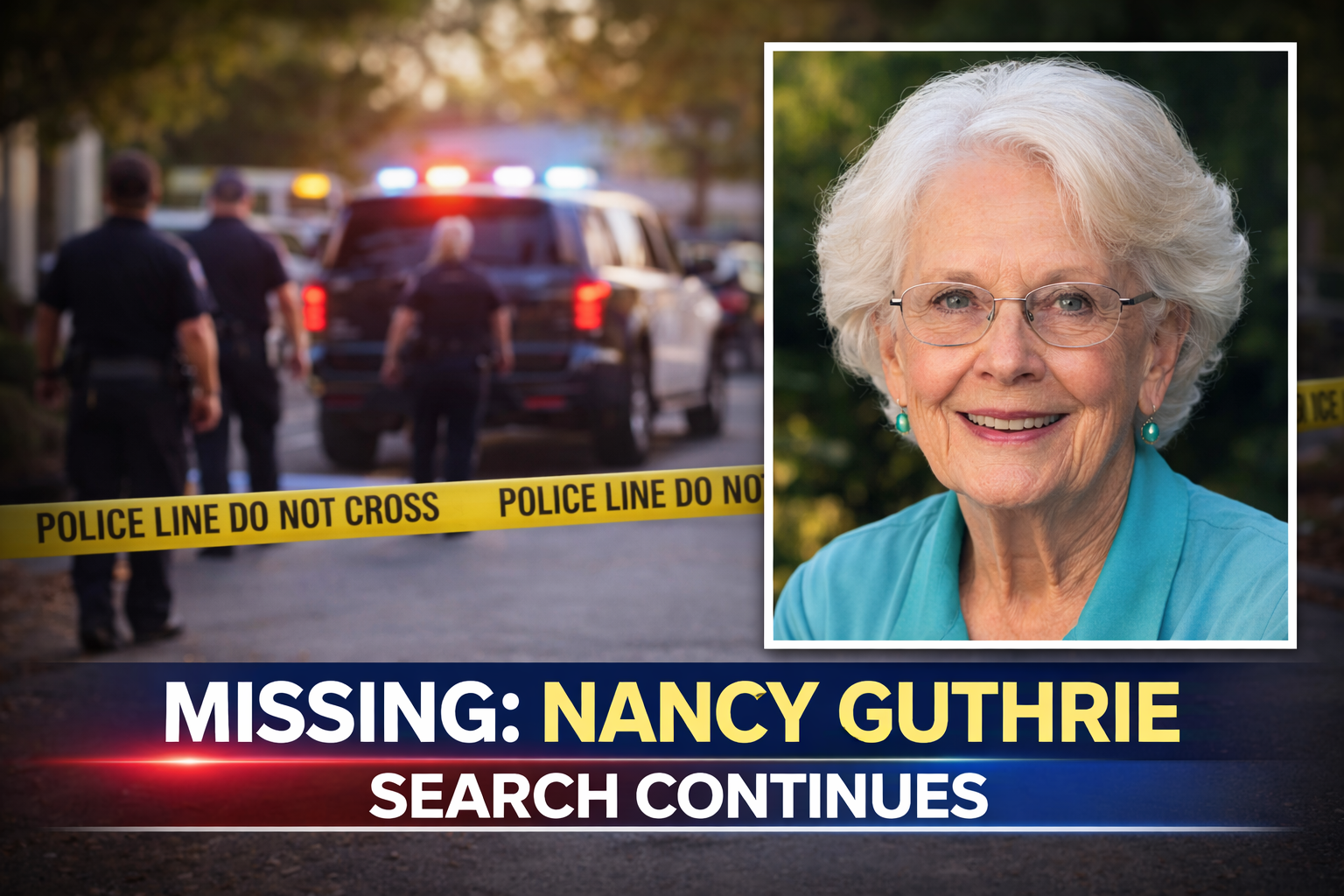
The biggest development over the latest seven days is not a breakthrough arrest, but a renewed public push: Nancy Guthrie’s family has intensified its appeal for information, Savannah Guthrie has given her first extended television interview since her mother’s disappearance, and investigators have continued to emphasize that the case remains active even though no suspect has been publicly identified. Authorities still believe Nancy Guthrie, 84, was taken against her will from her Catalina Foothills home near Tucson, and the FBI reward of up to $100,000 remains in place alongside the family’s separate $1 million reward.
It is also important to separate older developments from newer ones. The Walmart-backpack lead you quoted is real, but it is not part of the newest seven-day window. That reporting traces to mid-February, when investigators said the suspect’s 25-liter Ozark Trail Hiker Pack was definitively identified and that Walmart was being consulted because the backpack is exclusive to that retailer. In the past week, the public-facing updates have centered much more on appeals, timeline clarification, and safeguarding the public from scams than on any newly announced forensic breakthrough.
March 26: The most prominent update came Thursday, when Savannah Guthrie’s first major interview about the case aired on NBC’s “Today.” In that appearance, she described the family’s ordeal in stark personal terms and said someone “needs to do the right thing” and come forward. She also spoke about the pain of the uncertainty itself, making clear that the family is still living between hope and dread as the investigation nears two months without a public arrest. AP, The Washington Post, and other outlets all framed the interview as Savannah’s first detailed public account since the disappearance.
In the same interview cycle, Savannah revealed that her family quickly moved from fearing a medical emergency to fearing an abduction once they learned Nancy’s phone and purse had been left behind, doors were open, blood was found outside, and the home camera had been removed or tampered with. She said her brother was the first to voice the fear that it might be a kidnapping for ransom, and she acknowledged that the family has received numerous ransom-related messages, though only a small number were viewed as possibly credible. Those remarks did not change the official case posture, but they did add fresh detail to the family’s understanding of the early hours after Nancy vanished.
Also on March 26, Savannah spoke emotionally about the possibility that her own public profile may have made her mother a target. That is not an official law-enforcement conclusion, and authorities have not publicly confirmed a motive, but the interview drew national attention because it underscored one of the fears the family has privately wrestled with since early February. At the same time, Savannah forcefully rejected online conspiracy theories suggesting the family was involved, calling those rumors deeply cruel as investigators continue to ask the public for legitimate tips.
March 25: A separate development came from Sheriff Chris Nanos, who warned the public about fake fundraising efforts claiming to support the search. Nanos said no official GoFundMe or similar public fundraiser had been authorized and specifically noted that billboard displays tied to the case were being paid for through official channels. That warning matters because the case has attracted broad sympathy and national visibility, creating openings for scammers to exploit the public’s concern.
March 25 also brought more national focus to the human toll of the case. Coverage around Savannah’s upcoming interview emphasized that she had remained largely off-air and had not yet returned to normal duties at “Today,” with colleagues describing her situation as agonizing. While that was not an investigative milestone, it marked a shift in how the family’s public strategy is being presented: less focused on speculation, more focused on preserving attention, encouraging tips, and pushing back against misinformation.
March 24: Public reporting this week also sharpened attention on the Jan. 11 date that investigators have repeatedly asked residents to think about. Sheriff Nanos clarified that law enforcement expanded its request for surveillance because the timestamp on a key image could not be independently confirmed, not because investigators had definitively proven the suspect was at the home on Jan. 11. Even so, the sheriff said authorities still believe “something occurred” on that date or around it, which is why Jan. 11 remains one of the dates residents are being asked to revisit in their memories, messages, and camera footage.
That clarification is significant because it shows the investigation is still actively refining its timeline rather than closing off avenues. In practical terms, investigators are asking the public to think more broadly, not less broadly: not only about Jan. 31 into Feb. 1, when Nancy is believed to have been taken, but also about the earlier January window that may help determine whether the home or neighborhood had been scouted in advance. So far, officials still have not publicly identified a suspect, motive, or vehicle tied conclusively to the crime.
March 23: Over the weekend, Savannah Guthrie amplified a message of hope and persistence as the search entered its seventh week. Reports described her continuing to lean publicly on faith while also thanking the Tucson community for its support. The family’s messaging in this period has been notably disciplined: they are urging compassion, asking people not to dismiss small details, and stressing that even seemingly minor observations from late January or early February could still matter.
The same phase of coverage also reinforced that investigators believe the abduction was targeted, although officials have declined to explain what evidence supports that assessment. That leaves an unusual situation in which law enforcement appears to have some internal theory about why Nancy was taken, but has chosen not to disclose it publicly. For the public, the practical takeaway is unchanged: investigators still want footage, memories, and tips, not internet speculation.
March 22: The clearest documented public appeal of the week came when the Guthrie family released a renewed statement urging neighbors, friends, and Tucson-area residents to revisit anything they may have seen, saved, or discussed around Jan. 11, Jan. 31, and Feb. 1. In AP’s report, the family said someone in Tucson or southern Arizona may “hold the key” to resolving the case and specifically asked people to review camera footage, journal notes, text messages, observations, and conversations.
That statement also stood out for its emotional candor. The family acknowledged publicly that Nancy may no longer be alive, while also saying they cannot yet properly grieve because they still do not know what happened. It was one of the starkest indications in recent days that the family is trying to balance hope for recovery with the harsh realities of a long-running abduction investigation.
Even with that painful acknowledgment, the family did not retreat from its public campaign. Instead, it sharpened it. The reward remains in place, the call for information remains broad, and the message to the community is that no detail is too small. That is consistent with how investigators and missing-person experts often treat stalled cases: a single overlooked detail, especially from privately held surveillance or an old conversation, can suddenly become pivotal when matched with existing evidence.
March 21: Around the close of the week’s first half, coverage also focused on Savannah Guthrie’s partial return to public communication. People reported that she posted on social media for the first time in nearly three weeks, signaling both gratitude for support and continued engagement with the effort to keep Nancy’s case visible. That post did not include new evidence, but it showed the family was still carefully managing public attention while Savannah remained off-air for much of this period.
That same reporting again emphasized the rewards now attached to the case and the sheriff’s view that the abduction was likely targeted. It also showed that, despite the weeks that have passed, the family is still trying to sustain national visibility rather than allowing the story to fade into the background. In many investigations, that kind of continued attention can help generate second-wave tips from people who at first thought what they knew was unimportant.
March 20: By the start of this seven-day window, the investigation had clearly entered a slower, more methodical phase in public view. There were no announced arrests, no newly named suspects, and no confirmed break from forensic testing released during this period. Instead, the emphasis was on maintaining pressure: keep tips coming, preserve awareness, and continue to sift through old and new information. That slower tempo can be frustrating publicly, but it often reflects the reality of major investigations that rely on video analysis, digital review, and corroboration before police say more.
What has remained consistent across the week is the official baseline of the case. The FBI says Nancy was last seen at her Catalina Foothills residence on the evening of Jan. 31. She is considered a vulnerable adult with difficulty walking, a pacemaker, and a need for daily medication for a heart condition. The bureau has also said video shows an armed individual apparently tampering with the front-door camera on the morning of her disappearance and continues to seek help identifying that person.
The family’s reward and the FBI reward together mean the case is still being pushed aggressively in public, but the absence of a named suspect after nearly two months is striking. At the same time, authorities have not suggested the investigation has gone cold. The opposite is true: every major update this week has carried the same message that the case is active, that tips are still being evaluated, and that investigators believe community-held information could still unlock it.
So, the most accurate professional summary of the last seven days is this: the search for Nancy Guthrie remains unresolved, but public messaging has intensified rather than faded. March 26 brought Savannah Guthrie’s most emotional and detailed public interview yet. March 25 brought a sheriff’s fraud warning. March 24 brought clarification about the expanded surveillance timeline and the continuing relevance of Jan. 11. March 22 and 23 brought the family’s strongest renewed appeal to Tucson-area residents. What the week did not bring was the one thing everyone is still waiting for: a public identification of the person responsible.
For now, the newest reporting points to a case that is still very much alive in investigative terms, even if the publicly visible breakthroughs remain limited. The family is asking people to think backward through old footage and memories, law enforcement is warning the public against exploitation and rumor, and the central facts remain painfully unchanged: Nancy Guthrie is still missing, officials still believe she was taken against her will, and the investigation is still searching for the person behind it.