My mother was seventy-two when I made her leave the house she had lived in for more than forty years.
I told myself it was practical. My father had left the house to me anyway, and with three growing children squeezed into two bedrooms, I kept repeating the same excuse: We need the space. I said it so often that it stopped sounding cruel in my own head.
My mother did not argue.
That was the part that should have warned me. She did not cry, did not beg, did not remind me that every corner of that house still held her fingerprints. She just stood in the kitchen, folded her hands, and smiled the smallest, saddest smile I had ever seen.
“I will only take my plant with me,” she said.
I remember staring at her, almost irritated by how easy she was making it. I had prepared myself for a fight, for guilt, for tears. Instead, she made me feel like the villain without raising her voice once.
I asked where she wanted to go.
She looked down at her worn slippers and said quietly, “Take me to the least expensive nursing home. I know you don’t earn much, and I don’t want you to spend all your money on your sick mother.”
Even now, those words burn.
Not because she shouted them. Because she didn’t. She offered me mercy I had done nothing to deserve. And I took it.
The nursing home sat at the edge of town beside a cracked parking lot and a chain-link fence with rust curling around the edges. The hallway smelled of bleach, boiled vegetables, and something older—something like resignation. I remember hesitating at the desk for half a second, just long enough to know I should turn around.
But I didn’t.
I carried in her one suitcase with one hand and her potted plant with the other. She walked slowly behind me, one palm pressed to the wall for balance, as if each step was teaching her how to leave her life behind without making a sound.
Her room was small. Narrow bed. Thin curtains. One dented dresser. One chair beside the window.
I set the plant on the sill.
She touched one of its leaves and said, “It will like the light here.”
Something about that nearly broke me, but not enough to stop me from leaving. I kissed her cheek, promised I would visit soon, and walked out while she was still smiling, because I could not bear to see what her face might look like after I closed the door.
The first week, I was too busy to visit. School schedules, work, groceries, bills, soccer practice, laundry. The normal noise of life made it easy to postpone discomfort. By the second week, the guilt had settled into a dull ache, but I kept telling myself she was being cared for.
Then I visited on day eighteen.
She looked smaller.
That is the only way I can explain it. Smaller, as if loneliness had weight and was pressing her down into herself. She still smiled when I entered. She always smiled. She asked about the children before I asked about her. She lied and said the food was fine. She lied and said the staff was kind. She lied the way mothers do when they decide protecting their child matters more than telling the truth.
On day twenty-six, she coughed the entire time I was there.
I told a nurse, who nodded too quickly and said they were “monitoring it.” My mother squeezed my hand and changed the subject. She asked if the roses outside our old kitchen window had bloomed yet. I said yes, though I had not noticed.
On day thirty-three, I almost did not go.
I was tired. One of my kids had a fever, and my boss had been calling all afternoon. But something twisted in my chest hard enough to send me there anyway. When I entered her room, she was asleep in the chair by the window, the blanket slipping off her knees, the plant resting beside her like a companion that had done a better job of staying than I had.
She woke slowly and smiled again.
“Don’t worry,” she whispered. “I’ve had a beautiful life.”
I laughed awkwardly and told her not to talk like that. She only patted my hand. I noticed then how cold her fingers were.
Forty days after I left her there, I got the call.
The voice on the other end was soft and rehearsed, the kind of voice people use when they have delivered too much bad news. My mother had passed away in her sleep sometime before dawn. Peacefully, they said. As if that word could undo anything.
I do not remember driving there.
I remember signing papers. I remember a cup of stale coffee near the reception desk. I remember being handed her suitcase, lighter than I expected, as if death had weight too. And I remember the plant, waiting on the windowsill in the now-empty room.
“There was a note,” the nurse said.
She handed me a folded piece of paper with my name written on it in my mother’s trembling handwriting. My fingers shook so hard I nearly tore it opening it.
Inside, it said only this:
Search inside the soil.
I stared at the words until they blurred.
At home, I set the plant on my kitchen table. My children were laughing in the other room, arguing over a cartoon, completely unaware that the silence in front of me had become heavier than anything in the house. I pushed my hands into the soil, feeling ridiculous and terrified at the same time.
At first, there was nothing but damp dirt and tangled roots.
Then my fingers struck metal.
I pulled out a small rusted tin wrapped in plastic.
My heart began hammering so hard I could hear it. Inside the tin was a key, several folded documents, and a sealed envelope marked: For my child, when the truth finally hurts enough to matter.
I opened the letter first.
My mother wrote that she had known for years this day might come. She said she never blamed me for being overwhelmed, only for forgetting who had carried me when I was too small to walk alone. She wrote that love can survive humiliation, but it changes shape when it is not returned.
I was crying before I reached the second page.
Then came the part that made my stomach drop.
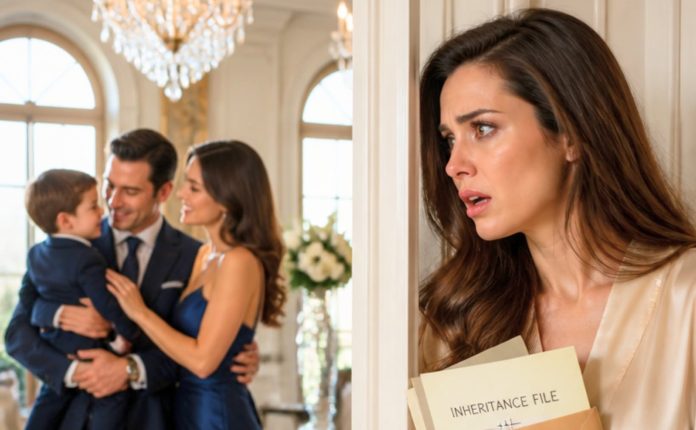
The house had never truly been mine.
Yes, my father had left it to me in his will—but only in trust. My mother explained that he had done so on paper for legal reasons during a business dispute, intending the home to remain hers for as long as she lived. Hidden among the documents in the tin was a notarized letter from my father, written months before he died, stating plainly that the property was never to be used to force her out.
And I had done exactly that.
But the final blow was still waiting.
There was another document beneath the will clarification: the deed to a second property I had never heard of. A small rental house across town, fully paid off. My mother wrote that she and my father had kept it secret for emergencies. She had continued renting it quietly for years, saving every cent after his death.
The account attached to that property contained more money than I had seen in my life.
Enough to care for her in comfort.
Enough to help my children through school.
Enough that she never, ever needed the cheapest nursing home.
She chose it because she knew what kind of person I had become when convenience outweighed love. She wanted to leave me one last gift: the truth, with no place left to hide from it.
At the bottom of the letter, she wrote:
I let you choose for me because I wanted to know whether you still saw me as your mother, or only as a burden standing in the way of your comfort. Now I know. So I leave you the plant, the truth, and one final chance to become someone your children will not fear becoming.
I could not breathe after that.
I looked around my kitchen—the larger kitchen I had justified taking, the house I had claimed in the name of family, the rooms I had told myself were worth her loneliness—and for the first time, it all looked ugly. Not because of the walls. Because of what I had traded to keep them.
The next morning, I drove straight to the cemetery before the ground over her grave had even settled.
I dropped to my knees in the wet grass and apologized to a silence that did not owe me forgiveness. I told her I had been selfish. I told her I had mistaken legal ownership for moral right. I told her I had failed the woman who had once gone hungry so I could eat, stayed awake so I could sleep, and grown old in the shadow of a child who could not make room for her in the home she built.
The wind moved through the trees, but there was no answer.
There should not have been.
Some endings do not offer mercy. Some mistakes do not get repaired with tears and flowers and late understanding. Sometimes the punishment is far simpler and far crueler: you finally see yourself clearly, and the person staring back is someone your mother loved anyway.
I sold the house six months later.
I used part of the hidden money to move my family somewhere smaller, somewhere honest. I donated the rest to improve elder care at that same nursing home, because repentance that costs nothing is only performance. I visit every month. I sit with mothers whose children are too busy, too far away, or too selfish to come. I listen when they talk about gardens, recipes, and sons who used to hold their hands in parking lots.
And the plant?
It still sits by my window.
Alive. Green. Silent.
Every time I water it, I remember the note buried in the soil and the final lesson my mother left me: the cruelest inheritance is not money, property, or shame.
It is the moment you realize the person you abandoned loved you enough to warn you who you were becoming—and you understood it only after she was gone.