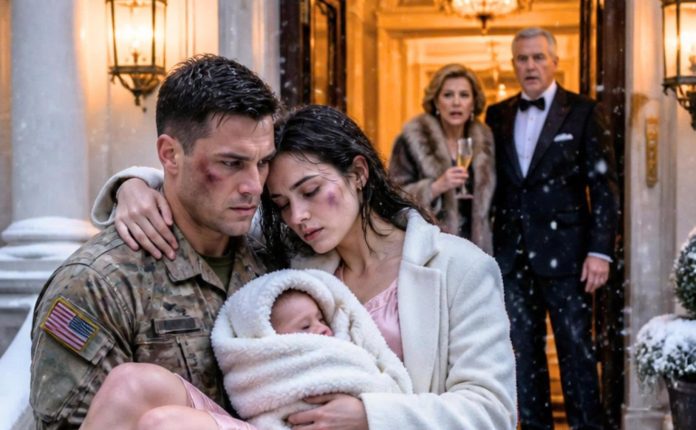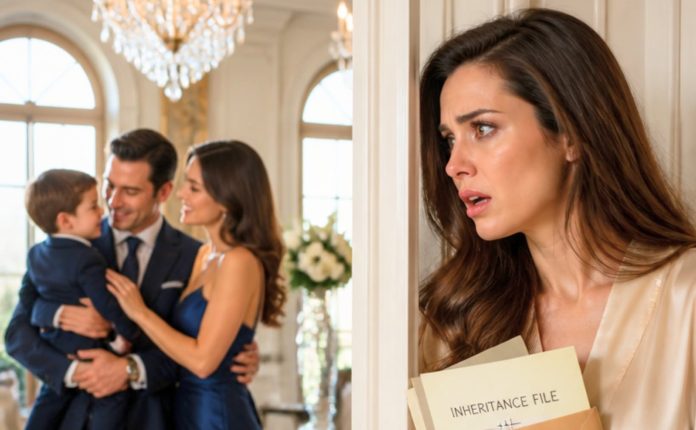
My sister died suddenly, leaving her 7-year-old daughter with nowhere to go. I begged my husband to let us adopt her, but he sneered, “We’re not an orphanage. I’m not feeding a stranger.” My niece was sent into foster care, and I never forgave myself. Fourteen years later, she found us. The moment I opened the door and saw the young woman standing there, my blood ran cold—because in her hands she held a folder that could destroy my marriage forever.
The call came on a Wednesday afternoon while I was folding laundry.
For years afterward, I would remember that detail with painful clarity—the warmth of sun through the kitchen window, the clean smell of detergent, the exact blue sweater I was smoothing flat when the phone rang. Tragedy has a way of pinning itself to ordinary moments, as if the mind needs some harmless object to cling to while everything else falls apart.
When I answered, it was a police officer.
My sister, Lena, had been in an accident. There were words after that, many words, but they blurred together in my memory like rain on glass. Severe. Immediate. No suffering. I remember sitting down hard on the kitchen chair because my knees stopped cooperating. I remember staring at the wall calendar as though if I focused hard enough on the square marked with grocery reminders and a dentist appointment, reality might fail to settle.
My sister was gone.
And just like that, her little girl had no one.
Emily was seven years old, all elbows and solemn eyes and badly cut bangs she insisted on trimming herself. She loved orange popsicles, hated socks with seams, and still slept with a stuffed rabbit whose ears had been chewed thin from years of worry. She was not some abstract responsibility on a social worker’s clipboard. She was my sister’s child. My blood. My family. I had held her the day she was born, tiny and furious and pink-faced, while Lena cried with exhaustion and joy. I had promised, jokingly then, that if Lena ever needed anything, I would always be there.
And when the moment came to prove that promise, I failed.
Not because I didn’t want Emily.
Because my husband wouldn’t let me have her.
At the time, Brian and I had been married nine years. From the outside, we looked solid. Respectable house. Two cars in the driveway. Joint Christmas cards with neat handwriting and matching smiles. We had tried for children early in our marriage and then, quietly, painfully, stopped trying after too many disappointments and too many months measured by hope and blood. We never spoke much about that grief. Instead, we folded it into our lives like people shoving clutter into a closet they do not intend to open again.
I thought—naively, catastrophically—that the emptiness in our house might make him understand.
The night after Lena died, I sat across from him at the dining table, my hands wrapped around a mug of tea gone cold, and told him everything. Emily had no father in the picture. Lena’s apartment lease was ending. Social services needed an immediate placement. There was some distant cousin in another state who had made vague noises about maybe helping eventually, but nothing certain, nothing immediate. They needed family. They needed me.
“Let’s bring her here,” I said. “Please, Brian. She needs us.”
He stared at me in silence for a beat too long.
Then he laughed.
Not because he thought I was joking. Because he thought the idea itself was ridiculous.
“We’re not an orphanage,” he said.
I remember blinking at him, waiting for the rest of the sentence to somehow soften what I had just heard. It did not.
“I’m not feeding a stranger,” he added.
A stranger.
That word entered the room like poison.
I felt my whole body go still. “She’s not a stranger,” I whispered. “She’s my niece.”
“She’s your sister’s kid,” he said, shrugging. “That doesn’t make her mine.”
Grief can sharpen into anger so fast it almost feels like clarity. I pushed back from the table so abruptly my chair scraped the floor. “A seven-year-old girl just lost her mother.”
“And I’m sorry for that,” he replied in the flat, practiced tone of someone performing decency without feeling it. “But that doesn’t mean we blow up our lives because your sister made bad choices.”
I slapped him.
Not hard enough to knock sense into him. No such force exists. But hard enough that his head turned.
The silence afterward was enormous.
He rose slowly, touched his cheek, and looked at me with something colder than outrage. “If you bring that child into this house,” he said, “I will leave.”
That was the moment. The hinge. The fracture line beneath the rest of my life.
People like to imagine moral decisions arrive cleanly. That love makes courage simple. But real life is uglier than that. At that point, I had nowhere to go independently. My name wasn’t on the house. I worked part-time at a florist shop, not enough to support myself and a grieving child overnight. I had no savings worth naming, because Brian handled “the big finances” and I had spent years mistaking control for competence. I told myself I was cornered. I told myself I needed time. I told myself maybe temporary foster care didn’t have to mean forever.
I told myself lies because the truth was unbearable.
Emily was placed with strangers the following week.
I saw her once before it happened, in a pale yellow room at the family services office, her rabbit clutched under one arm and a paper cup of juice untouched beside her. She looked so small in that plastic chair. So alert. Children who have been hurt often grow still in a way that feels older than silence.
“Am I staying with you?” she asked.
That question has lived under my skin for fourteen years.
I opened my mouth.
Nothing came out at first.
Then I knelt in front of her, took her little hands in mine, and said the ugliest thing I have ever said in my life: “Not right now, sweetheart.”
Not right now.
As if time were the problem. As if delay were not its own betrayal.
Her eyes did not fill with tears. That would have been easier to survive. She just nodded once, as if she had understood something final about the world. Then she asked if I could keep Mr. Rabbit safe until she knew where she was going.
I still have that rabbit.
Foster care swallowed her after that.
At first, there were updates. A temporary home. Then another. A caseworker who sounded too tired to lie convincingly. I called, wrote, asked questions, tried to stay involved in every half-allowed way a guilty aunt can. Sometimes I was told visits might confuse things. Sometimes I was told she had moved. Once, when I drove across two counties after hearing she was nearby, I arrived to find out she had been transferred two days earlier.
Eventually, even the scraps stopped coming.
Brian hated every mention of her.
If I brought up Emily at dinner, he would sigh heavily and ask whether I planned to “obsess over this forever.” If I cried, he accused me of punishing him for being practical. Once, in the third year after Lena’s death, I found a small shoebox in the attic containing the birthday cards I had written for Emily and never mailed because I no longer knew where to send them. Brian glanced at them and said, “You need to let that go.”
Let that go.
As if she were not a child with my sister’s face.
As if guilt were a scarf you could simply untie and hang by the door.
Years passed the way guilty years do: quickly on the calendar, slowly in the soul. I grew older inside a marriage that had curdled into habit and quiet contempt. Brian remained respectable to the outside world—helpful neighbor, efficient manager, man who remembered anniversary reservations and donated canned goods at Christmas. But I had seen the center of him when it mattered most, and after that, every kindness he offered felt staged under harsh light.
We never had children.
Somewhere deep down, I think I knew why. Not biology. Not fate. Something in me had closed. Motherhood had once been an ache. After Emily, it became a wound.
Sometimes I would imagine her at twelve, at fifteen, at eighteen. Was she safe? Was she angry? Did she remember the smell of Lena’s shampoo, the shape of our old backyard, the way I used to let her stand on a chair and stir cake batter? Or had all of us been flattened into some blurred pre-foster-care sadness she preferred not to touch?
I thought about her constantly.
I never expected her to come back.
And yet one cold October evening, fourteen years later, she stood on my porch.
I had just taken a casserole out of the oven when the doorbell rang. Brian was in the den watching a game too loudly. The sky outside had already darkened, and the porch light cast that yellowish cone that makes strangers look slightly unreal. I wiped my hands on a towel and opened the door without thinking.
A young woman stood there.
Tall. Thin. Dark coat buttoned to the throat. Hair pulled back. Her face was serious in a way that made beauty almost secondary to presence. For one heartbeat, I didn’t know her. Then something in the eyes—Lena’s eyes, undeniably Lena’s eyes—rose through the years and struck me so hard I had to grab the frame.
Emily.
She was twenty-one now.
No rabbit. No bangs. No child softness left anywhere. But Emily.
I think I said her name, though it came out more breath than sound.
She looked at me without smiling. “Hello, Aunt Claire.”
My blood ran cold.
Not because she had come. Because of what she was holding.
In her hands was a thick folder, the kind lawyers carry or investigators place on conference tables right before lives divide into before and after. The edges were bent from travel, but everything inside looked organized. Labeled. Deliberate.
And suddenly I knew, in that wordless animal way people know disaster before it fully arrives, that whatever was in that folder had not been gathered lightly.
“Can I come in?” she asked.
I stepped aside immediately.
Brian appeared in the hallway when he heard voices, remote still in one hand. He stopped dead the moment he saw her. The color drained from his face with such speed it was almost theatrical.
Emily noticed.
Of course she noticed.
Her gaze slid to him for half a second, and in that half second something passed between them that made my stomach drop even further. Recognition? Fear? No—fear, definitely fear, but not hers.
His.
“Who is this?” he asked, too fast.
Emily turned back to me. “I’m your sister’s daughter,” she said. Then, without looking at Brian, she added, “Though I think your husband already knows exactly who I am.”
The room changed temperature.
Brian recovered just enough to scoff. “I have no idea what that means.”
Emily held up the folder. “That’s okay,” she said. “I brought paperwork.”
My hands began to shake.
We sat in the living room, though “sat” suggests calm, and there was none. Brian remained standing near the mantel as if proximity to an exit might help him. I took the armchair opposite Emily and could not stop staring at her face, collecting pieces of my sister in the set of her mouth, the line of her jaw, the way she held herself when she was bracing against vulnerability.
She placed the folder on the coffee table.
Inside were copies of court requests, foster records, a private investigator’s report, and several sealed envelopes. At the top sat a recent DNA test.
Emily pushed it toward me first.
I unfolded it.
My eyes found the words before my mind could brace for them.
Probability of paternity: 99.98%
I looked up at her.
Then at Brian.
Then back at the paper.
The room tilted.
“What is this?” I whispered, though I already knew.
Emily’s voice remained terrifyingly steady. “It means your husband is my biological father.”
The sound I made did not feel human.
Brian started talking immediately—too loudly, too quickly, reaching for outrage as guilty men often do when the facts arrive before their excuses. “This is insane. She’s lying. This is some kind of scam—”
“She’s not lying,” I said.
I don’t know how I knew so fast. Maybe because his face had already confessed before the paper did. Maybe because memory, once given a key, starts throwing open locked rooms.
Brian had known Lena.
Of course he had.
She and I were three years apart, close enough that anyone who knew me well knew her too. Back then, before her life unraveled into instability and bad men and too much pride to ask for help, Lena used to stop by the house from time to time. Not often. Enough. I remembered now the way Brian sometimes insisted on driving her home when she dropped in late. The way he once said she was “wilder than you.” The way Lena, in her last year, stopped coming by entirely and refused to explain why.
Oh my God.
Emily opened another envelope and slid out a photocopy of an old letter. “My mother wrote this before she died,” she said. “I found it years later in a box that had been stored with some of her things. She never mailed it. It was addressed to you.”
My fingers felt numb taking it.
The letter was dated six months before Lena’s accident.
Claire,
If anything ever happens to me, do not let Brian near my daughter. I should have told you sooner, but I was ashamed and afraid you wouldn’t believe me. Emily is his. He came to me when I was drunk and grieving and said all the right things, and afterward he swore it could never happen again. Then when I told him I was pregnant, he offered money if I kept quiet. I took some because I was scared. That is my shame, not yours. But listen carefully: he does not love that child. He only loves not being exposed. If I die, do not trust him with any decision about her. Promise me.
The rest blurred under tears.
I couldn’t breathe.
I looked at Brian, really looked, and every year of my marriage rearranged itself around a new center. The cruelty. The refusal. The disgust at the idea of Emily living under our roof. It had never been about money, inconvenience, or practicality. He wasn’t rejecting a stranger.
He was rejecting evidence.
He had let a seven-year-old girl enter foster care rather than risk her growing up under my nose, where some resemblance, some timing, some careless paperwork might eventually expose him.
“You knew,” I said.
My voice barely rose above a whisper, but it cut through the room harder than a scream.
Brian’s mouth tightened. “Lena was unstable.”
Emily laughed then—a cold, astonished sound full of years I had not witnessed. “That’s what men say when dead women can’t answer.”
He pointed at the letter. “This proves nothing.”
She opened the investigator’s report. “Then there’s the money trail.”
There it was. Copies of bank withdrawals from one of Brian’s old accounts around the time of Lena’s pregnancy. Notes from interviews confirming periodic cash payments. A motel receipt from a town Lena had briefly lived in. And most damning of all, a notarized statement from the retired family lawyer Brian had consulted years earlier—apparently to ask, hypothetically, what obligations existed if a child born outside marriage was never formally acknowledged.
My husband sank onto the sofa as if his bones had given up.
I cannot fully describe what it feels like to watch a marriage die in real time.
People think it is an explosion. Sometimes it is. But sometimes it is quieter and far more terrible: a series of silent recognitions collapsing into place until the person in front of you is no longer the one you thought you married, and perhaps never was.
Emily watched me, not him.
There was anger in her face, yes. But beneath it was something even harder to bear.
Hope.
Not bright hope. Not childish hope. The bruised, cautious kind people bring only when they have already survived being unwanted.
“I didn’t come for money,” she said. “I came because I wanted the truth said out loud at least once in my life.”
I broke then.
I covered my mouth and sobbed so hard my whole body folded around the sound. For Lena. For Emily at seven. For Emily at twenty-one. For the rabbit still in my attic. For myself, because I had spent fourteen years hating my cowardice without understanding the full machinery I had been trapped inside.
“I’m sorry,” I gasped. “I’m so sorry.”
Emily’s face trembled for the first time.
“I know,” she said.
And somehow, that was the most merciful thing anyone could have given me.
Brian tried, briefly, to salvage himself.
He muttered words like mistake and misunderstanding and complicated, as though enough euphemism might reupholster rot. He said Lena had been manipulative. That he panicked. That he hadn’t known what to do. That he thought keeping Emily out of the house had been “best for everyone.” Best for everyone.
I stood up.
“No,” I said.
He looked at me with the weak surprise of a man who has confused silence with surrender for far too long.
“You don’t get to speak for what was best,” I said. “You condemned a child to fourteen years of instability to protect yourself. You let me live with guilt you had engineered. You let me believe I had failed her when you were the reason she was lost to us in the first place.”
He actually started to cry.
I felt nothing.
That surprised me most of all.
Not hatred. Not fury. Just a deep, exhausted emptiness where love had once lived, followed quickly by clarity. The kind that arrives too late to spare you pain but early enough to keep what remains of your life from being wasted.
I told him to leave.
He argued at first—where would he go, this was his house too, we should talk privately, Emily was manipulating emotions—but something in my face must have reached him, because eventually he fell silent. He grabbed his coat with shaking hands and walked out into the cold without another word.
The front door closed.
And for the first time in fourteen years, the house felt honest.
Emily and I sat there for a long while after he left.
Not speaking much. There are revelations so large language becomes clumsy around them. I made tea because that is what women in my family do when the world breaks: we boil water, we find cups, we put our hands around warmth and pray it teaches us how to keep going.
She told me pieces of her life then.
Not everything. Not yet. But enough.
There had been six foster homes. One decent. Two bad. One terrible. A group placement at fifteen. A teacher who helped. A scholarship. Community college first, then university. She was working part-time in a legal aid office now, which explained the folder—neat tabs, labeled sections, dates cross-referenced with almost surgical precision. She had found Lena’s letter at seventeen but waited years before acting because she wanted proof no one could swat away as bitterness.
“I wasn’t going to knock on your door unless I could make him answer for it,” she said.
I looked at this young woman—my sister’s daughter, my husband’s daughter, the child I had failed and the adult who had found me anyway—and felt something break open in me that grief had calcified years ago.
Not absolution. I did not deserve that so easily.
But maybe the beginning of repair.
I went to the attic that night and brought down the rabbit.
Its fur was flattened with age. One ear bent permanently. A seam had split and been badly mended by my own clumsy hand years ago because I could not bear to leave it broken. When I placed it in Emily’s lap, she stared for a long time before touching it.
“You kept him?” she asked.
“Yes.”
Her eyes filled instantly.
It was the first time she looked like the child I remembered.
The divorce was ugly in the logistical sense and simple in the moral one. Brian had no defense that mattered to me anymore. His secrets did not make him mysterious. They made him small. Once the lawyers had the DNA results and Lena’s letter and the timeline of concealed payments, his blustering collapsed into negotiation. He wanted discretion. Of course he did. Men like him always discover the value of privacy right after exposure becomes inevitable.
I did not give him the marriage.
I did not give him my silence either.
As for Emily, we did not become a perfect family overnight. Real life does not heal in one speech or one tearful embrace. Trust, once starved, returns cautiously. There were awkward dinners. Painful questions. Weeks when she pulled away and weeks when I did, both of us overwhelmed by how much had been stolen and how impossible it was to recover lost years cleanly.
But she kept coming back.
And so did I.
Sometimes what survives is not the life you wanted. It is the bond that refuses to die even after abandonment, even after lies, even after fourteen years of distance and the terrible knowledge of what could have been.
My sister died believing she had left her daughter unprotected.
She hadn’t.
Not completely.
She left a letter. A warning. A thread.
And fourteen years later, Emily followed it all the way back to my door, carrying the truth in a folder thick enough to break a marriage and, somehow, make room for something better to begin.