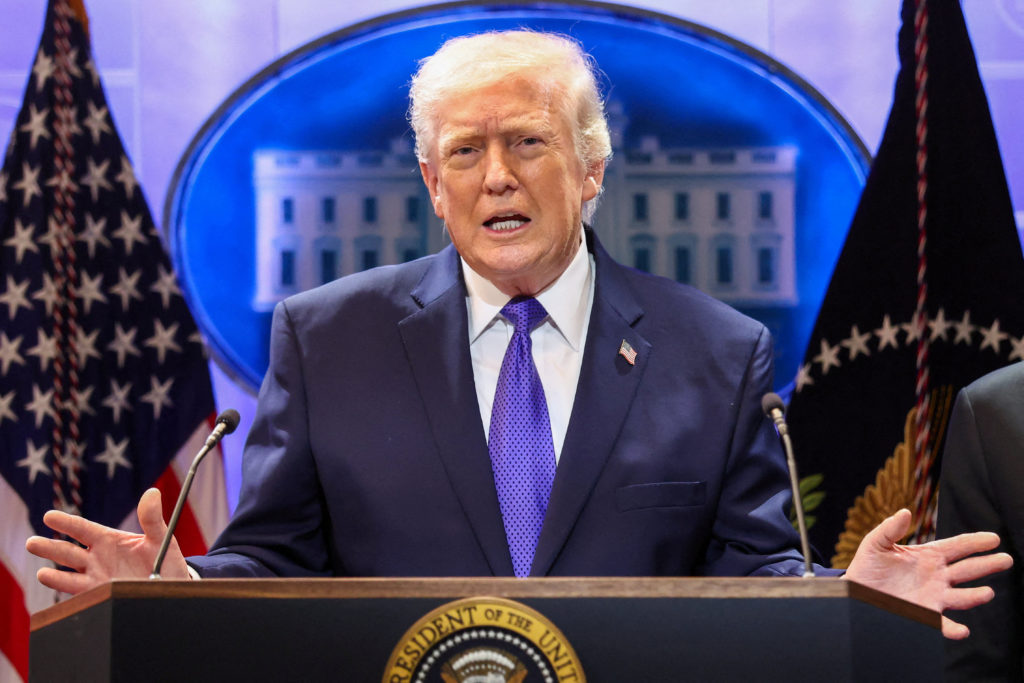
A major reason for that framing is the post–State of the Union coverage. Reuters’ takeaways report says Trump delivered the speech while facing voter frustration over the cost of living and rising tensions abroad, and it emphasizes that his message came at a politically important moment ahead of the midterms. Reuters also notes that, despite Trump’s claims about inflation easing and the economy improving, voters remain uneasy and polling shows weak marks for his handling of the economy.
The clearest “bad news” metric in that coverage is economic approval. Reuters reports that 56% of respondents disapprove of Trump’s handling of the economy, while 36% approve, even as he used the speech to highlight tariffs, lower drug prices, and a stronger market. That gap matters because the economy is typically one of the most important issues for voters, and Reuters says party strategists are worried Republicans could lose control of Congress if inflation and affordability concerns stay front and center.
Another major negative headline comes from a Reuters/Ipsos poll on vaccines and school mandates. Reuters reports that 84% of respondents said vaccines for diseases like measles, mumps and rubella are safe for children, and 74% said healthy children should be required to be vaccinated to attend school. Reuters frames this as a challenge for the Trump administration’s broader health-policy shift, which has been tied to Health Secretary Robert F. Kennedy Jr.’s efforts to change longstanding federal vaccine policy.
That same Reuters poll adds political context that makes the story harder for the administration: only 29% supported reducing the number of recommended vaccines for children, while about two-thirds supported more government action to discourage unhealthy eating. In other words, the poll suggests parts of the administration’s “Make America Healthy Again” agenda may resonate more than others, but the vaccine-related changes are running into broad public resistance.
The pressure is not just in polling — it is also becoming a legal fight. Reuters reports that California and Arizona attorneys general announced a multistate lawsuit, joined by 14 states and Pennsylvania Governor Josh Shapiro, challenging changes to the federal childhood vaccine schedule. Reuters says the lawsuit also targets Kennedy’s replacement of members on the CDC’s Advisory Committee on Immunization Practices (ACIP).
According to Reuters, the challenged CDC schedule removed universal recommendations for several vaccines and instead moved toward what the government calls “shared clinical decision-making,” meaning parents are encouraged to consult healthcare providers case by case. The states argue the changes could lower inoculation rates and increase outbreaks, while HHS called the lawsuit a “publicity stunt” and defended the policy as “common sense.” That combination — public opposition plus an expanding lawsuit — is what gives the Trump news cycle a distinctly negative tone today.
There is also a broader tone problem in recent Reuters polling and coverage. Reuters reported this week that a majority of Americans in a Reuters/Ipsos poll described Trump as having “become erratic with age,” even though the same story noted his approval rating edging up to 40%. That kind of split result is politically tricky: it may not signal immediate collapse, but it adds to a narrative of volatility and unease around his leadership style.
At the same time, Trump is still generating ordinary governing headlines that are not clearly negative. Reuters reported he planned a meeting on overhauling Washington Dulles International Airport, including discussion of the airport’s future as the facility expands after a record passenger year in 2025. That is more of a policy/infrastructure item than a political setback, so it doesn’t erase the tougher poll-and-lawsuit stories — but it does show the day is mixed, not uniformly bad.
So, if your question is “Does Trump have bad news today?” the best answer is: Yes, mostly in terms of political optics and public pushback. The dominant negative stories are about voter dissatisfaction (especially on the economy) and legal/public backlash to vaccine-policy changes, rather than a brand-new personal legal indictment or single explosive revelation. That’s what makes this a rough news day — more of a pressure-building cycle than a one-headline crisis.