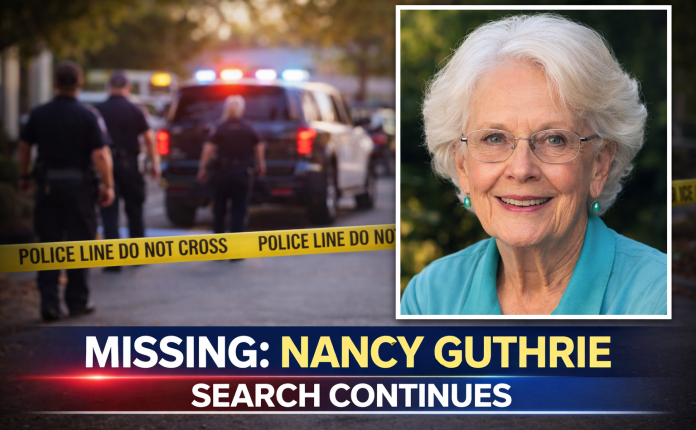
The disappearance of Nancy Guthrie—last known to be at her home in Catalina Foothills, north of Tucson—has moved deeper into a criminal investigation, with authorities publicly emphasizing DNA-focused leads, expanded rewards, and renewed calls for neighborhood video as they try to identify the masked figure seen near her residence.
According to the FBI’s official bulletin, Guthrie was last seen January 31, 2026, and investigators are seeking information that could lead to her location and/or the arrest and conviction of those responsible.

Reward now “over $200,000” when combined
One of the biggest new developments is the dramatic increase in reward money:
-
The FBI is offering up to $100,000 for information leading to Guthrie’s location and/or the arrest and conviction of anyone involved.
-
Separately, 88-CRIME boosted its reward after receiving a $100,000 anonymous donation, bringing its portion to $102,500—which is why many headlines now describe the overall reward as $200,000+ when combined.
Investigators and family members are hoping the higher reward encourages someone with even small details—late-night footage, an unfamiliar vehicle, a suspicious purchase, or a conversation overheard—to come forward.

Forensics update: glove DNA produced “no CODIS hit,” genetic genealogy being explored
Authorities have also disclosed a significant forensic hurdle: DNA recovered from a glove believed relevant to the case did not produce a match in CODIS (the national DNA database used in many criminal investigations).
With no CODIS match, investigators are increasingly looking at investigative genetic genealogy—a method that can sometimes identify a suspect by locating relatives in qualifying DNA databases and building family-tree leads (subject to legal rules and agency policy).
Officials have said biological evidence and DNA profiles are still being analyzed and explored across available options.
Suspect description: what investigators say they’re looking for
In the past week, the FBI released additional details derived from doorbell-camera analysis and related evidence. Public reporting based on law enforcement briefings describes a suspect believed to be a male around 5’9″–5’10”, average build, wearing a mask and gloves, and carrying a black Ozark Trail Hiker Pack backpack (25-liter).
The FBI has also asked residents to share any nearby surveillance footage covering the window around late January and early February, because investigators are still trying to reconstruct movements in and out of the neighborhood.
Local–federal coordination remains central
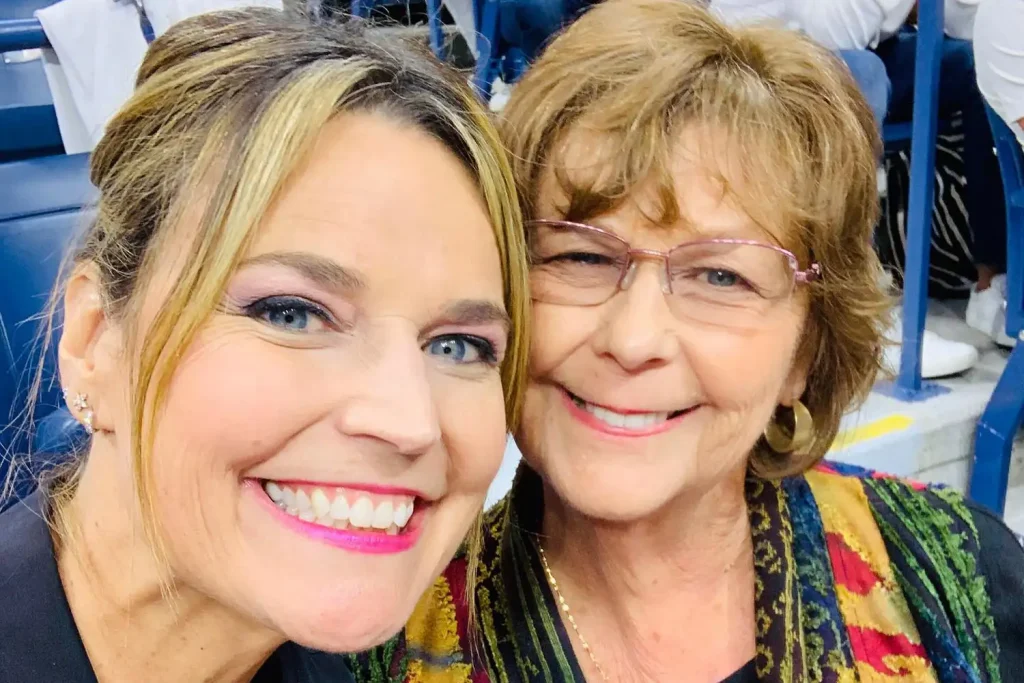
The case is being handled jointly by the Pima County Sheriff’s Office and the FBI, and it has drawn intense public attention, partly because Guthrie is the mother of Savannah Guthrie of Today.
In recent days, public reporting has also highlighted friction over evidence-handling decisions—something Chris Nanos has denied as the investigation continues.
Detentions during searches, but still no arrest
Another notable update: during warrant-related search activity, two people were detained and later released, with no arrest announced and no suspect publicly named.
That leaves the core reality of the case unchanged: no publicly identified suspect and no confirmed public explanation for what happened that night.
“Ransom note” claims: still unverified publicly
You mentioned reports of alleged ransom notes sent to media outlets. At this stage, major coverage continues to treat those messages as unconfirmed in terms of authenticity and connection to the case (law enforcement has not publicly validated them as real or relevant).
In practical terms, investigators and prosecutors typically avoid confirming such communications unless doing so advances the case or helps protect the victim—so the lack of confirmation doesn’t prove they’re fake, but it also means the public should treat them cautiously.
Why investigators say time matters
Authorities have repeatedly emphasized urgency around Guthrie’s well-being and the need for actionable leads quickly. The FBI’s bulletin frames the case as a disappearance requiring public assistance and offers direct tip channels for information.
If you’re in the Tucson area, the most useful information is often surprisingly simple:
-
any camera footage of a person on foot late at night,
-
a vehicle stopping briefly or turning around,
-
a backpack/mask/gloves matching the released descriptions,
-
suspicious disposal of clothing or items,
-
or someone suddenly leaving town, changing routines, or talking about the case in a revealing way.
Where the case stands today
As of Feb. 20, 2026, the investigation is in a phase where:
-
the reward has escalated to over $200,000 combined,
-
the most promising physical lead—DNA—has not matched CODIS,
-
and detectives are expanding options such as genetic genealogy while continuing to process tips and video.
If you want, tell me whether you’d like this rewritten in a more emotional/viral “human-interest” style (like your story articles) or kept as a straight news brief—I can reshape it either way without changing the facts.