I hadn’t spoken to my father in 11 years.
Not a call.
Not a text.
Not even a birthday card.
The silence between us wasn’t accidental—it was built slowly, brick by brick, after my parents’ divorce.
When I was younger, I blamed him for everything.
I blamed him for leaving.
For choosing a new life.
For moving across the country like we were nothing but an old chapter he could close and forget.
He blamed me too.
Or maybe he didn’t blame me… maybe he just didn’t know how to reach me anymore.
All I knew was that the last conversation we ever had turned into a shouting match. It ended with slammed doors, tears, and words that should never be said between a father and a child.
After that, we stopped trying.
At first, it felt temporary.
I told myself we’d talk again eventually.
That time would soften the anger.
That one of us would call when we were ready.
But time doesn’t heal what pride refuses to touch.
Years passed.
I finished school.
I built my own life.
I got a job, friends, responsibilities… distractions.
And even though his name sometimes came up in my mind late at night, I always pushed it away.
Because admitting I missed him felt like betraying my younger self.
Then one morning, my phone rang.
It was an unfamiliar number.
I almost didn’t answer.
But something inside me made me pick up.
A calm voice spoke on the other end.
“Hello… is this Emily?” the woman asked.
“Yes.”
“This is Mercy General Hospital. Your father has been admitted. He’s very sick, and he’s asking for you.”
My heart stopped.
For a moment, I couldn’t breathe.
I hadn’t heard anyone say the words your father out loud in years.
The nurse continued, “He’s asking to see you as soon as possible.”
I stared at the wall, frozen.
A hundred emotions hit me at once—anger, confusion, guilt, fear… and something else I didn’t want to admit.
Hope.
I swallowed hard.
“I… I’ll come soon,” I said.
And I meant it.
I really did.
But life was busy.
Work deadlines.
Bills.
A project I couldn’t delay.
A meeting I convinced myself I couldn’t miss.
And if I’m being honest…
I was scared.
Scared that I’d walk into that room and see a stranger.
Scared he’d apologize and I wouldn’t know what to say.
Scared he wouldn’t apologize at all.
So I waited.
I told myself I’d go the next day.
But the next day turned into another day.
And then, two days later, my phone rang again.
The same number.
This time, the nurse’s voice was quieter.
“I’m sorry,” she said. “Your father passed away early this morning.”
I dropped my phone.
The world went silent.
I sat down on the floor without even realizing it.
He was gone.
And the last thing I ever told him was… soon.
I went to his funeral in a daze.
I expected to feel nothing.
I expected to feel relief.
But when I walked into the chapel and saw the closed casket, something inside me cracked.
Because suddenly, it hit me:
There would be no more chances.
No “one day.”
No “when I’m ready.”
No “later.”
Just… never.
I sat in the back row, away from everyone.
I didn’t know most of the people there.
They were his friends, coworkers, neighbors… people who had shared pieces of his life while I stayed absent.
I listened as the pastor spoke about what a hardworking man he was.
How he loved deeply, even if he didn’t always know how to show it.
I kept my eyes down the whole time.
I didn’t want anyone to see me crying, because I didn’t think I deserved to.
After the service ended, I was about to leave quickly—before anyone could stop me—when a nurse approached me.
She looked familiar.
It was the same nurse who had called me.
“Emily?” she asked gently.
I nodded.
She held out a phone.
“This was your father’s,” she said. “He asked me to give it to you.”
I stared at it.
The device looked ordinary.
Just a simple phone.
But suddenly it felt heavier than anything I’d ever held.
“He kept asking for you,” she continued. “Even when he couldn’t speak clearly, he kept saying your name.”
My throat tightened.
I didn’t know what to say.
The nurse hesitated, then added softly:
“He typed something… but he never sent it.”
My eyes snapped up.
“What do you mean?”
She pointed to the screen.
“He asked me to make sure it stayed there. He said, ‘Please… don’t let her delete it.’”
My hands began to shake.
I took the phone.
The screen was locked, but she gave me the code.
And when it opened, I saw it.
A draft message.
Unsent.
The date at the top showed it was typed the night before he died.
I sat down in the empty hallway, my heart pounding, and opened it.
The message read:
“Hi sweetheart…
I don’t know if you’ll ever read this. I don’t know if you still hate me.
But I need you to know something before I go.
I was wrong.
I was wrong to leave the way I did. I was wrong to think space would make things easier. I was wrong to let pride keep me silent.
I told myself you were better off without me. That you didn’t need me. That you were happier.
But the truth is… I missed you every day.
Every birthday, I stared at my phone. Every holiday, I wondered if you were okay. Every time I passed a father holding his daughter’s hand, I felt like someone was tearing me apart.
I wanted to call you a thousand times.
But I was afraid you’d answer just to tell me you hated me.
And I deserved that.
I know I failed you. I know I wasn’t the father you needed.
But you were the best thing that ever happened to me.
I kept your childhood photo in my wallet for 11 years. It’s worn out now, but I couldn’t replace it because it was the last version of you that still smiled at me.
I don’t want to die without telling you this:
I love you.
I always loved you.
And if I could redo everything, I would have stayed.
I’m sorry, my beautiful girl.
If you can forgive me… please do.
If you can’t… I understand.
But I want you to live a life full of peace, not anger.
Because I never stopped being proud of you.
Love, Dad.”
I couldn’t breathe.
My vision blurred.
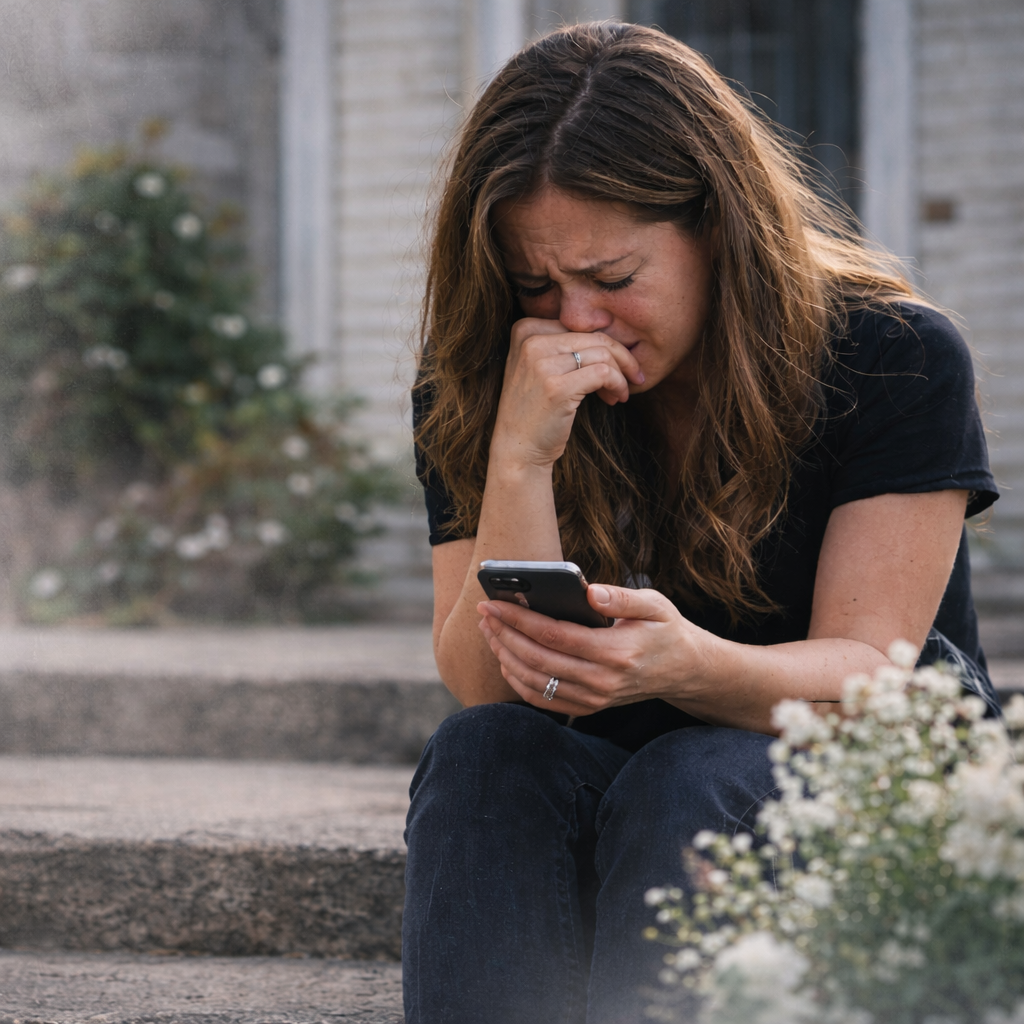
The words on the screen swam as tears poured down my face.
I covered my mouth, trying not to sob out loud, but the sound still escaped me.
I cried harder than I had cried in years.
Not just for him.
For us.
For the years we lost.
For the conversations we never had.
For the love that existed but was buried under pride and pain.
I stared at the phone for a long time, my hands trembling, my chest aching like it had been split open.
And then I noticed something else.
At the bottom of the draft message was a second part.
A sentence he had typed… and then erased.
But the phone still showed it faintly in the “edit history.”
It said:
“I left because I was scared I’d become my father.”
That line destroyed me.
Because suddenly, I understood something I never considered.
Maybe he didn’t leave because he didn’t love me.
Maybe he left because he didn’t believe he was worthy.
And now he was gone.
I stood outside the chapel afterward, holding that phone like it was the last piece of him I had left.
And I whispered into the wind, my voice shaking:
“I’m sorry too, Dad.”
That night, I went home and couldn’t sleep.
I kept rereading his message.
Again and again.
Each time it hit me deeper.
Because it wasn’t just an apology.
It was the love I spent 11 years pretending I didn’t need.
The next morning, I did something I never thought I would do.
I opened the phone, went to the message draft, and hit “Send.”
Not because he could read it.
But because I needed to release it into the world.
Because maybe somewhere—whatever exists beyond death—he would feel it.
And in that message I wrote back:
“I forgive you. I love you too.”
Then I placed the phone beside my bed and cried again.
But this time, the tears felt different.
Not only heavy.
But healing.
Because I realized something important:
Sometimes we don’t get closure through conversations.
Sometimes closure comes from understanding too late…
and choosing to let love win anyway.
And if there’s one thing I learned from that unsent message, it’s this:
Never wait until “soon.”
Because soon isn’t promised.
And the people we love might disappear while we’re still pretending we have time.