I (25M) am currently sitting in a studio apartment that smells like freedom and fried garlic, but according to my entire extended family, I am the devil incarnate. This all started a year ago when my brother, Jack (27M), and his wife, Jill (25F), found out they were pregnant.
At the time, their lease was ending, and the rental market was a nightmare. My parents, in a fit of grandmotherly excitement, invited them to move back into our family home. I was already living there, working a high-stress tech job and saving aggressively for a down payment so I could buy a place of my own within two years. I had a great setup: a large master-style bedroom I’d lived in since high school, which I’d customized with built-in desks and a high-end gaming/workstation.
The day they moved in, the peace died. Before Jack had even finished carrying the first box through the door, he looked at me and asked, “Why haven’t you moved your stuff out of your room yet?”
I was confused—completely blindsided. I asked him what he meant. He told me, with a level of entitlement that still shocks me, that he and Jill would be taking my room because it was bigger and closer to the bathroom, and I would be moving into the tiny guest room downstairs. I refused. I pay a modest rent to my parents; it’s my space. But my parents jumped in immediately. They got mad, we got into a massive, screaming fight, and ultimately, I lost. My mother cried about “the baby’s needs,” and my father told me that if I didn’t like it, I could find a new place that day. I retreated, defeated, into the small guest room—a room that barely fit my bed and had no space for my desk.
Then came the “Sensitivities.”
I’ve had the same routine for years. Every morning, I make scrambled eggs with mozzarella and avocado. It’s my comfort food. Two days after she moved in, Jill told me she couldn’t stand the smell. She said it made her morning sickness unbearable. I told her I’d open a window. She said that wasn’t enough. She asked me to stop cooking eggs entirely. I refused. Again, my parents got involved. They told me I had to be “accommodating” because she was creating life. I was forced to stop cooking my own breakfast in a house where I paid rent.
It didn’t stop at eggs. Soon, it was my garlic pasta. Then it was the brand of laundry detergent I used. Then it was the volume of my TV. Jill didn’t just move in; she colonized the house. She started bossing me around like I was a live-in intern. She’d leave her dishes in the sink and tell me, “Since you’re standing there, can you scrub these? I can’t lean over the sink with this bump.” She’d leave grocery lists on my door, expecting me to pick up her specific cravings on my way home from work, never offering to pay me back.
“It’s your nephew you’re doing this for,” my mom would say whenever I complained. “Don’t be so selfish, Leo.”
By the time the baby was born, I was a ghost. I spent my time either at the office or locked in my tiny room. I didn’t interact with them. I didn’t want to hold the baby. I was bitter, yes, but I was also exhausted. I had become a secondary citizen in my own life.
The breaking point happened last Saturday.
Jack had gone on a “well-deserved” weekend golf trip with his friends. My parents had encouraged it, saying he needed to decompress from the stress of a newborn. My parents were out at a formal charity gala. I was finally, for the first time in weeks, heading out to meet some old friends for dinner. I was dressed, I had my keys, and I was feeling human for the first time in months.
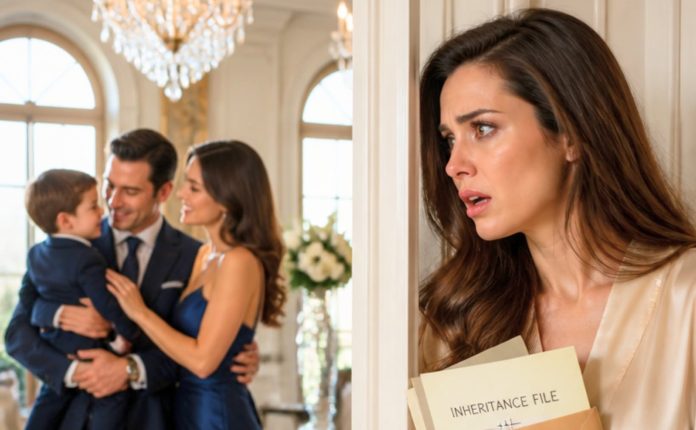
As I reached the front door, Jill came down the stairs. She wasn’t in her usual sweatpants. She was wearing a cocktail dress and heels, carrying the baby in his car seat.
“Oh, good, you’re still here,” she said, her voice breezy and commanding. “I’m meeting the girls for drinks. Leo Jr. is fed and changed. He should sleep for at least four hours. The monitor is on the kitchen counter.”
I stopped dead. “I’m going out, Jill. I have plans.”
She laughed, that sharp, dismissive sound she’d perfected over the last year. “No, you aren’t. I haven’t had a night out since the third trimester. I’ve already called the Uber; it’s two minutes away. You’re the only one home, so you have to do it.”
“I am not a babysitter,” I said, my voice dangerously low. “You didn’t ask. You didn’t check. I am not staying here.”
Jill’s face shifted. The entitlement turned into a sneer. “I shouldn’t have to ask my brother-in-law to watch his own nephew. We’re family, Leo. Stop being so incredibly petty because we took your room. I am exhausted, and I am leaving.”
She set the car seat down on the foyer floor. The baby started to whimper, sensing the tension. She actually turned her back on the infant and reached for the front door.
“Jill,” I said. “Listen to me very carefully. If you walk out that door and leave that child in this house with me, I am not picking him up. I am not checking the monitor. I am leaving for my dinner plans in exactly five minutes.”
She rolled her eyes. “You’re bluffing. You’re not a monster. You aren’t going to leave a three-month-old alone.”
“I’m not leaving him alone,” I corrected her. “You are. You are the parent. I am a legal stranger to that child who has repeatedly told you I am not a caregiver. If you leave, and I leave, that is child abandonment. And because I want to make sure the baby is safe, I won’t just leave him there.”
She paused, her hand on the doorknob. “What does that mean?”
“It means that the very second you step off this porch and get into that Uber, I am dialing 911,” I said. I pulled my phone out. “I will tell the dispatcher that a woman left an infant on the floor of my house and drove away. I will tell them I am leaving the premises and that the child is unattended. I will report you for child abandonment, Jill. I will let the police and CPS handle it.”
The silence in the hallway was deafening, save for the baby’s soft crying. Jill turned around, her face pale with fury. “You wouldn’t dare. You’d ruin my life. You’d ruin Jack’s life. Social services would be at our door!”
“Then don’t leave,” I said. “It’s very simple. Pick up the car seat, go back upstairs, and wait for your husband or my parents. I am not your staff. I am not your nanny. And I am done being the person you step on to make your life easier.”
“He’s your nephew!” she screamed.
“And you’re his mother! Act like it!” I shouted back.
The Uber honked in the driveway. Jill looked at the car, then back at me. She saw my thumb hovering over the keypad. She saw that I wasn’t blinking. For months, I had been pushed out of my room, my kitchen, and my peace. I had nothing left to lose, and she finally realized it.
With a shriek of rage, she grabbed the handle of the car seat. She slammed the front door so hard the glass rattled in the frame. “I hate you!” she sobbed as she stomped toward the stairs. “I’m telling Jack! You’re dead to this family!”
I didn’t go to dinner. I knew if I left, she might actually try to leave again out of spite. I went to my room, locked the door, and waited.
Two hours later, the house exploded.
My parents and Jack arrived home almost simultaneously. I heard the shouting from downstairs—Jill’s hysterical, exaggerated version of the story, Jack’s booming voice, and my mother’s gasps of horror. My door was nearly kicked off its hinges. Jack stood there, purple with rage.
“What the hell is wrong with you?” Jack screamed. “You threatened to call the cops on my wife? You threatened to have my son taken away over a couple of hours of babysitting?”
I stood up, feeling a strange, cold clarity. “I told Jill I wasn’t babysitting. She tried to force me. I told her that leaving a child with an unwilling person is abandonment. I gave her a choice. She chose to stay. The baby is fine.”
“She’s family!” my father barked from the hallway. “We are all supposed to help each other! We took her in, we’re supporting them, and you can’t even give her two hours of peace?”
“You took them in,” I reminded him. “You gave them my room. You told me what I could and couldn’t eat. You let her treat me like a servant for a year. I have helped. I have sacrificed. But I will not be coerced into childcare for a baby I didn’t ask for, for a woman who doesn’t respect me. I am not a parent. I am not a babysitter.”
“You’re a monster,” Jack spat. “I want you out. Now. I don’t want my son around a person who would weaponize the police against his own family.”
“Gladly,” I said.
I pulled a suitcase from under the bed. I’d been secretly packing for a week, ever since I’d found a small studio apartment that was available for immediate move-in. I hadn’t told them because I didn’t want the drama, but the drama had found me anyway.
My mother started to cry. “Leo, don’t be like this. Just apologize to Jill. Tell her you were stressed. We can fix this.”
“No, Mom,” I said, zipping up the bag. “Fixed would have been Jack and Jill finding their own apartment months ago. Fixed would have been you guys defending me when Jill told me I couldn’t cook breakfast in my own home. This isn’t a family anymore; it’s a support system for Jill’s convenience. I’m done.”
I pushed past Jack, who looked like he wanted to swing at me but didn’t. I walked down the stairs, through the foyer where I’d made my stand, and out the front door.
I’ve been in my new place for a few days now. My phone is a graveyard of angry texts. Jack sent a long message saying I’m “dead to him” and he’ll never let me see my nephew again. My parents are sending guilt-tripping emails about how I’ve “shattered the family dynamic” and that I should have just “been the bigger person.”
But this morning, I woke up at 8:00 AM. I walked into my own kitchen. I cracked three eggs, added mozzarella and avocado, and I let the smell fill the room. There was no one to tell me to stop. There was no one to demand I do their laundry. There was no one to threaten me with their responsibilities.
I know threatening the police is the nuclear option. I know it sounds cold-blooded to people who haven’t lived through a year of being slowly erased in their own home. But when every other boundary has been crossed, sometimes you have to draw the last one in iron.
So, AITA? They say I put a mother’s legal safety at risk over a “minor favor.” I say I stopped a person from abandoning their child with someone who told them ‘no.’ In their eyes, I’m the villain. In mine, I’m finally, finally home.