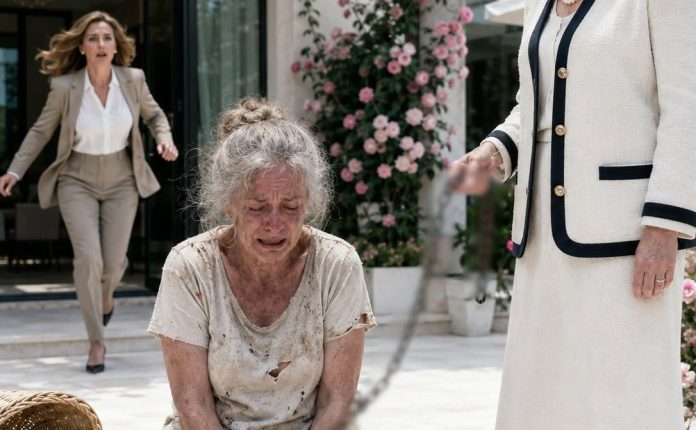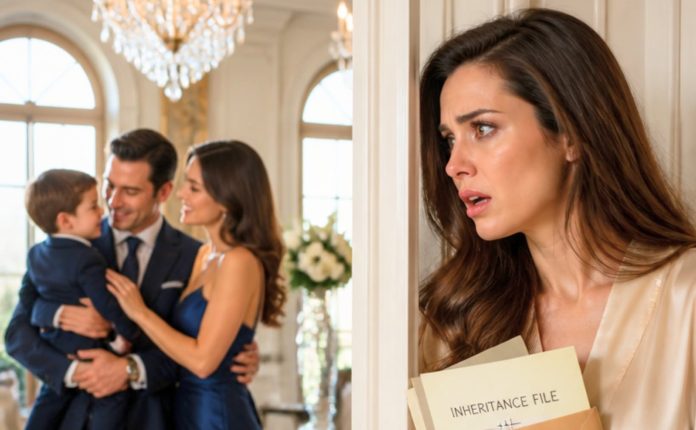
Liam and I had longed for a baby, and finally, our daughter was here. A week in, he said, “Mom and I will take her for a walk — you nap.” Grateful, I lay down and switched on the baby monitor. Then suddenly I heard MIL’s voice through it: “You didn’t tell her, right? Just take the baby and leave quietly. Got it?” Liam: “Yeah, Mom. I’m not a kid.” Then, “CRAP, the monitor’s still on.” Click. Heart racing, I waited. They came back acting normal. MAYBE I IMAGINED IT? But the next morning, the crib was EMPTY. I ran out. Husband’s things are packed. The baby’s clothes and bottles — GONE. And that’s when I heard the low, gravelly rumble of a car engine pulling away from the far end of the driveway, the sound of my life being stolen in the cold, grey light of dawn.
I stood in the middle of our nursery, a room I had spent months painting a soft lavender, paralyzed by a silence so heavy it felt like it was crushing my lungs. The mobile above the empty crib was still swaying slightly, a cruel mockery of the life that had been there just hours ago. My arms felt physically heavy, aching with the phantom weight of my seven-day-old daughter, Sophie. The betrayal didn’t just sting; it felt like a surgical removal of my soul. Liam, the man who had held my hand through eighteen hours of labor, the man who had promised to protect us forever, had chosen the manipulative whims of his mother over the woman he had sworn to love.
For those of you who have lived through many decades, who have seen the world change from a place of handshakes and neighbors to one of screens and isolation, you know that loyalty is a currency that has become tragically rare. My mother-in-law, Beatrice, was a woman of the “old school” in the worst possible way. She viewed her son not as a man, but as an extension of her own ego. To her, I was an interloper, a temporary vessel who had provided her with the “Sterling heir” she felt entitled to. I realized in that moment of chilling clarity that she had been planning this since the day I announced my pregnancy.
I didn’t scream. I didn’t collapse. A strange, icy calm settled over me—the kind of strength that only a mother knows when her child is in danger. I walked to the kitchen and found a single, hand-written note on the island. It wasn’t from Liam. It was Beatrice’s sharp, peacock-blue ink. *“We are going where she will be properly cared for. Do not follow us. Liam has realized his mistake.”*
The audacity of those words fueled a fire in me that I didn’t know I possessed. I picked up my phone and called my own mother, Martha. Martha is seventy-five, a retired head nurse who had seen everything from the blitz to the mundane tragedies of a suburban ER. She didn’t gasp when I told her. She didn’t offer platitudes.
“Elena,” she said, her voice a steady anchor in the storm. “Get in your car. Come to my house. We aren’t going to call the police yet—Beatrice has friends in the local precinct. We’re going to find them the way women in our family have always handled things. With our wits and our history.”
The drive to my mother’s house was a blur of tears and adrenaline. As I navigated the winding roads, I thought about the many years the older generation has spent building foundations that the younger generation often neglects. Beatrice thought her status and her family name gave her the right to kidnap a child. She assumed that my age and my recent delivery made me weak. She was wrong. She had forgotten that I was raised by a woman who had survived the lean years of the fifties and the social upheavals of the sixties.
When I arrived, Martha was already standing on her porch, her silver hair pulled back in a practical bun, her old leather briefcase in hand. “She took them to the lake house, Elena. The one in the valley. It’s the only place she feels she truly ‘owns’ everyone.”
We drove in silence for two hours, heading deep into the countryside where the trees grew thick and the cell service was a thing of the past. As we drove, my mother talked to me about the nature of family. She spoke of how some people use “love” as a cage, and how true love is an open hand. She reminded me that my worth as a mother wasn’t defined by Liam’s cowardice, but by my commitment to the truth.
To the grandmothers and grandfathers reading this, you understand the weight of a family estate. The lake house was a sprawling, cedar-shingled monument to the Sterling family’s perceived superiority. As we pulled into the long, gravel driveway, I saw Liam’s car parked next to Beatrice’s vintage Mercedes. The house looked dark, save for a single light in the upper window—the nursery.
“Wait here, Mom,” I said, my voice trembling but firm.
“Not a chance,” Martha replied, stepping out of the car. “I’ve known Beatrice for forty years. She’s a bully, and bullies hate a witness.”
We walked up to the front door. I didn’t knock. I tried the handle, and it was locked. I didn’t hesitate; I picked up a heavy decorative stone from the garden bed and smashed the small glass pane next to the deadbolt. The sound of shattering glass echoed through the quiet valley like a gunshot.
I reached in, turned the lock, and stepped into the foyer. The smell of Beatrice’s expensive, floral perfume hit me like a physical blow.
“Liam!” I roared. “Bring me my daughter!”
I heard footsteps at the top of the stairs. Liam appeared, looking haggard and terrified. He was holding Sophie, but he was holding her awkwardly, his shoulders hunched as if he were trying to hide. Behind him, Beatrice stepped out of the shadows, her face a mask of cold indignation.
“You have no right to be here, Elena,” Beatrice said, her voice silk-wrapped steel. “You are unstable. Breaking into a private residence? This only proves what I told Liam. You aren’t fit to raise a Sterling.”
“Fit?” I walked up the first few steps, my eyes locked on my husband. “Liam, look at me. You watched her take her first breath. You saw me bleed for her. You saw the love in my eyes every time I looked at you both. Are you really going to let your mother rewrite our entire life just because she wants a doll to play with?”
Liam’s lip trembled. He looked down at Sophie, who began to cry—a thin, hungry wail that tore through my heart. “Mom said… she said you were having a breakdown. She said the monitor incident was you imagining things. She said we needed space to establish a ‘proper’ environment.”
“Space?” Martha stepped forward into the light of the foyer. Her presence seemed to fill the room, dwarfing Beatrice’s arrogance. “Beatrice, you’ve been ‘proper’ your whole life, and look at the result. You’ve raised a son who is too afraid to be a father. You’ve stolen a week-old infant from her mother’s breast. In our day, we called that a crime, not an environment.”
Beatrice sneered. “Martha, stay out of this. This is family business.”
“This *is* my family,” Martha countered. “And I have the medical records in my car to prove that Elena is perfectly healthy. I also have the phone logs where you called her obstetrician trying to forge a mental health referral. That’s called fraud, Beatrice. And I suspect the board of your various charities would be very interested to know how you spend your weekends.”
The silence that followed was heavy with the weight of years of social posturing. Beatrice’s face went from pale to a mottled, angry red. She looked at Liam. “Don’t listen to them. Give the baby to me. Let’s go inside.”
But Liam didn’t move. He looked at me, then at the crying baby in his arms, and then at the woman who had spent thirty years making his decisions for him. For the first time in his life, he saw the cage for what it was.
“No,” Liam whispered. He walked down the stairs, ignoring his mother’s sharp command to stop. He reached the bottom and placed Sophie into my arms. The moment her small, warm body touched mine, the world felt right again. She stopped crying almost instantly, burrowing into my chest, recognizing the scent and the heartbeat of her home.
“I’m so sorry, Elena,” Liam choked out, falling to his knees on the hardwood floor. “I was so tired, and she was so loud, and I… I didn’t know how to fight her. I thought I was doing the right thing for Sophie. I thought you were the one who was confused.”
I looked at my husband—a man who had failed the ultimate test of character. To the older generation who were raised with the idea that a man’s word is his bond, his failure is hard to forgive. But as I looked at the tears streaming down his face, I realized that he wasn’t a villain; he was a victim of a different kind of theft—the theft of his own agency.
“Get up, Liam,” I said, my voice devoid of the warmth I once felt. “Pack your things. But you aren’t coming back to our house. Not yet. You need to decide who you are when your mother isn’t in the room.”
We left that night. Martha drove us back, the dawn breaking over the mountains in a spectacular display of gold and purple. It was the longest night of my life, but also the most meaningful. I had learned that a mother’s love isn’t just about lullabies and soft blankets; it’s about the fierce, unrelenting courage to stand up to the people who try to steal your peace.
To the grandfathers and grandmothers who may be watching their own children struggle with overbearing in-laws or the complexities of modern marriage, I want to say this: Do not stay silent. Your wisdom is the bridge that can save a family from falling into the abyss. My mother didn’t just help me get my daughter back; she taught me how to be the kind of woman who would never let it happen again.
In the weeks that followed, the fallout was extensive. Beatrice tried to sue for custody, but the evidence of her manipulation—thanks to Martha’s meticulous record-keeping—made her case laughable. She was forced to step down from several of her high-profile boards, her reputation in our small town forever tarnished by the “Lake House Incident.”
Liam went to counseling. He spent months living in a small apartment, learning how to exist as an individual rather than an extension of Beatrice. He had to earn every single minute of supervised time with Sophie. It was a hard road for him, but it was a necessary one.
I am thirty years old now, and Sophie is finishing kindergarten. I look at her often and think about that empty crib. The memory no longer haunts me; instead, it serves as a reminder of the day I found my own strength. Liam and I eventually reconciled, but our marriage is different now. It’s built on a foundation of radical honesty and iron-clad boundaries. Beatrice is no longer allowed in our home. She sees Sophie twice a year, in a public park, under the watchful eye of a professional supervisor. She complains, of course, but her words no longer have the power to move us.
To the older generation sitting in your armchairs today, perhaps looking at your own grandchildren and wondering about their future, remember this lesson from a daughter who stayed in the fight: Love is not a transaction. Family is not a pedigree. And the most important thing you can leave behind is not a lake house or a family name, but the integrity of a heart that knows how to protect its own.
My house is noisy now. There are toys on the floor, the smell of burnt toast in the morning, and the constant, beautiful chatter of a healthy little girl. Liam is a good father—a real father—because he finally learned that being a man means standing up to the people you love when they are wrong.
The baby monitor is still in the drawer of the nightstand. I never use it anymore. I don’t need to hear whispers through a speaker to know what’s happening in my own home. I learned to listen to my own heart instead. And as the sun sets over our little garden, I realize that the most “meaningful” stories aren’t the ones that are perfect from the start. They are the ones that are broken, betrayed, and then painstakingly rebuilt by hand.
We are the survivors of our own history. We are the architects of our own peace. And as long as we have the courage to smash a window when the doors are locked, we will always find our way home.
May your homes be full of truth, and may your hearts be brave enough to protect the legacies that truly matter. The crib is full tonight. The house is warm. And for the first time in a very long time, the monitor is silent—because there are no more secrets left to hear. Farewell for now, dear friends. Keep your lanterns lit and your boundaries firm. The world is a big place, but as long as we hold each other with open hands, we are never truly lost. Welcome home, Sophie. Welcome home to a family that finally knows what it means to stay.