I was thirty weeks pregnant when the doctor stopped speaking mid-sentence.
The room went unnaturally quiet. No steady rhythm from the monitor. No fluttering sound I had memorized, counted, and trusted. The ultrasound screen was turned away, but I didn’t need to see it. I already knew. The nurse reached for my hand—gentle, deliberate—the way people do when they’re about to change your life forever.
“I’m so sorry,” the doctor said softly. “There’s no heartbeat.”
The words didn’t arrive all at once. They echoed. Refused to settle. I stared at the ceiling tiles and waited for someone to correct the mistake—to say the machine was wrong, to ask for another minute, another scan.
No one did.
By the time my husband and his mother arrived, I felt hollowed out. As if something essential had been taken from my chest and carried away. My body ached in ways I didn’t know were possible. My arms already felt empty—missing a weight they’d never held.

My husband stood near the door, hands in his pockets, eyes fixed on the floor. He looked like someone waiting out a bad storm, not a man who had just lost a child.
His mother didn’t hesitate.
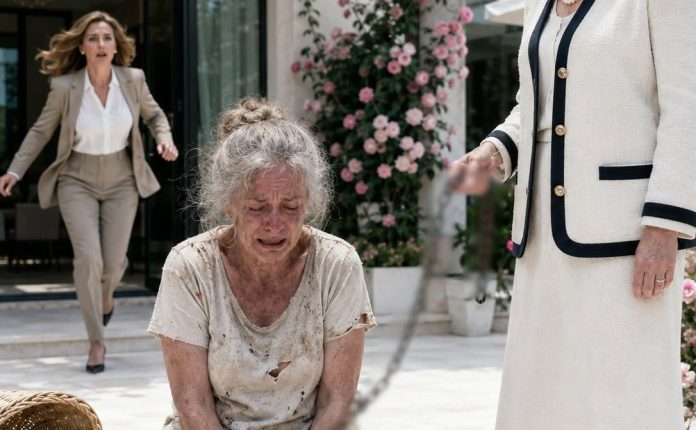
“Oh please,” she snapped, waving her hand as if I were inconveniencing her. “Stop the melodrama. These things happen. Your body rejected bad genes.”
The words cut deeper than the diagnosis.
I stared at her, certain I had misheard. Surely no one would say that—here, now, in this room.
My husband said nothing.
He didn’t defend me. He didn’t ask her to stop. He shifted his weight, glanced at me just long enough for guilt to flicker—and then walked out.
Something inside me shut down completely.
I don’t know how much time passed before my mother-in-law stepped closer. When she spoke again, her voice was different—low, urgent, nothing like the cruelty from moments earlier.
She took my hand.
“Don’t stay in this family,” she whispered. “Leave my son. Run.”
I blinked, stunned.
She pressed a small brass key into my palm, along with a folded paper bearing an address written in neat, familiar handwriting.
“This apartment is mine,” she said quickly. “It’s empty. It’s yours now. I’ll transfer it legally when the time is right. I’ll help you get away.”
My mind couldn’t process it. I was still trapped in the silence of the monitor. I nodded because nodding was easier than asking why.
She moved fast after that—faster than doubt could catch up. My belongings were packed while I was still recovering. I never returned to the house I’d shared with her son. I went straight to the apartment instead.
It was quiet. Pale walls. Morning light spilling across the floor.
It felt unreal—like I was living inside someone else’s escape plan.

My husband called once.
Not to ask how I was surviving. Not to ask if I needed help. He didn’t mention the baby at all.
He complained that I’d left him alone. That the house felt cold. That there was no one cooking hot meals anymore.
I hung up without saying goodbye.
That was when it truly hit me. Not in the hospital. Not at the diagnosis.
I hadn’t lost a partner.
I had lost an illusion.
A week later, my mother-in-law came to the apartment. She looked older somehow—heavier, as if she’d finally set down a secret she’d been carrying for years.
She told me everything.
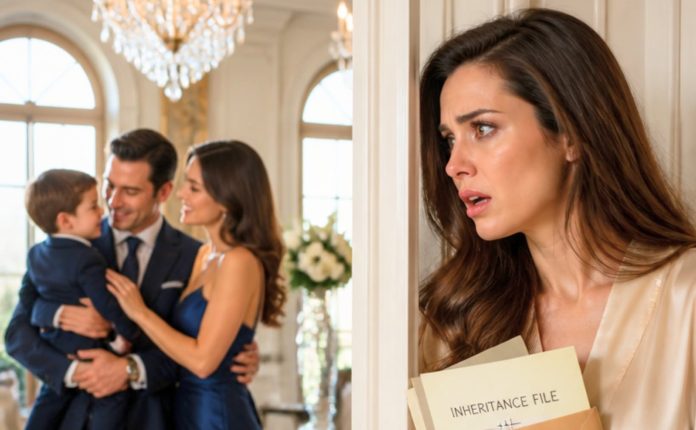
Her son had never wanted children. Not with me. Not with anyone. He’d only pretended because his grandmother’s will required a biological child for him to inherit her money. His plan was simple: stay until the baby was born, take the inheritance, and leave me for another woman.
“She thinks she was special,” my mother-in-law said bitterly. “She wasn’t.”
She hadn’t known the full plan at first. She’d overheard a conversation she wasn’t meant to hear—and from that moment on, she watched. Prepared. She was ready to help raise the baby if she had to. Ready to protect me when no one else would.
After the loss, she knew exactly what would come next. He would pressure me to try again. Push me back into risk. Into pain.
So she did the only thing she could.

She became the villain.
She pretended to despise me so he wouldn’t suspect her. Helped me disappear quietly. Found a lawyer. Handled the paperwork. Made sure I walked away with my dignity intact.
The apartment is legally mine now.
My ex is alone. He didn’t receive the inheritance. The woman he planned to leave me for vanished when there was nothing left to gain.
And he still doesn’t know the truth.
He still doesn’t know that the person who ruined his plans—
the person who saved my life—
was his own mother.
Note: This story is a work of fiction inspired by real events. Names, characters, and details have been altered. Any resemblance is coincidental. All images are for illustration purposes only.