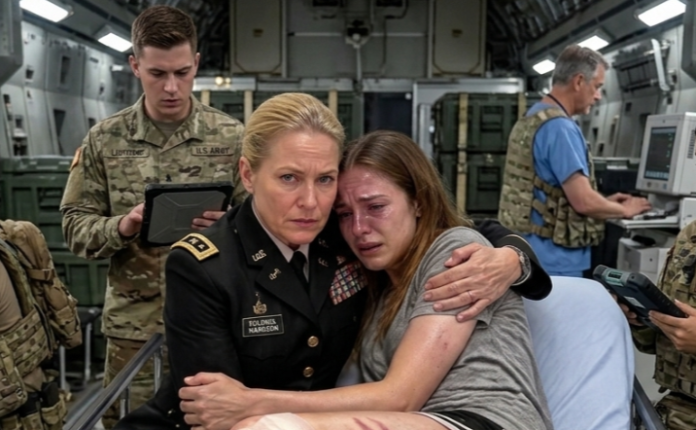
My MIL, Evelyn, did a DNA test on my four-year-old daughter behind my back. I found out because during Father’s Day dinner, with the whole family sitting around the table, she suddenly stood up and waved the documents, yelling at me: “JESSICA, YOU’RE A LIAR! YOU CHEATED ON MY SON! THIS GIRL ISN’T MY GRANDDAUGHTER! I HAVE A DNA TEST TO PROVE IT!” Everyone was stunned. But my mom just smiled quietly. And then, in a split second, my MIL turned pale as a ghost when my mom stood up and said: “Evelyn, you should be very careful about the ghosts you pull out of the closet, because I was the head nurse on the night your son was born, and I know exactly why your DNA doesn’t match that little girl’s.”
The dining room, which usually echoed with the clinking of silverware and the gentle laughter of a family celebration, became as silent as a tomb. My husband, David, sat frozen, his fork halfway to his mouth, his eyes darting between his mother’s trembling hand and my mother’s calm, resolute face. Our daughter, Lily, sensing the sudden spike in tension, crawled into my lap and buried her face in my shoulder. I held her tight, my heart hammering against my ribs like a trapped bird. I knew I had never been unfaithful to David. I knew Lily was his. But the document in Evelyn’s hand was official, stamped with the seal of a reputable lab. The world felt like it was tilting on its axis.
Evelyn, a woman who prided herself on her lineage and her “old-fashioned” values, had spent the last five years making my life a subtle misery. She whispered about my “modern” ways, my career, and how I supposedly didn’t deserve a man as “pure-blooded” as her David. She had been obsessed with Lily’s features, constantly looking for traits that weren’t there. When she saw the results of her secret test, she thought she had finally found the weapon to destroy our marriage. She thought she was the righteous protector of her family tree. She didn’t realize she was holding the axe that would chop it down.
“What are you talking about, Martha?” Evelyn stammered, her voice losing its edge, replaced by a thin, wavering fear. “The test says there is a zero percent probability of a grandmother-grandchild relationship. It’s right here in black and white! Jessica has made a fool of us all!”
My mother, Martha, walked around the table with the slow, deliberate grace of a woman who had spent forty years walking hospital corridors. She took the papers from Evelyn’s limp fingers and glanced at them. A sad, knowing smile touched her lips. She looked at David, who was looking at his mother as if seeing her for the first time.
“Evelyn,” my mother began, her voice soft but carrying to every corner of the room. “You were so eager to prove Jessica was a liar that you forgot one very important detail about genetics. If David isn’t your biological son, then Lily—his biological daughter—would never show up as your granddaughter in a DNA test.”
David’s breath hitched. “Mom? What is she saying?”
Evelyn collapsed back into her chair, the color draining from her face until she looked like the lace tablecloth she spent so much time bleaching. “It’s not true. Martha is just trying to protect Jessica. David is mine. He’s my flesh and blood!”
“I was there, Evelyn,” Martha said, her eyes filled with a mixture of pity and sternness. “Thirty-two years ago, at St. Jude’s. You and Thomas had been trying for ten years. You were desperate. You were heartbroken. When the doctor told you that you would never carry a child to term, you made a choice. You didn’t want the town to know. You didn’t even want Thomas’s parents to know. You went away for ‘bed rest’ for six months, and you came back with a baby boy that we helped you arrange through a private, closed-door placement. I was the one who signed the nondisclosure agreement for the hospital. I was the one who held your hand when you promised that boy would be yours in every way that mattered.”
The room seemed to shrink. To the older guests at the table—David’s aunts and uncles who had always praised the “Vance family genes”—this was an earthquake. For decades, Evelyn had built a pedestal of superiority based on a bloodline she didn’t actually share with the son she adored. She had spent years judging me for not being “one of them,” all while hiding the fact that her own son was a gift from a stranger.
David stood up, his chair scraping harshly against the hardwood floor. He was a tall man, kind and steady, the sort of man who usually sought peace at any cost. But now, he looked like he had been struck by lightning. “You lied to me? For thirty years? You let me believe I was someone I’m not? And you were going to destroy my family—you were going to take my wife and child away from me—to protect a secret that wasn’t even real?”
“I did it for you, David!” Evelyn wailed, her hands reaching out to him. “I wanted you to belong! I wanted you to have the Vance name and the Vance pride! I loved you so much I forgot you didn’t come from me!”
“No,” David said, his voice cold and clear. “You didn’t do it for me. You did it for your pride. You did it so you could look down on people. You were so worried about Jessica’s ‘purity’ that you were willing to brand her an adulteress and make our daughter feel like a mistake, all because you were afraid of the truth.”
I looked at my own mother. I realized then why she had always been so patient with Evelyn’s snide remarks over the years. Martha had carried this secret not to protect Evelyn, but to protect David’s peace of mind. She had intended to take it to her grave, believing that who a person “is” is defined by who raises them, not whose cells they carry. But when Evelyn attacked my character and threatened the stability of my child’s world, the nurse in Martha—the protector of life and truth—had been forced to step forward.
For the older generation sitting around that table, this was a moment of profound reckoning. They grew up in an era where adoption was often spoken of in hushed tones, where “illegitimacy” was a scarlet letter, and where family secrets were buried deeper than the foundations of their homes. They saw the agony in Evelyn’s eyes—the fear of being “exposed” as a fraud. But they also saw the damage that secrets do. They saw a young father whose entire identity had been shaken and a young mother who had been falsely accused of the ultimate betrayal.
“Evelyn,” my mother said, placing a hand on the older woman’s shoulder. “Love is the only thing that makes a family. You spent thirty years loving David, and that made you his mother. But the moment you used that love as a weapon to hurt someone else, you forfeited the right to call yourself a protector. Blood doesn’t tell lies, but people do.”
The dinner was over. The guests left quietly, their faces etched with a somber understanding of the fragility of human narratives. Evelyn remained in her chair, a broken woman surrounded by the ruins of her own making. She had tried to prove a point about biology, and in doing so, she had proven a point about character.
In the weeks that followed, the fallout was immense. David went through a period of mourning—not for a mother who had died, but for a history that had never existed. He spent hours talking to my mother, asking about the night he was born, looking for the tiny details of his origin that Evelyn had scrubbed away. He learned that his biological mother was a young student who had wanted him to have the best life possible—a life of love and security.
I watched my husband navigate this new reality with a strength that made me love him more than ever. He realized that Lily was his daughter not because of a DNA match, but because he was the one who kissed her scraped knees and read her bedtime stories. He realized that I was his wife because of the life we built, not because of some ancient tribal approval.
Evelyn tried to apologize, of course. She sent letters filled with excuses, still trying to frame her actions as a “mother’s love.” But David stayed firm. He told her that he needed time—time to figure out who he was without her shadow over him. He told her that her “objection” to our marriage was the last time she would ever be allowed to interfere in our lives.
As an older woman myself now, looking back on that day, I realize the profound lesson my mother taught us all. We often spend our lives trying to curate a perfect image, worrying about what the neighbors will think or how our lineage will be perceived. We hold onto secrets like they are treasures, not realizing they are actually anchors dragging us down.
The truth isn’t always pretty, and it often hurts before it heals. But the truth is the only thing you can build a life on. Evelyn tried to build hers on a lie of superiority, and it crumbled the moment she tried to use it to hurt someone else. My mother, with her quiet smile and her decades of silence, showed us that the real “blood” of a family is the truth we tell each other and the grace we show when that truth is hard to hear.
Lily is nine now. She knows she is loved. She knows her Daddy is her hero. And she knows that Grandma Martha is the one who keeps the lights on and the secrets safe until they need to be told. We still see Evelyn occasionally, but the dynamic has changed. She is no longer the matriarch on the pedestal. She is a grandmother trying to earn back the trust she threw away. She is learning that being a “Vance” isn’t about the DNA in your veins; it’s about the honesty in your heart.
To the readers who have lived long enough to see the way secrets can fester, you know that the most meaningful thing we can leave behind isn’t a perfect family tree or a spotless reputation. It is a legacy of integrity. It is the ability to stand up at a dinner table and say, “This is who we are, and we love each other anyway.”
The Father’s Day dinner where my mother-in-law tried to destroy my life ended up being the day my family was truly born. We were no longer bound by expectations or false pride. We were bound by the truth. And in that truth, we finally found the freedom to be exactly who we were meant to be.
Evelyn turned pale because she realized that the mirror she was holding up to me was actually reflecting her own reflection. She saw the “liar” she was looking for, but it wasn’t Jessica. It was the woman she had seen in the mirror for thirty years. And while that realization was painful, it was also her only path to redemption. For as my mother always said, you can’t start living a real life until you stop pretending to be someone else. That day, the pretending ended, and our real life—messy, complicated, and beautiful—finally began.