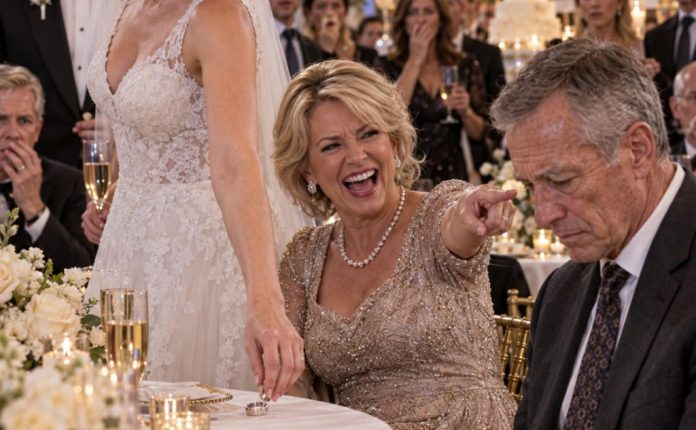
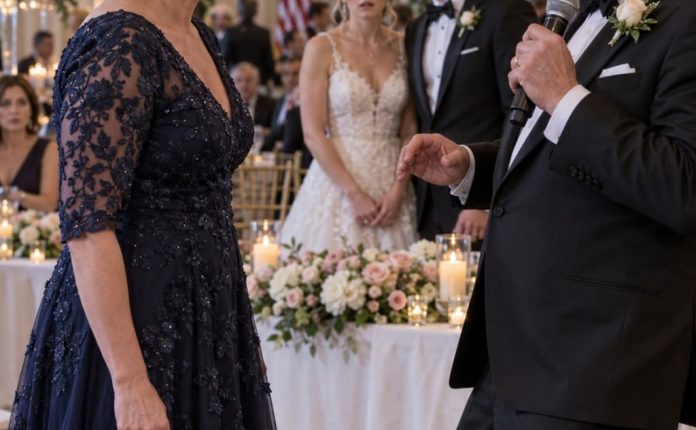
I looked from the folder to my father.
“Who is he?”
“Arthur Bell,” Dad said. “We worked together.”
Arthur offered his hand.
There was nothing theatrical about him. His suit was expensive, but his shoes were wet. A small drop of rain hung from the end of his nose until he brushed it away.
“I'd hoped we'd meet under easier circumstances.”
“What circumstances were you expecting?”
He glanced at Dad.
“A private meeting after dinner.”
George took another step.
“Arthur, I wasn't aware—”
“You were aware of the meeting.”
“Yes, but—”
“The people attending haven't changed.”
Beverly made a small scoffing sound from the doorway.
“Anyone can hire cars.”
Arthur ignored her.
Dad didn't.
He looked at her with the same concentrated expression he used when an engine made a noise nobody else could identify.
I recognized that expression.
He wasn't lost.
He was deciding what required attention.
“Where are you going?” I asked.
“The private room upstairs.”
Fiona stared.
The hotel had refused George that room two weeks earlier. Beverly wanted it for a family breakfast the following morning, and George tried to reserve it for the entire weekend.
It had already been booked.
I remembered Fiona complaining.
Apparently somebody's meeting mattered more than our wedding.
Arthur checked his watch.
“The others have been ready since eight.”
It was ten past.
My father nodded.
“I meant to finish something tonight,” he told me. “Then sit down with you tomorrow.”
“Finish what?”
“Business.”
“What business?”
His answer took a moment.
“The kind I should have explained before you were standing here asking.”
I felt my anger shift direction.
Not disappear.
Shift.
He reached into his pocket and brought out the brass key from the workbench.
Its edge pressed into his palm.
That little object disturbed me more than the cars.
It meant something had been inside our house all along.
Something he had passed every morning while making tea.
Something I had never been invited to understand.
Fiona came closer.
“Daniel, whatever this is, we can discuss it privately.”
The change in her voice was immediate.
Inside, I had been unreasonable.
Now I was someone who needed to be drawn away before he learned something.
Dad noticed, too.
He closed his fingers around the key.
“Arthur thinks you should come upstairs,” he said. “I think you should decide.”
“Does he get to decide whether I come?” George asked.
Arthur looked at him.
“Yes.”
There was a brief silence.
The valet stood beside the pickup, politely looking elsewhere.
Dad asked him to park it again.
He tipped him with a folded note.
Then he turned toward the hotel.
I went beside him.
George followed.
So did Fiona.
Beverly hesitated before coming after us, as though the act of walking behind my father had become intolerable.
The lobby doors opened automatically.
The woman at the desk recognized Arthur and lifted a hand toward the elevators.
“Mr. Bell, they're expecting you.”
“Thank you.”
No one asked Dad whether he was lost.
No one suggested another entrance.
I hated that I noticed.
In the elevator, George watched the numbers rise.
Fiona watched me.
Dad watched his own hands.
“You could have told me at breakfast,” I said.
“Yes.”
“Or last week.”
“Yes.”
“Then why didn't you?”
He looked up.
“I thought I was protecting something.”
“What?”
He didn't answer before the doors opened.
The private dining room overlooked the hotel gardens.
Rain turned the terrace below into a blurred reflection of its own lights.
A long table stood beneath two plain hanging lamps.
There were no flowers.
No champagne tower.
No photographer.
Just water glasses, notebooks, and four cream folders marked with green stripes.
Three people stood when Dad entered.
One was an older woman in a dark blue suit.
Another wore glasses and held a pencil behind his ear.
The third was a younger woman with a laptop already open.
Arthur made the introductions.
“Ruth Mercer, independent director at Ashford Development.”
I recognized Ruth.
She had attended the dinner.
I remembered seeing her seated near the middle of the ballroom, one hand resting beside an untouched glass.
“Priya Shah, restructuring counsel. Samuel Ortiz, forensic accounting.”
Ruth came toward Dad first.
“Martin.”
He shook her hand.
She looked at me.
“I saw what happened downstairs.”
I wasn't ready for kindness.
It made my throat tighten.
“Then you saw enough.”
“I saw something I should have interrupted.”
George pulled out a chair.
“We all know the speeches got away from us.”
Nobody sat.
Beverly gave a brittle laugh.
“Honestly, this is absurd. We had a misunderstanding at a family event.”
Ruth turned toward her.
“No. I don't think we did.”
Arthur closed the door.
That small sound marked the end of the evening I had expected to have.
Dad took the chair at the end of the table.
Arthur sat beside him.
George remained standing.
I waited for somebody to explain.
Finally, Dad looked at me.
“Years ago, before your mother got sick, Arthur and I ran a heating equipment company.”
I stared.
“What company?”
“Henderson Bell Thermal.”
I knew the name.
Not well.
But I had seen it on old commercial heating components, stamped into metal housings in mechanical rooms.
“You made those?”
“Some of them.”
Arthur folded his hands.
“Your father developed the controls. I handled contracts.”
I looked at Dad's fingers.
He had used those same fingers to repair my bicycle brakes.
I couldn't fit the two images together.
“You owned a business?”
“Yes.”
“When?”
“Before you were born. After, too. For a while.”
“Why didn't I know?”
He glanced toward George.
Then back to me.
“Because that's a longer answer than you deserve to receive in this room.”
“I think I deserve it now.”
He accepted that.
“We sold the company when your mother's treatment became more complicated.”
“How much?”
Dad rubbed one thumb across the key in his palm.
“Enough.”
I almost laughed.
He had spent my entire life saying we had enough.
Enough food.
Enough heat.
Enough time before the next bill.
I no longer knew what the word meant in his mouth.
Arthur spoke gently.
“The first sale wasn't the whole story. There were retained shares, licensing payments, later investments.”
“Investments in what?”
“Among other things, the fund considering refinancing Ashford Development.”
The room seemed to tilt slightly.
I put a hand on the back of a chair.
George spoke before I could.
“Through the Cedar Trust.”
Arthur nodded.
George's gaze moved to Dad.
“You're the principal.”
Dad said nothing.
That was answer enough.
Beverly sat down abruptly.
Fiona reached for a water glass and didn't drink.
I looked at the folders.
“The papers in your study,” I said to George.
He didn't meet my eyes.
“Confidential financial work.”
“Fiona said it was routine.”
Fiona spoke quickly.
“That's what he told me.”
Arthur opened one folder.
“Some of it is routine. Most businesses refinance. Some need additional conditions before responsible lenders can proceed.”
Dad rested the key on the table.
“Tonight was supposed to settle those conditions.”
“On my wedding night?”
“Yes.”
The answer landed hard.
George seized it.
“Exactly. Perhaps everyone can see how inappropriate—”
Dad turned toward him.
“You requested the date.”
George stopped.
Ruth opened her notebook.
“The company asked to conclude discussions before Monday's credit committee deadline. Mr. Henderson agreed to attend a short meeting after the dinner. He asked that the family event remain separate.”
“He should have told me,” I said.
“Yes,” Dad said.
He didn't let George answer for him.
He didn't pretend the admission solved anything.
I pulled out a chair.
“Explain it.”
Dad looked at Arthur.
Arthur closed the folder again, giving him the room.
“We weren't wealthy when you were little,” Dad said.
I thought of the meals.
His worn boots.
The radiator we left off in the front room.
“We sold the first business for less than people imagine when they hear that phrase. There were debts. Your mother's care took money and time. The company owed its employees, and I wasn't going to leave them unpaid.”
His voice stayed level.
“That left us with the house, some savings, and shares I couldn't spend.”
“Then you worked construction.”
“I knew the work.”
“And furnaces.”
“I knew those, too.”
“What changed?”
“The shares became worth something. Licensing payments grew. Arthur kept working on the business.”
Arthur nodded.
“It took years.”
“How many?”
Dad named them.
I did the calculation.
By the time I was seventeen, the worst of our financial uncertainty had eased.
By the time I finished university, it had ended.
Yet he still wore the same coat.
Still drove the same truck.
Still answered every late call.
“I paid for university with loans.”
“You did.”
“You watched me.”
“I paid them off after you graduated.”
I stared at him.
“The scholarship adjustment?”
He nodded once.
My university account had received a credit through an outside foundation.
The explanation seemed ordinary at the time.
I had been relieved.
Now that relief felt tampered with.
“You let me believe—”
“I know.”
“No. You keep saying that as if it makes this smaller.”
He looked down.
For the first time since we entered, he resembled the man in the ballroom.
That nearly stopped me.
But loving him didn't make the questions unnecessary.
“Why?”
He sat quietly for several seconds.
“When your mother died, people started helping. Good people. They brought meals. They took you to school when I couldn't. They offered money.”
His fingers moved toward the key, then stopped.
“I needed some of it. I hated needing it. Later, when things improved, I decided you should grow up without having to measure every friendship against money.”
“You could have told me we were secure.”
“Yes.”
“You could have bought yourself a suit.”
A faint, painful smile touched his mouth.
“That one fits.”
“It barely fits.”
“I know.”
I looked away because I couldn't bear the tenderness mixed with the anger.
Dad continued.
“What started as keeping you grounded became a habit. Then it became something I didn't know how to undo without admitting I'd let it go too long.”
That answer was uglier than a noble explanation.
It was also believable.
He wasn't claiming he had conducted a grand experiment in character.
He had made one decision, then another, until telling the truth became difficult.
Arthur looked at me.
“Your father lives modestly. He doesn't live carelessly. Those aren't the same thing.”
“How much does he control?”
Dad answered before Arthur could soften it.
“Enough to make this agreement possible. Not enough to own everything people might imagine.”
“The proposed facility is thirty-eight million,” Priya said. “The fund has several participants. Martin is its largest private investor and chairs its investment committee. Other parties have their own obligations and approval rights.”
I understood the structure.
That almost made it worse.
This wasn't a magical fortune arriving to punish anyone.
It was ordinary business.
My father had a role inside it I hadn't known existed.
George sat at last.
“Martin, we can acknowledge an unfortunate remark and return to the agreement.”
Dad looked at him.
“Which agreement?”
“The revised term sheet.”
“There's more than one revision.”
Samuel slid a document across the table.
“The version supplied to the company's board differs from the version sent to the fund on Thursday.”
George didn't touch it.
“Drafts change.”
“They do,” Samuel said. “Supporting disclosures should change with them.”
The paper listed several properties.
I recognized three.
One was Riverside Court.
I had reviewed drainage calculations for it.
Another was Bellmere Exchange.
The third was the old depot site.
Something tightened behind my ribs.
“What are those?”
“Security proposed for the refinancing,” Samuel said.
“The depot can't support that valuation.”
George looked sharply at me.
“Daniel.”
I turned toward him.
“The remedial works weren't completed.”
“We are not discussing engineering.”
“The valuation assumes they were.”
Samuel looked at Priya.
She made a note.
Dad's eyes stayed on me.
“When did you inspect it?”
“Three weeks ago.”
“Did you submit a report?”
“Yes.”
George placed both palms on the table.
“The report was preliminary.”
“It was signed.”
“Subject to additional information.”
“Every report is subject to information. That doesn't mean you can—”
Fiona touched my arm.
“Please.”
I moved away.
Her hand remained in the air for a moment.
Ruth spoke.
“The board received a compliance summary saying all significant remedial works had been completed.”
“They haven't,” I said.
George looked toward the closed door.
I recognized the calculation.
Not whether he had done something wrong.
How many people already knew.
Arthur opened the folder again.
“We have been asking for the underlying inspection documents since Wednesday.”
“I was waiting for your report,” Dad said to me.
I stared at him.
“You knew it was mine?”
“I saw your name on the requested schedule yesterday.”
“Yesterday.”
“Yes.”
“And you didn't call.”
“I should have.”
The room held too many truths at once.
My father had hidden a fortune.
George had concealed a report.
Fiona had laughed at Dad, then tried to pull me away from a conversation that might explain why her father had become silent.
I needed something solid.
“Do you have the report?”
Samuel shook his head.
“Only the summary supplied by management.”
“I do.”
George's chair moved.
“That is company property.”
“It's my signed work.”
“It was prepared within your employment.”
Priya leaned forward.
“No one needs to resolve ownership at this table. The company has already agreed to provide complete due diligence documents. Mr. Ashford, are you refusing to supply the report?”
George looked at her.
“I am saying this is not the appropriate—”
“Are you refusing?”
Silence.
I took out my phone.
My hands weren't entirely steady.
I opened the project archive.
There was the report, dated three weeks earlier.
There was my email attaching it.
And below that, a reply from George's office.
Received. Further circulation to be handled internally.
I remembered thinking the phrasing sounded formal.
Now it sounded like a door closing.
I handed the phone to Priya.
“That's the original.”
She read the email first.
Then the report.
“Would you forward it to this address?”
She wrote it on a card.
George stood again.
“This is becoming a conflict of interest.”
Arthur looked at him.
“It was a conflict of interest before Daniel entered.”
That stopped me.
Dad didn't look surprised.
“What does that mean?”
Arthur turned a page.
“Your appointment to the company was described in one internal paper as strengthening the relationship with a key funding source.”
I heard Fiona inhale.
Dad's face changed.
He had known about the appointment.
He hadn't known how it was being used.
George said, “That was an imprecise description.”
Ruth asked, “Of whose relationship?”
Arthur looked at Dad.
“The adviser handling the introduction told management that the principal behind Cedar Trust had a family connection to Ashford Development. The name wasn't disclosed at that stage.”
George stared at the table.
I understood slowly.
“You didn't know it was Dad.”
He said nothing.
“You knew it was somebody connected to me.”
“Business introductions are often indirect.”
“And the job?”
“You were qualified.”
“That wasn't my question.”
George's mouth tightened.
Fiona pulled her chair back from mine.
“Daniel, Dad didn't invent your qualifications.”
“I didn't say he did.”
“You're making everything sound dirty.”
I looked at her.
“What did you know?”
She looked toward her father.
That brief movement answered part of it.
“Fiona.”
“Only that there was a connection. I didn't know who.”
“When?”
She swallowed.
“Before he offered you the position.”
I waited.
“I thought it would help everybody.”
The words were soft.
They hurt more than anything she had shouted outside.
For months, she had let me defend taking that job.
She had reassured me that I earned it solely on merit.
She had argued that questioning her father's generosity meant distrusting her.
And she had known there was another reason.
Dad leaned back.
For the first time, he looked old in a way that had nothing to do with his suit.
“George.”
George raised his eyes.
“You used my son to improve your position with someone whose identity you didn't even know.”
“That is an inflammatory interpretation.”
“It is a straightforward one.”
“We valued the relationship.”
“Which relationship?”
George couldn't answer without making it worse.
Beverly stood.
“I will not sit here while my family is interrogated by hired advisers.”
Priya remained still.
“Then you're free to leave.”
Beverly looked at Dad.
I watched her trying to assemble a new version of him.
The shoes hadn't changed.
The suit hadn't changed.
His hands were still cracked.
Only her information had changed.
“Martin,” she said, suddenly gentle. “Surely you know I didn't mean—”
He lifted one hand.
“Don't.”
She stopped.
“If you apologize, say what you did.”
Her eyes moved toward me, then George.
“I made a careless joke.”
Dad lowered his hand.
“That won't help.”
Arthur looked at Ruth.
“We should establish whether the meeting can continue.”
“It can,” Ruth said. “Without treating a wedding dispute as a substitute for financial facts.”
Dad nodded.
“Agreed.”
I was grateful for that.
Anger wanted the whole room to collapse around George.
But the developments had employees.
Subcontractors.
People waiting on wages.
My father hadn't spent his life fixing things in order to destroy them for applause.
Samuel explained what they had found so far.
There were overdue contractor payments.
A restricted account had been used for purposes requiring approval that wasn't documented.
A proposed asset value relied on work my report said remained incomplete.
None of those facts had begun that evening.
The documents were dated.
The requests for clarification were dated.
The unanswered emails were dated.
Dad's fund had offered financing subject to disclosure, independent review, and limits on management withdrawals.
George had pushed for fewer conditions.
Then he requested this meeting at the hotel before Monday.
“The dinner provided access to several relevant directors,” Ruth said. “That was the reason given.”
George stared at her.
“And you agreed.”
“I agreed to a business meeting after a dinner. Not to incomplete information.”
I looked at Dad.
“You were planning to help him.”
“I was planning to help the company if the conditions protected the people depending on it.”
“After how they treated you?”
“Before tonight, most of that treatment was something I told myself I could bear.”
“You shouldn't have had to.”
“No.”
His eyes met mine.
“I should have said that sooner.”
It was the first time he admitted it without trying to make the hurt harmless.
Fiona sat very still.
The ring wasn't on her finger anymore.
I noticed its pale indentation.
“You took yours off,” I said.
She looked down.
“I thought we could start again once everyone calmed down.”
“You laughed.”
“I know.”
“No. You told me not to make it worse.”
She looked toward the window.
“My mother says terrible things when she's nervous.”
“She wasn't nervous.”
“She had five hundred people watching.”
“And she chose him.”
Fiona's mouth trembled.
“She shouldn't have.”
“What should you have done?”
There was a long pause.
“I should have stopped her.”
“Yes.”
She reached toward me again.
This time she stopped herself.
“I don't know why I laughed.”
I did.
It was easier.
It kept her safely beside her mother.
It was the same kind of small permission I had been granting for months, except hers came at the moment I could no longer grant another.
I didn't say all that.
Some explanations belong to the person who needs to do the explaining.
Priya asked whether I could provide a brief statement confirming the report's status.
I agreed.
George immediately objected.
“He is emotionally compromised.”
I turned toward him.
“The wall doesn't become safe because I'm upset.”
Samuel looked down at his notes.
Ruth closed her notebook.
“We will suspend approval tonight.”
George's voice rose.
“You don't have authority to suspend the entire—”
“The independent committee does. The fund also has no obligation to approve incomplete disclosures.”
Arthur nodded.
“No commitment will be executed this evening.”
Beverly gripped the back of Fiona's chair.
“What does that mean?”
“It means we verify the documents,” Priya said.
“How long?”
“As long as necessary.”
George pushed his folder away.
“You'll force a crisis.”
Ruth looked at him.
“The crisis is already here.”
The rain had eased outside.
I could hear individual drops striking the window ledge.
Dad picked up the brass key.
Then he set it down again.
“Daniel, there's something else.”
I waited.
“The metal box isn't only business papers.”
“What else?”
“Your mother's.”
That silenced me.
He opened the leather case Arthur had brought from the car.
Inside was an old envelope.
Not cream.
Not green-striped.
A plain white envelope, softened at the corners.
My name was written across it.
I knew the handwriting.
I had seen it on birthday cards, recipe margins, the labels my mother stuck inside my school clothes.
Dad placed it before me.
“I've been carrying this since breakfast.”
My throat tightened.
“Why?”
“She wrote it before the last treatment. She asked me to give it to you when you were making a home of your own.”
I stared at the envelope.
“I thought tonight was that night,” he said.
Nobody spoke.
I touched the edge of the paper.
Behind me, George's phone vibrated on the table.
He glanced at it and turned it facedown.
Ruth noticed.
“So did I,” Samuel said quietly.
George looked up.
Samuel slid a printed bank statement into the space between them.
“The account you described as restricted,” he said, “has another transfer we haven't discussed.”
George's expression hardened.
Dad didn't move.
The amount sat halfway down the page.
I read it twice.
Then I looked toward the ballroom below us, where five hundred people were still sitting among flowers someone had paid for.
And finally, I understood why George had been so certain I owed him for the wedding.
END PART 2