At two in the morning, I found a sentence I could not explain away.
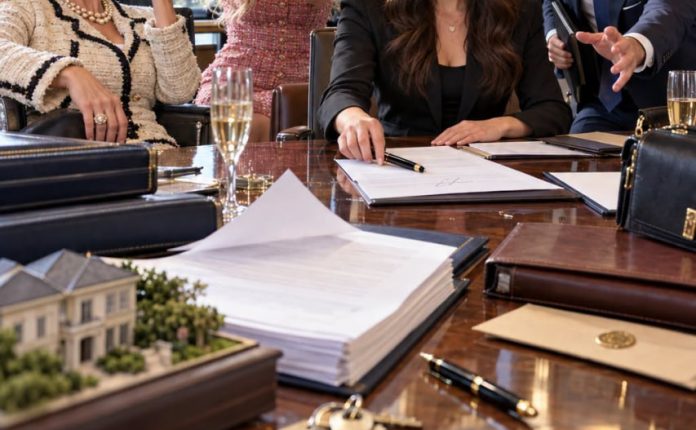
It sat halfway down a technical note, beneath language about succession and administrative efficiency. The new share class would preserve substantially equivalent financial participation while limiting direct voting authority.
I read the sentence again.
Then I wrote beside it: Who gets the vote?
My handwriting looked strange on the printed page.
Usually I marked documents with dates, figures, or questions about implementation. This question was simpler. It was also the one the packet seemed determined to answer without drawing attention to itself.
Grant and the executive trust.
That was where the lines led.
I went back through the chart, following each arrow with the end of a pen. The structure was not impossible to understand. It was simply layered enough that someone could discuss taxes, dividends, and continuity for twenty minutes before mentioning the right I would lose.
The refrigerator hummed.
A car passed outside.
Rosie lifted her head when I shifted in the chair, then put it back on my foot.
I had not eaten since lunch.
There was bread in the kitchen and soup in the refrigerator, but I could not imagine swallowing either. I drank water from a glass I kept forgetting to refill.
Every few pages, my mind returned to the lobby.
Grant’s knee touching the platform.
Vanessa’s hands around his face.
The cheering.
Then I would look down at the proposed trust and understand that the afternoon might not have been the beginning of anything.
It might have been the moment two plans overlapped where I could finally see them.
Mara had taught me years earlier to distinguish what a document claimed to accomplish from what it actually changed.
A page could say simplification and still transfer authority.
It could say protection and protect the person who drafted it.
I remembered that lesson clearly because I had once repeated it to a young manager who wanted to sign a vendor renewal without checking the revised terms.
Now I was applying it to papers my husband might have placed beside the dinner plates.
Around four, I found the signature requirements.
My consent was essential.
That fact offered relief and made me sick in equal measure.
They could not simply take the vote.
They had to persuade me to hand it over.
I went upstairs near dawn, washed my face, and changed into clothes that did not look as though I had spent the night at a kitchen table.
Grant had not come home.
His side of the bed remained untouched.
I stood in the doorway longer than I should have. The absence was familiar in a way that hurt. He traveled often, stayed late, and occasionally slept near a client site rather than driving back.
For years, I had treated an empty side of the bed as evidence that he was working hard.
Now I did not know what it meant.
Mara arrived at seven thirty carrying two coffees.
She took one look at the papers spread across the table and asked, “How much sleep?”
“Enough to know I didn’t get enough.”
She removed her coat.
“Good. You can still answer a question.”
I tried to smile.
She sat, arranged the pages in order, and began reading.
Mara was not theatrical. She did not gasp, mutter threats, or tell me we would destroy anyone. She circled provisions, compared definitions, and made notes on a yellow pad.
That steadiness helped more than outrage would have.
I watched her turn twenty pages without speaking.
Finally she removed her glasses.
“This was prepared with care.”
“That sounds like praise.”
“It isn’t.”
“Can he do it without me?”
“Not in the form proposed.”
“Could another route get him there?”
“There are corporate mechanisms that can change structures. They still require the applicable approvals and compliance with your governing documents. He cannot treat your consent as a detail.”
I nodded.
“I want every route checked.”
“We will.”
She tapped the signature page.
“For now, nothing gets signed because he calls it housekeeping.”
I told her about the bank meeting.
She already knew. Simon had sent the relevant covenant language before sunrise.
“What do I say?” I asked.
“The truth.”
“That seems to be causing trouble lately.”
“Then say it slowly.”
We drove to Dallas separately.
I needed a little time alone, though being alone in the car proved less helpful than I expected. At every traffic light I thought of something I should have noticed during the last year.
Grant taking calls outside.
Vanessa’s name appearing in conversations about subjects she did not oversee.
His impatience when I asked whether we could have dinner without discussing expansion.
Any one of those things could have been innocent.
I refused to turn twenty-two years into a list of clues just because I knew the outcome.
But I also refused to keep explaining away what I had seen.
Simon met us in the bank lobby.
He held a thin folder, not the blue one.
“We have a proposal for continuity,” he said.
“Good.”
“Grant is upstairs.”
I had expected that.
Hearing it still made my stomach tighten.
The elevator was bright and overcooled. Financial news played on a small screen. A presenter discussed market confidence while Mara checked a message and Simon studied the floor indicator.
Nobody mentioned the proposal.
When the conference-room door opened, Grant stood so abruptly that his chair rolled backward.
“What have you done?”
That was his greeting.
Not where had I been.
Not was I all right.
Not an attempt to acknowledge the flowers I had brought to his office.
Mara set her briefcase beside a chair.
“Good morning.”
Grant ignored her.
“You restricted our accounts.”
“I restricted unusual withdrawals.”
“You revoked my authority.”
“The authority attached to my shares.”
“Without talking to me.”
I looked at him.
“You asked another woman to marry you in front of the company.”
His face changed.
For the first time since entering, he looked at the other people in the room.
There were two bank representatives at the table. Allison Mercer, who managed Redstone’s commercial relationship, sat at the head. She did not appear surprised by the exchange.
Grant lowered his voice.
“You weren’t supposed to come in.”
I let the sentence settle.
“So that was the problem.”
“That isn’t what I said.”
“It is exactly what you said.”
He pressed his fingers against the back of a chair.
“We cannot discuss this here.”
Allison opened her folder.
“Then let us discuss Redstone.”
Grant sat.
I chose the chair across from him.
His wedding ring was still on his hand.
I noticed it because he kept turning it against the table edge.
Allison began with the company’s financial position. Redstone was sound. The issue was whether the change in voting authority would disrupt management or create uncertainty about access to core assets.
“The revocation itself is not a default,” she said.
Grant leaned forward.
“Then there is no reason to involve the bank in a domestic disagreement.”
“The governance review is required by the agreement.”
“I remain chief executive.”
“Yes.”
“The operational authority is mine.”
Allison looked at him.
“Operational authority does not erase the controlling shareholder’s rights.”
He glanced at Simon.
Simon did not rescue him.
I had watched Grant use that glance before. In meetings, it often brought an explanation from someone who knew what he wanted the room to hear.
This time Simon kept his hands on the folder.
Allison continued.
“We need confirmation that the board recognizes the current voting structure and that management will operate under a credible continuity plan.”
Grant turned toward me.
“Tell them this is temporary.”
I studied his face.
He looked tired. There was stubble along his jaw. His shirt collar sat slightly crooked, and I had an absurd urge to straighten it.
I kept my hands in my lap.
“What does the bank need to protect payroll?” I asked Allison.
Grant looked offended by the question.
Allison answered directly.
Written board confirmation. An interim governance plan. No unilateral disposal or encumbrance of core company assets. Clear responsibility for financial approvals.
“We can provide those,” Simon said.
“I support that,” I added.
Grant’s fingers stopped moving.
“So you are helping them now?”
“I’m protecting Redstone.”
“You created the uncertainty.”
Simon looked up.
“The ownership structure existed yesterday morning,” he said. “Claire has changed who exercises her rights.”
Grant stared at him.
Simon continued, “That distinction belongs in the record.”
It was the first time I had heard him correct Grant without cushioning the correction.
Allison made a note.
I breathed more easily.
Not because Grant was being challenged, but because someone else was describing reality accurately without asking me to make it comfortable.
The bank gave us forty-eight hours to provide the requested plan.
The credit line would remain available during that period, provided Redstone continued normal operations and supplied the information promptly.
There would be an emergency board meeting on Friday.
Simon confirmed payroll timing and fuel obligations. Allison asked specific questions about approvals. Mara clarified that restoring my voting authority did not mean I intended to direct individual transactions from my kitchen.
I almost laughed at that.
Grant did not.
He spent the rest of the meeting sitting very still.
Outside the conference room, he caught up with me.
“Claire, five minutes.”
Mara paused beside the elevator.
“Not here,” I said.
“You keep saying that.”
“You said it first.”
His mouth tightened.
“This is becoming much bigger than it needs to be.”
I looked at him.
“What size did you expect?”
He glanced toward Simon, who had stopped several feet away.
“I made a mistake.”
“You arranged a proposal.”
“That is not what I meant.”
“Then be precise.”
For a moment, he looked almost angry that I had asked.
The elevator arrived.
Mara stepped inside with me.
Grant stayed in the hallway.
Before the doors closed, he said, “You are letting lawyers turn this into a war.”
I did not answer.
In the parking garage, Mara handed me an email she had printed at the bank.
“I asked for preservation of all Project Meridian records.”
I read the header.
Vanessa had sent it to Grant eleven days earlier.
The language was not dramatic. That made it worse.
She asked whether I still expected the estate-planning packet the following week. She wanted my signature before the board retreat. After the conversion, she wrote, the remaining steps would be easier.
Grant’s response came six minutes later.
He said I trusted him.
He said he would take care of it at home.
I read the exchange three times.
There was no need to infer his understanding. He had written it.
My trust was not an unfortunate complication in their plan.
It was how he intended to complete it.
Mara touched my sleeve.
“Sit down before you drive.”
“I’m all right.”
“You can be all right in a chair.”
We stood beside her car for a moment.
I looked at the concrete floor because looking at the email again seemed unbearable.
“I keep remembering the stove,” I said.
“What about it?”
“Every time he asked me to sign something while I was cooking. The pan needed attention. Someone needed a ride. His mother would call.”
Mara waited.
“He knew exactly when I would be grateful for a short explanation.”
“That does not make you responsible for a misleading one.”
“I know that.”
“Know it more than once.”
I folded the printout.
On the drive home, I passed the exit for our first warehouse.
The building was still there, though Redstone no longer occupied it. I had not driven past in years.
I remembered the loading dock, the bad carpet, and the winter morning our office heater failed. Grant and I had worn coats at our folding desks and argued over whether we could afford a space heater before a customer payment cleared.
There had been no audience then.
No one applauded when we stayed late.
The work had belonged to both of us.
Somewhere along the way, he had begun treating my absence from the office as proof that I had never done it.
At home, Noah’s backpack lay on the kitchen floor.
He sat at the counter with a bag of pretzels. Broken pieces were arranged in a little pile near his elbow.
He looked nineteen and twelve at the same time.
“Dad called,” he said.
“I thought he might.”
“He said you were trying to take the company.”
I filled a glass with water.
“Did he tell you about Vanessa?”
Noah stared at the counter.
“Yes.”
“What did he say?”
“That things were complicated.”
I pulled out the chair beside him.
“They are. But some parts are simple.”
“Are you getting divorced?”
The question came out quickly, as though he had been holding it for hours.
“I don’t have every answer yet.”
He looked at me.
I did not want to lie.
“I cannot imagine staying married to him after what I saw.”
Noah nodded once.
He broke another pretzel.
For years, I had told my children that adults sometimes needed time to make decisions. Now I understood how unsatisfying that sounded to the people waiting for those decisions to change their lives.
“Do you want to see something?” I asked.
He shrugged.
I brought the old photo album from the cabinet near the fireplace.
The first picture showed Grant and me in the Richardson warehouse. We were twenty-four, standing beside folding tables with mugs in our hands. The company sign was crooked.
Noah looked at it.
“You look younger than me.”
“Not quite.”
“Dad looks weird.”
“He thought that tie made us look established.”
“It didn’t.”
“No.”
A little of the tension left his shoulders.
I turned the page.
There was our first truck, parked with its door open. I had taken the photograph after we brought it home, if a leased warehouse could be called home.
“Who bought that?” Noah asked.
“I did.”
“With company money?”
“With the proceeds from the property my grandmother left me.”
He looked back at the photograph.
“I didn’t know that.”
“There are quite a few things you don’t know.”
“Dad said he built Redstone because nobody would give him a chance.”
“He worked hard.”
“But so did you.”
“Yes.”
I said it without softening.
That felt unfamiliar.
The next pages held company barbecues, Christmas gatherings, drivers with children on their shoulders, and a much younger Simon wearing a shirt he would now deny owning.
Noah stopped at a photograph of me behind a desk.
“What were you doing?”
“Payroll.”
“I thought you worked at the foundation.”
“That came later.”
“What else did you do?”
I told him.
Hiring. Safety manuals. Customer complaints. Fuel negotiations. Bookkeeping. Insurance renewals. The endless small decisions that never became a speech but kept the company functioning.
He listened without interrupting.
Finally he asked, “Why didn’t you tell us?”
I traced the edge of a photograph.
“Because I thought we were hearing the same story.”
He did not answer.
The front door opened.
Sophie came in carrying her violin case. She stopped when she saw the album between us.
“Is everyone doing the thing where we pretend nothing happened?”
“No,” I said.
“Good. It’s exhausting.”
She placed the case against the wall and sat on my other side.
At seventeen, she had less patience than Noah for adult explanations that sounded designed to postpone facts.
“Did you really bring flowers?”
I nodded.
Her face tightened.
“Oh, Mom.”
I looked away.
That was the first time anyone had spoken about the flowers as though they mattered.
Not the proxies.
Not the bank.
Not Grant’s future.
The flowers.
Sophie put her hand on my wrist.
We sat there until Rosie came looking for dinner.
I fed the dog, heated soup, and watched my children move around the kitchen carefully, trying not to make anything worse.
I wanted to tell them they could be ordinary.
I also wanted to lie down on the floor.
We managed dinner.
Noah asked whether payroll would be affected. I explained the bank’s position.
Sophie asked whether Grant was coming home.
“I don’t think so tonight.”
“Does he still get to?”
That was a more difficult question.
“There are practical things we need to work out.”
She nodded, displeased but willing to wait.
Later, Grant called.
I answered because silence could not be the only way I handled a father my children still needed.
“You have made your point,” he said.
I looked at the kitchen table.
“What point?”
“That you’re angry.”
“I am not doing this to demonstrate anger.”
“Then what are you doing?”
“Making sure I understand decisions that concern me.”
He exhaled.
“Claire, Vanessa and I—”
“I’m not discussing her tonight.”
“We have to discuss her eventually.”
“Yes. But first I want an answer about Project Meridian.”
The pause was brief.
It was still too long.
“What about it?”
“Were you planning to ask me to sign the conversion?”
“It was a standard restructuring proposal.”
“Were you going to call it estate planning?”
“There were estate considerations.”
“Were you going to explain that I would lose most of my voting authority?”
“You would have had the documents.”
“That is not the same thing.”
He became impatient.
“You have not been involved in day-to-day operations for years.”
I held the phone farther from my ear.
There it was.
The reason he had used to justify the plan was also the result of the arrangement he had encouraged.
“You asked me to step away.”
“We decided that together.”
“You said the children needed me. You said your father needed help. You said the foundation needed someone who understood people.”
“And those things were true.”
“So why are you using them now as evidence that I shouldn’t have a voice?”
He said nothing.
I waited.
Finally he said, “Leadership cannot work when everything requires two conversations.”
“Then you should have had one honest conversation.”
“You would have refused.”
“Perhaps.”
He let out a short, bitter laugh.
“You see?”
“Yes,” I said. “I do.”
The answer seemed to confuse him.
My refusal had become something he believed entitled him to avoid asking.
Mara sent a message while he was still speaking.
There was an attachment.
“I have to go,” I said.
“Claire, we are not finished.”
“No.”
I ended the call.
The photograph showed another working document.
It described a founder-equity transition.
Below my name was a note explaining that I would probably sign if the packet was presented as estate planning. Governance language, it suggested, should not lead the first discussion.
I set the phone down.
For several seconds, I could not touch it again.
Grant had not simply counted on affection.
Someone had written instructions for using it.
The next morning I took a clean notebook from the drawer and wrote three questions on the first page.
Who drafted the structure?
Who approved the explanation?
What else had been handled without disclosure?
I did not write Vanessa’s name first.
I wrote Grant’s.
He was the person who knew what my trust meant. He was the person who had promised to respect it. Whatever Vanessa had encouraged, she had not spent twenty-two years learning which ordinary moments made me lower my guard.
I put the notebook beside Mara’s file.
Then I returned the Paris envelope to the overnight bag.
I would not need it at Redstone.
What I needed was the record.
END PART 2