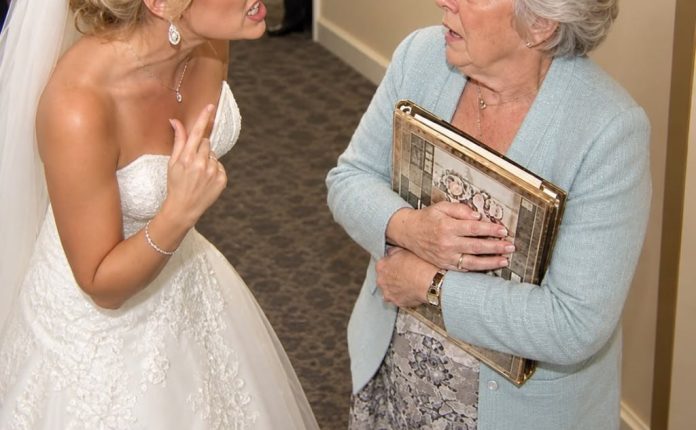
The check was already inside the envelope before Madison asked for the money.
That was the detail I remembered most clearly afterward.
Not the amount.
Not my sister’s squeal.
Not even my mother’s sentence.
The envelope.
Cream-colored.
Heavy paper.
My mother’s neat handwriting across the front.
Madison & Trevor — For Your Beautiful Beginning.
It had been sitting on the sideboard when I arrived at my parents’ house that Sunday afternoon.
That meant Mom had already written the check.
My sister’s little performance about wedding expenses was not a request.
It was theater.
She knew the answer before the conversation started.
Maybe everyone did except me.
My name is Hannah Mitchell.
I was thirty-one then.
Madison was twenty-eight.
We grew up outside Charlotte, North Carolina, in the kind of neighborhood where houses had matching brick mailboxes and people hired companies to make lawns look naturally perfect.
My father, Robert Mitchell, owned a commercial flooring business.
My mother, Elaine, had worked in real estate when we were younger, then gradually stopped taking clients because, as she liked to say, “A family runs better when someone is paying attention.”
Our family did run smoothly.
For Madison.
I was the person expected to adjust when it didn't.
That afternoon, Madison and her fiancé, Trevor Collins, arrived twenty minutes late.
Mom did not mention it.
When I had arrived eight minutes late the previous Christmas because an accident blocked Interstate 85, Dad said punctuality reflected respect.
Madison swept inside wearing white trousers and a camel sweater, carrying bridal magazines and a folder full of venue photographs.
She kissed Mom.
Kissed Dad.
Then looked at me.
“Oh. You came.”
I smiled.
“You invited me.”
“I know. I just thought you'd be working.”
That was another family habit.
My career was treated like a scheduling defect.
At the time, I worked in corporate operations for a regional healthcare services company.
The pay was respectable.
The work was demanding.
I liked parts of it and hated others, which apparently made it less legitimate than Madison’s job with one of Dad’s acquaintances.
She handled client relations for a small marketing agency.
Her actual responsibilities changed depending on who was asking.
Mom called her “creative.”
Dad called her “a natural people person.”
Madison called herself “basically management.”
I had never understood exactly what she managed.
We sat in the dining room.
Madison spread photographs across the table.
The venue looked beautiful.
Stone building.
Rolling lawn.
Glass reception room.
Trevor’s family had money, though they rarely talked about it.
His father was a cardiologist.
His mother had inherited several commercial properties.
Madison wanted the wedding to prove she belonged comfortably in their world.
Two hundred guests.
Designer gown.
Live band.
Custom flowers.
Late-night food stations.
A champagne wall.
Apparently champagne now needed architecture.
Dad nodded through everything.
Mom asked about colors.
Trevor looked mildly terrified.
I drank water.
Then Madison reached the cost page.
She sighed.
Not a normal sigh.
The kind she had perfected since adolescence.
A quiet release of breath designed to make somebody ask what was wrong.
Mom responded exactly as trained.
“What is it, sweetheart?”
Madison looked down.
“We've cut everything we can.”
Trevor blinked.
I suspected that was news to him.
Madison continued.
“His parents are contributing, obviously.”
Obviously.
“But there are deposits.”
“Final balances.”
“Photography.”
“The planner.”
“The floral installation.”
I almost smiled at installation.
Flowers were apparently infrastructure now.
Dad asked:
“How short are you?”
Madison hesitated.
“One hundred thousand.”
I choked on my water.
Everyone looked at me.
“Sorry.”
I reached for my napkin.
“I thought she said one hundred thousand.”
Madison frowned.
“I did.”
“For a wedding?”
“Hannah.”
Mom’s tone sharpened.
“This is not the time.”
I stared at her.
“I asked one question.”
Dad looked at Madison.
“That's what you need?”
She nodded.
Then Mom stood.
Walked toward the sideboard.
Picked up the cream envelope.
And handed it to my sister.
Madison’s mouth opened.
“Oh my God.”
She had known.
I knew she had known.
Still, she performed surprise beautifully.
“You guys.”
She hugged Mom.
Then Dad.
Trevor thanked them repeatedly.
Dad poured wine.
“To Madison and Trevor.”
We raised glasses.
I raised mine too.
I was not angry that they helped her.
That matters.
I had spent most of my life watching my parents help Madison more than me.
I was used to it.
When she turned sixteen, they gave her a new Honda.
When I turned sixteen, Dad drove me to a used-car lot and explained financing.
I paid half.
When Madison struggled in college, they hired tutors.
When I needed textbooks, Dad suggested more restaurant shifts.
When Madison graduated, they took a family trip to Florida.
I was not invited because, Mom said, “You probably can’t get away from work anyway.”
I had told her I had vacation days.
She changed the subject.
Still, I had trained myself not to count.
Counting made me resentful.
Resentment made me difficult.
Difficult was the family word for Hannah whenever I noticed patterns.
So I raised my glass.
“Congratulations.”
Madison smiled triumphantly.
Then Mom looked at me.
“And before you get any ideas, Hannah, you don't deserve any help.”
Everything stopped.
Even Trevor looked at her.
I lowered my glass.
“What?”
Mom gave an impatient little laugh.
“You know what I mean.”
“No.”
“I genuinely don't.”
She folded her hands.
“You've made your choices.”
“What choices?”
“You bounce from job to job.”
“I changed companies twice in six years.”
“For more money,” Dad added, as though that proved instability.
“Yes.”
I looked at him.
“That is generally one reason people change jobs.”
Mom ignored me.
“You live in an apartment.”
“I rent.”
“You're unmarried.”
I almost laughed.
“So?”
“You have no real foundation.”
Madison stared at the check.
Trevor looked increasingly uncomfortable.
Mom continued.
“We aren't going to keep rewarding you for refusing to settle down.”
I felt heat move through my chest.
“Rewarding me?”
“You know how hard your father worked.”
“I do.”
“And Madison is building a family.”
I stared at her.
“So I don't deserve help because I don't have a husband?”
“Don't twist it.”
“What am I twisting?”
Dad put his wine down.
“This is exactly what your mother means.”
I looked at him.
“What?”
“You make everything an argument.”
“I didn't ask for money.”
Silence.
That mattered.
“I didn't walk into this house asking for anything.”
Mom said:
“I'm simply making expectations clear.”
“Why?”
She looked annoyed.
“Because I know you.”
I laughed.
That came out sharper than I intended.
“No.”
I looked directly at her.
“You know the daughter you decided I was.”
“Hannah.”
I stood.
Dad's face hardened.
“Sit down.”
“No.”
Madison finally spoke.
“Can we not ruin my engagement weekend?”
I turned toward her.
“You already have the check.”
Her eyes narrowed.
“Wow.”
“What?”
“Nothing.”
“No. Say it.”
“You always do this.”
“Do what?”
“Make my good moments about your resentment.”
I stared.
Mom had just told me I did not deserve parental help.
At a conversation where I had requested none.
And somehow my reaction was stealing Madison’s good moment.
The logic was so familiar that for the first time, I saw how absurd it was.
“I hope you have a beautiful wedding.”
I meant it.
Then I picked up my purse.
Dad said:
“You're leaving because your sister received something nice.”
“No.”
I placed the napkin neatly beside my plate.
“I’m leaving because Mom needed to insult me while giving it to her.”
Mom rolled her eyes.
“You're thirty-one years old.”
“Yes.”
“So stop expecting everything to be equal.”
That sentence stayed with me.
Because she was right about one part.
I was thirty-one.
Too old to keep expecting fairness from people who had consistently shown me their version of family.
I looked around the table.
Dad irritated.
Mom offended.
Madison clutching the envelope.
Trevor silent.
I felt something inside me release.
Not forgiveness.
Hope.
The exhausting hope that if I worked hard enough, helped often enough, remained calm enough, achieved enough, eventually they would recognize me.
I was done auditioning.
“I won't expect it anymore.”
Mom frowned.
“What?”
“Equality.”
Another.
“Help.”
Another.
“Approval.”
Dad stood.
“Don't be melodramatic.”
“I’m not.”
I looked at him.
“I’m agreeing with Mom.”
Then I left.
No one followed.
That hurt more than I admitted.
In my car, I sat with both hands on the steering wheel.
I expected to cry.
Nothing happened.
I drove home.
My apartment was eleven hundred square feet.
One bedroom.
Second-floor unit.
Kitchen cabinets that never closed properly.
A water heater that took fifteen minutes to recover after a shower.
I had spent three years thinking it was temporary.
A waiting room.
Until marriage.
Until a house.
Until my family decided I had built something respectable.
That evening, I looked around and realized something.
It was mine.
Not legally.
I rented it.
But the life inside it was mine.
Every lamp.
Every book.
Every bill.
Every decision.
No one had given it to me.
That did not make me less deserving.
I blocked Mom first.
Dad second.
Then Madison.
I did not send a speech.
Did not announce estrangement.
Did not post anything.
I simply stopped.
The next morning, Mom emailed.
Your behavior yesterday was childish. Call me when you are ready to apologize.
I deleted it.
Dad left voicemail from his office number.
We aren't doing this, Hannah. Families disagree. You need to grow up.
Deleted.
Madison sent:
I can't believe you're jealous of my wedding.
That one almost made me respond.
Almost.
Instead I blocked her email too.
The silence that followed felt wrong.
For weeks, my body kept expecting interruption.
Phone ringing.
Mom needing a ride.
Dad asking whether I could help his office manager with a spreadsheet.
Madison needing the children picked up.
That happened often.
Madison had two children from a prior relationship.
Sophie, seven.
Eli, five.
I loved them.
Their father lived out of state.
I had become one of Madison’s regular emergency babysitters.
She never called it babysitting.
She called it:
“Aunt time.”
The first time she texted from another number asking whether I could collect Sophie from dance, I cried.
Not because I wanted to help Madison.
Because I wanted to see Sophie.
I nearly said yes.
Then noticed Madison had not said please.
Had not acknowledged the argument.
Had not asked whether I was okay.
Just:
Need you at 5:30. Studio on Providence.
I turned the phone facedown.
That night guilt sat on my chest.
I imagined Sophie waiting.
Then reminded myself Madison had a fiancé, parents, friends, and the child’s father.
I was not abandoning a child by refusing to remain the default solution.
The next morning Madison emailed through work.
I had to cancel an appointment because of you.
That clarified it.
I changed my work contact information.
The first six months were lonely.
People romanticize cutting contact as liberation.
Sometimes it is.
It is also grief.
I missed Mom’s pancakes.
Dad’s terrible jokes.
Madison sending pictures of the children.
I missed belonging to something, even something that regularly hurt me.
At night, I sometimes wondered whether I had exaggerated everything.
Maybe Mom had been clumsy.
Maybe Dad had been frustrated.
Maybe I had ruined a family over one sentence.
Then I remembered it was not one sentence.
It was a pattern.
The sentence had simply been honest enough to name the hierarchy.
Six months later, I accepted a job in Raleigh.
Technology consulting.
Operations transformation.
The salary increased by almost forty percent.
Dad would have called changing companies disloyal.
I called it progress.
I packed the apartment myself.
Loaded boxes.
Left Charlotte on a rainy Saturday.
No farewell dinner.
No family photograph.
No one waving.
I cried for the first thirty miles.
Then Raleigh appeared.
I rented a modest apartment.
Secondhand sofa.
Cheap desk.
Dining table from Facebook Marketplace.
Started work Monday.
The job was difficult.
I loved it.
Companies hired us when their growth had outrun their systems.
Warehouses with inventory nobody trusted.
Departments using seven different spreadsheets.
Managers arguing about data.
Vendors bleeding money.
I was good at seeing where things broke.
Maybe growing up inside my family trained me.
I knew what happened when people normalized dysfunction long enough.
At a professional networking event, I met Rebecca Lawson.
Forty-two.
Blunt.
Elegant without trying.
She had built and sold two small businesses.
We talked over terrible conference coffee.
She asked what I did.
I explained.
She said:
“You should consult independently.”
I laughed.
“No.”
“Why?”
“I don't have money to start a company.”
“That's not why.”
I frowned.
She smiled.
“You said no too fast.”
We had dinner a week later.
Rebecca asked questions no one in my family had ever asked.
What problems do clients repeatedly have?
What do you solve particularly well?
What would companies pay to fix quickly?
What skills do you lack?
What risks can you tolerate?
Nobody asked whether I was married.
Nobody asked whether I wanted children.
Nobody suggested ambition might frighten men.
It felt almost suspicious.
I began planning.
Not quitting.
Planning.
I hired an attorney.
Opened an LLC.
Created Mitchell Strategic Consulting.
Built a simple website.
Worked nights.
Weekends.
Within my employment contract.
My first client was a regional logistics company.
Their inventory numbers were so unreliable that managers physically walked through warehouses before approving orders.
Three months.
Long nights.
One warehouse in Greensboro had no functioning heat.
I practically lived in thermal socks.
We rebuilt process.
Reduced duplicate purchasing.
Improved fulfillment.
The COO referred me to a manufacturer.
Then another firm.
For the first year, I kept my regular job.
Worked constantly.
Saved everything.
At some point, fear stopped feeling like a warning and became background noise.
The second year, revenue grew enough that I resigned.
I hired an administrative assistant.
Then a data analyst.
Then Olivia Chen, a project manager so competent that within two months I wondered how I had survived without her.
We made mistakes.
I underpriced a major engagement.
One client paid ninety days late.
I hired someone who looked brilliant in interviews and missed every deadline.
I spent one terrifying weekend calculating payroll and wondering whether independence had been the stupidest decision of my life.
Rebecca came over with wine.
Looked at my spreadsheets.
Then asked:
“Are you actually failing?”
“I don't know.”
“Yes, you do.”
I ran the numbers again.
“No.”
“Then you're scared.”
Different problem.
By year three, the company changed.
Recurring contracts.
Referrals.
A team.
Profit.
Not fantasy money.
Real business.
Real taxes.
Real expenses.
Real reserves.
I paid myself reasonably.
Invested.
Saved.
Then started looking for a house.
I did not intend to buy something enormous.
The house outside Raleigh found me.
Five bedrooms.
Floor-to-ceiling windows.
Stone patio.
Small pool.
Mature oaks.
Home office.
Enough room for friends.
Enough garden space for the vegetables I had wanted since childhood.
Just over two million dollars.
I nearly walked away because the number frightened me.
My accountant, Daniel Price, reviewed everything.
Down payment.
Mortgage.
Reserves.
Business liquidity.
Retirement.
Worst-case revenue decline.
He looked at me.
“You can afford it.”
I whispered:
“That feels irresponsible.”
“Why?”
I did not have an answer.
Then I realized.
Because expensive things were for Madison.
Help was for Madison.
Celebration was for Madison.
I had learned to interpret comfort as evidence I was taking too much.
I made the offer.
It was accepted.
At closing, I cried in the parking lot before driving home.
Not because I owned an impressive house.
Because three years earlier my mother looked across a dining table and told me I did not deserve help.
Now I had stopped asking the question.
I moved in on Friday.
Rebecca came.
Olivia brought pizza.
Friends sat on the kitchen floor because furniture delivery was delayed.
We drank sparkling cider from mismatched glasses.
Nobody asked what my parents thought.
Nobody compared me with my sister.
Nobody needed me to fail so someone else could look successful.
Four days later, I was carrying boxes through the front door when a car slowed.
I barely noticed.
Then it stopped farther down the street.
Madison.
She stared.
I froze.
Three years.
No contact.
She lowered the window.
“Hannah?”
I stood holding a box.
“Hi.”
She looked at the house.
Then me.
Then the house again.
“You live here?”
“Yes.”
She did not smile.
Did not say congratulations.
Her face tightened.
“How?”
One word.
Exactly like Mom would have asked it.
I almost laughed.
“I bought it.”
“With what?”
“Money.”
“Don't be stupid.”
The old tone.
I felt strangely calm.
“I have movers coming back.”
Madison stared at my car.
The landscaping.
The windows.
“You never told anyone.”
“We haven't spoken in three years.”
“That’s not an answer.”
“It actually is.”
Her face flushed.
“You've been hiding this.”
“No.”
“I've been living.”
She drove away.
Nineteen minutes later, my phone rang.
A number I once knew by heart.
Elaine.
I watched it vibrate.
Declined.
Again.
Declined.
A message:
Hannah, this is your mother. Madison told me something very disturbing. Call immediately. We need to discuss your financial situation.
I stared.
Three years without asking whether I was alive.
Twenty minutes after learning about the house, my finances became a family emergency.
The phone rang again.
This time I answered.
“Hello, Elaine.”
Silence.
Then:
“Elaine?”
“Yes.”
“Since when do you call your mother by her first name?”
“Since you stopped acting like one.”
She inhaled sharply.
“Don't start.”
Some family phrases survive everything.
She continued:
“Madison says you've bought a mansion.”
“I bought a house.”
“How?”
“I worked.”
“Don't insult my intelligence.”
I looked around the kitchen.
Moving boxes.
Sunlight.
Keys.
My life.
She said:
“People don't become millionaires in three years.”
“Some people build businesses.”
“What business?”
That almost made me laugh.
“You genuinely don't know.”
Silence.
Then:
“Are you involved in something illegal?”
There it was.
Her first explanation for my success.
Crime.
Not work.
Not talent.
Not discipline.
I closed my eyes.
“Goodbye, Elaine.”
“Hannah, wait. Your father—”
I ended the call.
My hands shook.
I expected guilt.
Instead, I felt clarity.
Madison had discovered the house.
My family had discovered I was no longer useful because I was available.
I was useful because I had money.
And within forty-eight hours, they would make that unmistakably clear.
END PART 1