For the first two hours of our flight to Washington, DC, the man beside me kept casting uneasy glances at my combat boots and military tattoos. He clearly wasn’t comfortable sharing a row with a bearded stranger who looked like he’d been through some rough situations. All I wanted was to get some sleep and remain unnoticed. But when the captain announced over the intercom that American military aircraft were intercepting our flight, the frightened businessman stared in disbelief as the lead fighter pilot called me by name over the radio.
I didn’t want the medal. I had no interest in the ceremony, the formal handshakes, or the applause. If I could have chosen anything, it would have been to disappear into the crowd.
I was sitting in seat 12A aboard United Airlines Flight 237, an economy-class window seat, looking down at the Arizona desert from 35,000 feet. As far as the other 147 passengers knew, I was simply another traveler flying from San Diego to Washington, DC. Beneath my tan tactical cap, my dark hair was cropped short. My forearms, covered in tattoos depicting military unit insignias, deployment coordinates, and a Trident, rested quietly across my lap.
I was 43, but I felt decades older. A constant, dull pain ran through my left leg, the lasting result of shrapnel wounds I’d suffered in Syria eight months earlier. The classified mission had saved lives, but two of my brothers hadn’t made it home. That operation had also ended my career. The doctors managed to save my leg, but my time as a Navy SEAL—breaching doors and leading my men into danger—was finished.
I’d been medically retired.
Now I was on my way to the Pentagon to accept an award I didn’t believe I’d earned. It was recognition for an operation I wasn’t allowed to discuss, presented before politicians who could never truly grasp what it had cost.
The middle seat was occupied by a corporate executive in his fifties. He was visibly nervous, typing rapidly on his laptop and occasionally glancing at me from the corner of his eye. I recognized the expression. It was the wary discomfort people showed when they found themselves sitting beside someone they considered threatening.
I understood what he saw.
A 195-pound man with lean muscle, a heavy beard, combat boots, and eyes that had witnessed more than most people could imagine.
His uneasiness suited me better than an attempt at conversation. I was perfectly happy being a stranger.
Then my phone vibrated.
A message had arrived from Captain Jake Morrison, my former team leader and the closest friend I had.
You on the plane? Pentagon ceremony starts at 1800 tomorrow. Don’t show up late, and don’t even think about skipping it. Admiral’s orders.
I answered:
I’m on the flight. Relax.
His response appeared almost immediately.
You’d better be. You earned this, brother. Give them a chance to honor you.
I slipped the phone into my pocket and shut my eyes, hoping to silence the memories that never seemed to leave me alone.
Then the captain spoke over the intercom.
There was something different in his voice—a carefully controlled strain that brought every survival instinct I’d developed over the years instantly to attention.
“Ladies and gentlemen, Captain Rodriguez speaking from the flight deck,” he announced.
The entire cabin fell quiet.
“Air traffic control has just advised us that two United States Air Force F-35 fighter jets will be escorting our aircraft under a routine security protocol. There is no reason to be concerned. We ask that everyone remain in their seats.”
The cabin erupted.
“Fighter jets? What for?!” a man yelled from somewhere behind us.
“Is somebody hijacking the plane?!” a woman cried, her voice growing frantic.
Passengers leaned across their rows and crowded toward the windows, pressing their faces against the glass to see what was happening outside.
Beside me, the executive had gone pale. His hands trembled.
I remained in my seat and turned toward the window.
And there they were.
Two F-35A Lightning II fighters, among the most sophisticated stealth aircraft ever built, were maintaining a tight formation alongside our plane on the port side.
Sunlight reflected off their canopies, allowing me to make out the pilots’ helmets.
My eyes immediately began assessing the details.
United States Air Force markings. External fuel tanks. Internal weapons bays containing AIM-120 missiles.
This wasn’t a training exercise.
We were being intercepted for real.
“Holy crap,” the businessman muttered, pulling himself farther away from the window.
He looked at me, fear written across his face.
“Why are those things out there? What did you do?”
I gave him no answer.
Instead, I opened my bag and took out my encrypted military phone, a secure communication device reserved for emergencies at the highest levels.
Before I could do anything else, it started ringing.
The name on the screen made my stomach tighten.
Captain Jake Morrison.
I answered immediately.
“Jake?”
“Listen carefully. Are you still at cruising altitude?”
“Thirty-five thousand feet. Somewhere over Arizona.”
“Has the captain made an announcement?”
I looked through the window at the two fighters maintaining formation outside.
“Yeah. He told us we have an escort. Want to explain why?”
Jake didn’t answer right away.
In all the years we’d served together, that kind of silence had never meant anything good.
“Your aircraft triggered a security alert,” he finally said. “We’re working with the FAA and federal authorities. I need you to stay calm and follow the flight crew’s instructions.”
“What kind of alert?”
“An attempted hijacking was reported through an aviation emergency channel. We’re still determining whether the report is legitimate.”
I glanced toward the businessman beside me.
He was staring at my phone.
“How did you know I was on this flight?” I asked.
“Because your name was included in the report.”
For a moment, the low hum of the engines seemed to disappear.
“My name?”
“Specifically yours.”
I straightened in my seat.
“Jake, what’s going on?”
“Eight months ago, your team recovered material during the operation in Syria. Some of that information led to an investigation involving an American defense contractor.”
I remembered.
Of course I remembered.
We had gone into that compound expecting to recover a kidnapped intelligence officer. Instead, we’d discovered evidence that sensitive equipment had reached people who should never have possessed it.
Two of my men died getting us out.
The intelligence officer survived.
And the evidence we recovered had disappeared into classified investigations I wasn’t allowed to discuss.
“What does that have to do with my flight?”
“The investigation has progressed. Someone apparently believes you’re coming to Washington to testify.”
“I’m coming for a medal.”
“I know that. You know that. But whoever submitted the threat apparently doesn’t.”
I closed my eyes.
Someone had taken a routine commercial flight and turned it into a national security emergency because of a mistaken assumption about me.
“Do you believe there’s someone aboard?”
“We don’t know. Federal authorities are checking the passenger manifest and the information behind the report. Your pilots are coordinating with air traffic control.”
“Is the threat credible?”
“Credible enough to take precautions.”
I looked outside again.
The closest F-35 adjusted its position slightly, sunlight flashing along its gray fuselage.
“Who’s flying those fighters?”
Jake hesitated.
Then he said something I hadn’t expected.
“Someone you know.”
Before I could ask another question, the captain’s voice returned over the intercom.
“Ladies and gentlemen, we are currently coordinating with air traffic control and will be diverting to Phoenix Sky Harbor International Airport as a precaution. Our flight crew has the situation under control. Please remain seated with your seat belts fastened.”
The businessman beside me grabbed his armrest.
“Phoenix?” he whispered. “Why are we going to Phoenix?”
I kept my phone against my ear.
“Jake, they’re diverting.”
“That’s the plan. And listen to me. Whatever happens, don’t try to take command of that cabin. You’re a passenger. Follow the crew’s directions.”
I almost laughed.
He knew me too well.
“Wasn’t planning on doing anything.”
“Good. Keep it that way.”
Then his voice softened.
“And brother?”
“Yeah?”
“You’re not alone up there.”
The call ended.
I lowered the phone.
The businessman was watching me with the expression of someone who had just realized the stranger beside him was connected to the emergency unfolding around them.
“You’re military,” he said.
I looked at my tattooed forearm.
“Used to be.”
“Who was that?”
“A friend.”
He glanced at the encrypted phone.
“That doesn’t look like a normal phone.”
“It isn’t.”
His eyes widened.
“Are we in danger?”
I considered the question.
I had spent most of my adult life learning not to give reassurance I couldn’t justify.
“I don’t know,” I said. “But there are a lot of people working to keep us safe.”
He swallowed and looked outside.
One of the fighters had moved slightly ahead of us.
Then something happened that I would remember for the rest of my life.
The captain began another announcement, but instead of his voice, a burst of radio static came through the cabin speakers.
A second voice followed.
“United Two Three Seven, Viper Lead. Confirm you are receiving.”
The transmission was crisp, authoritative, and unmistakably military.
For a moment, nobody in the cabin moved.
Then the captain answered.
“Viper Lead, United Two Three Seven. We have you.”
“Roger. Maintain your assigned heading and altitude. Air traffic control will provide further instructions.”
The businessman leaned closer to the window.
“That’s one of the fighter pilots,” he whispered.
I nodded.
Then the pilot spoke again.
“United Two Three Seven, one additional request. We understand a retired Navy operator is aboard.”
My heart began pounding.
The transmission continued.
“Please confirm whether Chief Petty Officer Nathan Cole is among your passengers.”
The businessman turned so quickly that his laptop nearly fell into the aisle.
He looked from the speaker to my face.
Then to my tattoos.
Then back to my face.
I stopped breathing for a second.
Nathan Cole.
My name.
The captain’s response came through.
“Viper Lead, stand by.”
A flight attendant near the forward galley looked down the cabin with a confused expression.
The radio audio abruptly stopped.
Whatever had caused the cockpit communication to come through the passenger announcement system had apparently been corrected.
But the damage was done.
People were staring.
The businessman beside me had gone completely still.
“That’s you,” he whispered.
I didn’t answer.
“That’s your name, isn’t it?”
I stared at the phone resting in my hand.
“Yes.”
His mouth fell open.
For the first time since takeoff, he wasn’t looking at me as though I were a threat.
He was looking at me as though I might be the only person who knew what was happening.
“Why would a fighter pilot know your name?”
I looked outside.
The lead jet had moved into a position where I could see its cockpit.
And something about the aircraft’s markings stirred a memory.
A small red insignia near the forward fuselage.
An emblem I had seen before.
Not on an airplane.
On a patch.
Eight months earlier, in Syria.
The memory came back with painful clarity.
Our extraction helicopter had taken fire less than seven miles from the Turkish border.
We had been trapped in a rocky valley with wounded men, dwindling ammunition, and hostile vehicles closing in from three directions.
Our radio operator had called repeatedly for assistance.
And a pair of American fighters had answered.
The lead pilot’s callsign was Viper One.
His real name was Major Ethan Walker.
He had stayed overhead until every surviving member of my team was clear, directing supporting aircraft and coordinating with the ground controllers through a desperate forty-three-minute extraction.
I had never met him in person.
But I remembered his voice.
I remembered it because, on the worst day of my life, that voice had told me help was coming.
A flight attendant approached our row.
“Excuse me, sir. Are you Nathan Cole?”
I looked up.
“Yes, ma’am.”
“The captain has asked whether you would identify yourself to the crew. He wants you to remain seated. We’re not asking you to do anything else.”
I nodded.
“Understood.”
She examined my face.
“Is there something you need?”
I almost told her there was.
I almost asked her to tell the captain that I had worked through situations worse than this one.
But Jake’s warning echoed in my head.
Don’t try to take command of that cabin.
So I shook my head.
“No, ma’am. Just let me know if you need me to move or follow any special instructions.”
She gave a small, grateful nod and returned to the galley.
Beside me, the businessman was breathing rapidly.
“Chief Petty Officer,” he repeated. “That’s Navy, right?”
“Yes.”
“Special operations?”
I glanced at my Trident tattoo.
“Yes.”
His expression changed again.
“You’re a Navy SEAL?”
“Retired.”
He stared at me.
Then he looked down at his expensive watch and gave a nervous laugh.
“God. I’ve been sitting next to a Navy SEAL for two hours.”
I said nothing.
He rubbed his forehead.
“I thought you were going to cause trouble.”
That caught my attention.
He looked embarrassed.
“Your tattoos. The boots. You looked angry when you boarded.”
“I was tired.”
“I know that now.”
He extended a trembling hand.
“My name’s Richard Bennett.”
I shook it.
“Nathan.”
He held my hand for a moment longer than necessary.
“Are those fighter jets here because of you?”
I glanced toward the window.
“That’s what I’m trying to understand.”
Richard released my hand.
For the next several minutes, the cabin settled into an uneasy silence.
Flight attendants moved through the aisles, answering questions and reassuring passengers. A young mother two rows ahead held her daughter against her chest. An elderly man clutched a small Bible.
Outside, the F-35s maintained their positions.
I watched them closely.
Not because I expected them to perform some dramatic maneuver.
Because their steady presence reminded me that somewhere beyond the aircraft’s metal skin, trained people were doing their jobs.
Just as my brothers once had.
Then Richard spoke again.
“Can I ask you something?”
“Sure.”
“Have you ever been shot at?”
I looked down at my left leg.
“Yes.”
“More than once?”
I nodded.
He stared at the faded scar visible above my boot.
“That happen overseas?”
“Syria.”
His expression softened.
“I’m sorry.”
I turned toward him.
He looked genuinely ashamed.
“I spend my life in conference rooms,” he said. “I complain about delayed flights, expensive hotels, bad quarterly reports. And then I get on an airplane and decide the guy next to me is dangerous because he’s wearing boots.”
I shrugged.
“You didn’t know me.”
“That’s the point.”
Before I could answer, my secure phone vibrated again.
This time, the screen displayed an unfamiliar military routing number.
I answered.
“Cole.”
A voice spoke immediately.
“Chief Cole, this is Major Ethan Walker, United States Air Force. Do you remember me?”
For the first time that day, I smiled.
“Viper One.”
A brief silence followed.
Then Walker laughed.
“Good to hear your voice, Chief.”
“Same to you.”
“I understand you’re aboard the aircraft we’re escorting.”
“I’ve noticed.”
“Sorry about that radio transmission earlier. The airliner’s cockpit communication was inadvertently routed through the cabin speakers.”
“You certainly made an impression.”
“Wasn’t my intention.”
His voice became more serious.
“We’ve been given a limited briefing concerning the threat. I wanted to establish contact with you through an authorized channel. Your former team leader helped arrange it.”
“Jake?”
“Yes.”
“What’s the situation?”
“We’re escorting your aircraft while the FAA coordinates a diversion. The pilots are responding normally. There is currently no indication of a loss of cockpit control.”
“That’s good news.”
“It is. And Chief, I wanted to tell you something.”
I waited.
“You got my guys home that night.”
My throat tightened.
Walker continued.
“The after-action report said your team maintained its position under fire until the extraction corridor was clear. If you’d withdrawn earlier, our supporting aircraft would have been trying to identify friendly and hostile positions in the same grid.”
“We didn’t have much choice.”
“You always had choices.”
I looked down at my hands.
“Two of my men didn’t make it.”
The line went quiet.
“I know,” Walker said softly.
For several seconds, neither of us spoke.
Then he added, “I read the citation, Nathan. I know what you did.”
I swallowed.
“Then you know I don’t deserve a medal.”
“No,” he answered. “I know you don’t want one. Those aren’t the same thing.”
I closed my eyes.
He continued.
“I’ll see you safely into Phoenix. After that, the people on the ground will handle the rest.”
“Copy that.”
“And Nathan?”
“Yeah?”
“Good flying weather today.”
I smiled faintly.
“Keep the shiny side up, Major.”
He laughed.
“Always.”
The call ended.
Richard had been watching me throughout the conversation.
“That was the fighter pilot?”
“Yes.”
“You know him?”
“He helped my team once.”
Richard glanced outside with renewed curiosity.
“Helped you how?”
I looked at the gray aircraft beyond the window.
“Helped us get home.”
That was all I could say.
And, for once, it was enough.
Twenty minutes later, the captain announced that we had begun our descent toward Phoenix.
The flight attendants conducted a final cabin check.
Nobody argued about seat belts.
Nobody complained about the diversion.
As the city came into view beneath us, I watched one of the fighters move farther away.
The other remained visible briefly before turning off toward its assigned route.
The passengers began applauding.
Not loudly.
Not triumphantly.
Just relieved.
Richard wiped his forehead with a tissue.
“I’ve never been so happy to see an airport.”
“Me neither,” I said.
He laughed.
Then our wheels touched the runway.
The plane rolled steadily along the pavement before slowing near a remote parking area.
Through the window, I saw airport emergency vehicles, police cars, and several unmarked SUVs waiting at a distance.
The captain came over the intercom.
“Ladies and gentlemen, we have landed safely in Phoenix. As a precaution, federal authorities will be conducting security procedures before we proceed to the terminal. Please remain seated and follow all crew instructions.”
A collective groan moved through the cabin.
But it was a relieved groan.
People were alive.
The airplane was on the ground.
And whatever had brought those fighters to our side had not ended in disaster.
Several minutes later, federal agents boarded.
They identified themselves, explained that passengers would be interviewed, and began coordinating with the flight crew.
I remained seated.
When one of the agents reached our row, he looked at my identification.
“Chief Cole?”
“That’s me.”
“Would you come with us, please?”
Richard looked alarmed.
“Is he under arrest?”
The agent shook his head.
“No, sir. We need to speak with him regarding the security report.”
Richard turned toward me.
For a moment, I saw the fear returning to his face.
But this time, it wasn’t fear of me.
It was concern for me.
“Are you going to be okay?”
I stood carefully, adjusting my weight to protect my injured leg.
“I’ll be fine.”
He hesitated.
Then he extended his hand again.
“Thank you for staying calm.”
I shook it.
“Take care of yourself, Richard.”
As I moved toward the front of the aircraft, I felt eyes following me.
A few passengers whispered.
Someone asked whether I was the man the fighter pilot had mentioned.
I kept walking.
At the forward door, I paused to thank the lead flight attendant.
“You and your crew did good work today.”
She smiled wearily.
“So did you, apparently.”
I shook my head.
“I sat in my seat.”
“Sometimes that’s exactly what we need people to do.”
I couldn’t argue with that.
Outside, the Arizona air was warm and dry.
Two federal agents escorted me to a vehicle and then to a secure room inside an airport operations building.
There, I finally learned what had happened.
An anonymous message had been sent to an aviation security reporting channel shortly after our aircraft departed San Diego.
The sender claimed that a passenger named Nathan Cole was carrying sensitive material and that an attempted takeover of the aircraft was imminent.
The message included my seat number.
It also referenced details from the Syria operation that had never been released publicly.
That was what had made the warning so concerning.
Whoever sent it knew enough to be taken seriously.
The agents explained that the reporting system had elevated the warning for immediate review. Air traffic authorities had coordinated with the flight crew while military aircraft were assigned to observe and escort the airliner during the diversion.
No one had attempted to enter the cockpit.
No weapon had been found.
No passenger had made a threat.
And preliminary checks had revealed no evidence of an actual hijacking.
The emergency had been triggered by the report itself.
“Do you know who might have submitted it?” one agent asked.
I considered the question.
“I have an idea why someone might want to stop me from reaching Washington.”
The agent leaned forward.
“Go on.”
I explained what Jake had told me about the investigation.
I didn’t disclose operational details beyond what the agents were authorized to receive. Instead, I requested that they coordinate directly with the military investigators handling the original case.
They agreed.
Then the senior agent said something that changed the entire situation.
“Chief, we believe the person who submitted the report may have been trying to create a public security incident involving you.”
“To make me look like a threat?”
“Possibly. Or to prevent you from reaching Washington on schedule. We’re examining both possibilities.”
I leaned back.
Suddenly, the incident made an ugly kind of sense.
If someone could associate my name with a hijacking alert, even a false one, it might be enough to delay my trip, damage my reputation, or provoke an investigation that overshadowed the award ceremony.
It wouldn’t erase evidence recovered in Syria.
But someone desperate enough might have believed it could.
“Am I free to leave?” I asked.
“Once we’ve finished your interview and verified a few details, yes.”
“Then I’d like to make my flight tomorrow.”
The agent raised an eyebrow.
“Still going to Washington?”
“Apparently.”
He almost smiled.
Three hours later, I received confirmation that the aviation security scare had been assessed as a false report.
The investigation into its origin remained open.
Passengers were allowed to continue their travel arrangements, and the airline began coordinating replacement flights.
I was sitting alone in a quiet airport lounge when Jake called.
“Well,” he said, “you certainly know how to make an entrance.”
“Very funny.”
“You’re okay?”
“I’m fine.”
“Leg?”
“Hurts.”
“Anything new?”
“No.”
He sighed.
“The admiral wants you in Washington. We’ll make sure you get there.”
“Jake, someone’s trying to interfere with the investigation.”
“We know.”
“How much do we know?”
“Enough that the appropriate agencies are looking at a former senior employee of the defense contractor under investigation.”
I stared across the empty lounge.
“Someone from the original case?”
“Someone with access to information connected to it.”
“Do you think he sent the threat?”
“That’s what investigators are trying to establish. Don’t jump ahead of the evidence.”
I rubbed my face.
“Two men died in that valley, Jake.”
His voice changed.
“I remember.”
“If somebody sold equipment that helped get them killed—”
“Nathan.”
I stopped.
“We’re not going to forget them,” he said. “But you’re not going to fix this by carrying all of it yourself.”
I looked down at the floor.
For eight months, I’d been carrying exactly that.
The weight of the men I couldn’t save.
The decisions I replayed every night.
The knowledge that somewhere, in the space between orders and execution, two families had received the worst news imaginable.
I had never known what to do with surviving.
Jake spoke again.
“Come to Washington. Let us do this properly.”
I closed my eyes.
“All right.”
The following morning, a replacement flight carried me to Washington without incident.
No fighter escorts.
No emergency announcements.
Just coffee, turbulence, and a tired flight attendant who apologized because they had run out of orange juice.
It was perfect.
When I arrived, Jake was waiting outside baggage claim.
He looked older than I remembered.
More gray in his beard.
More lines around his eyes.
But when he saw me, his expression softened.
“There he is.”
I approached him.
For a moment, neither of us said anything.
Then he pulled me into a hug.
A real one.
The kind men like us usually reserved for funerals, hospital rooms, and homecomings nobody had expected.
“Good to see you, brother,” he whispered.
I held on longer than I intended.
“Good to see you too.”
He stepped back and looked at my leg.
“How’s the hardware?”
“Still attached.”
“That’s a start.”
We laughed.
Then he picked up my bag before I could protest.
“The admiral wants a word before tomorrow’s ceremony.”
I grimaced.
“Please tell me it’s canceled.”
“Not a chance.”
“I tried.”
“Yeah. We noticed.”
The Pentagon ceremony was scheduled for six o’clock that evening, after a security briefing and medical check.
I spent the afternoon in a quiet room, reviewing the unclassified version of the citation I would receive.
It described an operation conducted under extraordinary circumstances.
It described leadership under hostile fire.
It described the successful recovery of an American intelligence officer and sensitive material.
And it described a senior enlisted operator who had repeatedly exposed himself to enemy fire while directing the withdrawal of his teammates.
What it didn’t describe was the sound of Petty Officer First Class Michael Reyes calling for his mother after the explosion.
It didn’t describe the way Chief Daniel Brooks had pushed a wounded teammate behind a concrete barrier seconds before he was struck.
It didn’t describe the silence in the helicopter after we crossed the border.
I folded the citation and put it down.
Later, Jake found me staring at the wall.
“You ready?”
“No.”
He sat beside me.
“Good. Means you’re human.”
I looked at him.
“Do you ever think about that night?”
“Every day.”
“Do you ever wonder if we could have done something differently?”
“Of course.”
“Then how can you stand there and tell me I deserve a medal?”
Jake leaned forward, resting his elbows on his knees.
“Because I was there.”
I said nothing.
He continued.
“You were the one who carried Reyes after his leg was torn apart. You were the one who refused to leave Brooks behind. You held our position when the rest of us were running out of ammunition.”
“We all did our jobs.”
“Exactly.”
He turned toward me.
“And sometimes doing your job means more than people outside that world will ever understand.”
I looked away.
Jake wasn’t finished.
“You think accepting recognition means claiming you were more important than the men we lost. It doesn’t. It means allowing people to acknowledge what happened.”
I swallowed.
“And what about Michael and Daniel?”
“We’re going to honor them too.”
My eyes burned.
I hated that feeling.
I hated how easily grief could make a forty-three-year-old man who’d survived combat feel like a frightened kid.
Jake put a hand on my shoulder.
“You don’t have to enjoy the ceremony, Nathan. Just don’t run away from it.”
At five forty-five, I stood in a private room adjusting my dress uniform.
It felt strange wearing it again.
The fabric was stiff.
My leg ached.
And the man staring back from the mirror looked nothing like the operator who had once led missions overseas.
He looked tired.
He looked older.
He looked like someone who was still trying to figure out why he was alive.
A knock came at the door.
“Chief Cole?”
An aide stepped inside.
“They’re ready for you.”
I took one last breath.
“All right.”
The ceremony was held in a large auditorium filled with service members, senior officials, invited guests, and families.
I recognized several familiar faces.
Former teammates.
Officers I’d served under.
A few men I hadn’t seen since before Syria.
Then I saw two women sitting in the front row.
One held a framed photograph of a young sailor with a crooked smile.
The other held the hand of a little girl wearing a blue dress.
My chest tightened.
Michael Reyes’s mother.
Daniel Brooks’s widow.
I stopped walking.
For a moment, I couldn’t move.
Jake appeared beside me.
“They wanted to be here,” he said quietly.
I looked at him.
“You knew?”
He nodded.
“They asked us not to tell you. They thought you might try to disappear.”
Despite everything, I let out a small laugh.
“They know me pretty well.”
Jake guided me toward my seat.
The ceremony began with formal introductions and a brief explanation of the operation that avoided classified details.
Then an admiral stepped to the podium.
He spoke about courage.
Duty.
Sacrifice.
The men and women who serve without expecting anyone to remember their names.
I barely heard him.
My attention remained fixed on the two families in the front row.
Then the admiral said something that made me look up.
“Tonight, we recognize Chief Petty Officer Nathan Cole for extraordinary heroism. But we would fail in our duty if we allowed his actions to be separated from the courage of the men who served beside him.”
The room fell silent.
“Petty Officer First Class Michael Reyes and Chief Petty Officer Daniel Brooks made the ultimate sacrifice during this operation. Their families are here tonight, and we honor their service with our deepest gratitude.”
The admiral paused.
“Chief Cole has repeatedly insisted that he does not deserve to stand here.”
A few people smiled.
“He has said that the men who deserve recognition are the men who never came home.”
My throat closed.
The admiral looked directly at me.
“Chief, I would remind you that honoring the living does not diminish the fallen. Their courage and yours are part of the same story.”
Then he invited me to the stage.
I stood slowly.
Every step sent pain through my left leg.
But I made it to the podium.
The admiral read the citation.
I heard phrases that sounded almost foreign.
Extraordinary heroism.
Conspicuous gallantry.
Disregard for personal safety.
When he placed the Navy Cross around my neck, I felt its weight settle against my chest.
The audience stood.
Applause filled the room.
But I couldn’t look at them.
I was watching Reyes’s mother.
Tears streamed down her face.
Beside her, Brooks’s widow held her little girl close.
And I realized that all the recognition in that room couldn’t give them what they truly wanted.
Neither could I.
When the applause faded, the admiral stepped aside and invited me to speak.
I hadn’t prepared anything.
Not a single word.
I approached the microphone.
For a moment, I stared at the rows of faces.
Then I said the only thing that felt true.
“I wasn’t supposed to be the one standing here.”
The room became completely quiet.
I looked toward the front row.
“Michael Reyes was twenty-eight years old. He loved bad jokes, old country music, and calling his mother every Sunday.”
His mother covered her mouth.
“Daniel Brooks was thirty-six. He kept a photograph of his daughter inside his body armor. Every time we prepared for a mission, he touched that picture before putting on his helmet.”
I paused.
“Both of those men were better than me in ways I still don’t know how to explain.”
My voice trembled.
I didn’t try to hide it.
“People keep telling me I’m a hero. But I remember being scared. I remember making decisions without knowing whether they were right. I remember wishing I could turn back time.”
I swallowed hard.
“Most of all, I remember the men who trusted me to bring them home.”
Nobody moved.
“I can’t change what happened. I can’t bring Michael or Daniel back. But I can promise their families one thing.”
I looked directly at the two women.
“I will never forget them. And I will spend whatever time I have left trying to live in a way that honors what they gave.”
For a moment, I couldn’t continue.
Then I touched the medal hanging against my chest.
“This may have my name on it. But it belongs to all of us.”
I stepped away.
The room rose again.
This time, the applause didn’t feel like celebration.
It felt like remembrance.
After the ceremony, I found Reyes’s mother waiting near the exit.
She approached slowly.
For a second, I feared what she might say.
I had imagined that conversation a thousand times.
Maybe she would ask why I had survived.
Maybe she would ask whether I could have done more.
Maybe she would look at me and see only the man who had returned without her son.
Instead, she took my hands.
“Nathan,” she whispered.
“Ma’am.”
“Michael loved serving with you.”
My eyes filled.
“He talked about you every time he called home.”
I couldn’t speak.
She squeezed my hands.
“He said you were the kind of leader who never asked his men to do something he wouldn’t do himself.”
I stared at her.
Then she said the words I’d needed to hear for eight months.
“He knew you would never leave him willingly.”
I broke.
Not loudly.
Not dramatically.
My shoulders simply began shaking, and I couldn’t stop the tears.
She pulled me into her arms.
And for the first time since Syria, I allowed someone else to hold some of the grief.
When we finally stepped apart, Brooks’s widow approached with her daughter.
The little girl looked up at me.
“Are you Uncle Nathan?”
I knelt carefully, ignoring the pain in my leg.
“Yeah, sweetheart. That’s me.”
She studied my face.
“Daddy said you were his friend.”
I nodded.
“He was my friend too.”
She looked at the medal around my neck.
“Is that because you were brave?”
I glanced at her mother.
Then back at her.
“It’s because I had brave friends.”
She considered that answer seriously.
Then she reached forward and hugged me.
I wrapped my arms around her.
And something inside me, something I’d kept locked away since that terrible night, finally began to loosen.
Two days later, Jake called me to his office.
He had an update about the aviation incident.
Federal investigators had traced the false security report through a series of accounts and technical records.
The evidence pointed toward a former executive associated with the defense contractor under investigation.
He had obtained my travel information through an intermediary and allegedly submitted the warning in an effort to delay my arrival in Washington.
But his plan had not worked as intended.
Instead of compromising the underlying investigation, the report had drawn additional scrutiny to the people connected with the contractor.
Investigators were examining whether the executive had violated federal law through knowingly false statements and interference with aviation operations.
“Has he been arrested?” I asked.
“Not yet,” Jake said. “The investigation is ongoing. Prosecutors will decide what charges the evidence supports.”
“And the original case?”
Jake slid a folder across his desk.
“The recovered material has been authenticated. Investigators confirmed that restricted technology was transferred through unauthorized channels. Federal prosecutors have filed charges against several individuals involved in the transactions.”
I stared at him.
“For what happened in Syria?”
“For the illegal transfers and related offenses they can prove. The battlefield consequences are part of the broader investigation, but those are difficult legal questions. Nobody is promising more than the evidence supports.”
I nodded slowly.
It wasn’t the sweeping justice I’d imagined during sleepless nights.
There was no dramatic confession.
No courtroom full of villains begging forgiveness.
Just investigators gathering evidence, prosecutors building cases, and people being forced to answer for decisions they thought would remain hidden.
It wasn’t perfect.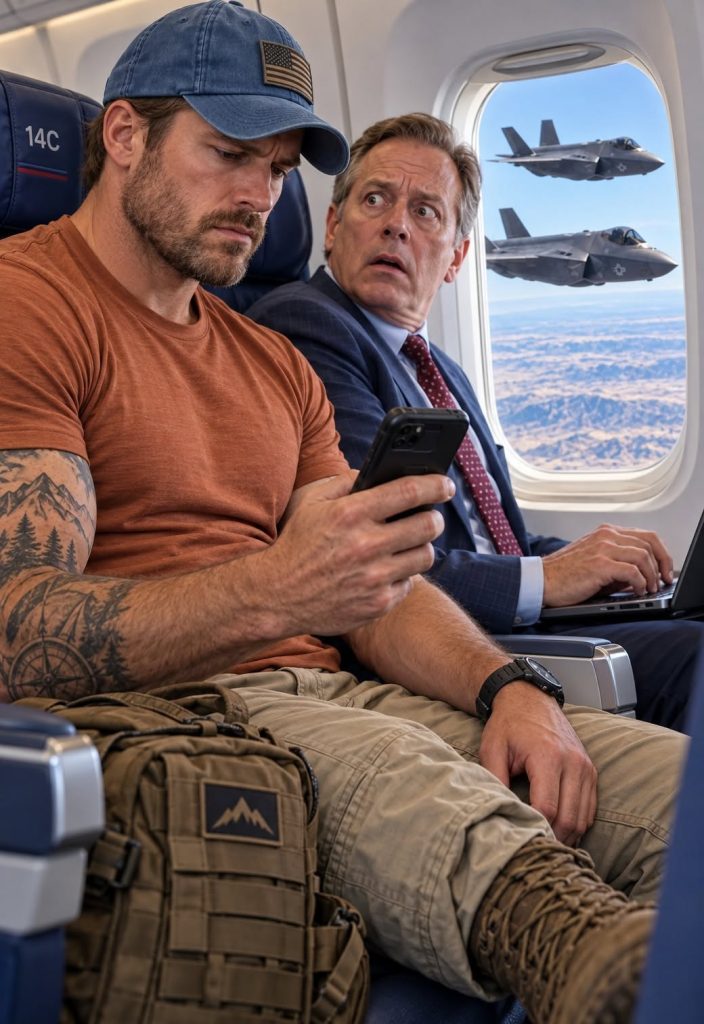 But it was real.
“At least it’s something,” I said.
Jake nodded.
“It’s a start.”
Then he smiled.
“There’s someone else who wants to see you.”
He opened the office door.
A tall Air Force officer stood outside wearing a flight suit.
He was about my age, with close-cropped hair and a weathered face.
A familiar red insignia was sewn onto his shoulder.
I recognized it immediately.
“Viper One?”
The officer grinned.
“Chief Cole.”
Major Ethan Walker stepped forward and extended his hand.
I shook it.
For a moment, neither of us spoke.
Then he said, “Figured we should finally meet without an aircraft between us.”
I laughed.
“That would be nice.”
He glanced at my medal.
“Heard the ceremony went well.”
“That’s one way to describe it.”
Jake disappeared down the hallway, leaving us alone.
Walker and I sat in a small conference room with two cups of terrible government coffee.
He told me about the night in Syria from his perspective.
The confusing radio traffic.
The difficult visibility.
The urgency of coordinating air support without putting friendly forces at risk.
He told me how long he had remained in the area after our helicopter departed, making certain no additional personnel were stranded.
Then he grew quiet.
“I remember your last transmission that night,” he said.
I looked at him.
“What transmission?”
“You asked us to keep watching the valley.”
A cold sensation moved through my chest.
I remembered.
As our helicopter climbed away, I’d looked down at the darkness where Michael and Daniel had died.
I hadn’t been able to see the bodies.
But I knew exactly where they were.
Walker continued.
“You said you didn’t want them left alone.”
I lowered my head.
He gave me a moment.
“After you were clear, we maintained coverage until the recovery team reached the area.”
I stared at him.
“You stayed?”
“Yes.”
“All that time?”
He nodded.
“We didn’t leave them alone, Nathan.”
I covered my face with my hands.
For eight months, one thought had haunted me more than almost anything else.
That after our helicopter disappeared, the men we’d lost had been abandoned in the darkness.
I knew recovery had eventually been completed.
I knew their remains had been brought home.
But I had never known that someone had remained overhead.
Someone who remembered their names.
Someone who understood that even after life was gone, loyalty still mattered.
Walker waited until I could look at him again.
Then he said quietly, “That’s what brothers do.”
We sat there for a long time.
Neither of us spoke.
We didn’t need to.
Before he left, Walker handed me a small cloth patch.
The red Viper insignia.
On the back, he’d written three words.
You weren’t alone.
I kept that patch.
I still have it.
A week later, I finally went home.
Not to another military installation.
Not to another hospital.
Home.
A small house outside San Diego, where the ocean breeze moved through the trees and nobody cared what rank I’d once held.
For the first time in months, I slept without leaving the television on.
Not every night.
Not even most nights at first.
But occasionally.
And that was progress.
I began physical therapy again.
I called Reyes’s mother every Sunday.
I visited Brooks’s widow and helped her daughter build a model airplane, even though I was terrible at following the instructions.
Sometimes Jake came over, and we’d sit on the porch without saying much.
Other times, we’d argue about baseball, grill steaks, and tell the same stories we’d told a hundred times before.
I still had nightmares.
My leg still hurt.
And there were mornings when surviving felt harder than anything I’d ever done in uniform.
But I was learning that a life after service didn’t have to mean a life without purpose.
One afternoon, several weeks after the ceremony, an envelope arrived in my mailbox.
Inside was a handwritten letter.
The return address was unfamiliar.
I opened it at the kitchen table.
Dear Chief Cole,
My name is Richard Bennett. I was the businessman sitting beside you on United Flight 237.
I smiled.
He continued.
I’ve been thinking about that flight ever since we landed in Phoenix.
I owe you an apology.
When you sat down beside me, I judged you before you ever said a word. I saw your beard, your tattoos, and your boots, and I assumed you were someone I needed to worry about.
I didn’t see a veteran. I didn’t see a man who had sacrificed years of his life serving his country. I didn’t see someone who might be carrying wounds I couldn’t understand.
I just saw someone different from me.
I set the letter down for a moment.
Then I continued reading.
When those fighter jets appeared, I was terrified. But you remained calm. You didn’t brag. You didn’t demand attention. You didn’t even seem interested in telling anyone who you were.
Then I heard that fighter pilot say your name.
I looked at you, and I realized how little I’d understood about the man sitting beside me.
I went home and told my family what happened.
My son is seventeen. He’s been talking about joining the military after graduation. Before that flight, I’d spent months trying to convince him to choose another path.
Now we’ve started having a different conversation.
I’m still worried about him. I think I always will be. But I’m listening to him instead of dismissing what matters to him.
I don’t know whether he’ll join. That’s his decision.
I just wanted you to know that the way you conducted yourself made a difference to someone.
Thank you for your service. And thank you for reminding me that appearances tell us very little about the people we meet.
Sincerely,
Richard Bennett.
I sat quietly with the letter in my hands.
For years, I’d measured everything in missions completed, objectives secured, and men brought home.
I had never considered that sitting quietly beside a frightened stranger could matter to anyone.
I read the letter once more.
Then I folded it and placed it in the wooden box where I kept my most important things.
Inside were the Viper patch.
A photograph of my old team.
A letter from Michael Reyes’s mother.
And the Navy Cross I still struggled to believe belonged to me.
I didn’t put the medal on display.
I wasn’t ready for that.
Maybe I never would be.
But I no longer thought about giving it back.
That evening, I went outside and sat on the porch.
The sun was setting over the Pacific, turning the sky orange and gold.
Somewhere overhead, a commercial airplane passed through the clouds.
I watched it for a while.
I thought about the terrified businessman.
The fighter pilot who remembered my name.
The two men who hadn’t come home.
And the families who had somehow found the strength to keep living.
For most of my life, I’d believed courage meant running toward danger when everyone else wanted to run away.
I still believed that was one kind of courage.
But I was beginning to understand there were others.
Sometimes courage meant accepting help.
Sometimes it meant facing people you were afraid you’d disappointed.
Sometimes it meant waking up after another sleepless night and deciding to try again.
I took out my phone and opened a message from Jake.
You doing okay, brother?
I looked toward the ocean.
Then I typed:
Getting there.
A few seconds later, his reply appeared.
That’s all we ask.
I smiled and set the phone beside me.
Eight months earlier, I had returned from Syria convinced that the best part of my life was over.
I’d lost my career.
I’d lost two brothers.
And somewhere along the way, I’d nearly lost myself.
But that flight to Washington had reminded me of something I’d forgotten.
The world was still full of people willing to stand beside one another.
Some wore uniforms.
Some flew fighter jets.
Some were frightened businessmen sitting in the middle seat of an airplane.
And some were simply waiting at home, hoping the people they loved would find their way back.
I looked up as the last light faded from the sky.
For the first time in a long time, I wasn’t wishing I could disappear.
I was grateful I was still here.
Not because I’d been given a medal.
Not because a fighter pilot knew my name.
But because I finally understood something my fallen brothers would have wanted me to know.
Coming home wasn’t the end of my mission.
Learning how to live again was.
THE END.