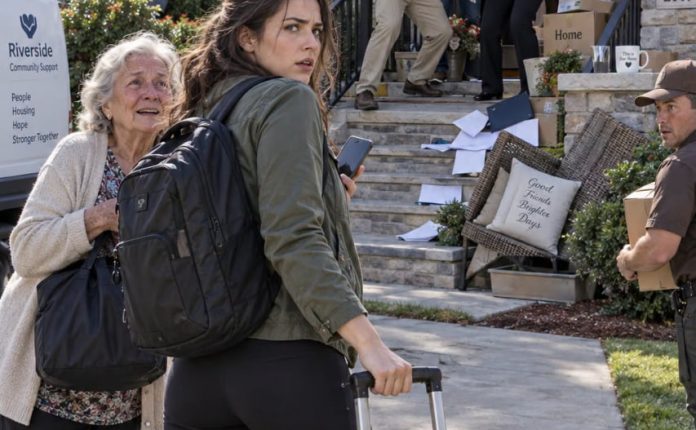
Valerie laid the dinner invitation on her desk between us. New Promise Community Church would honor Mom with a community service award for her leadership of Helping Hands. Valerie had been asked to speak about the shelter’s partnership with the group. She told Grandma she could describe the meals, donations, and volunteer hours without naming any resident. She could also explain why one resident had eaten separately on Tuesdays. “I won’t use your name unless you ask me to,” she said. Grandma studied the invitation. She asked whether children would be in the room. When Valerie said the dinner was for adults, Grandma folded the card and put it in her cardigan pocket. She wanted until morning to decide.
I woke at four and found Grandma sitting by the motel window, dressed and holding the folded invitation. She told me Valerie could say her name. “I don’t want anybody tearing Denise apart,” she said. “She was somebody’s little girl once.” Then she turned the card over in her hands. “But I’m tired of helping her hide me.” She did not want to make a speech. She would sit beside Valerie and let her tell the truth. When she asked what I planned to say, I began listing the rentals and the deed. Grandma stopped me. She wanted me to say one sentence at the dinner, if I needed to say anything at all. The property could be dealt with elsewhere.
I spoke with the attorney again that morning. I had proof of ownership, saved listings, photographs, and a record of the bookings I could see online. He advised me to preserve everything and told me how to handle the guests who had already paid for their stay. The family currently in the house would finish its reservation; I was not going to put them out over something they could not have known. He also helped me prepare for the locksmith and the planned construction work. Grandma listened while I made the calls. When I finished, she asked whether I had eaten lunch. She could hold a difficult decision in one hand and still notice an untouched sandwich.
Valerie called the next afternoon with a seating chart. We would sit with her at table four. She mentioned two donors from Kansas, Howard and Marjorie Bennett, seated at table three. During a May conference, Dad had arranged a lake rental for them, and Marjorie had admired the quilt on the bed. I checked the rental calendar I had saved. The dates matched. I did not know the Bennetts, nor had I asked them to help me. They had been guests who saw my home as my father presented it. I told Valerie I would leave them out of any plan. If questions arose at the dinner, they could ask their own.
At the motel, Grandma tried on the blue dress. Kelsey had cut it simply, with enough room for Grandma to lift her arms and work at a machine. Brianna had argued for a hem below the knee and won. One seam still needed finishing. While Grandma showered, I opened her sewing box and took out the strip of ivory satin from my prom dress. I stitched it inside the blue hem with small, uneven stitches, then returned the note to the box. Grandma caught me before I could put the sewing kit away. I told her I was finishing the hem. She inspected it, saw the satin, and looked at me for a moment. Then she put on the dress and asked whether we had time to stop for coffee.
The fellowship hall was warm when we arrived. Flowers stood in jars on round tables, and photographs of Helping Hands events lined the stage. Mom sat at the front in white, wearing a sash that read COMMUNITY HEART. Dad, in a sport coat, sat beside her. Pastor Rebecca occupied the next chair. We entered as the opening prayer ended. Grandma held my arm, though she needed no support on the level floor. Two women from her old quilting circle turned when we passed. One raised a hand and then lowered it, uncertain whether Grandma wanted a greeting. Grandma gave her a small nod. We sat at table four, where Valerie had left us two places.
Valerie began with the work everyone recognized: meals served, money donated, volunteers who washed dishes and carried supplies. She thanked Helping Hands for the food it brought to Riverside. Then she spoke about a resident who had folded more towels than most volunteers and taught other women to sew. A few people smiled. Grandma’s hands rested flat on the tablecloth. Valerie said her name and age. She said Evelyn Mercer had come to Riverside in March with one suitcase. I saw Mom turn in her chair. Her smile vanished when she recognized Grandma, then she saw me sitting beside her. Dad followed her gaze and placed his glass carefully on the table.
Valerie described Grandma’s sewing lessons and the clothing she repaired. She spoke without making her sound helpless. Then she told the room that Grandma had eaten Tuesday dinners alone behind the kitchen after a volunteer said a family situation should be kept out of sight. Silence moved across the tables. Mom stood. “Mama?” she said, loud enough for people nearby to hear. Valerie stopped and let the word settle. Mom looked at her, then at Pastor Rebecca. “She gets confused sometimes,” Mom told the room. Tears appeared in her eyes. One of the quilting women stood and asked why Denise had told them Evelyn was staying with family in Arkansas.
Grandma’s fingers closed around mine beneath the table. I wanted to stand at once, but she held me there. Marjorie Bennett, seated at the next table, turned toward Dad. She asked him about the house by the lake where she and Howard had stayed during the conference. She remembered a quilt with Natalie’s name sewn into it. Whose room had that been? Dad looked down at his plate and called the house a rental. Marjorie asked who owned it. He did not answer. A few people glanced from him to me. I stayed seated until Mom began walking toward Grandma with both arms open, ready to embrace her before anyone could ask another question.
I stood in her path. She stopped and looked directly at me. “You came home without telling us,” she said. There was reproach in her voice before concern, and I heard it clearly. She turned to the room and said she and Dad had been managing a complicated situation until I returned. Then she looked back at Grandma. “Mama, please.” Grandma did not rise. I remembered her instruction and kept to one sentence. “You served your own mother dinner twice and never looked her in the eyes.” Mom’s tears stopped for a moment. Anger passed over her face. Pastor Rebecca stood and said Mom’s name quietly. Mom turned toward her, but she did not take another step.
Grandma squeezed my hand once and said she wanted to leave. We walked across the hall together. Nobody blocked us. Outside, the parking lot lights threw our shadows toward the church doors. Aunt Marlene was near my rental car; she had left the room ahead of us. She started to speak, saw Grandma’s face, and waited. Mom came out without Dad. Her sash was gone. She said she and Dad had planned to bring Grandma home after summer, once the rentals had solved their money problems. Grandma stopped. “When after summer?” she asked. Mom gave no date. My return flight had been booked for July ninth, and she had asked Marlene twice when I was due back. Grandma knew both things.
Mom said Carl had needed time. Grandma looked at her daughter for a long moment. I expected an argument about the shelter or the soup line. Instead, she asked for her quilt. Mom blinked. Grandma said she wanted the quilt from her bedroom, her mother’s sewing machine, and the photographs packed in the garage. Then she looked at me. “Take me home.” She said it in front of Mom, Marlene, and anyone who might have followed us into the parking lot. She meant the lake house. Mom’s expression changed as she understood that the arrangement she had controlled was over. I opened the car door for Grandma, and we drove back to the motel to collect her things.
Pastor Rebecca called Mom the next morning. Valerie let me know Helping Hands had removed Denise from leadership while the church reviewed how its shelter work had been handled. The church made no announcement about our family. Dad took the rental listing down before breakfast. Marlene texted that he did not want any more trouble. He had said nothing about Grandma. I met a locksmith at the house at ten and showed him the deed. The guests had checked out, and the cleaner was finishing. We waited until she had taken her supplies to her car. The locksmith removed the keypad, fitted a deadbolt, and handed me two keys. I gave Grandma the first one.
She stood at the bottom of the porch steps with the key in her palm. The rocking chair was beside the door, bare now that its cushion had gone into the dumpster. She climbed the steps slowly, put the key in the lock, and turned it. Inside, the house smelled of sunscreen and cleaning spray. Laminated instructions lay on the kitchen counter: wireless password, checkout time, restaurant suggestions, the location of extra blankets. Dad had prepared every detail for guests. Grandma set down her purse and walked to her bedroom. The quilt covered the bed. She stopped in the doorway. I saw a stranger’s hairpin near the pillow and reached for the quilt before she had to.
I carried it to the washer. When water began to fill the drum, I sat on the laundry-room floor, exhausted in a way sleep would not fix. Grandma leaned against the machine. She told me she had counted two hairs on the bedding, and I laughed despite myself. She stayed until the wash cycle had begun, then asked if we could look in the garage. Her antique machine sat beneath a plastic tarp. Dad had not sold it. The cardboard box held photographs, blankets, knitting supplies, old tax papers, and the courthouse picture. Grandpa’s hat was crooked. Grandma touched the glass and told me he liked the photograph because he believed the judge was looking at someone else during the vows.
We spent hours sorting the boxes. Some of my belongings had been packed with Grandma’s, and other things had been moved upstairs for guests. Shelving had already come off one sewing-room wall, but the machines were intact. Grandma chose where to put the courthouse photograph before we brought the next box inside. Aunt Marlene sent another message: somebody else had handed out church bulletins that morning. Grandma read it over my shoulder and gave back the phone. I could not tell whether she felt relief, grief, or both. I made coffee from the red can I had carried home from Italy. She held the cup in both hands and stood at the kitchen window until the washer stopped.
At seven the following morning, a construction truck pulled up. Three workers unloaded drop cloths and came toward the porch, then stopped at the new lock. Grandma sat in her rocking chair drinking coffee. One man checked his paperwork and asked whether Carl was there. She said no. He called Dad twice and got no answer. I opened the screen door, showed him the deed, and told him I owned the house and did not want the work done. He put the paperwork away. The three men loaded their supplies and left. Grandma watched the truck disappear and said Grandpa once waited outside a hardware store for two hours to collect an unpaid roofing bill. He had called it waiting for his money.
Dad’s envelope arrived that evening. Inside were nineteen pages of accounting and a cashier’s check. He had listed bookings, cleaning fees, supplies, and the money earned from my property. There was no greeting or apology. Grandma read the pages while I spoke with the attorney. The accounting gave us a record to compare against the listings I had saved; I kept copies of both. After reviewing the numbers with him, I deposited the check. I canceled future reservations and made sure guests received notice through the booking service. I did not need to spend another year speaking to Dad about the business he had built in my house. I needed him to stop using it.
On Tuesday, Grandma went back to Riverside for her sewing lesson. She arrived with her own supplies and a repaired work coat for Kelsey. Afterward, someone brought bowls of soup to the long table beside the windows. Kelsey set one in front of Grandma. Nobody suggested the little room behind the kitchen. Grandma sat with her purse on the chair beside her, facing the front door. She ate while Brianna talked about a torn pocket and a volunteer carried a stack of clean towels past them. When the meal was over, she moved to the sewing table and showed Kelsey why the new zipper sat crooked. Riverside still needed her, and she could come home afterward.
Marlene appeared at the house that evening carrying cherry and pecan pies. She stood at the bottom of the porch steps until Grandma opened the screen and told her to come in before the pies got warm. They did not try to settle everything over dessert. Marlene cut the pecan pie unevenly, and Grandma complained that she had always cut pie that way. Marlene smiled for a second, then looked down at her plate. She had believed Mom when she should have called me, and both she and Grandma knew it. Staying for pie was a small beginning. My phone lit up on the counter with another call from Mom. I let it ring while Grandma poured Marlene more coffee.
Click here to continue reading: PART 4: Once Grandma Had Her Key Back, We Had to Decide Which Doors in Our Family Would Open Again
Grandma Answered Her Old Phone From a Shelter, and I Realized My Mother Had Been Speaking for Both of Us
Part 3 of 4