The driver took my suitcase while I climbed into the car. Through the rear window, I watched the porch light until the bend in the road hid it. Vanessa messaged before we reached the hotel: You’ve ruined this family. Don’t come to my wedding. I saved the message and sent Leah the new recording. Dad’s threat, my reluctant signature, and my reference to the estate were all audible.
Leah called the next morning. We would dispute the waiver and seek to preserve the remaining assets. She cautioned me that the process could be slow. Dad was the executor, and some spending might already be entangled with loans he had taken against what he expected to inherit. “I want you to know what is happening before you decide how public to make this,” she said. I agreed. I had no wish to mistake my anger for a complete understanding of the facts.
For a month, I worked. My company had a national rollout to prepare, and people depended on me to make decisions that had nothing to do with my family. I approved a replacement vendor for an Atlanta distribution center, reviewed hiring plans, and learned to sit through an afternoon without checking my phone for one of Mom’s emergencies. The quiet felt unfamiliar. Sometimes it felt good. Sometimes I caught myself wondering whether I had missed a call because she needed medicine.
The investigator Leah engaged sent us a report on the estate spending. Dad had leased a crimson SUV using financing tied to his expected distribution. My parents had bought furniture, jewelry, and memberships while telling relatives their investments were doing well. Vanessa’s wedding had grown into an event for nearly three hundred guests. The Royal Cypress Ballroom at the Grand Briar Hotel alone required a large deposit. I kept turning pages, looking for a bill someone had paid with money already in hand. There were very few.
Grant Calder, Vanessa’s fiancé, appeared in the report too. I knew him as the man who arrived at family dinners in a fine car and spoke confidently about property investments. The investigator found debts exceeding $150,000 and no evidence that he owned the apartments he had described. The car was leased through another company. Leah said he appeared to believe Vanessa would receive most of Grandma’s estate.
I remembered Grant at Christmas, taking Dad aside to ask about the house while Vanessa arranged presents beneath the tree. I had thought he was being sociable. I could not tell from the report how much Vanessa knew about his finances or how much he knew about Dad’s false filing. I knew only that they were planning a lavish wedding against an inheritance still under dispute.
The wedding planning firm owed money to several vendors and was close to closing. Leah had included that fact because its failure could complicate the money trail. I asked what would happen to the booked events. “They’d have to be transferred or renegotiated,” she said. I sat with the report open in front of me. “Could the company be bought?” Leah took a breath before answering. “Possibly. Tell me what you’re thinking.”
At first, I said I wanted a clear record of every wedding expense connected to the estate. Owning the struggling firm would provide that, and it would let its staff and vendors be paid for work they had already done. Leah helped arrange a purchase through Phoenix Gate Holdings, with no public connection to my name. We kept the existing events, including Vanessa’s. The company notified its clients of the ownership change. My family did not ask who the new owner was.
Once I could see the invoices, the scale of the promises became plain. Vanessa had ordered a second gown. Mom had changed the linens because the first ones looked ordinary to her. Dad upgraded the bar while telling guests he had enjoyed an excellent year financially. I approved payment for staff and suppliers through the planning company and kept copies of the contracts. I did not alter Vanessa’s choices. She was making them without any encouragement from me.
Three days before the wedding, she sent another message: I assume you know you’re still not invited. Please don’t make a scene. I remembered her sleeping on my sofa after a breakup years earlier, accepting the rent money I offered when she could not face going to work. She had cried into my kitchen towels and called me the only person who understood her. I answered her message with two words: I understand.
By then Leah had filed the challenge to Dad’s affidavit and the waiver. The court had allowed the fraud complaint to proceed, and she had prepared the papers to serve him. She laid the documents out in my office: Grandma’s will, Dad’s account of his supposed search for me, records showing our regular contact, and the two recordings. “You can let the case unfold privately,” she said. “You do not owe anyone an audience.”
I knew she was right. I also knew my parents had filled the ballroom with people who had been told a version of their success built on lies. I wanted to walk into it and make them answer for what they had done. Leah asked me to think carefully about Vanessa. The wedding would be humiliating enough if Grant’s creditors reached him there. I had evidence concerning Dad; I had reason to suspect Grant had deceived my sister. Those were different matters, and Vanessa would have to live with both after the guests went home.
I spent the night before the wedding listening to the recording once more. My own silence on the porch lasted several seconds before Dad spoke again. In that silence, I could hear rain hitting the wood above me. I thought about the other way that evening might have gone. I could have opened the door sooner, announced the sale, paid their debts, and never learned about the affidavit. They might have accepted millions from me while leaving Grandma’s will concealed.
I had planned to give them help they had never requested honestly. That was what troubled me as much as the theft. Mom had called the spa an emergency because she knew I would cover an emergency. Dad had described the mortgage as a crisis because he knew I would try to solve one. I could not change what they had chosen, but I could stop allowing their stories to decide what I did next.
I dressed the following afternoon in a white suit. The ballroom contract gave the planning company authority over its event staff and presentations, but Leah made certain the hotel manager understood precisely what we intended to show. We would display the relevant estate documents with private details removed. I would speak as myself. The manager could stop the presentation if the room became unsafe. I agreed to that without argument.
My driver left me beneath the Grand Briar’s covered entrance. Through the ballroom doors, I could see the orchids Vanessa had chosen and the guests beneath the chandeliers. A string ensemble was playing while servers carried drinks between the tables. My father stood near the front in a dark tuxedo, accepting a handshake. Mom’s silver dress caught the light when she moved. Neither of them looked as though they had spent a sleepless night worrying about the house.
I waited until the manager came to meet me. He confirmed that the staff were ready and that the materials Leah had reviewed were loaded for the screen. My mouth was dry. I had spent years presenting my work to investors who interrupted me, challenged my figures, and made me prove every claim. This room frightened me more. Here, I could see people who had once held me as a child.
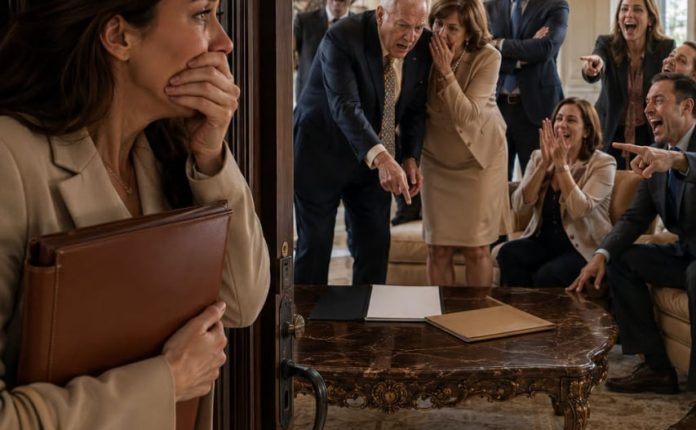
The ballroom doors opened. Conversation thinned as I walked toward the stage. Dad saw me first. He put down his drink and came straight at me. “You were told to stay away,” he said, close enough that only the nearest guests could hear. I said I needed to speak. He lifted his hand toward security and ordered them to remove me.
The manager stepped beside us. He explained that Phoenix Gate Holdings owned the firm controlling the event arrangements and that I controlled Phoenix Gate. Dad looked at the manager, then back at me. For an instant he seemed unable to connect the daughter he had ordered out of his house with the woman standing inside his carefully arranged celebration. Across the room, Vanessa turned from Grant and saw us.
I did not enjoy that moment. Dad’s fear looked much like it had the night I named Grandma’s estate, and Vanessa’s face was already losing its brightness. I could still leave, let the lawyer deliver the papers, and say nothing before the guests. Then I saw Mom moving quickly toward us, ready to explain me away before I could speak. I walked past Dad, climbed onto the stage, and took the microphone.
Click here to continue reading: PART 3: The Ballroom Fell Silent When Grandma’s Will Appeared, but My Sister Learned a Truth I Had Not Come to Reveal
I Came Home Ready to Pay Every Debt, and Heard My Father Planning to Take My Share of Grandma’s Estate
Part 2 of 2