Three years after my husband Daniel died, his wealthy family still treated my janitor job like proof I had failed. At Easter dinner, my mother-in-law laughed about me cleaning toilets. Before I could answer, eleven-year-old Audrey stood, faced everyone, and revealed why I had accepted that job for Audrey alone.
PART 1 — The Job They Mocked Had Kept My Daughter Standing
By the time Audrey and I turned through the stone gates of the Whitmore estate that Easter Sunday, I had already changed clothes twice. My first dress smelled faintly of disinfectant because I had worked the morning shift at St. Matthew’s Academy. The second had a coffee stain. The blue one I finally wore had belonged to my mother.
Audrey sat beside me holding a foil-covered lemon cake on her knees. She had insisted we bring something even though Eleanor Whitmore’s cook would produce enough food for thirty people. “Grandma likes lemon,” she said. I glanced at her. “Grandma likes criticizing lemon.” Audrey grinned. “Then she can criticize ours specifically.”
That was my daughter. Eleven years old, thin as a reed, Daniel’s gray-green eyes and my stubborn mouth. She had learned too early that humor could make uncomfortable rooms survivable. I sometimes wondered whether that was a gift or another burden I had accidentally handed her after her father died.
Daniel had been gone three years and twelve days. I knew the number because grief does not really stop counting. It simply becomes less obvious about it. He died on a Wednesday morning from a sudden cardiac event at thirty-eight, after kissing Audrey goodbye and complaining that he had forgotten his travel mug.
By lunch, I was a widow.
By evening, Audrey was fatherless.
By the following week, Daniel’s family had already begun discussing what should happen next.
The Whitmores did everything quickly. They arranged funerals, contacted attorneys, moved investments, sent flowers, hired caterers, and decided which emotions belonged in public. Their family wealth came from Whitmore Industrial Supply, a company Daniel’s grandfather had started with two trucks and turned into a regional business worth more money than I ever understood.
Daniel had grown up inside that world. I had not.
I came from Mill Creek, Ohio, where my father repaired farm machinery and my mother worked at the county library. My childhood home had one bathroom, mismatched kitchen chairs, and a furnace that complained every winter. We were never desperate, but money always had a purpose before it arrived.
When Daniel brought me home for the first time, Eleanor looked at my inexpensive shoes, asked what my parents did, and smiled the way people smile after hearing something unfortunate but manageable. She never openly told Daniel not to marry me. She did something more sophisticated.
She asked whether we were “really compatible long term.”
Daniel laughed about it afterward.
I did too.
I stopped laughing years later.
At the entrance to the Whitmore house, Audrey touched my arm. “Mom?”
“What?”
“You’re doing the face.”
“What face?”
“The one where you look like you’re about to attend a meeting you hate.”
I smiled. “That’s because I’m about to attend a meeting I hate.”
“It’s Easter.”
“With ham.”
“That makes it festive.”
She reached for the door handle.
I caught her wrist gently.
“If anyone says anything uncomfortable, you don’t have to defend me.”
Audrey’s expression changed.
“I know.”
“I mean it.”
“So do I.”
She opened the door before I could ask what that meant.
Eleanor greeted us in the marble foyer wearing pale lavender and pearls. At sixty-eight, she remained beautiful in a carefully maintained way that made every strand of silver hair appear intentional. She kissed Audrey warmly, then looked at me from shoulders to shoes.
“Claire, you made it.”
“I said we would.”
“I wasn’t sure with your schedule.”
There it was.
Not yet an insult.
Just placement.
My schedule.
My work.
The category into which she had filed me after Daniel died.
Audrey handed her the cake.
“We made this.”
Eleanor’s face softened immediately.
“That looks lovely, sweetheart.”
“I zested six lemons.”
“Six?”
“Mom said four. I rebelled.”
Eleanor laughed and kissed her again.
Watching them hurt sometimes because Eleanor genuinely loved Audrey. People are easier to understand when love and cruelty occupy different bodies. In our family, they often occupied the same person.
Charles Whitmore appeared from the study and hugged us both. Daniel’s father was quieter than Eleanor, broader through the shoulders, with the tired expression of a man who had spent forty years letting his wife handle emotional weather because she handled it efficiently.
“How’s school?” he asked Audrey.
“Good.”
“And your science fair?”
“Second place.”
Charles looked offended on her behalf.
“Who beat you?”
“A volcano that actually smoked.”
“Unfair advantage.”
Audrey laughed.
He turned to me.
“You doing all right?”
“I’m fine.”
He nodded, accepting the answer too quickly.
That had always been Charles’s habit.
If I said fine, he did not inspect the word.
Daniel’s older sister Vanessa arrived ten minutes later with her husband, Mark, and their two teenage sons. Vanessa hugged Audrey, complimented my cake, then glanced at my hands.
“You’ve got paint on your nail.”
I looked down.
A streak of blue remained near my thumb from repainting a damaged classroom wall on Friday.
“Occupational hazard.”
Vanessa smiled.
“You really do everything there, don’t you?”
“Most things eventually.”
She laughed as if I had made a joke.
Maybe I had.
Daniel’s younger brother Grant arrived last, loudly apologizing about traffic even though he lived twelve minutes away. He worked in the family company, drove a vehicle worth almost as much as my annual salary, and had never understood why I refused Eleanor’s later offers that came attached to instructions.
“Claire,” he said, hugging me with one arm. “Still surviving?”
“Every day.”
“That’s the spirit.”
He meant it kindly.
That somehow made it worse.
The first year after Daniel died, people had praised survival as though it were a character hobby I had selected.
Nobody asked what it cost.
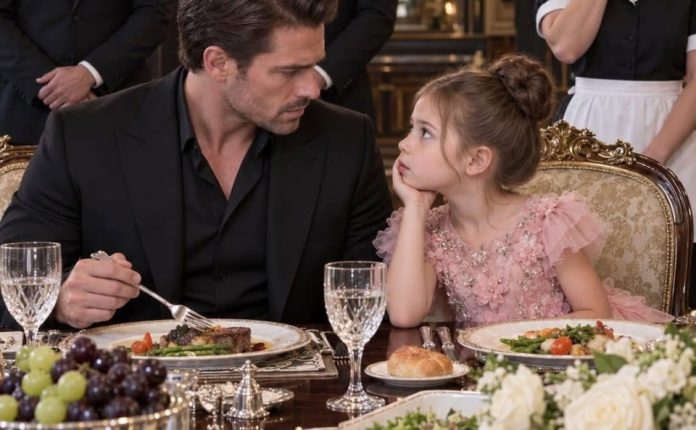
Easter lunch was served in the long dining room overlooking Eleanor’s garden. There were fourteen of us, including two aunts, one cousin, and Charles’s older brother Warren. Daniel’s empty place no longer existed physically. The table had been rearranged after his death.
That detail still bothered me.
For years he had sat across from me, tapping his water glass whenever Eleanor asked invasive questions. He called it our emergency signal. One tap meant ignore it. Two meant I am about to say something inappropriate. Three meant we leave immediately.
I missed those taps.
Audrey sat beside me.
Eleanor had placed her near the center because she was the youngest grandchild and still enjoyed being fussed over. For twenty minutes, conversation stayed safe.
School.
Weather.
Vanessa’s oldest son applying to colleges.
Grant’s golf trip.
Charles complaining about airport security.
Then Aunt Patricia asked where I was working now.
Everyone at the table already knew.
That was how these conversations began.
“At St. Matthew’s,” I said.
Patricia nodded.
“In the office?”
“No. Custodial staff.”
“Oh.”
The single syllable traveled farther than it should have.
I buttered my roll.
Audrey looked at Patricia.
“My mom keeps the whole middle-school wing from falling apart.”
I touched Audrey’s knee beneath the table.
She looked at me innocently.
Patricia recovered.
“Well, every job matters.”
That phrase had become familiar too.
Every job matters.
Usually spoken only when someone believed yours did not.
Vanessa changed the subject.
For a while.
Then Grant mentioned a school fundraiser St. Matthew’s had held the previous month.
“Was that the gala at the Grand Regent?”
“Yes.”
“Mom donated to that.”
Eleanor smiled modestly.
“The Whitmore Foundation has supported St. Matthew’s for years.”
I knew.
Her name appeared on the science building.
Audrey knew too.
Grant continued.
“Did you have to work the gala?”
“The cleanup afterward.”
He chuckled.
“Of course.”
Nothing cruel yet.
Still, I felt Audrey go still beside me.
The gala had ended at eleven.
My shift had ended at two in the morning.
I had come home, showered, slept four hours, made pancakes, and taken Audrey to her Saturday robotics program.
Nobody at the table knew that.
Nobody had asked.
Eleanor reached for her wine.
“I suppose there’s security in school maintenance.”
“There is.”
“Benefits?”
“Yes.”
“That helps.”
“It does.”
She nodded as though approving a sensible compromise.
“When Daniel was alive, I always imagined you’d eventually return to something more…”
She paused.
I waited.
“Professional.”
Vanessa looked down.
Grant pretended not to hear.
Audrey stopped eating.
I set my fork carefully beside my plate.
“Custodial work is professional work.”
Eleanor smiled.
“You know what I mean.”
“Yes.”
That was precisely the problem.
Charles said, “Eleanor.”
She waved him off.
“I’m not insulting Claire. I admire that she works. Plenty of people would have simply expected the family to carry them forever.”
My throat tightened.
That sentence had history.
A great deal of history.
After Daniel’s funeral, I had asked the Whitmores for one thing.
Not a house.
Not monthly support.
Not access to Daniel’s trust.
I asked whether they could cover Audrey’s school tuition through the end of elementary school while I rebuilt our finances.
Eleanor said no.
She called dependence dangerous.
She said Daniel’s death did not make me incapable.
Then, for three years, she acted impressed that I had proved her right.
Audrey looked at me.
She knew pieces of that story.
I did not know yet how many.
I smiled at Eleanor.
“You don’t need to admire me.”
She blinked.
“I beg your pardon?”
“I work because Audrey and I need income. Admiration isn’t part of payroll.”
Warren laughed softly.
Charles covered it with a cough.
Eleanor’s mouth tightened.
“I was complimenting you.”
“Then thank you.”
I returned to my food.
That should have ended it.
Instead, cousin Melissa asked whether I planned to stay at St. Matthew’s after Audrey moved to the upper school.
“Yes.”
“Even cleaning?”
“Yes.”
She looked genuinely curious rather than judgmental.
“Do you like it?”
I considered the question.
“Some days.”
That surprised everyone.
I continued.
“I like my coworkers. I like fixing things people assume fix themselves. I like knowing what my schedule will be. I like health insurance.”
Melissa nodded.
“That makes sense.”
Eleanor gave a small laugh.
“Claire has always been practical.”
I glanced at her.
Daniel used to call me practical lovingly.
From Eleanor, the word meant limited.
Audrey knew that too.
She shifted in her chair.
I touched her knee again.
Stay out of it.
She pressed her lips together.
For another half hour, lunch moved forward. Dessert arrived. Audrey’s lemon cake was slightly too tart and everyone ate it anyway. Grant praised it twice. Charles asked for another slice.
I thought we had escaped.
Then Eleanor followed me into the kitchen while I carried plates.
“You don’t need to do that.”
“I’m helping.”
“We have staff.”
The irony was so perfect I nearly smiled.
“I know.”
She watched me place dishes beside the sink.
“You seem defensive today.”
“I’m tired.”
“From work?”
“From conversation.”
Her eyes sharpened.
“Claire, nobody is attacking you.”
“I didn’t say they were.”
“You’re hearing judgment because you feel judged.”
I turned toward her.
“Those are sometimes related.”
She sighed.
“Daniel wanted more for you.”
My chest tightened.
“You don’t get to tell me what Daniel wanted.”
“I was his mother.”
“And I was his wife.”
The kitchen became quiet except for water running somewhere behind the swinging service door.
Eleanor lowered her voice.
“I am simply saying that at some point survival should become ambition.”
I stared at her.
“Ambition for what?”
“For yourself.”
“You think I have none?”
“I think you’ve settled.”
There it was.
The clean version.
The sentence she had probably wanted to say all afternoon.
I heard footsteps behind me.
Audrey had entered carrying empty glasses.
Eleanor did not notice immediately.
She continued.
“You’re forty-one years old, Claire. You cannot spend the rest of your life cleaning classrooms because grief made you afraid to try something better.”
Audrey stopped walking.
I saw her face.
“Grandma,” she said.
Eleanor turned.
“Audrey, sweetheart, we’re talking.”
Audrey put the glasses down.
“My mom isn’t afraid.”
I stepped toward her.
“Sweetheart—”
“I know.”
Her voice stayed calm.
“I’m not defending you.”
Eleanor smiled awkwardly.
“Good. Because there is nothing to defend.”
Audrey looked directly at her grandmother.
“Then stop talking like there is.”
For several seconds, none of us spoke.
Charles appeared in the doorway.
“Everything okay?”
Eleanor laughed.
“Apparently I’ve upset everyone by suggesting Claire deserves more than janitorial work.”
Audrey’s expression hardened.
I recognized Daniel in that look.
The same stillness before he decided politeness had reached its limit.
I said, “Audrey, go finish dessert.”
She hesitated.
“Please.”
She returned to the dining room.
Eleanor watched her leave.
“You shouldn’t let her become involved in adult issues.”
My hands tightened around the edge of the counter.
“I agree.”
“Then don’t discuss finances in front of her.”
“I don’t.”
Eleanor’s eyes narrowed.
“That child knows too much.”
I almost answered.
Instead, I walked away.
Back at the table, Audrey sat quietly.
Too quietly.
I asked if she wanted to leave.
“No.”
“You sure?”
“Yes.”
Charles tried reviving conversation by asking Warren about fishing.
It worked briefly.
Then Grant, perhaps trying to lighten the mood, looked at me and said, “Come on, Claire. Mom’s terrible at phrasing things, but she has a point. You’re smart. You could probably manage an office somewhere.”
“I could.”
“So why don’t you?”
“Because I don’t want that schedule right now.”
He shrugged.
“Fair.”
Vanessa added, “Honestly, I couldn’t do your job.”
I smiled.
“Most people say that until something spills.”
She laughed.
Even Audrey smiled slightly.
Then Eleanor returned from the kitchen.
She poured herself more coffee and looked at me with the brittle cheerfulness of someone determined to prove no argument had happened.
“So,” she said, “still cleaning toilets every morning?”
Grant snorted before realizing she was serious.
Patricia laughed.
Then Warren.
Not viciously.
That almost made it worse.
The laughter spread because the question sounded harmless enough when everyone had already decided the work beneath it was embarrassing.
I felt heat rise into my face.
Before I could answer, Audrey pushed her chair backward.
The sound scraped sharply across the hardwood floor.
Every person at the table looked at her.
My daughter stood.
END PART 1