“Yes,” I told Claire. “You can.” She smiled. Not the polished smile she used at family dinners. A tired one. “Congratulations.” “Thank you.” For a few seconds, we stood in the crowded lobby surrounded by voices, clinking glasses, and people taking photographs beneath the event banners.
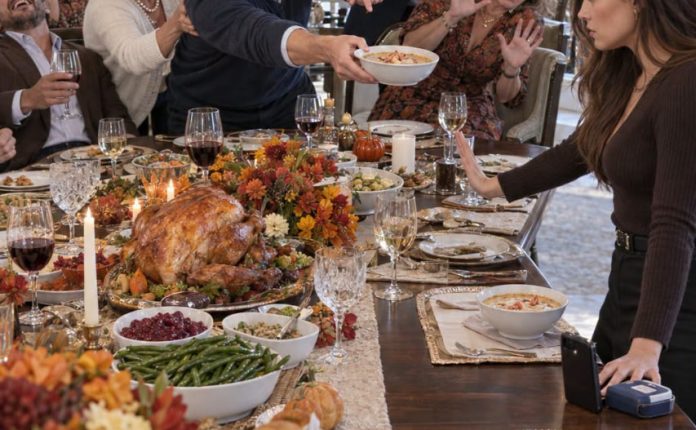
Then Claire nodded toward the award. “Is that the device you started sketching in residency?” I looked at her sharply. “You remember that?” “Kind of.” She laughed awkwardly. “You came home for Thanksgiving once with folded papers sticking out of your coat pocket.
I asked what they were, and you said you were designing a surgical instrument.” I had forgotten. Claire looked down. “I made a joke about you turning into an inventor.” “You said I’d become the weird uncle with a garage laboratory.” “I did.”
“Accurate prediction.” She laughed. So did I. It was strange how easily an old version of us appeared for a second. Then it passed. Claire’s expression became serious. “I started working at the community clinic permanently on Fridays.” “How is it?”
“Hard.” I waited. “And I love it.” That answer surprised me. She told me about elderly patients who arrived carrying grocery bags filled with years of medical records. Parents who delayed their own appointments because their children needed care first.
People working two jobs who couldn’t easily return for follow-ups. “It’s not glamorous,” she said. “Nobody at Mom’s country club cares.” “Maybe that’s good.” “That’s exactly why it’s good.” She looked toward the crowd.
“I spent a long time choosing things that sounded impressive when Mom repeated them.” I understood that better than she knew. “Are you still talking to them?” I asked. “Sometimes.” “How’s Dad?” “Angry.” “At me?” “Mostly at the universe.”
That sounded right. Claire hesitated. “He thinks you’ll come back eventually.” “I’m not coming back.” “I know.” She said it without judgment. That mattered. Mom had mistaken boundaries for a temporary tantrum. Dad viewed silence as a negotiation strategy.
Claire was the first person in the family who seemed to understand that the old relationship was finished. Maybe another relationship could someday exist. But not that one. She looked at me. “Mom asked me to give you something.”
My shoulders tightened. Claire immediately raised both hands. “I didn’t bring it.” I relaxed slightly. “What was it?” “A framed replacement diploma.” I stared at her. “She ordered a certified copy.” For a moment, I almost laughed. Of course she had.
My mother still believed the problem was the destroyed object. Replace the paper. Repair the family. “She thinks if she gives it back, you’ll feel better.” Claire’s mouth twisted. “I told her the diploma isn’t the problem.” “What did she say?”
“She said I was turning against them too.” There it was. The old family mathematics. Agreement equals love. Boundaries equal betrayal. I nodded. “Welcome to the difficult-child club.” Claire actually laughed. “I hate it here.” “Membership is free.” We spoke for another ten minutes.
Nothing dramatic happened. No hug. No tearful reconciliation. When she left, she simply said, “Good night, Nathan.” “Good night, Claire.” That was enough. My relationship with my sister rebuilt slowly after that. Not into what it had been. Into something new.
We met for coffee occasionally. She never asked about Meridian unless she was genuinely curious. I never paid her bills again. When she needed advice about expanding her clinic, I listened but refused to solve it for her.
The first time I said, “You’ll have to decide that yourself,” she looked annoyed. Then she smiled. “Right. Normal sibling behavior.” “Apparently.” My parents had a harder time. Dad eventually sent an email he clearly considered an apology.
I regret losing my temper and damaging your diploma. I still believe family should share success, but perhaps the way we approached the situation was wrong. I read it once. Then archived it. Damaging. Not burning. Approached the situation.
Not tried to take control. Perhaps. Every word was chosen to avoid the truth. Mom’s apology was softer but equally incomplete. She wrote that she missed having “both children together” and hoped I could “remember the good years.” I did remember them.
That was part of the problem. The good years often depended on me accepting less. Less attention. Less celebration. Less consideration. Less right to say no. Once I understood that, nostalgia stopped being persuasive. I sent one final email to both of them.
I told them I would not return to the old family dynamic. I would not discuss my finances. I would not fund future ventures. I would not provide professional opportunities to relatives based on family pressure.
I would not accept conversations in which boundaries were described as selfishness. And I would not meet with them until they could acknowledge, clearly and without qualification, what had happened. Dad never replied. Mom responded with one sentence.
I’m sorry success became more important to you than family. I stared at the message for a long time. Then I deleted it. That was the last direct communication we had. People sometimes ask whether that makes me sad. The answer is yes.
Of course it does. Boundaries don’t magically erase grief. Sometimes, after a long surgery, I’ll walk out into the quiet hospital corridor and remember Dad teaching me how to ride a bicycle. I’ll remember Mom sitting beside me when I had the flu in middle school.
Human beings are inconvenient that way. Someone can love you in one season of your life and still become harmful in another. Good memories do not obligate permanent access. A year after the diploma burned, Meridian expanded into a larger research facility.
I insisted on keeping one item from our original laboratory. A scarred wooden desk. The surface still had a dark ring from the leaking coffee maker and a shallow cut where Daniel once dropped a prototype.
We placed it inside my new office beneath a large window overlooking the city. The medical innovation award sits on one side. Photographs sit on the other. Not publicity photos. Team photographs. Residents after completing fellowship. Engineers standing beside early prototypes.
A former patient who returned five years after surgery and mailed me a picture of himself hiking with his daughter. Those are the things I keep. Not because they prove I’m successful. Because they remind me what success is for.
One afternoon, Rebecca came by with a large flat envelope. “Something for you.” I opened it. Inside was a certified replacement copy of my medical diploma. I looked at her. “How?” “You know universities keep records, right?” I laughed.
“I hadn’t bothered replacing it.” “I know.” The paper looked almost identical to the one Dad burned. Same lettering. Same seal. Same degree. Different date of issue. I held it for a moment. Then leaned it against the wall.
“Not hanging it?” “Maybe eventually.” Rebecca looked around my office. “Your father thought burning that would hurt your career?” “He thought it represented the career.” “And what do you think?” I looked through the glass wall toward the laboratory.
A young engineer was arguing enthusiastically with one of our surgeons over a prototype design. Beyond them, researchers moved between workstations. Somewhere several floors below, an operating room was being prepared for the afternoon case.
“The diploma got me through one door,” I said. “What happened after that was up to me.” Rebecca nodded. “Keep that line.” “For what?” “The memoir you’ll never have time to write.” She left. I smiled and returned to work.
Several months later, Claire called while I was leaving the hospital. “I have news.” “What happened?” “I hired another physician.” “Congratulations.” “I interviewed twelve.” “That sounds terrible.” “It was.” She laughed. Then her voice softened. “I almost hired the one Mom liked.”
I waited. “But he wasn’t the right fit.” “So?” “So I hired the one who was.” I understood what she was really telling me. She had made a decision based on reality instead of parental approval.
Small victories don’t look impressive from the outside. Sometimes they’re the ones that change your life. “Good,” I said. Claire hesitated. “Do you ever think we’ll all be in the same room again?” I looked out through the hospital entrance.
Evening light reflected off the glass buildings across the street. Cars hissed across wet pavement. “I don’t know.” “Would you want that?” “Not if nothing has changed.” She was quiet. Then she said, “Fair.” That was another difference between us now.
She didn’t try to negotiate my answer. We said goodbye. I walked toward my car. On the way, I passed the hospital’s donor and innovation wall. My name appeared there twice. Once for surgery. Once for Meridian.
A year earlier, seeing it might have made me imagine bringing my parents to the hallway. I would have pictured Dad finally understanding. Mom finally being impressed. Maybe that’s what I’d secretly wanted for most of my life.
The moment when I accomplished enough that they could no longer minimize me. That moment never came. Something better did. I stopped needing it. My father had wanted the diploma fire to teach me a lesson.
He wanted me to understand that family approval could be withdrawn if I refused to surrender what I’d built. Instead, the fire taught me something else. A diploma can burn. A photograph can disappear. An award can gather dust.
Money can vanish. Titles can change. But the thousands of decisions that made me a surgeon were still inside me. The nights studying until sunrise. The first patient whose chest I opened with my hands shaking beneath my gloves.
The first complication I blamed myself for. The first life I knew my team had saved. The failed prototypes. The redesigned instruments. The patents. The arguments. The mistakes. The people who trusted me enough to build something together.
My family had mistaken the evidence for the achievement. They had mistaken my generosity for permission. And they had mistaken my patience for weakness. I don’t hate my parents. Hatred would require more energy than I want to give them.
I simply believe them now. When someone shows you that they value access to your success more than your right to own your life, believing them is not cruelty. It’s clarity. Claire and I may eventually become close. Maybe we won’t.
She’s building her life, and I’m building mine. My parents remain on the other side of a boundary they could cross with two things: genuine accountability and changed behavior. So far, they have chosen neither. And I’ve stopped standing at the boundary waiting.
The replacement diploma is finally framed now. Not in my parents’ living room. Not above a fireplace. It hangs inside my office beside the first crude sketch of the device that eventually became Meridian’s foundation. One represents where I started.
The other represents what I created. Sometimes I look at both before walking downstairs to surgery. And every time, I remember the night my father watched my name turn to ash and thought he had taken something from me.
He hadn’t. He had only burned the last reason I had to keep begging my family to see me. Medicine was never wasted on me. My success never belonged to them. And my life is no longer available for redistribution.
THE END!
Disclaimer: Our stories are inspired by real-life events but are carefully rewritten for entertainment. Any resemblance to actual people or situations is purely coincidental.