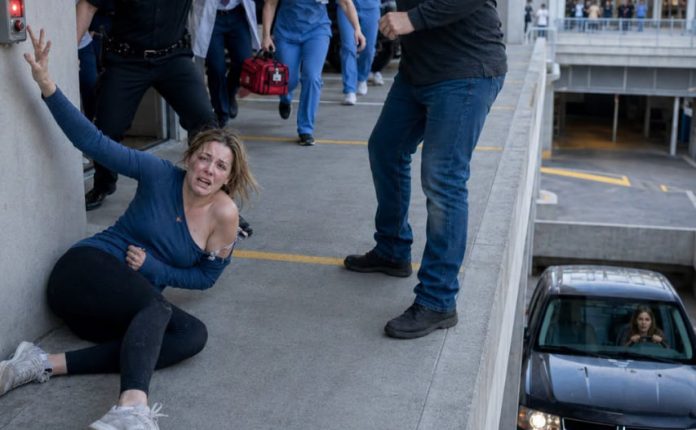
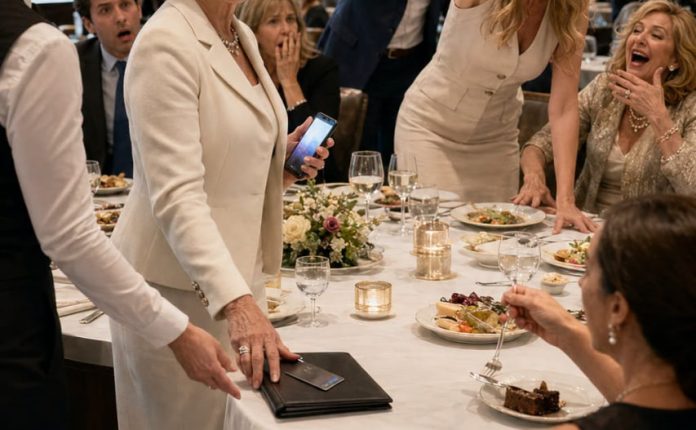
Mom looked between us in confusion. I opened the binder while Brianna stood and called the entire situation ridiculous.
“Sit down,” I told her. She accused me of ordering her around. I explained that I was giving everyone the chance to hear the truth together.
Dad demanded that I stop playing games. “Good,” I replied. “Let’s stop playing them.”
I slid Bellhaven Atelier’s business registration toward him. Dad identified it as Brianna’s company.
“No,” I said. “It’s a registration tied to a virtual mailbox.”
I explained that the supposedly million-dollar clothing operation had no employees, warehouse, manufacturing agreements, or meaningful evidence of inventory.
Mom looked confused. “What does that mean?”
“It means there was never a million-dollar business.”
Brianna claimed I knew nothing about her company. I reminded her that I had reviewed every public filing I could legally access.
Then I explained why I had investigated. “Our parents destroyed a building because you convinced them criminals were coming to kill you.”
Dad insisted that Brianna had shown them threatening messages.
“I know,” I replied.
Then I removed the digital-forensics report.
“I had them examined.”
Brianna froze.
Mom’s hand slowly moved away from her daughter. I explained that the accounts sending the threats had been created shortly before the demands began and showed repeated technical connections.
“One account is tied to someone named Coleman Mercer.”
Dad asked who that was. Brianna immediately announced she was leaving.
Mom whispered, “Cole?”
That mattered.
She remembered him.
I explained that Cole was an actor, voice performer, and former party friend of Brianna’s.
Then I said the sentence my parents had destroyed almost everything to avoid considering.
“There is no million-dollar underground debt.”
Mom stared at me.
Brianna had real financial problems—roughly eighty thousand dollars in judgments, delinquent accounts, lease disputes, and tax problems—but no evidence supported her story about dangerous lenders demanding one million.
Brianna screamed that I was lying. Dad flinched at her anger, perhaps for the first time in his life.
I continued. After selling their house, Mom and Dad had given Brianna twenty-three thousand dollars.
Mom insisted that money went to the dangerous people.
“No.”
I placed the country club contract on the table.
“Five thousand dollars paid for her birthday celebration.”
Dad picked it up before Brianna could grab it. His eyes moved from the contract to photographs and then to records connected to her luxury apartment.
Mom kept trying to explain it away. Perhaps Brianna needed somewhere secure. Perhaps posting the apartment publicly proved nothing.
“Mom,” I said sharply. “She lied to you.”
Silence filled the room.
“You lost your house because you destroyed someone else’s property trying to force me to finance her lie.”
Dad’s face went gray. He looked directly at Brianna.
“Tell me she’s wrong.”
“Dad…”
“Tell me.”
Her mouth opened.
Nothing came out.
Mom started crying, but this time the tears were different. There was no performance in them. They were confused and ugly and real.
Brianna looked at me and snapped, “You did this.”
“No.”
“You turned them against me!”
“You did that yourself.”
“You’ve hated me your entire life.”
“I stopped caring enough to hate you years ago.”
That hurt her more than anger would have. Hatred would have made her important. Indifference didn’t.
Then Dad noticed another divider inside the binder.
EVELYN.
I explained that Brianna had begun asking Aunt Evelyn about retirement savings and whether her house was fully paid.
Brianna claimed she was warning Evelyn because the lenders were researching extended family.
“You asked how much she had in retirement,” I reminded her.
“I was scared!”
“And yesterday Cole posted asking about voice-changing software.”
Brianna became completely still.
Dad stared at her. “Were you going to take money from Evelyn?”
“No.”
“Were you?”
“No!”
The second denial cracked.
Then someone knocked from behind the kitchen.
Detective Ortiz entered with two investigators.
Brianna’s face emptied.
“Brianna Whitmore?” Ortiz asked. “We need to speak with you regarding fraudulent electronic communications and attempted financial exploitation.”
Brianna looked at me instead of our parents.
“You set me up.”
I shook my head.
“No.”
Ortiz stepped closer.
“You set yourself up.”
Then she delivered the sentence Brianna clearly hadn’t expected.
“Cole Mercer has already given us a statement.”
My sister stopped fighting before anyone even touched her because she knew exactly what he had told investigators.
Brianna did not scream when Ortiz escorted her away. That surprised me because screaming had been her response to consequences since childhood.
A bad grade meant the teacher hated her. Losing a job meant her manager was jealous. Late rent meant the landlord was greedy.
She had spent three decades creating a world where responsibility belonged to other people. When she learned Cole was cooperating, that world finally collapsed.
After Brianna left, Dad sat holding the country club contract. His thumb repeatedly rubbed the edge of the paper.
“We sold the house,” he whispered.
Mom stared toward the door.
“For her.”
I said nothing.
Dad tried to speak but couldn’t finish. For once, I didn’t rescue him from uncomfortable silence. He had spent my childhood expecting me to do exactly that.
Mom finally asked how long I had known. I explained that I began investigating only after Martin saw Brianna celebrating publicly.
Anger appeared beneath Mom’s grief.
“You could have told us sooner.”
I almost admired how quickly blame found its way back to me.
“I told you from the beginning to verify the debt,” I reminded her. “I asked for documents.”
Mom insisted Brianna had been terrified. I reminded her that she and Dad had broken into my bakery and painted TRAITOR across my wall.
“That was before we knew,” she whispered.
“No. That was before you were willing to know.”
Dad finally said, “We made a mistake.”
I laughed once without amusement.
“A mistake is sending money to the wrong account. You came to my home, threatened my livelihood, and frightened your granddaughter while she sat at dinner.”
His eyes dropped.
“You terrified Lily. Then you deliberately broke into the bakery and destroyed equipment because you believed loving Brianna gave you permission to destroy me.”
They had no answer.
That was the real truth beneath the fraud. Brianna could manipulate them because she already understood the family system perfectly.
Save Brianna.
Sacrifice Claire.
The pattern existed long before the fake debt.
I closed the binder. Dad asked what would happen to Brianna. I told him investigators were reviewing messages, transfers, devices, and Cole’s role.
Whatever charges resulted would depend on evidence rather than family emotion.
But one fact was already clear.
Saving Brianna was no longer my job.
Then Mom asked, “What happens to us?”
I looked at her in confusion. She explained that they had almost nothing left.
“You have each other.”
Her face collapsed.
“Claire, you’re our daughter.”
The sentence landed strangely. For thirty-six years, being their daughter had meant obligation. Suddenly, they wanted the word daughter to mean mercy.
“You told me I was dead to you,” I reminded them.
Mom claimed Dad had only been angry. Dad whispered that he hadn’t meant it.
“You didn’t care whether you meant it,” I told him. “You wanted it to hurt.”
He looked away.
Evelyn remained beside Mom but did not comfort her. I stood and picked up my briefcase.
Mom immediately panicked. “You’re leaving?”
“Yes.”
“We need to talk.”
“We have.”
“What about the family?”
I looked around the room.
“This is the family you built.”
Then I walked outside.
I expected relief.
Instead, I cried in my car.
Not because I wanted them back. Somewhere inside me was a little girl who had waited thirty years for her parents to choose her once.
That night, she finally understood they probably never would.
Ethan was awake when I got home. He didn’t ask me to explain. He simply opened his arms, and I stood in our kitchen with my face against his shoulder while rain tapped the windows.
After a while, Lily appeared in the hallway wearing pajamas.
“Mom? Are you okay?”
I wiped my face and looked at my daughter.
Really looked at her.
Then I understood that I had spent years measuring everything my family made me lose.
Standing there, I could finally see what I had protected.
“Yes,” I told Lily. “I think I’m going to be.”
Three months later, I signed a lease for a new Maple & Rye location. This time, nobody from my old family received the address from me.
The new bakery opened the following spring. It was smaller than the old location but better designed, with tall windows, warm oak floors, a narrow patio, and a kitchen far more efficient than the one Dad destroyed.
On opening morning, I arrived before sunrise and stood behind the counter watching the sky turn pale blue while fresh bread cooled and coffee filled the room.
I thought I would miss the old bakery forever.
I didn’t.
I missed what it represented.
That was different.
The old Maple & Rye proved I could build something. The new Maple & Rye proved I could rebuild without dragging the past with me.
Ethan arrived carrying flowers, and Lily followed wearing an apron embroidered with the bakery name.
“You’re not allowed to cry,” she announced.
“I wasn’t planning to.”
“You already look like you’re going to.”
Ethan kissed my forehead. “She definitely is.”
I laughed, and it felt good.
My parents contacted me repeatedly during that first year. Their messages moved from anger to apologies and finally desperation.
Dad wrote that he understood how terribly they had treated me. Mom claimed losing everything had opened her eyes.
They asked to see Lily and begged to attend the bakery reopening after hearing about it through relatives.
I said no.
Not because I wanted revenge.
Apologies do not automatically restore access.
People often confuse forgiveness with reconciliation because reconciliation benefits the person who caused the damage. Eventually, I stopped carrying active anger toward my parents.
But I never invited them back into my life.
Some doors close because you hate the people outside.
Others close because you finally love the people inside enough to protect them.
Mine was the second kind.
The criminal investigation into Brianna lasted more than a year. Cole cooperated extensively and provided messages showing that he and Brianna discussed how to frighten our parents and how much money they might have.
Investigators discovered that Brianna had studied Mom and Dad’s finances. She knew the approximate value of their house and how much retirement savings remained.
She had calculated how frightened they needed to become before they would liquidate almost everything.
Her eventual guilty plea included fraud-related charges tied to the fabricated threats and her attempted exploitation of Aunt Evelyn.
She received a significant prison sentence.
I did not attend sentencing.
Mom did.
Dad did not.
Evelyn later told me Brianna apologized in court. Maybe she meant it. Maybe she didn’t.
It no longer mattered to me.
My parents remained in their trailer for several years. Dad worked maintenance jobs, and Mom found employment at a discount grocery store.
After the truth about Brianna became public, the extended family stopped rescuing them financially. For once, nobody volunteered to erase the consequences they had created.
Aunt Evelyn remained part of my life, although even that relationship required honesty. She admitted that she had watched years of favoritism without confronting it because she told herself it wasn’t her place.
“It would have helped if somebody had said something,” I told her.
“I know,” she replied. “I’m sorry.”
Her apology felt different because she did not explain herself, ask me to comfort her, or demand closeness as proof that I forgave her.
She simply owned what she had done.
So I believed her.
Six years after the old bakery was destroyed, Ethan and I had bought a new house. One morning, I came downstairs while sunlight crossed the kitchen in golden stripes.
Ethan was outside arguing with a malfunctioning sprinkler. Lily, now fifteen, sat at the island eating toast while complaining about homework.
Normal life.
Beautifully, stubbornly normal.
I poured coffee and looked through the glass doors. My parents had spent years teaching me that family meant sacrifice.
What they actually meant was that I should sacrifice.
My time.
My money.
My boundaries.
My peace.
Brianna understood that system better than anyone. She used it until there was almost nothing left.
But she made one mistake.
She believed I would continue playing my assigned role forever.
She believed that if enough people called me selfish, I would panic and open my wallet. She believed destroying Maple & Rye would finally break me.
Instead, it gave me permission to stop trying to be the daughter my parents wanted and start protecting the life I had actually built.
The original bakery eventually disappeared as part of Crestline’s redevelopment. Years later, I drove past the block and saw that the entire building was gone.
I expected sadness.
I felt none.
Maple & Rye had never truly been those bricks. It wasn’t the marble counter Dad cracked, the display cases he shattered, or the ovens Crestline replaced.
It was the recipes, the employees, the mornings filled with coffee and cinnamon, and my stubborn belief that I was allowed to create something without surrendering it whenever someone else demanded it.
My parents destroyed a building.
Brianna destroyed their illusion.
But none of them destroyed me.
That was the part they never understood.
People like my family believed love should make you endlessly available for mistreatment. I learned the opposite.
Sometimes loving yourself means allowing people to experience the full consequences of choosing to lose you.
I never reconciled with Brianna. I never restored my parents to the position they once occupied in my life.
There was no dramatic Christmas reunion, tearful family photograph, or moment where blood magically erased everything.
I simply moved forward.
Ethan and I raised Lily. Maple & Rye eventually expanded to a second location, and I gradually reduced my forensic-accounting hours so I could spend more time growing the bakery company.
Every morning when I unlocked those doors, the smell of bread reminded me of something my parents had spent years trying to make me forget.
My life belonged to me.
They tried to punish me because I refused to pay my sister’s million-dollar debt.
In the end, there had never been a million-dollar debt.
There had only been a million-dollar lie.
And for the first time in my life, I refused to pay for it.
THE END!
Disclaimer: Our stories are inspired by real-life events but are carefully rewritten for entertainment. Any resemblance to actual people or situations is purely coincidental.