### Part 5
My father emailed the ratification form.
One page.
A paragraph saying the cottage sale had been conducted with my full knowledge and approval.
A line for my signature.
I printed it.
I wish I could tell you I immediately threw it away.
I didn’t.
I sat at my kitchen table with a pen in my hand.
Natalie’s voice was still in my head.
Harper picked the yellow room.
My mother’s tears.
Dad’s fear.
Luke’s exhausted silence.
Everyone’s future seemed to be narrowing toward the tip of one pen.
I set Ethan’s notebook down beside the paper.
My hand touched the signature line.
The pen left one tiny blue dot.
Then my eyes landed on Ethan’s sentence.
She deserves a house that holds.
My hand stopped.
I finally saw the choice clearly.
My family had framed it as:
Save Natalie or punish Natalie.
But that wasn’t the choice.
The real choice was whether I would participate in rewriting theft as generosity.
Whether I would make my father’s decision legally become mine.
Whether I would erase what Ethan had protected so that everyone else could continue believing I existed to absorb consequences.
I put the pen down.
The next morning, I called an attorney named Martin Hale.
I’d worked with him on real-estate disputes before. He had the emotional range of a tax form, which was exactly what I needed.
I gave him the facts.
Ownership.
Power of attorney.
Sale.
Purchase price.
Foundation report.
Ratification request.
When I finished, Martin was quiet.
Then he said, “Mara, stop acting like you’re trapped.”
“I’m not?”
“Not from what you’ve described.”
He explained that my father’s authority was likely far narrower than what he’d exercised.
The recorded transfer could be challenged.
More importantly, Derek wanted the transaction unwound.
I wanted it unwound.
“Your buyer purchased a structural problem on questionable title,” Martin said. “He wants his cash back. You want the cottage back. You’re not natural enemies here.”
“So what do I do?”
“Nothing today.”
I almost laughed.
“Nothing?”
“Do not ratify. Do not sign anything your family gives you. Let me communicate with the buyer’s attorney.”
Thirty-four years of training rebelled against those instructions.
Doing nothing felt irresponsible.
Martin apparently heard that silence.
“Your family is depending on your reflex to rescue them. You don’t have to.”
I wrote three words on a sticky note.
DO NOT SIGN.
Dad called later.
“We’re having everyone over Sunday.”
“Why?”
“To settle this.”
Of course.
A family meeting.
My father believed in audiences.
One person could disagree with him.
Nine people agreeing made disagreement look like a defect.
I decided to attend.
But I wasn’t going empty-handed.
I copied Ethan’s notebook pages.
I copied the old engineer’s report.
I printed the new report commissioned by Derek.
I placed both assessments side by side.
Years apart.
Same damaged areas.
Same diagnosis.
Nearly the same repair.
Then I put Ethan’s original notebook into his old canvas tool bag.
Sunday afternoon, I drove to my parents’ house.
Two enormous green ferns stood beside their front door.
Fresh.
Healthy.
Probably purchased that morning.
I sat in my car staring at them.
My parents had bought decorative ferns to make their entrance beautiful for a family meeting.
Meanwhile, the two ferns outside Ethan’s cottage had died while Dad possessed the only spare key I’d knowingly given him.
That was my family in one image.
They maintained whatever people were watching.
They let the unseen things die.
Inside, everyone was arranged around the dining table.
Dad at the head.
Mom beside him.
Natalie and Luke.
My aunt.
Two cousins.
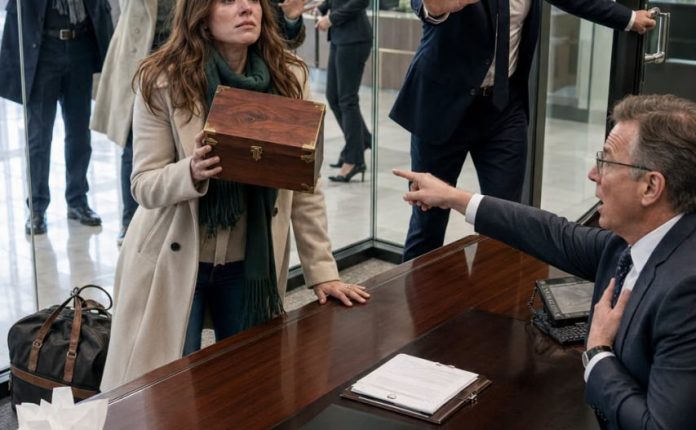
A single sheet of paper waited in front of an empty chair.
The ratification.
A pen lay across it.
“Sit down,” Dad said warmly.
I did.
He slid the pen toward me.
“One signature. This ends tonight.”
Mom placed her hand over mine.
“Please come back to us, Mara.”
My throat tightened.
“We can put all of this behind us.”
There it was.
The thing I had wanted my whole life.
Belonging.
Acceptance.
Home.
Available for one easy payment.
Myself.
I reached down beside my chair.
Not for the pen.
For Ethan’s bag.
And I pulled out his notebook.
### Part 6
“Before I sign anything,” I said, “I want to read something.”
Dad sighed.
“Mara, we’re past—”
“It’s Ethan’s handwriting.”
That stopped him.
I opened the notebook.
Nobody moved.
“March. Hairline crack at west footing. Monitor.”
I turned the page.
“October. Slight widening. Save more before repair.”
Another page.
“Spring thaw. Water at south corner. Fill still moving.”
Natalie stared at me.
I placed Ethan’s old structural report on the table.
“Full underpinning recommended. About seventy thousand dollars.”
Then the savings slips.
“Ethan had saved eighteen thousand toward it.”
Mom looked confused.
“He never told you?”
“No.”
“Why?”
“Because he was trying to handle it before it became my burden.”
My voice almost cracked.
I steadied it.
“He spent years watching that ground. He wasn’t ignoring the house. He was protecting it.”
I placed several photographs on the table.
One showed Ethan kneeling beneath the cottage with a level against the foundation.
Natalie’s eyes dropped.
Her face changed.
Not enough to repair anything.
But enough that I saw the first fracture in the story she had told herself.
“I thought…” she whispered.
“What?”
“I thought it was just old.”
“You called it useless.”
Her face went red.
“I didn’t know.”
“I know.”
That was the truth.
She hadn’t known because nobody had bothered to know.
I placed Derek’s new engineer’s report beside Ethan’s old one.
“This was commissioned after the buyer finally inspected beneath the house. Same settlement. Same footings. Same soil problem. Estimated repair now: seventy-two thousand.”
Dad shifted.
“This doesn’t change the legal issue.”
“No. It explains why the legal issue exists.”
I looked directly at him.
“You sold a house you didn’t own, under authority I never intended to give you, almost one hundred thousand dollars under what it could have been worth if repaired, because Natalie needed her down payment fast.”
“Mara—”
“And the buyer was just as impatient. He paid cash, skipped a real inspection, never opened the crawl space, and thought he was stealing a deal.”
Dad’s jaw tightened.
“He signed as-is.”
“Correct. Which would be his problem if the title were clean.”
Nobody spoke.
I continued.
“But now his lawyer thinks the sale wasn’t validly authorized. He wants his $182,000 returned.”
Natalie went pale.
Luke already knew.
My aunt looked down.
The cousins suddenly seemed deeply interested in the grain of the dining table.
“And,” I said, “that money isn’t sitting in an account anymore.”
My father’s face hardened.
“We used it for family.”
“You used it for Natalie.”
“She has children.”
“So?”
It came out sharper than I intended.
Dad stared at me.
I had never said so to him before.
Not about Natalie.
Not about family need.
Not about any of it.
He tapped the ratification paper.
“None of this matters if you sign.”
There it was again.
“If you sign, the sale is confirmed. Natalie closes. Everyone moves forward.”
I stared at the paper.
Dad softened his voice.
“If you love your sister, fix this.”
Mom started crying quietly.
Natalie’s hands trembled.
Every mechanism in the room was familiar.
Guilt.
Need.
Fear.
Witnesses.
Love made conditional.
I closed Ethan’s notebook.
Then I looked at Dad.
“You’re right about one thing.”
His posture relaxed.
“I do need to stop clinging to the past.”
For half a second, relief spread across his face.
I picked up the pen.
Mom exhaled.
Natalie closed her eyes.
I put the cap on the pen.
Then I pushed it across the table.
“I’ll keep the house.”
Dad’s face emptied.
“And I’ll stop clinging to the version of this family where loving you means letting you take things from me.”
“Mara.”
“I am not signing.”
Mom whispered, “Think about what you’re doing.”
“I finally am.”
Dad stood.
“If you walk out that door, don’t expect everything to go back to normal.”
I looked at him.
“Normal is what I’m leaving.”
Then, unexpectedly, Luke pushed his chair back.
He stood.
Picked up Natalie’s coat.
“Come on.”
Natalie stared at him.
“What?”
“We’re leaving.”
“Dad can still—”
“No.”
Luke’s voice remained low.
“We’ll find another house. One we can afford.”
He looked around the table.
“I’m not putting our kids into a home bought with money taken from Mara.”
Natalie’s mouth opened.
Nothing came out.
For the first time, someone besides me had refused the machine.
I gathered Ethan’s photographs.
Placed them back inside his notebook.
Then I stood.
At the doorway, Dad called my name.
I turned once.
“Water your own ferns,” I said.
And I walked outside.
### Part 7
Freedom did not feel good at first.
That’s something revenge stories usually leave out.
I sat in my car outside my parents’ house with both hands resting on the steering wheel and felt hollow.
I had spent decades believing family was something permanent.
Something you could stretch until it hurt but never break.
That afternoon I understood something uglier.
The relationship had broken long before.
I had simply been the one tying the pieces together.
Martin handled the legal negotiations.
Derek Mallory’s attorney was aggressive at first.
Then practical.
Derek did not want to own a cottage requiring more than seventy thousand dollars of structural work.
I did not want him owning it.
The simplest answer was rescission.
Undo the transaction.
The title returned to me.
Derek’s purchase money had to be returned.
He lost some fees associated with his rushed purchase and the inspection he should have ordered before closing.
I never spoke with him.
Not once.
I didn’t call to warn him about the foundation.
I didn’t call to celebrate when he discovered it.
He had bought a house without examining its bones.
The ground taught him the rest.
My parents had the harder problem.
They owed $182,000 they no longer possessed.
Natalie’s purchase collapsed before her scheduled closing.
The bank refused to fund while her down payment was tangled in a disputed transaction.
Some of the money could be recovered.
Some couldn’t.
Furniture cancellation fees.
Closing expenses.
Earnest money.
Other costs.
Dad and Mom eventually borrowed against their own house to cover the remaining obligation.
For once, my father had to secure a debt with something belonging to him.
He left me one voicemail.
“After everything we’ve done for you, I cannot believe you’d let this happen.”
I listened once.
Then saved it.
Not because I enjoyed it.
Because it reminded me how easily he could still rewrite cause and effect.
I hadn’t made him sell the cottage.
I hadn’t made him transfer the money.
I hadn’t made Derek skip an inspection.
I hadn’t made Natalie build her future around money that wasn’t hers.
I had simply stopped preventing consequences from reaching the people who created them.
Natalie and Luke remained in their rental.
I heard from Luke several weeks later.
He called without Natalie knowing.
“We were wrong,” he said.
His voice sounded exhausted.
“All the way through. I knew something felt wrong when they offered us that money. I didn’t ask enough questions because I wanted the house too.”
I leaned against the kitchen counter.
“Why are you telling me?”
“Because Natalie isn’t ready.”
“Ready for what?”
“To apologize.”
I almost smiled.
“Then don’t apologize for her.”
He was quiet.
“Fair.”
A few weeks later, he brought the children to the cottage.
I almost said no.
Then I remembered that Harper was six.
Her younger brother, Miles, was four.
They hadn’t sold anything.
They hadn’t signed anything.
They were children caught inside decisions adults made.
Harper ran straight to the porch.
“Is this Uncle Ethan’s house?”
“It was.”
She looked at me.
“Now yours?”
“Yes.”
She nodded like ownership was the simplest concept in the world.
Then she noticed the porch light.
“It’s pretty.”
I had repaired it the week before.
One loose connection.
Nothing more.
For two years, grief had convinced me everything broken had to be complicated.
Sometimes a light just needed someone willing to climb a ladder.
In April, contractors arrived.
The foreman opened Ethan’s notebook on the kitchen counter.
I pointed to the west footing.
“He documented everything.”
The man read several pages.
“Your husband knew what he was doing.”
“Yes.”
“We’ll follow this.”
The work was ugly.
Concrete.
Steel.
Mud.
Hydraulic equipment.
Noise vibrating through the floor.
I spent nearly all of Ethan’s $18,000 foundation savings and a painful amount of my own.
I never hesitated.
Every dollar felt like finishing a sentence he’d been forced to stop halfway through.
When they were done, the west-side movement stopped.
The engineer checked measurements twice.
“Solid.”
That one word almost brought me to my knees.
Solid.
After years of uncertainty.
After death.
After betrayal.
After a sale that should never have happened.
The cottage finally stood on ground that had been forced to behave.
I changed every lock.
The locksmith handed me two copies.
I stared at them.
Then I put one in a drawer and one on my key ring.
I gave neither to my parents.
Neither to Natalie.
No emergency keys.
No assumptions.
No “family access.”
One evening in May, I carried my final box through the front door.
I was moving home.
Not back.
Home.
There was a difference.
### Part 8
The cottage sounded different after the foundation repair.
Not silent.
Houses are never silent.
Wood expands.
Pipes tick.
Wind presses at windows.
The third stair still creaked under exactly the right amount of weight.
For months after Ethan died, that sound had made me turn my head.
Every time.
Some part of me expected him to appear.
Now, when the stair creaked during the night, I stayed still.
I knew what it meant.
Wood.
Memory.
A house settling.
Not a ghost.
Not a promise.
Just something familiar that no longer had to hurt every time it spoke.
My mother continued calling.
At first, I answered.
She rarely apologized.
Instead she tested different versions of the old story.
“We all made mistakes.”
“Your father was only trying to help.”
“Natalie has suffered too.”
“Families shouldn’t throw each other away over money.”
The word money fascinated me.
They kept trying to make the story about money because money was easier than ownership.
Easier than trust.
Easier than admitting my father had looked at a home legally belonging to his widowed daughter and decided he had more right to determine its purpose than she did.
Eventually, I stopped answering most calls.
Mom left messages.
I listened when I wanted to.
Deleted them when I didn’t.
The guilt surprised me by shrinking.
I had expected guilt to punish me forever.
Instead, it behaved like a smoke alarm with a dying battery.
Loud at first.
Then intermittent.
Then quiet enough that I could hear my own life again.
I have not spoken to my father since his voicemail.
I know through relatives that he still believes I humiliated him.
Maybe he always will.
That is no longer my problem to solve.
Natalie eventually wrote me a letter.
Not a text.
Not a group-chat apology.
A real letter.
Three pages.
She admitted she had known the cottage belonged to me.
She admitted she had accepted Dad’s explanation because accepting it gave her something she wanted.
She wrote that the sentence about Ethan’s “useless shack” kept waking her up at night.
At the end, she asked whether I could ever forgive her.
I folded the letter.
Put it in a drawer.
I never answered the question.
Maybe forgiveness is possible someday.
Maybe not.
But even if I forgive Natalie in my own heart, she will never again have the version of me who surrenders first and thinks later.
Forgiveness does not restore access.
Regret does not recreate trust.
And being sorry after the consequences arrive is not the same thing as being safe before they do.
Luke still brings the children occasionally.
Natalie has come once.
She stood on the porch without entering.
I didn’t invite her inside.
She looked at the new fern by the door.
Then at the repaired light.
“I really am sorry, Mara.”
“I know.”
She waited.
Years earlier, I would have rushed to rescue her from the discomfort.
I would have said, “It’s okay.”
It wasn’t.
So I didn’t.
After a moment, she nodded.
Then she left.
That was enough.
The first evening after I moved home, I bought a fern.
One.
I put it beside the front door in the same pot where the old one had died while my father carried a key he couldn’t be bothered to use.
I filled Ethan’s old watering can.
The metal handle was cool against my palm.
I poured slowly until water darkened the soil and ran from the bottom of the pot.
Then I sat on the porch.
The field beyond the cottage turned blue-gray as evening came down.
Birds moved through the tree line.
A truck passed on the county road.
For a few minutes, nothing dramatic happened.
That was what made it beautiful.
Nobody called asking me to fix something.
Nobody explained why Natalie needed more.
Nobody called me strong.
I simply sat there.
At dusk, the porch light came on.
Warm.
Steady.
Exactly the way Ethan had wired it to.
I looked through the window toward the kitchen.
His notebook rested in a drawer that no longer stuck because I finally repaired the track myself.
The original engineer’s report was inside.
So was the last sentence he wrote.
She deserves a house that holds.
For a long time, I had thought Ethan meant concrete.
Footings.
Steel.
Drainage.
Maybe he did.
But sitting there, I understood something else.
A house holds because somebody protects what matters beneath the surface.
So does a life.
My family had spent thirty years praising me for being strong whenever they wanted me to carry something that belonged to them.
I don’t accept that job anymore.
I don’t want to be the strong daughter.
The understanding sister.
The forgiving one.
The woman who proves her love by disappearing.
I want to be Mara.
That is enough.
Natalie once said Ethan’s useless little shack had finally done something good for the family.
In a strange way, she was right.
The cottage exposed every weak foundation we had.
Derek’s greed.
My father’s entitlement.
My mother’s guilt.
Natalie’s dependence.
My own belief that love had to be purchased with sacrifice.
The house didn’t destroy my family.
It simply stopped hiding the cracks.
And when everything unstable finally shifted, I learned which parts of my life were actually built to hold.
The deed is in my name.
The foundation is repaired.
The porch light works.
The fern is alive.
And the key stays in my pocket.
Exactly where it belongs.
THE END!
Disclaimer: Our stories are inspired by real-life events but are carefully rewritten for entertainment. Any resemblance to actual people or situations is purely coincidental.