Part Three The allegation was absurd, but absurdity becomes dangerous when written in legal language. Michael’s attorney demanded records from my bank accounts, phone, email, and communications with Lawrence. For the first time in nine years, every bowl of soup and pharmacy run was being reinterpreted as evidence of a scheme.
I wanted to reject the inheritance immediately.
Samuel advised against making decisions from fear.
“If you disclaim your share today,” he said, “Michael will still pursue the challenge because most of the estate does not go to him. You disappearing from the case will not erase his accusations.”
“Then what do I do?”
“Tell the truth and keep records.”
Fortunately, I had records.
Not because I anticipated litigation.
Because divorce had turned me into a compulsive keeper of receipts.
I had pharmacy receipts showing Lawrence reimbursed medication costs exactly when required but nothing more.
Grocery statements showed my own purchases.
Text messages contained years of ordinary exchanges.
Soup is on porch.
Thank you.
Do you need milk?
No.
Your trash bin is still by curb.
I am old, not blind.
Emily spent an entire weekend downloading messages from old phones and cloud backups.
Daniel found photographs spanning years: Lawrence at birthdays, Thanksgiving dinners, graduation parties, and backyard cookouts.
Nothing proved I had not manipulated him.
But together, they showed something Michael’s filing ignored.
Lawrence had a life.
He was not a lonely confused man controlled by one neighbor.
He belonged to our family because he chose to.
Priya’s financial records were more powerful.
The accounts receiving unauthorized transfers were traced to a consulting company controlled by Michael and Susan.
Several payments moved again into an Arizona investment account.
None came to me.
Michael’s allegation about secret accounts collapsed within weeks.
Then the freezer records revealed why he had made it.
One original bank statement contained a handwritten routing number investigators had not seen before.
Priya traced it to a dormant account at a regional bank.
The account belonged to MWS Holdings.
Michael Whitmore Sutton.
Susan’s maiden name.
The company had received eighty-six thousand dollars from Lawrence through transfers carrying electronic authorizations created after Michael’s financial authority was revoked.
That changed the dispute from ugly probate litigation into a possible criminal investigation.
Samuel forwarded the evidence to the district attorney.
Michael became furious.
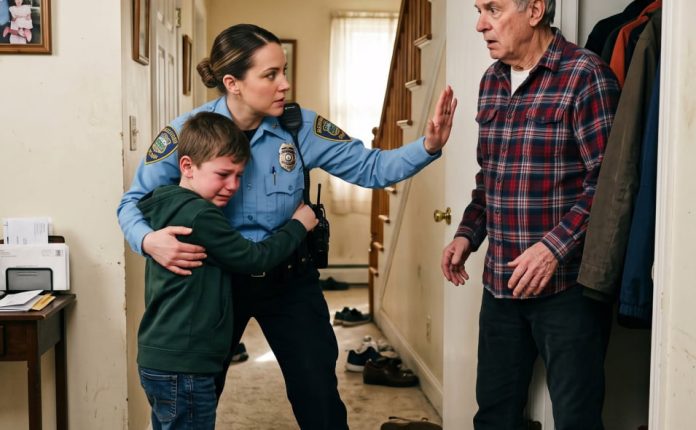
He came to my house on a rainy Tuesday afternoon.
I saw him through the front window and called Daniel before opening the door. Daniel was only ten minutes away.
Michael stood on my porch holding a folder.
“You ruined my family.”
“I’m not discussing this without attorneys.”
“He wasn’t your father.”
“No.”
“You took advantage of a lonely old man.”
“He left most of his money to charities and your daughters.”
His face hardened.
“You think that makes you innocent?”
“I know what I did.”
“You fed him soup.”
“Yes.”
“For nine years.”
“Yes.”
“And suddenly he leaves you hundreds of thousands of dollars.”
“I didn’t know he would.”
“That is convenient.”
I started closing the door.
Michael placed one hand against it.
“Give me the box.”
My fear disappeared beneath anger.
“No.”
“It belongs to my family.”
“It belongs to the estate.”
“You have no idea what is in those records.”
“Apparently neither did you.”
He stared at me.
Then he said, “My father stole from me first.”
I stopped.
Michael claimed Whitmore Equipment had been partly promised to him. He had spent his twenties helping build it, working weekends and delaying his own career.
When Lawrence decided to sell, Michael believed he deserved more.
“So you took it?”
“I took what I had earned.”
“One hundred eighty thousand dollars?”
His jaw tightened.
“You don’t understand.”
“No. I understand perfectly. You decided wanting money made it yours.”
He stepped closer.
“You sound like him.”
“Thank you.”
The insult landed differently than he intended.
Daniel’s truck pulled into my driveway.
Michael removed his hand from the door.
Before leaving, he looked toward my basement windows.
“People like you always pretend money does not matter until someone hands you enough of it.”
I closed the door.
That sentence stayed with me because part of it frightened me.
What would accepting Lawrence’s inheritance say about the previous nine years?
Would people believe I had been waiting for it?
Would I begin wondering whether every meal had somehow purchased a future reward?
Emily ended that spiral immediately.
“Mom, if Mr. Lawrence had left you twenty dollars, would you keep it?”
“Yes.”
“Two hundred?”
“Probably.”
“Two thousand?”
“I don’t know.”
“So there is a number where gratitude becomes suspicious?”
I stared at her.
She shrugged.
“That’s Michael’s logic. Don’t borrow it.”
The probate case moved toward mediation while the financial investigation continued.
Then Michael’s daughters entered the story.
Rachel and Joanna were thirty-two and twenty-nine. I had seen photographs but never met them.
They flew from Arizona to Oregon after learning their trusts were being challenged.
Rachel asked to meet me.
We chose a public café.
The moment she sat down, she said, “I’m not here about your inheritance.”
“What are you here about?”
“My grandfather.”
She explained that Lawrence had secretly stayed in contact with both granddaughters for years. Michael told them their grandfather had rejected the family because he was controlling and vindictive.
Lawrence told them little about the financial dispute because he did not want them choosing sides.
Rachel showed me birthday cards, emails, and photographs.
“He paid part of my college tuition,” she said. “Dad told me the money came from him.”
My stomach tightened.
“Lawrence paid?”
Rachel nodded.
“Grandpa sent checks to Dad because he said tuition should not become another argument.”
Joanna had discovered something similar.
Michael claimed he paid the deposit on her first apartment.
The money had come from Lawrence.
Even while estranged from his son, Lawrence had helped his grandchildren indirectly.
Michael had taken credit.
Rachel rubbed her eyes.
“I don’t know what to believe anymore.”
“I know that feeling.”
She smiled sadly.
Then she handed me an envelope.
“My grandfather mailed this to me two weeks before he died.”
Inside was a copy of an account statement showing a transfer from Lawrence to Michael marked TUITION — RACHEL.
A handwritten note below said:
She should know someday who helped her, but please let the truth make her freer, not angrier.
Rachel began crying.
So did I.
Michael’s family was not exploding because of a will.
The will merely opened a door that had been holding twenty years of resentment, deception, pride, and money behind it.
Susan filed for separation from Michael three months later.
According to court filings, she claimed she had not known the full extent of the later unauthorized transfers, though evidence showed she benefited from several.
Michael accused her of abandoning him to protect herself.
His daughters stopped speaking to him temporarily.
The family fallout Lawrence had feared happened anyway.
But something unexpected followed.
Rachel and Joanna kept visiting Oregon.
They helped clean Lawrence’s house before it was sold.
Emily joined them one weekend.
I went reluctantly.
Walking into his home after months of legal fighting felt strange.
His reading glasses were still beside the chair.
Evelyn’s photographs remained on the mantel.
In the kitchen cabinet, I found eleven food containers with my name written on masking tape.
Lawrence had saved every good container I ever told him to return.
I laughed until I cried.
Rachel opened a drawer and found dozens of pharmacy receipts held together with a rubber band.
On top was a note.
Claire refuses reimbursement for errands. This is extremely irritating.
Daniel read it aloud twice.
That afternoon, the four younger adults carried boxes while I sat on Lawrence’s porch.
For the first time since his death, I missed him more than I feared his money.
That distinction mattered.
The estate was not the relationship.
It was merely something he had left behind.