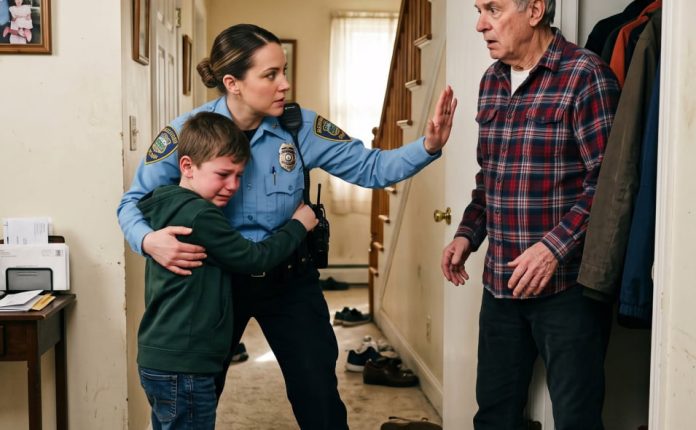
Part Three Simon released Misty immediately. His attorney objected, explaining that nobody was required to speak. Aaron agreed. “Absolutely. You may all leave unless legally detained. I am simply asking Mrs. Mercer whether she wishes to clarify a statement she made voluntarily in front of several witnesses.”
Misty looked from Simon to Aaron. Her confidence had vanished. “I need a lawyer.”
“That is a good idea,” Aaron said.
Jesse remained seated. His shoulders had collapsed inward. “I want to talk,” he said.
Simon spun toward him. “No, you don’t.”
Jesse stared at him. “You don’t get to tell me what to do anymore.”
His attorney had not attended because Jesse expected a routine will reading. Brenda advised him to obtain counsel before saying anything else. To my surprise, he listened. The meeting ended with everyone leaving separately.
I returned to Dad’s house alone.
Near sunset, I went to the rose garden. The bushes were beginning their second bloom. I knelt where I had found Dad’s envelope and searched beneath the branches. One line in his ledger kept bothering me: Garden Copy.
I checked the soil, the stone border, even the irrigation box. Nothing.
Then I noticed one of Dad’s old brass plant markers pushed deeper than the others. Instead of a variety name, it bore a single letter: H.
I pulled it free. Beneath it was a narrow plastic tube wrapped in waterproof tape.
Inside was another flash drive.
I called Brenda before touching anything further. She arrived with Aaron and a forensic technician. The technician photographed the tube, sealed the drive, and took it for imaging. Dad had created redundancy. Whatever he feared losing, he had hidden a second copy in the garden.
The drive contained audio files.
One recording began with Simon saying, “Once Cassandra is out of the marriage, you don’t owe her anything.”
Dad answered, “She is my daughter whether she is married to you or not.”
Simon laughed. “Not legally.”
Dad’s voice became cold. “You have always underestimated relationships you cannot invoice.”
Another recording captured Simon urging Dad to sign a management agreement. Dad refused. Simon responded, “Jesse already understands this is the only way to keep the properties together.”
Then Jesse’s voice entered. “Dad, Cassie doesn’t know how to run any of this. Simon does. We’re trying to protect what you built.”
Dad replied, “By putting it into a company you two own?”
There was a long silence.
The most damaging recording came three weeks later. Simon said the forged transfers could be “explained as confusion” if anyone questioned them. Jesse asked whether Cassandra might challenge the transactions. Simon answered, “She will be grieving. And if Harrison’s medical file shows memory concerns, Brenda won’t risk litigation.”
Jesse said, “There are no memory concerns.”
Simon replied, “Then there need to be.”
I turned off the recording.
My brother had not invented the plan, but he had stayed in the room while it grew teeth.
The financial investigation moved much more quickly after that. Meridian Legacy Partners had received title interests and option rights connected to three properties. Simon controlled fifty-one percent. Jesse held twenty-four percent. The remaining twenty-five percent belonged to an LLC registered to Misty before she married Simon.
That discovery explained her confidence in the garden. She was not simply a new wife expecting Simon’s inheritance. She held a concealed financial stake in the scheme.
Jesse contacted me four days later through his lawyer and requested a meeting. Brenda recommended a neutral location with counsel present. We met in a small conference room at her office.
My brother looked ten years older.
“I’m sorry,” he said.
I did not respond.
He began explaining. His construction company had failed two years earlier. He owed banks, vendors, and private lenders almost two million dollars. He had hidden the losses from Dad because he was ashamed. Simon discovered the debt and offered help.
At first, the plan sounded legal. Simon proposed consolidating several properties under Meridian, borrowing against them, and using development profits to repair Jesse’s finances. Dad would supposedly remain beneficial owner. Jesse convinced himself everyone would gain.
“When did you know Dad had refused?” I asked.
Jesse stared at his hands. “Before the first transfer.”
The answer destroyed every excuse that followed.
He admitted carrying documents to Dad and pressuring him to sign. Dad refused. Simon later produced signed copies and claimed Harrison changed his mind privately. Jesse said he suspected the signatures were false but accepted the explanation because he needed the money.
“And the competency story?”
His eyes filled. “Simon said if Dad challenged the papers, the transactions could be protected by showing he was inconsistent. I never wanted him declared incompetent.”
“You only helped build the argument.”
Jesse began crying. “Yes.”
I thought of the final months when Dad asked why Jesse stopped visiting alone. I had defended my brother. “He’s scared,” I told Dad. “People handle cancer differently.” Again, I had mistaken distance for grief when it was guilt.
“Why did you keep helping after he got sick?” I asked.
Jesse’s answer came quietly. “Because every week I waited, confessing became harder.”
That was the most believable thing he said.
He had finally decided to cooperate fully. His attorney was negotiating with prosecutors. He agreed to surrender his Meridian interest, return funds he received, and testify about Simon’s role. He understood Dad’s challenge clause would probably cost him his inheritance.
“Do you hate me?” he asked.
I looked at the brother who once slept outside my bedroom when thunderstorms frightened me. “I love you,” I said. “And I don’t trust you.”
He nodded as if the distinction hurt exactly as it should.
Misty’s position deteriorated differently. She initially claimed Simon handled everything and she merely signed documents. Bank records showed otherwise. She had transferred money from Meridian into a luxury renovation company she owned with her sister. Emails showed her discussing how quickly Harrison’s house could be resold after probate.
One email, written two months before Dad died, said, Cassandra will fight emotionally, but Jesse can handle her. Simon says once the old man is gone, the house is basically ours.
I read that sentence twice and felt strangely calm.
Misty had walked into my garden believing the ending had already been written.
Instead, she had announced the plot before the investigation finished reading it.
Simon was arrested six weeks after the will reading on charges involving fraud, forgery, conspiracy, and attempted theft of estate assets. Misty was charged later with conspiracy and financial offenses. Jesse entered a cooperation agreement and pleaded guilty to lesser charges connected to the unauthorized transfers.
I stopped reading articles.
Instead, I worked with Brenda to stabilize Dad’s businesses. The legitimate holdings employed more than eighty people, many of whom feared the scandal would cost them their jobs. Dad had left instructions prioritizing payroll, existing leases, and long-term employees before family distributions.
That sounded exactly like him.
His estate was not worth the enormous fortune Misty imagined, but it was substantial enough to change lives. After clawbacks and settlements, the house remained mine, and my share of the business assets provided security I had never expected.
Jesse’s forfeited inheritance, under Dad’s clause, moved into the caregiver foundation.
At first, that felt cruel. Then Brenda showed me Dad’s handwritten note explaining the choice: If Jesse participates in taking from the vulnerable, let what he loses serve people who protect the vulnerable.
Dad had not written punishment. He had written purpose.