Vanessa’s smile lasted less than a second. It wasn’t warm. It wasn’t apologetic. It was the smile of someone who still believed she might win. I hated how much it frightened me. The hearing room was smaller than I expected. No dramatic gallery packed with strangers. Just lawyers, family members, court staff, and a judge who looked exhausted before anyone spoke. Rosie was not there. That had been nonnegotiable. She was spending the morning with Dr. Mercer and Carol. I would not make my five-year-old sit in a room with the woman who had spent years teaching her fear.
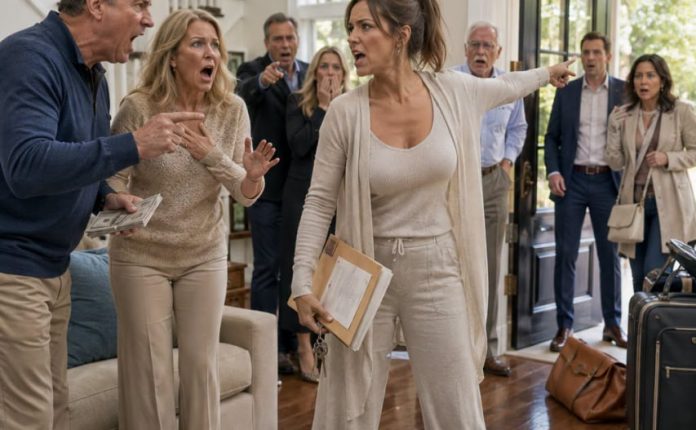
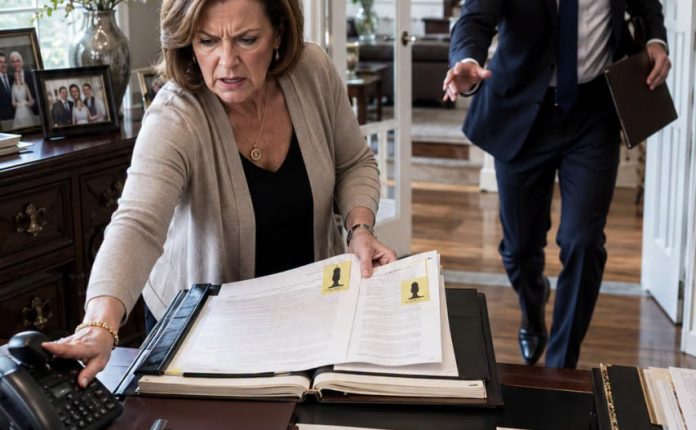
Vanessa’s attorney presented her as overwhelmed. A respected mother. An active volunteer. Someone who had experienced “a momentary lapse in judgment.” Then the footage began. Easter. The shed. Memorial Day. The shove. Fourth of July. The pinch. The playhouse. Buttons above the trash. The barbecue. The cup. The slap. Vanessa’s expression changed with every clip. First bored. Then irritated. Then pale. The judge watched without interruption. When the footage ended, Vanessa’s attorney stood. “These recordings lack audio, Your Honor. They do not demonstrate context.” The judge glanced at him.
“What context would justify holding a child’s toy above a garbage container while the child appears to be begging?” The attorney paused. “We cannot know what was being said.” “No,” the judge replied. “But we can observe what was being done.” Carol testified. So did Rachel. So did Daniel. When it was my turn, my knees felt weak as I walked forward. I described the barbecue. The earlier concerns. The things we had explained away. Then Vanessa’s attorney asked, “Would you agree that you have disliked my client for some time?” “No.” “You never had tension?” “We had tension.” “Would it be fair to say you often interpreted her behavior negatively?”
I looked at Vanessa. She stared back. “I interpreted it too positively.” The lawyer frowned. “Excuse me?” “I spent years telling myself things were accidents. That she was blunt. That she was particular. That she didn’t understand adoption.” I looked at the judge. “I was wrong.” The attorney tried another direction. “Did Rosie ever tell you directly, prior to the barbecue, that Vanessa abused her?” “No.” “So you had no direct disclosure.” “No.” “Yet now, after these videos were shown to her parents, she has made statements about my client.” I understood what he was suggesting. My voice went cold.
“My daughter told me Vanessa said we would send her away if she was bad.” “After you became angry with Vanessa.” “She told me while I was comforting her after Vanessa slapped her.” He started another question. The judge interrupted. “Counsel, move on.” By the end of the hearing, I was exhausted. The final orders and consequences were not as dramatic as some relatives expected. Vanessa was placed under supervised legal restrictions, required to undergo professional counseling, and prohibited from coming near Rosie or our property. Additional family court decisions affected her contact with Noah and Mia. Some people complained that it wasn’t enough.
I understood that feeling. There is no sentence that gives a child back the mornings she woke up afraid. No courtroom order erases the moment she wondered whether one spilled drink could cost her a family. But Vanessa could no longer reach her. That mattered. Outside the courthouse, Daniel’s parents waited near the steps. Linda hugged me carefully. “I’m sorry.” “I know.” “I should have protected Rosie.” “Yes.” She looked startled. Maybe she expected me to rescue her from the truth. I didn’t. Then she nodded. “Yes.” George walked Daniel toward the parking lot. I stayed behind for a moment.
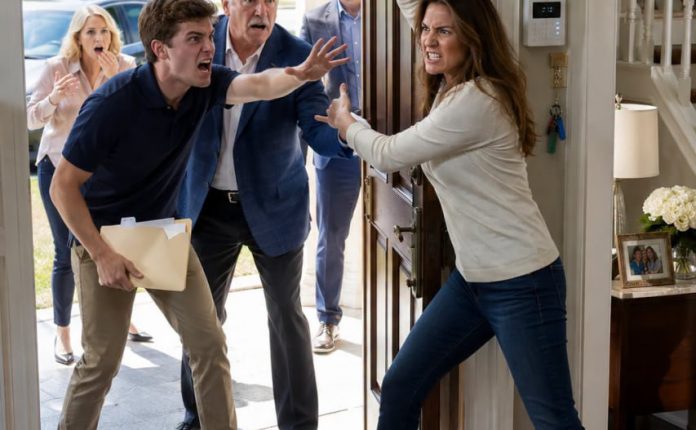
That was when Vanessa came through the courthouse doors with her attorney. She stopped when she saw me. Her lawyer kept walking. Vanessa didn’t. “I hope you’re happy.” I said nothing. “You destroyed my family.” “No.” Her mouth tightened. “You could have handled it privately.” “You mean secretly.” “I made mistakes.” “You terrorized a five-year-old.” “She isn’t innocent.” Even after everything, hearing those words stunned me. Vanessa leaned closer. “You don’t know what she’ll become.” And there it was. The thing underneath all of it. Not one ruined dress. Not stress. Not some misunderstanding.
She had decided what Rosie was before Rosie was old enough to speak. She had spent years punishing a child for a future she invented. I stepped back. “You will never be near my daughter again.” “I’m your sister-in-law.” “Not anymore.” Her face hardened. “Daniel will forgive me eventually.” “No.” I turned to leave. Vanessa called after me. “Blood matters, Claire.” I stopped. Then I looked over my shoulder. “So does character.” I walked away. Three weeks later, a letter arrived from Vanessa’s attorney. She wanted us to read it. Daniel placed the unopened envelope on the kitchen counter. “What do you want to do?”
I looked outside. Rosie was painting at the patio table. Yellow suns. Blue houses. Three people holding hands. I picked up the envelope. And dropped it directly into the recycling bin. We never read Vanessa’s letter. Some relatives thought that was cruel. I didn’t care. Apologies can be useful when they repair something. They can also become another demand placed on the person who was hurt. Read my explanation. Understand my pain. Recognize my trauma. Forgive me. We had spent enough years centering Vanessa. Now we centered Rosie. That summer, our house changed. Not physically. The same coffee stain remained on the kitchen counter.
The same loose deck board squeaked near the patio door. The same maple tree dropped tiny helicopter seeds into the yard. But Rosie changed inside it. She stopped asking whether Aunt Vanessa was coming over. She stopped getting stomachaches before Friday family dinners. She no longer watched the driveway whenever a car slowed in front of our house. The first time I noticed that last change, I nearly cried. It was a Tuesday afternoon. Rosie sat on the lawn with sidewalk chalk, drawing a purple dragon across three concrete squares. A car door slammed next door. Months earlier, she would have snapped her head up.
This time she kept drawing. That was healing. Not forgetting. Not magically becoming fine. Just slowly believing safety could last. Dr. Mercer helped us understand that. “Children don’t heal on adult schedules,” she told us. Daniel nodded. “I know.” “No,” she said gently. “You’re trying to know. There’s a difference.” He accepted that. Daniel began therapy too. At first, he hated going. He said it felt selfish to talk about his guilt when Rosie had suffered. Then one evening, after a session, he came home and sat beside me at the kitchen table. “I figured out something ugly.” “What?”
“I defended Vanessa because admitting what she was doing would have forced me to act.” I waited. “And acting would have broken the family.” His eyes were wet. “So I chose the explanation that kept everyone comfortable.” “Daniel—” “I need to say it.” I let him. “I chose comfort over instinct.” He looked toward Rosie’s artwork taped to the refrigerator. “I won’t do that again.” I believed him. Not because he said it. Because he was already doing differently. When an uncle suggested inviting Vanessa to Thanksgiving “with boundaries,” Daniel answered before I could. “No.” “She’s your sister.” “She abused my daughter.”
“She’s getting help.” “I hope it helps her.” “So maybe eventually—” “No.” There was no anger in Daniel’s voice. That made it stronger. He didn’t debate. He didn’t negotiate. Vanessa’s access to us was over. Eric’s life changed too. He filed for divorce. That decision shook Daniel’s family almost as much as the original videos. Linda asked him once whether there was any chance of reconciliation. Eric answered, “I can forgive somebody without putting my children back inside the same house.” Noah and Mia continued seeing Rosie. Their first visit was supervised, mostly because all three children had been caught in something too complicated for them to understand.
I worried Rosie might associate them with Vanessa. Instead, when Mia stepped through our front door, Rosie shouted, “Come see my paints!” She dragged both cousins toward a new art table Daniel had built in the sunroom. “I have special washable ones now,” she announced. Mia laughed. “Why?” Rosie shrugged. “Because clothes are just clothes.” I looked at Daniel. He looked at me. Neither of us said anything. The children spent two hours painting dinosaurs, flowers, and what Noah claimed was a race car but looked like a potato with wheels. At one point, Mia spilled blue paint across the table. She froze. Completely.
Her face drained of color. “I’m sorry.” Eric stood. “It’s okay.” “I didn’t mean to.” “I know.” Mia started crying anyway. Eric knelt beside her. “It’s paint, kiddo. We clean it.” I looked away because suddenly I understood that Rosie had not been the only child learning to fear mistakes. Later, Eric stood on our porch. “I’m finding out more.” I didn’t ask for details. He sighed. “She wasn’t physically hurting them the way she hurt Rosie, at least not that I know. But there was a lot of fear in that house.” “I’m sorry.” “So am I.”
He looked through the window at the children laughing. “I thought providing a good house made me a good father.” “What changed?” “I realized a safe house matters more.” Carol and Peter became part of our regular family dinners. Rosie started calling Carol “Aunt Carol” without anyone suggesting it. The woman who had once worried she was intruding now had her own chair at our table. One evening, we were sitting under the backyard lights when Carol said, “I still wish I had told you sooner.” I considered pretending it didn’t matter. Instead, I told her the truth. “I wish you had too.”
She looked down. Then I reached across the table and touched her hand. “But you told us when you had proof. And when it mattered, you didn’t stay quiet.” Carol nodded. That was enough. The following spring, almost a year after the barbecue, Rosie’s kindergarten class held a family day. Parents were invited to look at projects taped along the hallway. Rosie’s was a drawing titled MY FAMILY. I expected to see me, Daniel, maybe her grandparents. Instead there were nine people. Me. Daniel. Rosie. Grandma Linda. Grandpa George. Noah. Mia. Eric. And Carol. Above all of us, Rosie had drawn a giant yellow sun.
Her teacher smiled. “She was very specific about who belonged.” I swallowed. “Was she?” Rosie ran toward us. “Mommy! Daddy! Look!” Daniel lifted her. “I see it.” She pointed at Carol. “That’s Aunt Carol.” Carol blinked rapidly. Then Rosie pointed toward a blank corner of the page. For half a second, my chest tightened. But she only said, “I didn’t draw people who aren’t family anymore.” Daniel’s eyes met mine. Rosie smiled. Then she ran toward the snack table. She had made her choice before we ever needed to explain ours. A year and a half after the barbecue, the fairy lights still hang in our backyard.
Daniel tried replacing them once. Rosie objected. “They’re my summer lights.” So they stayed. Some of the bulbs have gone dim, but when evening comes and the maple leaves move in the wind, the little white lights glow above the patio exactly as they did on the day our family broke apart. For a while, I hated looking at them. Now they remind me that the same place can hold two different memories. The worst day. And everything that came after. Vanessa has continued professional treatment and has followed the restrictions around Rosie. We know very little beyond that. That is intentional.
Linda once began telling me about Vanessa’s progress during coffee. I stopped her. “I hope she gets better.” Linda nodded. “She says she understands now.” “That’s good.” “Would you ever consider—” “No.” Linda looked at me. I didn’t raise my voice. “I’m glad she’s getting help. I’m glad she may become a healthier person. None of that gives her access to Rosie.” “What if Rosie asks someday?” “Then when she’s old enough to understand the history and make a truly informed choice, we’ll support her.” Linda stared into her coffee. “And if she never asks?” “Then she never asks.”
There was a time when that conversation would have ended with tears or guilt. Now Linda simply nodded. “I understand.” That was growth too. Not getting what you want. Accepting someone else’s boundary anyway. Rosie turned seven this spring. She is taller now and missing one front tooth. She loves glitter glue, hates tomatoes, and believes she could run a veterinary clinic out of her bedroom if we would just buy her a horse. She barely remembers the details of the barbecue. Sometimes I’m grateful for that. Sometimes I wonder what pieces will return as she grows older. We will deal with them if they come.
The cameras remain. Carol upgraded her system last winter, and Daniel installed cameras around our own house. Not because we live in fear. Because once you learn how much can happen in the space between what adults see, you stop feeling foolish for paying attention. Most days, the recordings are boring. A squirrel stealing birdseed. Daniel taking the trash out in mismatched slippers. Rosie and Mia setting up a lemonade stand where every cup somehow costs a different amount. Noah accidentally kicking a soccer ball into Peter’s roses. Ordinary things. Beautiful things. Last Friday, we hosted another barbecue. The first big one since that summer.
I almost canceled it. As the date approached, my body remembered what my mind insisted was over. The smell of charcoal. A white dress. A plastic cup. That sound. Daniel noticed me standing alone beside the grill before everyone arrived. “We don’t have to do this.” “Yes, we do.” “Why?” I looked around the yard. “Because it’s ours.” By five o’clock, people began arriving. Linda brought pasta salad. George showed up with enough hamburger buns for an army. Owen carried a cooler. Eric arrived with Noah and Mia. Carol and Peter came through the side gate carrying apple pie.
Rosie ran barefoot across the grass in a blue dress covered with sunflowers. Not daisies. I was grateful for the difference. She had grown into the kind of child who entered a room assuming she was wanted. That was the greatest victory of all. At dinner, someone knocked over a glass of punch. Red liquid spread across the white plastic tablecloth. For one second, every nerve in my body lit up. Then I saw Rosie. She stared at the spill. Mia stared too. Then Noah grabbed a stack of napkins. “I got it.” Rosie laughed. “Mom, look! It looks like a volcano!”
Daniel threw a towel over the mess. “No casualties.” Everyone kept eating. That was it. A spilled drink. Nothing more. Later, when the sky turned dark, Rosie sat between Noah and Mia beneath the fairy lights, teaching them a clapping game. Carol and Peter talked with Linda near the fence. Eric helped Daniel clean the grill. George had fallen asleep in a lawn chair. I stood at the patio door and watched. For years, I had thought protecting family meant preserving it. Keeping everybody together. Avoiding uncomfortable conversations. Giving difficult people another chance. Making excuses. Then Vanessa taught me the hardest lesson I have ever learned.
Protection sometimes means removing someone. Family is not a permanent guest list. It is not blood. It is not a shared last name. It is not history. Family is the people who make a child feel safe enough to make mistakes. Safe enough to spill a drink. Safe enough to laugh loudly. Safe enough to believe she belongs. That night, I tucked Rosie into bed. She was nearly asleep when she whispered, “Mom?” “Yes?” “You know when I was little?” I smiled. “You’re still little.” “No, like really little.” “Okay.” She played with the edge of her blanket. “Did Aunt Vanessa not like me because I was adopted?”
I had wondered when that question would come. I sat beside her. “Aunt Vanessa had beliefs that were wrong and cruel.” “Was it because of me?” “No.” “Did I do something?” “No.” Rosie was quiet. Then she asked, “Why did she say you’d send me away?” My chest tightened. “Because she wanted you to be scared.” “That was mean.” “Yes.” “Were you mad?” “Very.” She considered that. “Are you still mad?” I could have said no. I could have given her the beautiful answer adults give children about forgiveness. Instead, I chose something more truthful.
“I don’t think about her very much anymore.” Rosie smiled sleepily. “Me neither.” I kissed her forehead. “Good night, sunshine princess.” Her eyes opened. “You remember that?” “I remember everything about you.” She grinned. Then she closed her eyes. Before leaving, I stood in the doorway and watched her breathing settle. For a long time after the barbecue, I believed our failure was not seeing Vanessa sooner. I no longer think that is the whole truth. Our real failure was seeing pieces and deciding they were easier to explain than confront. That lesson changed us.
Daniel no longer dismisses discomfort simply because the person causing it is family. Linda and George no longer confuse peace with silence. Eric built a calmer home for his children. And I learned to trust the uneasy voice inside me before someone else teaches me I was right. I walked downstairs. Daniel was waiting on the back patio. Above us, the fairy lights glowed softly. Across the fence, Carol’s camera blinked once in the darkness. A silent witness. Daniel wrapped an arm around my waist. “Good night?” “The best.” From upstairs came the faint sound of Rosie laughing in her sleep.
I looked through the kitchen window toward the wall where her latest family drawing hung. There was no space left empty. No one missing. No shadow waiting outside the frame. Vanessa had once insisted blood decided who belonged. She was wrong. The woman who shared Daniel’s blood became a stranger. The child who shared none of ours became the center of our world. And if there was one thing I would never again apologize for, it was choosing my daughter over anyone who believed she deserved less. The cameras still watch our yard. These days, all they usually record is joy. And that is exactly how I intend to keep it.
THE END!
Disclaimer: Our stories are inspired by real-life events but are carefully rewritten for entertainment. Any resemblance to actual people or situations is purely coincidental.