After work, instead of going home, I toured an apartment. It was small. One bedroom. Third floor. The kitchen had old cabinets and a refrigerator that hummed loudly. The carpet wasn’t new. The bathroom mirror had a tiny chip in one corner. I loved it immediately. Not because it was beautiful. Because it was quiet. The leasing agent opened the balcony door. “This faces west, so you get great evening light.” I stepped outside. Traffic moved below. Somebody was walking a golden retriever across the parking lot. For the first time in months, I pictured coming home and knowing nobody could assign me a task.
“I’ll take it,” I said. My savings were thinner than I wanted. But I could manage. I signed the application. The following day, I got approved. That evening, I came home carrying nothing but my work bag. Natalie was sitting at the kitchen table with Mom. They stopped talking when I entered. “What’s going on?” I asked. Mom looked uncomfortable. Natalie answered. “We’ve been discussing how things need to work if you’re staying here.” I almost smiled. “If I’m staying?” She missed the tone. “Yes. Mom and Dad can’t keep covering everything, and since you’re here—” “Covering everything?” Natalie frowned. “You know what I mean.”
“No, I really don’t.” Mom rubbed her hands together. “We need peace in this house.” “Great. I agree.” Natalie leaned forward. “Then you need to stop acting like helping with Sophie and Mason is some huge injustice.” I set my bag down. “How much are you planning to pay me?” She stared at me. “What?” “Childcare costs money. You mentioned twenty dollars an hour sounded outrageous, remember? I’ll give you the family discount. Fifteen.” Her face went crimson. “You’re seriously trying to charge your sister?” “You’re seriously trying to make your sister work for free.” Mom whispered, “Claire, that’s enough.”
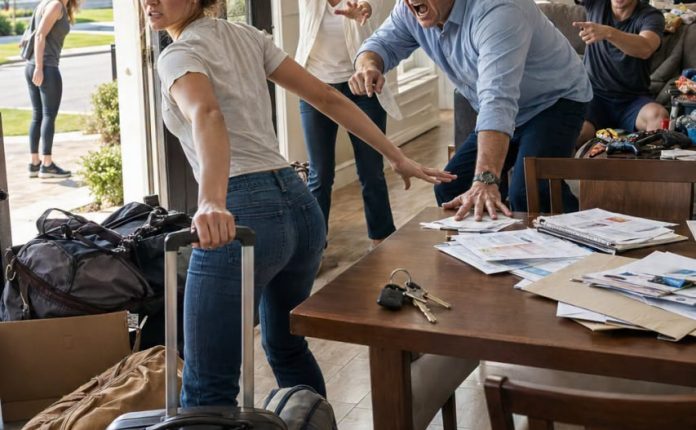
Actually, it was. I pulled an envelope from my bag. Inside was a copy of my lease. I placed it on the table. “I’m moving out Saturday.” Mom froze. Natalie’s expression changed from anger to alarm. “But you can’t.” “I already did.” “What about the bills?” Mom asked. “I’ve paid through the end of this month.” Derek walked in at that exact moment. “What bills?” Natalie looked at him. “Claire’s leaving.” He stared at me. “For how long?” I met his eyes. “Forever.” The room went completely silent. And for the first time, everyone looked less angry than frightened. They were finally realizing what my absence was going to cost them.
My announcement turned dinner into a war zone. Mom cried first. Not loudly. That almost made it worse. She pressed a napkin beneath her eyes and said, “I don’t understand how we got here.” I did. Very clearly. Dad pushed his chair back. “You signed a lease without even discussing it with us?” “I’m an adult.” “You still live in our house.” “Not for much longer.” Natalie looked genuinely panicked. “What are we supposed to do?” I almost asked which part she meant. Paying for groceries? Watching her children? Managing her life? Instead, I said, “You’re going to figure it out.” Her mouth fell open.
“That’s cruel.” “No. It’s adulthood.” Derek finally spoke. “We’re looking for work.” “Good.” “You know how difficult things are.” “Yes. I do. I’ve been financially supporting part of your family.” “We never asked you to do that.” I laughed. “Then I’m sure you’ll be relieved when I stop.” That shut him up. Mom reached for my hand. I moved mine before she touched it. “Claire, please don’t do this out of anger.” “I’m not.” And that was true. Anger had started it. Clarity was finishing it. “I’m moving because I should’ve moved months ago.” Dad shook his head.
“Your mother needs help.” “I’ve helped.” “Your sister needs help.” “I’ve helped.” “The kids love you.” “I love them too. That doesn’t make me their parent.” Natalie slammed her palm against the table. “You are punishing my children because you’re mad at me.” “No. I’m refusing to raise them because you don’t want to.” Her chair scraped backward. “You have no idea what being a mother is like.” “You’re right.” I looked directly at her. “But I know it’s not leaving your kids with someone who told you she isn’t babysitting and driving toward an airport.” Her face went white. Nobody said anything.
I stood. “I’ve spent months being told that because I’m younger, single, and don’t have children, my time matters less. I’m done accepting that.” I went upstairs. Packing was strangely peaceful. Every box made the room look less like mine. Books. Work clothes. Diploma. Shoes. The ugly ceramic mug Mia had given me sophomore year. I packed all of it. Saturday morning arrived quickly. Aunt Vivian came with her SUV. Mia brought coffee and moving blankets. Dad stayed in the garage. Natalie stayed upstairs. Mom stood near the front door as we carried boxes out. When the final load was ready, she followed me to the driveway.
“You’re really leaving.” “Yes.” She looked smaller than usual. For a moment, guilt tried to return. Then she said, “I don’t know how we’re going to afford everything.” And there it was. Not “I’ll miss you.” Not “I’m sorry.” Money. I nodded slowly. “You’ll figure it out.” Her face hardened. “I can’t believe you can be so cold.” “I learned that family shouldn’t be measured by how useful someone is.” She flinched. Good. Maybe she finally heard me. “Claire—” “I know you love me, Mom.” Tears formed in her eyes. “I do.” “But you loved what I did for everyone more.”
She shook her head. “That’s not true.” “Then why did Aunt Vivian have to tell me she wanted me in Florida?” Mom’s expression collapsed. She hadn’t expected that. I continued. “You told her work kept me away.” “Claire, I—” “You made the choice for me. You lied so I could stay home and babysit.” “It wasn’t meant to hurt you.” “That doesn’t make it okay.” She covered her mouth. I got into my car. Before closing the door, I looked at the house. I had once thought leaving would feel dramatic. It didn’t. No music. No triumphant speech. Just sunlight on the driveway and a cardboard box buckled into my passenger seat.
As I backed out, Mom remained near the porch. I did not turn around again. My new apartment smelled faintly like fresh paint and somebody else’s cooking. That first night, I ate takeout noodles while sitting on the floor because I didn’t own a dining table. It was one of the best meals of my life. No children screaming. No bills waiting beside my plate. No one asking whether I could “just help with one thing.” My phone buzzed. Natalie. I almost ignored it. Then curiosity won. Her message read: Hope you’re happy. Mom says they might have to sell the house because of you.
I read it twice. Months earlier, that sentence would have destroyed me. Now I saw it for what it was. A hook. One designed to drag me back. I blocked her number. Then I finished my noodles. The first month alone taught me how tired I had actually been. Not physically. In my bones. In my mind. For months, every sound had meant someone might need something. A door opening. Footsteps in the hallway. My name shouted from downstairs. Even after moving, I sometimes heard a neighbor’s child in the corridor and instinctively tensed. Then I remembered. Not my responsibility.
I began saving again. Slowly at first. Without five other people draining the grocery budget, my paycheck suddenly felt much larger. I cooked. I joined Mia for dinner. I went to a movie on a Tuesday night simply because I wanted to. At work, I volunteered for a new project that required occasional travel. Six months earlier, I would have declined because someone at home might need me. This time I said yes immediately. The project went well. My manager noticed. Three months after moving out, I received a raise. That evening, I bought a bottle of sparkling cider and invited Mia over. We toasted using mismatched glasses on my tiny balcony.
“To selfishness,” Mia said. I laughed. “To boundaries.” “Less fun, but probably healthier.” My family didn’t disappear. Mom sent messages every few weeks. At first they were angry. Your father is disappointed. Then sad. The kids ask about you. Then practical. Do you know anyone hiring? Could you help Dad understand this online bill? Could you watch Sophie for one afternoon? I stopped responding to requests disguised as reconciliation. Eventually, I replied to one message. Mom, I’m willing to talk to you as my mother. I’m not willing to be your financial backup plan or Natalie’s babysitter. She didn’t answer for three days.
Then: I understand. I wasn’t sure she did. But it was a start. Dad called once. He apologized in his awkward, indirect way. “I guess we leaned on you too much.” “Yes.” There was a long silence. “I should’ve noticed.” “You did notice.” Another silence. That was the difference now. I wasn’t going to make his apology easier by rewriting what happened. He had noticed. He simply hadn’t objected because my sacrifice made everyone else’s lives easier. Natalie and Derek lasted another four months at my parents’ house. Derek eventually found another consulting position. Natalie closed the boutique and took an administrative job at a medical office.
They moved into a townhouse across town. I learned all of that from Aunt Vivian. Natalie never apologized. She did email once from an address I hadn’t blocked. Her message was long. She accused me of humiliating her. She said I’d made a difficult period worse. She said siblings were supposed to support each other. Near the bottom she wrote: Maybe someday when you have children, you’ll understand. I stared at that sentence for several seconds. Then I deleted the email. I didn’t need children to understand entitlement. I didn’t need marriage to understand respect. And I didn’t need to suffer through the same mistakes before I was allowed to recognize them.
A year after I left, Aunt Vivian held a small retirement anniversary dinner. This time she invited me herself. I went. So did my parents. Natalie didn’t. Mom hugged me carefully when I arrived. Dad asked about work. Neither mentioned money. Neither asked for favors. It was polite. A little uncomfortable. But manageable. Maybe that would be our relationship now. Maybe someday it would become warmer. I didn’t need to decide. Forgiveness, I had learned, was not the same as giving someone access to your life. I could stop carrying anger without reopening the door they had walked through so many times.
Natalie remained outside that door. I didn’t hate her. I simply no longer trusted her. There was a strange freedom in admitting that. The following spring, Hartwell promoted me to senior analyst. I moved into a better apartment closer to downtown. One Saturday morning, sunlight poured through the big living-room windows while I packed for a trip to Portugal with Mia. My passport sat on the counter beside a cup of coffee. My phone buzzed. Mom had sent a picture of Sophie and Mason at a soccer game. They were taller. Happy. I smiled. Then another message appeared. Hope you have a wonderful trip. Be safe.
Nothing else. No guilt. No request. Just that. I wrote back: Thanks, Mom. I will. Then I put my phone away. Mia honked from outside. I grabbed my suitcase and paused near the door. For years, I’d believed being dependable meant never letting anyone down. Now I understood something different. Sometimes the person you’re most responsible for protecting is yourself. My family had called me selfish when I stopped paying their bills. They had called me irresponsible when I refused to raise someone else’s children. They had called me cruel when I chose my own future.
And yet, walking into that bright morning with my own apartment behind me, my own career ahead of me, and a plane ticket in my bag, I didn’t feel selfish. I felt free. I never reconciled with Natalie. Not in the way my parents hoped. There were no tearful hugs, no dramatic apology, no pretending that what happened had been some innocent misunderstanding. Years later, if we happened to be at the same family gathering, I was polite. “Hello.” “How are you?” Nothing more. She became someone I happened to be related to. And I was okay with that.
Because love offered only after someone loses access to your money, time, labor, or obedience isn’t always love worth returning to. Sometimes it is simply regret that the benefits are gone. I finally learned the difference. And I never forgot it.
THE END!
Disclaimer: Our stories are inspired by real-life events but are carefully rewritten for entertainment. Any resemblance to actual people or situations is purely coincidental.