The second document collapsed faster than Dad expected. Dr. Price had written a letter declaring me impaired without examining me. He had relied on a phone conversation with Dad and one voicemail I left after Lucas died.
In that voicemail, I had cried and asked whether grief could cause chest pain. Somehow that became evidence that I could not manage my own finances. Miriam filed an emergency petition that afternoon.
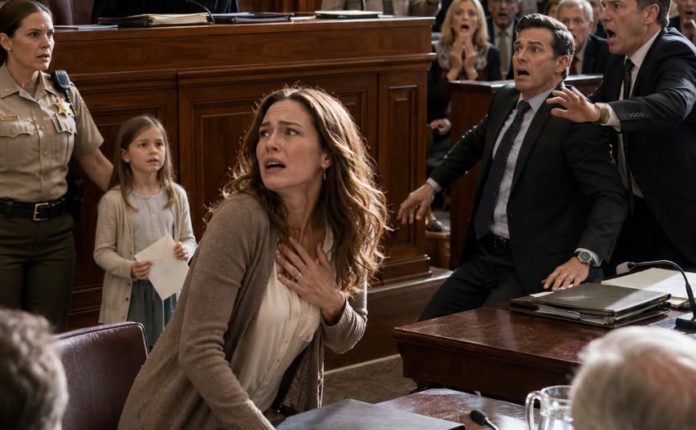
The hospital’s obstetric psychiatrist evaluated me because the allegation now affected legal decisions. I hated every minute of it. I hated answering orientation questions while my premature son slept in intensive care.
I hated knowing my father had turned ordinary grief into evidence against me. The psychiatrist was kind without being sentimental. “You understand why I’m here?” “Yes.”
“Do you believe anyone is trying to harm you?” “My father already did.” She paused. “Do you believe anyone else is part of a conspiracy?”
I almost laughed. “Only the people whose emails and signatures Miriam can show you.” Her mouth twitched.
The evaluation found grief, acute stress, and no impairment preventing me from making decisions. The judge suspended every disputed authority Dad claimed and ordered him to stay away from me, Noah, and my property while the documents were investigated.
Dr. Price withdrew his letter the same day. Then he hired a lawyer. That frightened Dad more than anything else. People who had spent years protecting him were beginning to protect themselves.
Sienna lasted forty-eight hours. She admitted signing the letter calling me unstable. “Ray said Elena would lose the baby if she kept dealing with business stress,” she told investigators.
The cruelty of that explanation stunned me. Dad had convinced his young wife that stealing my authority was a form of prenatal care. Sienna also admitted Dad instructed her to laugh and “not feed the drama” if I became emotional during the house conversation.
That detail hurt almost more than the money. Her laughter had been rehearsed. Dad knew humiliation was easier to enforce when another person treated pain as ridiculous.
The kitchen scene had not merely escalated. It had been staged. What Dad had not planned was violence visible on four cameras. What he had not planned was my water breaking.
And what he could not have imagined was Lucas leaving instructions behind. The forensic review of Mercer Infrastructure took six months. By then, Noah was home.
He spent seventeen days in the NICU, mostly learning how to eat without exhausting himself. The first time I carried him through our front door, I stopped in the mudroom and stared at the tile where Dad had dragged me.
Instead, I hired contractors. We replaced the kitchen floor. Repainted the mudroom. Changed every lock. Removed Dad’s old key from the hook where Lucas had left it.
I kept the house because leaving would have turned Dad’s last act there into its permanent meaning. I wanted Noah to crawl across that floor someday without knowing where my knees had hit it.
Recovery was not pretending nothing happened. It was deciding what happened next in the same room. Mercer’s audit traced $3.18 million in improper payments connected to Dad’s consulting entities over six years.
Not every dollar was stolen. Some work had been legitimate. That distinction mattered. Approximately $1.9 million lacked adequate support or had been routed through entities providing little or no documented service.
Northline received $812,000. Vehicle and housing benefits added hundreds of thousands more. The prosecutor charged him with fraud, forgery, attempted financial exploitation, and assault-related offenses.
Dr. Price surrendered his medical license during disciplinary proceedings and accepted responsibility for issuing a capacity opinion without an examination. Sienna was charged more narrowly for false statements and receiving questionable funds.
Her cooperation reduced the consequences. Then, nine months after Noah was born, Dad asked through his attorney whether I would participate in a mediated meeting before his plea hearing.
I refused. He asked again. This time his attorney enclosed a single page. No excuses. Just one sentence.
“I knew the house was yours, and I tried to take it because I believed being your father made your no temporary.” I read that line for a long time. Then I agreed to the meeting.
Dad entered the mediation room looking older. Not transformed. Just older. His hair was almost completely gray. He had lost weight. For the first time in my life, he waited until I sat before taking a chair.
Miriam sat beside me. Dad’s lawyer sat beside him. Nobody hugged. He looked at my left hand. I still wore my wedding ring. “How is the baby?”
“His name is Noah.” Dad closed his eyes. “I know.” “Then use it.” “How is Noah?” “Healthy.” Tears appeared. “I’m glad.” I waited.
Dad swallowed. “I hit you.” “Yes.” “I dragged you.” “Yes.” “I could have hurt the baby.” “Yes.” His voice broke.
“I could have killed him.” The room became quiet. I had avoided saying that aloud for months. So had everyone else. “Yes.”
Dad covered his face. I watched him cry and felt grief rather than satisfaction. This was the man who taught me to swim by standing waist-deep in a lake with both arms open.
The man who sat beside my hospital bed when I had appendicitis at fourteen. The man who held my mother’s hand while she died. The same hands had dragged me across a floor.
People want one version of someone to invalidate the other. It does not. That is why betrayal hurts. “You came for the house,” I said.
“Yes.” “Why?” Dad stared at the table. “Because Lucas was dead.” The honesty was brutal. “I thought the only person who could stop me was gone.”
My throat tightened. “And me?” “I didn’t think you would fight.” “Because I was pregnant?” “Because you were my daughter.” There it was. Not weakness. Ownership.
Dad continued. “I spent your whole life believing that if I pushed long enough, you would eventually decide I was right.” “You mean surrender.” “Yes.”
He did not soften it. “Lucas stopped surrendering to me years ago. I hated him for that.” My eyes filled. “He knew.” “Yes.”
“Did you know about the red file?” “No.” Dad gave a bitter laugh. “I thought he was too soft to prepare for me.” That sounded like Lucas too.
Quiet was often mistaken for weak by people who required noise to feel powerful. “Did you love him?” Dad looked surprised. Then he nodded. “In my way.”
“That phrase usually means badly.” A sad smile appeared. “Then badly.” I asked about Mom. Not Sienna. My mother.
“Were you with Sienna before Mom died?” Dad’s face collapsed. Miriam shifted beside me. I had not told her I planned to ask. Dad took a long time.
“Yes.” The answer hurt even though I had expected it. “How long?” “Seven months.” I looked away.
Mom spent her final year apologizing because chemotherapy made her too tired for Dad’s social calendar. I remembered him telling her she was imagining distance.
“You let Mom think she was failing you.” Dad began crying. “Yes.” “You married Sienna and told me you met afterward.” “Yes.” “Why?”
“Because I knew you would hate me.” “So once again, you changed the truth instead of accepting my answer.” He nodded. The pattern was almost boring now. That somehow made it worse.
Dad accepted a plea several weeks later. He received a prison sentence for the financial crimes, followed by restitution and supervised release. The assault contributed to the sentence but was not the largest legal count.
I did not attend. I was at Noah’s first birthday. That choice felt more important. We held it in the backyard under strings of yellow lights.
Miriam came. Priya Desai from Mercer came. Nurses from the NICU came. Lucas’s sister, Camille, flew in from Oregon and brought a wooden train Lucas had bought months before his death.
There was an envelope taped beneath it. “For Noah, from Dad.” My hands shook when I saw Lucas’s handwriting. Inside was a letter written before the red file video.
“Hey, little man. If you are reading this, you are old enough to know your father worried too much and loved you before he met you.” I laughed and cried.
Lucas wrote about teaching him pancakes, bicycles, and terrible jokes. Then: “Your mother is the bravest person I know, although she will hate me for writing that because brave people are usually just tired people who had to keep moving.”
I pressed the letter to my chest. Noah smashed cake into his hair while everyone laughed. The timing could not have been more perfect. Life had stopped arranging itself around Dad’s consequences.
That was recovery. I became chair of the Mercer family trust but refused to become chief executive of the company. Lucas had been right.
I did not need to preserve his ego through a building. We promoted the existing president, sold one division, created an employee equity plan, and used part of the recovered funds to establish independent compliance controls.
The Mercer name stayed because employees wanted it. Not because I needed a monument. Dad’s apartment lease ended. The Range Rover was repossessed by the company. Northline dissolved. Noah grew.
At three, he asked why other children had grandfathers who visited. I told him mine lived far away. At six, he asked why. I gave him more truth.
“Grandpa Raymond hurt me before you were born, so we keep distance.” “Did he say sorry?” “Yes.” “Then why can’t he come?”
I thought carefully. “Because sorry matters, but safety matters too.” Noah accepted that more easily than adults often did.
Dad was released when Noah was seven. He did not come to my house. That mattered. He wrote first.
“I am out. I will not contact Noah or come to your property unless you ask. I understand that an apology is not permission.” I cried reading it.
Then I put it away for three weeks. Eventually I agreed to coffee. Dad arrived early and waited outside until I entered. He looked old.
Not movie old. Simply human. We talked for forty minutes. He asked about Noah once. Did not ask to meet him. Did not mention money.
Before leaving, he said, “I used to think losing everything was what happened when Mercer froze the apartment and car that day.” I looked at him. “And now?”
“I lost everything important before that.” His eyes filled. “I just didn’t notice because people were still obeying me.” I said nothing.
He nodded. “That sounded like something I expected you to forgive.” “A little.” “Sorry.” We both laughed quietly.
I did eventually let him meet Noah. Not that year. Two years later. In a public park. For one hour. Dad brought no gifts because I asked him not to.
Noah challenged him to kick a soccer ball and immediately accused him of cheating. Dad laughed. I watched from a bench with Miriam nearby and felt nothing simple.
No triumph. No complete forgiveness. No restored family. Just a boundary I had chosen to move because I wanted to, not because anybody dragged it. That difference was everything.
On the tenth anniversary of Lucas’s death, Noah and I sat on the kitchen floor eating pizza because our new dining table had been delayed.
The floor beneath us was the tile I chose after Dad’s assault. Noah knew the broad version of what happened by then. He asked, “Is this where Grandpa hurt you?”
“Yes.” “Why didn’t you move?” I looked around. The cabinets Lucas painted. The windows overlooking the yard. The doorway where Dad once believed possession could be created by force.
“Because I still loved the house.” Noah nodded as if that were obvious. Then he asked, “What was the phone call?” I smiled.
“What?” “Aunt Miriam says one phone call changed everything.” Of course she did. I told him. His grandfather had come with papers. His father had left protections. His mother called the lawyer.
“What did Grandpa lose?” I thought of the corporate apartment, vehicle, consulting payments, access, reputation, freedom. Then I thought of what took longer.
“He lost the ability to decide what belonged to other people.” Noah considered that. “That seems good.” “It was necessary.” He took another bite of pizza.
“Did Dad save you?” The question surprised me. I looked toward Lucas’s photograph on the shelf. “No.” Noah frowned. “But he made the red file.”
“He helped protect us.” I touched my son’s shoulder. “But your father was dead. Miriam was on the phone. Police came. Doctors helped. Lots of people did their part.”
“And you?” “I made the call.” He smiled. “So you saved you.” I laughed. “Something like that.”
The truth was less dramatic and more important. Lucas prepared. Miriam acted. Police intervened. Doctors kept Noah safe. Lawyers exposed documents. Auditors found money. My father eventually admitted what he had done.
But none of those things could replace my decision to say no while kneeling on concrete with my water breaking beneath me. For most of my life, Dad treated no as the opening position in a negotiation.
That afternoon, it became the end of one. Three weeks after my husband died, my father came to take control because he believed grief had made me available for possession.
He was wrong. I lost Lucas. I nearly lost the peaceful ending of my pregnancy. I lost the uncomplicated story of my father. I lost whatever relationship I might have had with Sienna.
Those losses were real. But I did not lose my house. I did not lose Lucas’s company to fraud. I did not lose the money intended for Noah.
Most importantly, I did not lose myself trying to preserve a family structure that required my obedience. Years later, I could still remember the cold concrete beneath my palms and the warm rush of water down my legs.
I remembered Dad asking what I had done when his phone began filling with termination notices. At the time, I barely understood the answer. Now I did.
I made one call. Not because one lawyer magically saved my life. Because the call was the first time I refused to negotiate with someone who had already shown me what my consent meant to him.
Dad thought Lucas’s death left him as the strongest person in the room. He thought strength meant controlling money, documents, houses, companies, wives, daughters, and stories.
He was wrong about that too. Strength was quieter. It was a widow holding a phone with scraped hands. It was a premature baby breathing inside an incubator.
It was a dead husband admitting he had waited too long to tell the truth. It was a lawyer following instructions instead of family mythology.
It was a daughter learning that loving her father did not require letting him own the ending. The house remained mine. The life after Lucas became mine too.
And the first word that truly secured both was the one my father had spent my whole childhood teaching me he would never accept.
No.