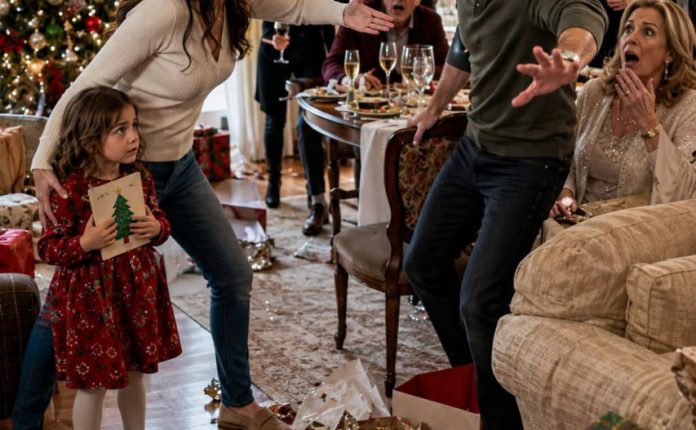
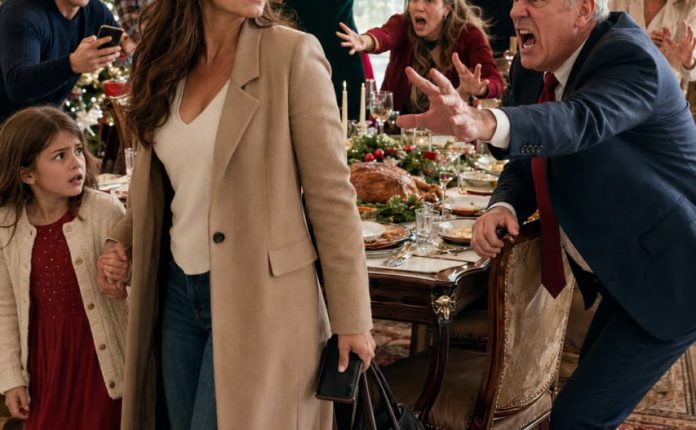
Luke stared at Aaron as if the hallway had tilted beneath him.
“What?”
Aaron did not repeat the accusation casually.
He opened the index copy and pointed to one line.
“Daniel recorded that he had concerns about payments you approved through the operations division.”
Luke’s face drained.
Emma turned toward him.
“Luke?”
Sophie whispered, “What did you do?”
“Nothing.”
Too fast.
I heard it.
So did everyone else.
“Luke.”
He looked at me.
My son had Daniel’s eyes.
That had always comforted me.
Now it felt cruel.
“I approved invoices.”
“How many?”
“I don’t know.”
“For Northstar?”
“Yes.”
My hands went cold.
“Why?”
“They were already established vendors.”
“That isn’t what I asked.”
Luke rubbed both palms over his face.
“Dad told me to keep them moving.”
Aaron frowned.
“When?”
“Years ago.”
I stared.
“Your father instructed you to approve payments?”
“At first.”
“Then what changed?”
Luke looked toward the courtroom doors.
“Martin started calling me directly.”
Of course.
“What did he want?”
“Faster approvals.”
“Did you give them?”
“Yes.”
“Why?”
Silence.
Emma said his name.
He closed his eyes.
“Because I owed him money.”
The sentence landed differently from everything else.
Not betrayal exactly.
Shame.
“How much?”
“One hundred fifty thousand.”
Sophie gasped.
“For what?”
Luke’s face reddened.
“I invested in a restaurant group with a friend.”
I remembered that disaster.
Two years earlier, Luke had told us he lost only his original investment.
Apparently he lied too.
“The group collapsed.”
He continued.
“I had personally guaranteed part of the debt.”
“And Martin paid it?”
“He arranged a private loan.”
“Did Daniel know?”
“Not then.”
“So Martin owned your silence.”
Luke flinched.
I hated how familiar that pattern had become.
Secrets creating leverage.
Daniel’s affair.
Luke’s debt.
Celeste’s access.
Martin’s money.
Everyone believing concealment bought safety while it quietly increased the price.
“Did you know the invoices were false?”
“Not at first.”
“And later?”
He looked at me.
“Yes.”
My chest hurt.
“How much later?”
“Last summer.”
Nearly a year.
“You knew money was leaving the company for work that wasn’t happening.”
“Some work happened.”
“Luke.”
“Not enough.”
“Why didn’t you tell your father?”
“I thought Martin would expose the debt.”
“To whom?”
“You.”
That answer stunned me.
“Me?”
Luke’s eyes filled.
“You were proud of me.”
I almost laughed.
“What does that have to do with anything?”
“I didn’t want you to know I’d failed.”
I stared at my adult son.
Thirty-four years of marriage had apparently created a family in which everyone feared disappointing me enough to lie.
That possibility hurt in a new way.
“Did I make you think you had to be perfect?”
“No.”
He answered immediately.
“Dad did.”
Then he shook his head.
“No. That’s not fair. I did that to myself.”
His voice broke.
“I thought if you knew, you’d look at me differently.”
“I do look at you differently.”
He cried.
I continued.
“But not because the restaurant failed.”
That landed.
He covered his face.
I wanted to hold him.
I did not.
Not yet.
Aaron said Daniel discovered Luke’s involvement in March while reviewing Northstar payments.
He confronted him privately.
Luke admitted the loan.
Admitted signing approvals.
Claimed he never received any Northstar proceeds.
The forensic records supported that so far.
Daniel did not know whether to believe him.
That was why he named him in the recording.
Not as a convicted thief.
As someone investigators needed to question.
Luke whispered, “He told me to tell you.”
“When?”
“The night before his heart attack.”
My breath stopped.
“What?”
“He called me.”
The ICU returned instantly.
Daniel arriving by ambulance.
Machines.
His hand.
The monitor.
Luke continued.
“He said he was done hiding things.”
My knees weakened.
Emma guided me toward the bench.
“What exactly did he say?”
“That he had fixed the will.”
Luke cried openly.
“He said he was meeting investigators the next week. He said after that he was telling you everything.”
I laughed bitterly.
“Next week.”
Always later.
Luke nodded.
“I told him he should tell you that night.”
“What did he say?”
“He said he wanted one more ordinary evening.”
My eyes closed.
I remembered our final evening.
Daniel came home at seven.
We ate leftover chicken.
Watched half a documentary.
He complained about heartburn.
I folded laundry.
He asked whether I still wanted to go to the cabin in June.
I said yes.
He kissed my forehead before bed.
Ordinary.
He had chosen ordinary for himself and ignorance for me.
The realization hurt even while I understood why a frightened man might want one final night before detonating his life.
Aaron asked whether I wanted to hear Daniel’s private recording immediately.
“Yes.”
We used a conference room.
My children offered to leave.
I told them to stay.
No more separate rooms.
No more truths distributed according to who someone thought could handle them.
Aaron inserted the drive.
Daniel appeared on the screen.
He sat in his office wearing the blue shirt I bought him for Christmas.
He looked tired.
“Hi, Helen.”
My hand flew to my mouth.
For one second I almost answered.
Daniel looked down, then back at the camera.
“If you’re watching this, I failed to tell you myself.”
Tears blurred him.
“I’m sorry.”
He described Celeste without pretending the affair meant nothing.
“I loved her.”
The words pierced.
“I need to tell you that because reducing five years to manipulation would be another lie.”
Celeste had not invented every promise.
Daniel admitted he discussed leaving me.
He toured apartments.
Once told Celeste they might live together after my cancer surveillance ended.
He bought her jewelry.
Took trips I believed were business.
“I betrayed you repeatedly, not once.”
I cried silently.
Emma held my hand.
This time I let her.
Then Daniel said, “But Celeste lied when she said I stayed only from guilt.”
I looked at the screen.
“I stayed because I loved you too.”
His face crumpled.
“I know how selfish that sounds.”
It did.
“I wanted two incompatible lives and kept postponing the moment when truth would force me to lose one.”
He wiped his eyes.
“Your cancer gave me an excuse to call cowardice compassion.”
My chest tightened.
“Then recovery gave me another excuse. Sophie’s engagement. Emma’s new job. Luke’s troubles. There was always a reason to wait.”
He admitted telling our children.
Apologized for making them custodians of an adult secret.
Then he discussed the fraud.
Martin had managed personal and corporate investments for fifteen years.
He knew where signatures were stored.
He knew passwords.
He knew which Whitmore employees could be pressured.
Celeste had introduced Martin to her brother’s companies.
At first, Daniel approved legitimate consulting work.
Then invoices expanded.
Martin moved money through vendors and accounts.
Celeste benefited.
How knowingly was still uncertain until recorded conversations began.
Daniel activated an office recorder after consulting investigators.
The April eighteenth video captured Martin placing the new will on his desk.
It captured Celeste saying, “Sign it, and Helen never has to know how long you’ve been planning to leave.”
Then Martin said, “If you fight us, everyone learns everything tonight.”
Daniel looked into the camera now.
“I signed.”
His voice flattened.
“That was cowardice again.”
He then signed the revocation three days later and reported the coercion.
He said the 2021 will remained his intended estate plan.
Under that plan, I received our home, cabin, vehicles, personal accounts, and the controlling family trust.
Our children received equal long-term shares.
Life insurance named me.
The estate was larger than Celeste’s filing suggested because she apparently did not know about a separate $4.2 million business-continuity policy and several trust assets.
I almost laughed at the absurdity.
An hour earlier, money had felt like the center of the catastrophe.
Now it seemed like bookkeeping attached to grief.
Daniel continued.
“Helen, keep whatever you want. Sell whatever you hate. Do not preserve my company or my reputation because you think marriage requires it after death.”
I cried harder.
“Protect the employees if you can. Protect yourself first.”
Then he addressed Luke.
Our son stared at the screen.
“Luke, tell the truth about Martin.”
Luke started sobbing.
“Pay back what you owe. Accept whatever consequences belong to you. Your mother’s love is not a hiding place.”
That sentence silenced the room.
Daniel addressed Emma and Sophie next.
He apologized for burdening them.
Then returned to me.
“I don’t know whether you will hate me.”
I whispered, “I don’t know either.”
“If you do, you are allowed.”
His eyes were wet.
“But please don’t hate the woman you were with me.”
My chest tightened.
“She wasn’t stupid.”
I covered my face.
“She loved me. She trusted her husband. Those are not character defects.”
For years afterward, that would be the sentence I remembered most.
The recording ended with Daniel saying he loved me.
I could not answer.
Dead men do not need immediate forgiveness.
The probate dispute changed quickly after that day.
The April will was never admitted.
The revocation was authenticated.
The video and financial records were transferred to investigators.
Martin Keene was arrested four weeks later on charges involving fraud, identity theft, money laundering, and attempted extortion.
Celeste was charged later.
Her attorneys argued she had believed Daniel intended to provide for her and that Martin controlled the financial scheme.
Some evidence supported her claim that Daniel promised her a future.
Other evidence showed she knowingly received money from fictitious vendors and participated in pressuring him to sign the April will.
She eventually accepted a plea agreement requiring restitution and admitting participation in the coercive scheme.
I did not attend sentencing.
Luke cooperated completely.
Investigators determined he had approved false invoices after recognizing irregularities but had not received stolen proceeds beyond Martin’s separate personal loan.
The company disciplined him.
I removed him from operations before anyone else could.
He resigned rather than challenge it.
He repaid the loan using proceeds from selling his condominium.
For months, he barely spoke to me.
Not because I punished him.
Because shame made conversation difficult.
One evening he appeared at my house carrying takeout.
“I don’t want money.”
I almost smiled.
“Good opening.”
“I don’t want a job.”
“Better.”
“I just miss you.”
That broke me.
I let him inside.
We ate at the same kitchen table where Daniel and I had spent thousands of evenings.
Luke apologized without asking me to make him feel better.
I told him something I was only beginning to understand.
“I love you.”
He cried.
“And I’m still angry.”
He nodded.
“Both can be true.”
We were learning that sentence as a family.
Emma apologized for keeping Daniel’s secret.
Sophie did too.
I did not tell them it was fine.
It was not.
Instead, we talked about why they stayed silent.
Fear.
Loyalty.
Cancer.
Their father’s authority.
The desire to preserve one more holiday.
I understood all of it.
Understanding became the beginning of repair, not the end of accountability.
The first Christmas without Daniel was terrible.
We almost canceled.
Then Sophie said avoiding the holiday would make him control one more thing from the grave.
So we gathered.
Nobody sat in Daniel’s chair.
Not intentionally.
We simply left it empty.
Halfway through dinner, Luke started telling a story about Daniel getting lost on a family road trip despite refusing to ask directions.
I laughed.
Then immediately cried.
Soon everyone did both.
Grief after betrayal is greedy.
It demands you mourn the person and the story you believed about them.
I missed Daniel every day.
I also became furious at him every day.
Sometimes within the same minute.
I sold our house the following summer.
People were shocked.
Emma asked whether I was sure.
“Yes.”
The house belonged to thirty-four years I did not want to erase, but I no longer wanted every doorway asking whether Daniel had texted Celeste while standing inside it.
I kept the cabin.
Not for him.
For me.
I had painted half its walls, planted the lilacs, taught my children to swim from that dock, and survived my first chemotherapy summer there.
Celeste did not get to own it symbolically because Daniel once promised it to her.
Neither did Daniel.
I hired independent management for Whitmore Logistics.
Then I sold a majority interest to an employee ownership group and a regional investor on the condition that headquarters and pension commitments remained intact.
Reporters called it dismantling Daniel’s legacy.
They were wrong.
Daniel’s legacy was not my responsibility.
The employees’ livelihoods were.
I kept enough wealth to live securely and funded a program providing independent legal and financial counseling to spouses facing hidden debts, forged signatures, and coercive asset transfers.
I named it Clear Ledger.
Not after Daniel.
Not after me.
After the thing our family had lacked.
Five years after Daniel died, my children and I returned to the cabin for his birthday.
Luke brought his fiancée.
Sophie had a toddler.
Emma brought a cake Daniel used to love.
We placed no photograph at the table.
We did not need one.
After dinner, Sophie asked whether I still loved him.
Everyone became quiet.
“Yes.”
The answer surprised nobody more than me.
Luke asked, “After everything?”
“Yes.”
I looked toward the dark lake.
“Love isn’t a verdict.”
Emma smiled sadly.
“Do you forgive him?”
I thought for a long time.
“Some days.”
Sophie laughed softly.
“That sounds like you.”
“Other days I want five minutes with him and a locked room.”
Everyone laughed.
Then I added, “I stopped needing one final answer.”
That was recovery.
Not deciding Daniel had secretly been good.
Not deciding thirty-four years were fraudulent because five contained an affair.
Not deciding Celeste was a monster so I could remain innocent in a simple story.
Recovery meant letting contradiction exist without allowing it to rule my future.
Daniel betrayed me.
Daniel loved me.
My children failed me.
My children loved me.
Celeste hurt me.
She was also hurt by promises Daniel chose to make.
Luke concealed wrongdoing.
He also told the truth when consequences finally arrived and spent years repairing what he could.
No single sentence erased another.
Later that night, after everyone slept, I walked to the dock.
The cabin windows glowed behind me.
I thought about probate court.
Celeste entering with two attorneys.
Her beautiful calm.
The will.
My children lowering their heads.
Her sentence.
He stayed from guilt, not love.
For years, I had wanted to defeat that sentence.
Prove it false.
Daniel’s recording did not completely defeat it.
He had felt guilt.
He admitted it.
Sometimes guilt influenced why he stayed.
So did cowardice.
History.
Family.
Habit.
Fear.
And love.
Human beings rarely stay anywhere for one clean reason.
That was the truth Celeste never understood because I had not understood it either.
I touched the silver bracelet on my wrist.
The one Daniel gave me for our thirtieth anniversary.
For a while, I could not wear it.
Then one morning I put it on because I still loved the coordinates engraved inside.
They marked the library where I met a twenty-year-old boy who had no mistress, no company, no millions, and no idea how badly he would someday hurt me.
That boy was real too.
I did not owe my future to him.
But I no longer needed to erase him.
The sealed envelope saved my home, my assets, and millions of dollars.
People who heard fragments of the story always assumed that was the miracle.
It wasn’t.
Money mattered.
The fraud mattered.
Justice mattered.
But the envelope’s greatest gift was uglier and more useful.
Daniel refused to let me survive by believing another lie.
He could have written that Celeste meant nothing.
He could have called her a predator from the beginning.
He could have painted himself as a victim.
Instead, he admitted loving her.
Admitted planning another life.
Admitted using my cancer as cover for cowardice.
Admitted that his eventual attempt to protect me did not undo what came before.
I hated him for that honesty at first.
Then I became grateful.
Truth hurt once in the open.
Lies keep charging interest.
For once, truth had cost us less than another generation of silence.
Daniel’s final recording ended with “I love you.”
For years, I did not answer him.
Then one spring evening at the cabin, I stood alone beside the lake and finally said the words aloud.
“I loved you too.”
Past tense.
Present tense.
Both, perhaps.
Then I added what I could not have said while holding his hand in the ICU.
“But I belong to myself now.”
The water moved quietly against the dock.
No answer came.
For once, I did not need one.