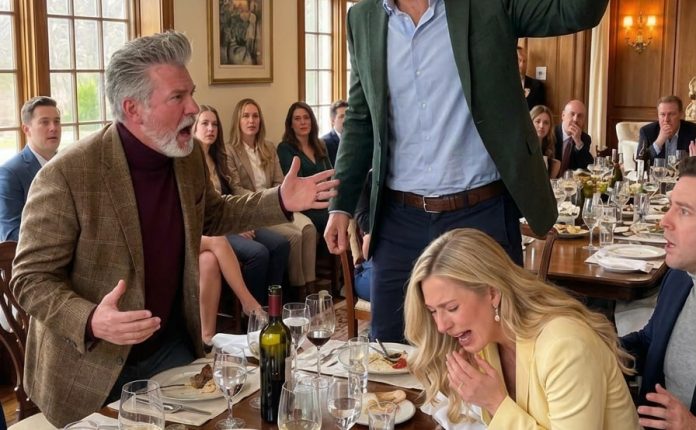
Joe was sentenced fourteen months after Eleanor’s birthday.
He received four years in federal prison after cooperating with investigators and helping recover several million dollars.
Martin received less.
Other executives paid fines.
Vance Development survived, although not as a Vance-controlled company.
My father became its largest voting shareholder after exercising his conversion rights.
Then he did something nobody expected.
He refused to run it.
Instead, he installed an independent board.
He separated family ownership from management.
He ordered every major contract reviewed.
He created whistleblower protections.
When I asked why, he smiled.
“Because ownership is not competence.”
Eleanor would have considered that sentence blasphemy.
She lost most of her influence.
She kept her home and enough money to live comfortably, but the era of people rearranging themselves around her ended.
For months, she did not speak to me.
Then Tommy was hospitalized with pneumonia.
It happened during a brutal January.
He had been doing well for years, but respiratory illness still frightened me.
I sat beside his hospital bed while snow struck the windows.
A nurse entered.
“There’s someone outside asking to see him.”
Eleanor.
I almost said no.
Then Tommy woke.
“Who?”
“Your grandmother.”
He was quiet.
“Do you want her here?”
He thought about it.
“For five minutes.”
Eleanor entered.
She looked smaller.
Not physically.
Socially.
She carried no flowers.
No expensive gift.
She stood beside his bed.
“Hello, Tommy.”
“Hi.”
“I heard you were sick.”
“Obviously.”
I nearly laughed.
Eleanor almost did too.
Then she looked at him.
“I owe you an apology.”
Tommy’s expression changed.
She continued.
“I made you feel that being ill meant being weak.”
He said nothing.
“I compared you to other children.”
Still nothing.
“I treated Leo differently when I met him.”
Tommy looked toward the window.
“Yes.”
“I was wrong.”
He looked back.
Eleanor’s eyes filled.
“You are stronger than anyone in our family.”
Tommy frowned.
“Don’t do that either.”
She blinked.
“What?”
“I don’t have to be stronger.”
The words stunned both of us.
“I can just be me.”
Eleanor covered her mouth.
I looked at my son.
He had understood at eleven what generations of Vances had failed to understand.
Strength did not determine worth.
Eleanor nodded.
“You’re right.”
Tommy glanced toward me.
Then toward her.
“You can stay longer than five minutes.”
She sat.
That did not repair everything.
It began something.
Recovery was not dramatic.
That surprised me.
The birthday party had been dramatic.
The USB was dramatic.
The arrests were dramatic.
Healing was boring.
It was school mornings.
Therapy appointments.
Legal paperwork.
Grocery shopping.
Learning how to sleep in a bed that no longer contained another person.
Changing emergency contacts.
Removing Joe from subscriptions.
Finding his shirts behind mine months later.
Explaining to Tommy why loving his father did not mean approving of him.
Allowing him to write letters to Joe without reading them unless he asked me to.
Letting Leo visit.
Learning to sit across from Tracy without seeing only the affair.
Tracy eventually apologized again.
This time, I told her something different.
“I forgive you.”
She cried.
I did not.
Forgiveness felt quieter than I expected.
It did not make us friends.
It removed a weight.
My divorce became final nineteen months after the birthday party.
I kept my personal assets.
The fraudulent transfers were reversed.
Joe’s remaining marital holdings were divided according to the settlement.
The house became mine through a purchase arrangement with Dad’s holding company.
Tommy received protected trusts from both sides of the family.
Leo received one too.
That was my decision.
Eleanor objected initially.
“He was born outside the marriage.”
I looked at her.
“He was born.”
That ended the discussion.
Leo had not chosen the circumstances of his birth.
I refused to build another generation around punishment inherited from adults.
My father later transferred part of his Vance Development position into trusts for both boys.
When I asked why, he shrugged.
“Arthur’s descendants should benefit from whatever honest value remains.”
“Even Leo?”
Dad looked offended.
“Especially if people are going to make the child spend his life apologizing for existing.”
I hugged him.
“You hid a twenty-eight-million-dollar loan from me.”
He sighed.
“I knew that would return.”
“You’re impossible.”
“I’m old.”
“That isn’t a defense.”
“It works surprisingly often.”
For the first time in years, family dinners became enjoyable.
Not perfect.
Real.
Tommy grew stronger physically.
At twelve, he joined his school’s robotics club.
At thirteen, he tried tennis.
He was terrible.
He loved it.
When he lost his first match 6–0, 6–1, he called me from the court.
“Mom!”
“What?”
“I won a game!”
I laughed so hard I cried.
Eleanor attended one match.
She did not compare him to Joe.
That mattered.
Joe served thirty-two months before transferring to supervised release.
Tommy chose to see him.
I drove him to the first meeting.
My hands shook on the steering wheel.
“You don’t have to go.”
“I know.”
“You can leave whenever you want.”
“I know.”
“You don’t have to forgive him.”
“Mom.”
“What?”
“I know.”
I laughed.
He looked out the window.
Then quietly said, “I miss him.”
“I know.”
“Is that stupid?”
“No.”
“He did horrible things.”
“Yes.”
“But he’s still Dad.”
“Yes.”
Tommy looked at me.
“You don’t hate me for that?”
I pulled the car over.
He looked startled.
I turned toward him.
“Never apologize to me for loving your father.”
His eyes filled.
“Love is not a courtroom verdict.”
He nodded.
I touched his cheek.
“You get to decide what relationship you want with him.”
“What if he hurts me again?”
“Then we deal with that.”
“We?”
“Always.”
He hugged me.
Joe cried when he saw him.
I waited outside.
Their relationship became cautious.
Joe did not return as the father he had been.
He could not.
Too much had happened.
Instead, he learned to become something smaller and perhaps more honest.
He attended Tommy’s tennis matches when permitted.
He called Leo.
He worked.
He paid support.
He stopped promising grand futures.
He started arriving on time.
Years later, Tommy told me that mattered more.
Tracy eventually married someone else.
A pediatric physical therapist named Marcus who seemed utterly unimpressed by Vance family history.
Leo adored him.
Joe struggled with that.
Then, to his credit, he accepted it.
Eleanor turned eighty.
This time, there were twelve people at her birthday dinner.
No country club.
No ballroom.
No hundred guests.
No photographers.
Just family around a long table at her house.
I almost did not attend.
Tommy wanted to.
So did Leo.
Joe was there too.
Our divorce had been final for years.
The first time the four of us—Joe, Tracy, Tommy, and me—occupied the same room after everything, the tension was almost comical.
Leo solved it.
He was eight by then.
He looked around the table.
“Why is everyone acting weird?”
Tommy laughed.
“Because adults are emotionally incompetent.”
“Tommy,” I said.
“What? Grandpa says it.”
Nathan raised his wine.
“I stand by it.”
Even Eleanor laughed.
Dinner continued.
At some point, she asked Tommy to make a toast.
He stood.
“No USB this time,” Joe said.
Everyone froze.
Then Tommy smiled.
“Probably.”
Joe laughed first.
That mattered too.
Tommy lifted his glass.
“To Grandma.”
Eleanor looked at him.
“Happy birthday. Thanks for not renting a ballroom.”
Everyone laughed.
“And thanks for getting better at being a grandma.”
Her eyes filled.
Tommy continued.
“I think families are weird because you don’t get to choose how they start.”
He looked around.
“But maybe you get some choice in what they become.”
Nobody spoke.
Then he sat.
I looked at my son.
The ten-year-old boy who once stood beneath chandeliers holding a USB drive was nearly fifteen.
He was taller.
His breathing was better.
His voice had deepened.
He still kept the USB.
I discovered that accidentally one afternoon while helping him move furniture.
It was inside a small box.
“You kept it?”
He shrugged.
“Historic artifact.”
“You terrified half of Greenwich with that thing.”
“Good.”
I sat beside him.
“Do you ever regret what you did?”
He thought about it.
“No.”
“Never?”
“I regret the walking-corpse line.”
I raised an eyebrow.
“Really?”
“No. That was excellent.”
I laughed.
Then his expression became serious.
“I regret that Leo was there.”
That answer made me proud.
“He was too young to understand.”
“Still.”
“You protected me.”
Tommy looked at the USB.
“I was angry.”
“You were ten.”
“I wanted Dad to hurt.”
I nodded.
“That doesn’t make me bad?”
“No.”
He looked at me.
“What would?”
“Choosing to keep hurting people after you understand what it does.”
He considered that.
“Like Dad?”
“Like Dad did.”
“Do you think he changed?”
“Yes.”
“Do you trust him?”
“Not the way I once did.”
“Can you forgive someone without trusting them?”
“Yes.”
“How?”
I smiled.
“Apparently very slowly.”
He put the USB back.
The Vance company changed too.
Five years after the scandal, it had a different name.
Vance Development became Bennett Vance Urban Partners after a merger, although I argued unsuccessfully that both family names should disappear.
Dad said institutional investors liked continuity.
I accused him of becoming sentimental.
He denied it badly.
The company recovered.
Not because our family recovered.
Companies and families are different organisms.
But both benefited from the same thing.
Transparency.
The independent board uncovered additional losses early.
Bad projects were canceled instead of disguised.
Executives were required to disclose conflicts.
No family member automatically received a job.
When Tommy turned sixteen, Dad offered him a summer internship.
Tommy asked, “Doing what?”
“Whatever interns do.”
“Meaning?”
“Mostly things nobody else wants to do.”
“Will I get paid?”
“Yes.”
“Then okay.”
Eleanor nearly objected that a Vance heir should have a better title.
She stopped herself.
I noticed.
Growth sometimes looked like a sentence someone decided not to say.
My own life expanded in ways I had forgotten were possible.
For years, I had organized myself around Joe.
His dinners.
His travel.
His family.
His image.
His company.
His moods.
After the divorce, empty time frightened me.
Then it became mine.
I returned to consulting.
I joined the board of a children’s respiratory-health foundation.
I traveled with Tommy.
We went to Iceland because he wanted to see the northern lights.
The first night was cloudy.
The second too.
On the third, green light moved across the sky.
Tommy stood beside me in three layers of clothing.
“Worth it?”
I asked.
He nodded.
“Definitely.”
Then he looked at me.
“Are you happy?”
The question surprised me.
“Yes.”
“More than before?”
I thought about it.
“Yes.”
“Because Dad’s gone?”
“No.”
He waited.
“Because I’m not gone anymore.”
He frowned.
“You were always here.”
“Physically.”
He understood.
We stood beneath the lights.
I thought about the woman I had been at Eleanor’s seventy-fifth birthday party.
She believed her greatest humiliation was about to happen in public.
She thought her husband’s mistress was the catastrophe.
She thought losing her marriage meant losing her life.
She was wrong.
The affair was only the visible betrayal.
Beneath it were forged signatures, hidden money, contempt, manipulation, and years of allowing myself to become smaller so other people could feel larger.
Joe had wanted witnesses when he discarded me.
He got them.
He wanted everyone to watch me lose my place.
Instead, they watched me discover that the place had never been worth begging to keep.
The strangest part was that Joe’s trap worked.
Just not the way he intended.
He wanted public humiliation to frighten me into surrender.
Instead, the audience prevented him from rewriting what happened.
Everyone heard him.
Everyone saw Tracy.
Everyone saw Leo.
Everyone watched Tommy insert that USB.
Everyone saw Joe’s face when the forged documents appeared.
There was no private version afterward in which I had misunderstood.
No quiet family campaign convincing me I was overreacting.
Truth had witnesses.
Years later, Joe and I stood together at Tommy’s high-school graduation.
Eleanor sat beside Leo.
Tracy sat with Marcus.
My father complained about the folding chairs.
The arrangement would have horrified the people we once were.
It felt ordinary now.
Tommy crossed the stage.
His name was announced.
Thomas Joseph Vance.
He had chosen to keep the surname.
Joe once asked whether that bothered me.
“No.”
“Really?”
“It’s his name.”
Joe looked relieved.
“He’s a good Vance.”
I looked at him.
“He’s a good Tommy.”
Joe smiled.
“You still correct me.”
“When necessary.”
After the ceremony, Tommy found us.
He hugged me first.
Then Joe.
Then Nathan.
Then Eleanor.
Leo crashed into him from the side.
Pictures followed.
At one point, a photographer asked the parents to stand together.
Joe looked at me uncertainly.
I stepped beside him.
There was no pain.
That surprised me.
Once, standing beside Joe had meant marriage.
Then betrayal.
Then litigation.
Now it meant our son wanted a photograph.
Nothing more.
Nothing less.
Afterward, Joe said, “Thank you.”
“For what?”
“For not making Tommy choose.”
I looked toward our son.
“He was never ours to divide.”
Joe nodded.
“I didn’t understand that.”
“I know.”
He smiled faintly.
“You say that differently now.”
I remembered Eleanor saying something similar years earlier.
Maybe we all changed in circles.
That evening, after everyone left, Tommy and I returned home.
The same house Joe once planned to remove us from.
It no longer felt like his house.
Or Dad’s holding company’s house.
Or a symbol of victory.
It was simply home.
Tommy dropped his graduation gown over a chair.
“Don’t leave that there.”
“I’m eighteen.”
“Congratulations. Pick it up.”
He groaned.
I laughed.
Then he disappeared upstairs.
A few minutes later, he returned carrying something.
The USB.
“No.”
He smiled.
“I’m retiring it.”
“What does that mean?”
He handed it to me.
“You keep it.”
“Why?”
“Because it saved us.”
I looked at the small black drive.
“No.”
Tommy frowned.
“What?”
“It didn’t save us.”
“Yes, it did.”
“It exposed something.”
“Same difference.”
“No.”
I held it out.
“You saved yourself that night by refusing to stay silent.”
He stared.
“I saved myself afterward by refusing to surrender.”
I placed the drive in his palm.
“Grandpa protected us financially. Rebecca protected us legally. Tracy eventually told the truth. Your father eventually took responsibility. Grandma eventually changed.”
I closed his fingers around it.
“There wasn’t one rescue.”
Tommy looked down.
“So what do I do with this?”
“Whatever you want.”
He smiled.
“Maybe I’ll frame it.”
“Absolutely not.”
“Too late.”
He walked upstairs.
I stood alone in the living room.
Rain tapped softly against the windows.
Years earlier, Joe had stood in a ballroom and announced that I no longer belonged.
At the time, the sentence felt like a door slamming.
Now I understood something I could not have understood then.
Belonging is not something another person can revoke with a microphone.
Marriage did not grant Joe ownership over my place in the world.
His mother’s approval did not make me family.
His company shares did not make me secure.
His betrayal did not make me disposable.
And his downfall did not make me victorious.
Recovery was the victory.
Tommy laughing without wondering whether his body disappointed anyone.
Leo growing up knowing his birth was not a scandal he needed to carry.
Eleanor learning that love was not a reward for strength.
Tracy building a life no longer dependent on promises from a married man.
Joe learning, painfully and far too late, that consequences could not be negotiated away.
My father finally trusting me enough to tell me the whole truth about the financial protections he had built.
And me.
Learning to occupy my own life again.
That was what remained after the affair, fraud, lawsuits, investigations, headlines, and anger faded.
Not revenge.
Not the company.
Not even the money.
A life.
Mine.
On Eleanor’s eighty-fifth birthday, we gathered again.
She was frailer now.
Tommy was twenty.
Leo was thirteen.
Joe had rebuilt a modest career consulting for small construction companies, none of which allowed him near financial reporting.
Dad joked that this was prudent.
Joe agreed.
That alone demonstrated progress.
After dinner, Eleanor asked Tommy to bring out the cake.
He returned carrying it with Leo.
Ten candles burned across the top, each representing a decade.
Eleanor looked around the table.
“I have something to say.”
Everyone groaned theatrically.
She smiled.
“I deserve that.”
Then she looked at me.
“Claire.”
I waited.
“I told you once, through my actions if not my words, that you did not belong in this family.”
The room quieted.
“I was wrong.”
My throat tightened.
She looked at Tommy.
“I thought strength meant never being sick.”
Then at Joe.
“I thought strength meant never failing.”
Then Leo.
“I thought bloodlines mattered more than people.”
Finally, she looked at me.
“And I thought preserving the family meant protecting whatever the family did.”
She folded her hands.
“All I preserved was the behavior that nearly destroyed it.”
Nobody spoke.
Then Tommy said, “Grandma?”
“Yes?”
“Your cake is melting.”
Everyone laughed.
The tension broke.
We ate.
Later, I helped Eleanor into her cardigan.
The same gesture I had performed on her seventy-fifth birthday.
Her hands rested briefly over mine.
“Do you remember?”
“Yes.”
“I’m sorry.”
“I know.”
“Did you ever think we would be here?”
“No.”
“Neither did I.”
She smiled.
“You were stronger than I understood.”
I shook my head.
“Tommy taught us better than that.”
She looked confused.
“I don’t need to be strong all the time.”
Understanding appeared slowly.
Then she smiled.
“No.”
She squeezed my hand.
“You don’t.”
Outside, Tommy and Leo were arguing over who would drive home.
Joe was laughing.
My father was telling both boys that neither could drive his car.
Tracy and Marcus were gathering coats.
The family did not resemble the portrait Eleanor once wanted.
It was divorced.
Rearranged.
Complicated.
Some relationships were close.
Others remained carefully bounded.
Trust had returned in different amounts to different people.
Nobody pretended the past had not happened.
That was perhaps why the present worked.
I stepped outside.
Tommy tossed me the keys.
“You drive.”
“I thought you wanted to.”
“Grandpa threatened to give me a lecture about defensive driving.”
Nathan called from behind him, “Because you need one.”
Tommy rolled his eyes.
I laughed.
We walked toward the car.
For a moment, I remembered the ballroom again.
Joe entering with Tracy.
Leo’s tiny hand in his.
Eleanor opening her arms.
The relatives whispering.
Joe telling me I no longer belonged.
Then Tommy walking onto the stage.
The microphone.
The USB.
The first file opening.
Joe’s face.
My father standing.
The trap reversing.
For years, people who heard the story focused on that moment.
They loved the drama.
The child exposing the father.
The mistress.
The secret son.
The forged documents.
The hidden fortune.
The corporate collapse.
The federal charges.
People wanted to know whether I enjoyed watching Joe realize he had destroyed himself.
The answer was complicated.
For perhaps thirty seconds, yes.
I enjoyed seeing his certainty disappear.
I enjoyed watching the people who had whispered that I should accept humiliation suddenly become silent.
I enjoyed realizing I was not powerless.
But revenge burns quickly.
Afterward, you still have to live.
That was the part nobody asked about.
They did not ask about Tommy crying because he missed his father.
They did not ask about Leo wondering why Daddy could not come home.
They did not ask about Tracy learning that the apartment she thought was a gift had been funded through fraud.
They did not ask about Eleanor sitting alone in a house built around a family identity that no longer existed.
They did not ask about me waking at three in the morning reaching toward an empty side of the bed because ten years of habit does not disappear when love becomes impossible.
They did not ask how difficult it was to accept that someone could deserve consequences and still be mourned.
Those were the real years.
The USB exposed the lie.
Recovery required us to live after it.
I started the car.
Tommy climbed into the passenger seat.
Leo and Dad argued in the back.
Eleanor waved from the doorway.
Joe stood beside her.
Our eyes met.
He raised one hand.
I raised mine.
Nothing more.
I drove away.
Tommy turned on the radio.
A song he liked filled the car.
Dad complained it was too loud.
Leo turned it louder.
I laughed.
And somewhere between Eleanor’s house and mine, I realized I had stopped measuring my life by what Joe had taken from me.
That was freedom.
Not winning the company.
Not keeping the house.
Not reversing the fraudulent transfers.
Not watching the man who humiliated me answer for his crimes.
Freedom was reaching a point where his betrayal was no longer the most important thing that had ever happened to me.
It was simply something that happened.
Something terrible.
Something consequential.
Something survived.
Joe had once looked at me before a hundred people and said, “You don’t belong here anymore.”
He had been right in one way he never intended.
I did not belong inside the life he had built from lies.
I did not belong inside a marriage where betrayal was planned like a business transaction.
I did not belong inside a family system that measured children by strength and women by usefulness.
I did not belong beneath chandeliers waiting for people who diminished me to decide whether I deserved a place at their table.
So I left that version of belonging behind.
What replaced it was quieter.
A son who trusted me.
A father who stood beside me.
A home that felt safe.
Work that mattered.
Boundaries that no longer required apologies.
A complicated extended family learning, imperfectly, how to tell the truth.
And a future nobody else had permission to sign away.
Years after that birthday party, the black USB drive remained framed above Tommy’s desk despite my objections.
Beneath it, he eventually added a small engraved plaque.
I discovered it when helping him pack for college.
It read:
THE NIGHT DAD ASKED FOR WITNESSES.
I laughed until I had tears in my eyes.
Tommy leaned against the doorway.
“Still think framing it was a bad idea?”
“Yes.”
“You’re laughing.”
“Two things can be true.”
He smiled.
Then he looked at the drive.
“So can people.”
I turned toward him.
“What?”
“Dad loved us and betrayed us.”
I said nothing.
“Grandma loved us and hurt us.”
“Yes.”
“Tracy did something wrong and still became a good mom.”
“Yes.”
“Grandpa protected us and still should’ve told you about the company.”
From downstairs, Nathan shouted, “I can hear you!”
Tommy grinned.
“And you were scared and still fought back.”
I looked at my son.
“When did you get so wise?”
“Probably around age ten.”
“Modest too.”
“Obviously.”
I pulled him into a hug.
He had become taller than me.
The fragile little boy Eleanor once worried could never carry the Vance name now had to bend slightly to rest his chin on my head.
I closed my eyes.
The family name had survived.
But not because Tommy became the kind of heir they wanted.
Because he became himself.
That was enough.
More than enough.
When he left for college the following morning, he took the framed USB with him.
I stood in his empty room afterward.
Sunlight crossed the desk.
For the first time since he was born, I lived alone.
The silence felt strange.
Then peaceful.
I walked downstairs, made coffee, opened the back door, and stepped into the morning.
There was no audience.
No microphone.
No confrontation waiting.
No husband deciding where I belonged.
Nobody telling me what role I was expected to perform.
The house was quiet.
My life was quiet.
And for the first time, quiet did not mean I was swallowing something that needed to be said.
It meant the battle was over.
Joe had brought his mistress and their secret child to a birthday party because he believed humiliation would make me surrender.
He had assembled the family to witness the end of my place among them.
He had hidden money, forged my signature, planned my removal from our home, and assumed that ten years of conditioning me to keep peace would guarantee my silence.
He forgot one thing.
Our son had been watching.
Tommy saw what adults ignored.
He heard what people assumed children could not understand.
He copied the evidence his father thought nobody would find.
Then, when Joe built a stage for my humiliation, Tommy walked onto that same stage and changed who the performance exposed.
But the USB was never the real weapon.
Truth was.
And truth did not destroy our family.
The lies had already done that.
Truth simply gave us the chance to build something different from what remained.
That was the part Joe never anticipated when he looked at me beneath those chandeliers and said I no longer belonged.
He thought he was ending my life with him.
Instead, without realizing it, he was returning my life to me.