The hospital room seemed to tilt even though I was lying completely still. Dad kept speaking, but his words sounded distant. Alpine Crest Holdings had been created eight months earlier, and its registered agent was an attorney who regularly handled transactions for Mercer Development.
The company had no employees, office, products, customers, or visible purpose beyond holding options connected to Dad’s property. Daniel had apparently used documents carrying my forged signature to convince investors that he could eventually secure development rights after Dad’s death or incapacity.
“How?” I whispered. Dad looked physically sick. “He made it appear you agreed.” I remembered the earlier draft documents and Daniel dismissing my anger because they were supposedly only drafts. Apparently, those drafts had evolved into something far more serious.
Dad discovered the forged assignment because Jonathan, his estate attorney, noticed a title-related inquiry connected with the mountain property. He contacted Dad, who printed everything at the cabin and asked me to come. Daniel likely knew Jonathan had discovered trouble because another notice reached an attorney associated with Alpine Crest.
I asked the question neither of us wanted to answer. “Did Daniel cut my brakes?” Dad looked toward the doorway before saying, “Police don’t know yet.” I heard what he did not say: investigators suspected my husband enough to remove him from my hospital room.
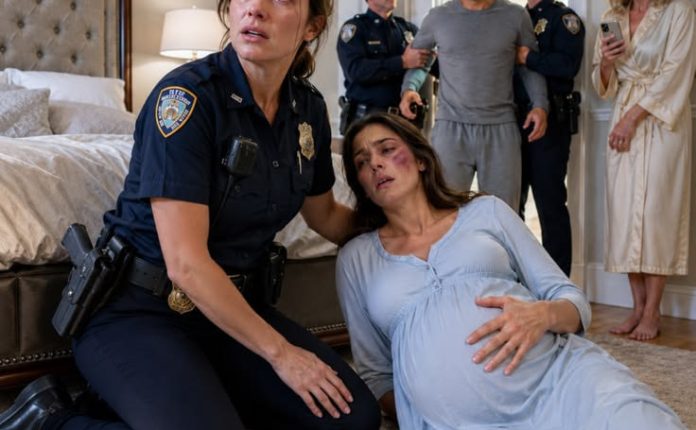
The detectives returned about forty minutes later. Daniel did not. They asked Dad to step outside while they spoke with me privately, but I requested that he remain. The older detective, Renee Alvarez, pulled a chair beside my bed and explained what investigators had found.
Police searched our garage after the mechanic identified deliberate brake damage. A neighbor’s security camera showed someone entering our driveway shortly after midnight. The image was partly obscured by darkness, falling snow, distance, and a hood covering the person’s face.
“Was it Daniel?” I asked. Detective Alvarez said they could not confirm the person’s identity. Whoever it was appeared to approach from behind our property rather than the street. I asked why Daniel had been taken away if they could not identify the figure.
“We haven’t arrested your husband,” she said carefully. “We are interviewing him.” Then she asked whether Daniel knew I planned to drive to the cabin. I said yes. She asked whether he knew which vehicle I intended to use. Again, yes.
“Did he encourage you to use another vehicle?” she asked. I remembered the conversation in the garage. “He wanted me to take his Range Rover.” Alvarez and her partner exchanged a quick glance before asking why.
I explained Daniel said his SUV would be safer on the mountain roads. Then Alvarez asked whether anybody else regularly drove my car. “Emma sometimes.” The realization made me nauseated because my seventeen-year-old daughter occasionally used that vehicle.
Whoever cut the brake line could not know for certain who would drive unless they knew about my specific trip. Daniel knew. Dad knew. The children learned only that morning. Greg, whoever else was involved, would have needed information from someone close to us.
I asked whether police believed my husband wanted me dead. Alvarez refused to speculate. “We follow evidence.” I appreciated her professionalism and hated it simultaneously because I desperately wanted somebody to tell me which version of my life was real.
She asked whether I knew anything about Alpine Crest Holdings. I explained what Dad had just told me. Alvarez requested permission to obtain relevant financial and electronic records, though she explained many would still require warrants regardless of my consent.
“Take everything,” I said. Before leaving, she asked whether Daniel had access to my electronic signature. My stomach tightened. Years earlier, we had created digital signatures during mortgage refinancing, and Daniel handled most of that paperwork. “Yes.” Alvarez quietly wrote it down.
After the detectives left, Dad and I watched snow falling outside the hospital window. I thought about Daniel standing in the garage and insisting I use his car. A question occurred that seemed to contradict everything.
“If he wanted me hurt, why tell me to take his vehicle?” Dad looked at me for several seconds. “Maybe he didn’t want you hurt.” I frowned. “Then who cut my brakes?” Dad closed his eyes. “That’s what scares me.”
The answer started forming that afternoon. Detective Alvarez returned with information about Alpine Crest. Daniel was not its only beneficiary. His longtime business partner, Greg Shaw, controlled a forty-percent interest through another company connected to Mercer Development.
I knew Greg well enough to have shared holidays and dinners with him. Six months earlier, he had attended our anniversary dinner, toasted our marriage, and told Emma she should intern at Mercer Development someday. He was forty-eight, divorced, charming, and aggressively ambitious in ways Daniel often defended.
Police located Greg’s truck on traffic cameras near our neighborhood at 12:22 that morning. He lived about forty minutes away. His phone had also been switched off for nearly three hours during the period when somebody approached our property.
Investigators brought him in for questioning. Greg denied touching my car. He claimed he had been driving home from a bar and took an unusual route because highway traffic was heavy. The detectives did not believe him.
Neither, apparently, did Daniel.
My husband called from his attorney’s office. I nearly refused the call, then answered because I needed to hear his voice. “Caroline,” he said, sounding broken. I remained silent until he finally said, “I did not touch your car.”
I believed he might be telling the truth, and somehow that possibility frightened me almost as much as the alternative. “Did Greg?” I asked. Silence followed. “Daniel.” He whispered, “I don’t know.”
I closed my eyes and asked another question. “Did you forge my signature?” Another long silence followed. Then he answered, “Not exactly.” I laughed despite my cracked ribs. “There is no comforting version after ‘not exactly.’”
Daniel began explaining investor commitments, contingent rights, financing structures, and preliminary documentation. I stopped him. “Did you put my signature on that document?” He said they had used a digital signature file. “Without my permission?” He tried to explain again.
I asked the only question that mattered. “Did I agree?” Silence stretched between us. Finally, Daniel whispered, “No.” There it was. I told him that meant he had forged my authorization, no matter how many financial terms he used to describe the paperwork.
Daniel insisted the document was never supposed to become final and repeated that he never intended to harm me. I asked whether he told Greg that I was driving to Dad’s cabin. His breathing changed immediately.
“I mentioned it.” My entire body went cold. “When?” Daniel said Greg called the previous night because Jonathan’s inquiry threatened their investment structure. He admitted telling Greg that Dad had discovered documents and had asked me to come to the cabin.
“What did Greg say?” I asked. Daniel began crying. “He said we needed to stop you from signing anything.” I gripped the phone harder. “Stop me how?” Daniel insisted he thought Greg meant legally, through delay or paperwork.
“Did he threaten me?” “No.” I asked whether Greg said anything about my drive. Daniel hesitated long enough that panic returned. I shouted his name despite the pain in my ribs.
“He asked which car you were taking.”
Dad stood from his chair because he could hear enough to understand. “And you told him?” I asked. Daniel started sobbing. “I didn’t think—” I ended the call before he could finish the sentence.
Dad looked as though he might physically collapse. I whispered, “He told Greg.” Dad paced toward the window and back, unable to remain still. “I should have gone to the police when I found those documents.”
“You couldn’t know,” I told him. Dad answered, “I knew Daniel was desperate.” I said, “Not this desperate.” He looked at me with tears in his eyes and whispered, “I should have protected you.”
I reached for his hand. “Dad, stop. You called me. You didn’t cut my brakes.” He lowered his forehead against our joined hands, trying to calculate backward through every decision he believed might have prevented the crash.
My father had spent his life believing responsibility meant anticipating every possible failure before it happened. That belief made him a brilliant engineer and an exhausting parent. I recognized what he was doing because, before long, I would begin blaming myself in almost the same way.
“This belongs to Daniel and whoever touched my car,” I told him. “Not you.” At the time, I did not know how often I would need to repeat similar words to myself whenever I questioned why I had trusted my husband.
Greg was arrested two days later. Investigators found nitrile gloves in his garage carrying trace residue consistent with automotive brake fluid. That alone could not prove sabotage, but technicians then recovered deleted location data from another electronic device he had forgotten about.
The data placed him within two blocks of our home between 12:31 and 12:47 a.m. Even worse were deleted messages recovered from his laptop. One message had been sent to Daniel after their late-night conversation.
Greg wrote, If Caroline signs with Jonathan tomorrow, we’re finished. Daniel responded, I know. Greg wrote, Then stop her. Daniel answered, How? Greg replied, Let me handle the timing.
Daniel later claimed he believed Greg meant delaying my trip, calling Dad, manufacturing a legal distraction, or doing anything short of physical violence. Prosecutors would spend months arguing about what Daniel should reasonably have understood from those messages.
The final recovered message came at 1:04 a.m. Greg wrote, She won’t make the meeting. Daniel never responded. He also never warned me, and that silence became the most painful piece of evidence in the entire investigation.
At 7:15 the next morning, Daniel watched me load my car. He knew Greg had said I would not make the meeting. He had enough concern to encourage me repeatedly to take his Range Rover, yet he never told me why.
He never said Greg had sent a disturbing message. He never inspected my car, contacted the police, or physically stopped me from leaving. Instead, he hugged me, watched me drive away, and said, “Call when you arrive.”
Detective Alvarez eventually told me investigators believed Daniel suspected something might happen but did not know specifically that Greg had cut my brake line. That distinction mattered legally. Emotionally, it barely mattered to me because he had chosen protecting his secret over warning me.
On the third day, my children visited. Emma entered first, pale and furious. Noah looked terrified by the monitors, tubing, bruises, and hospital smell. I held them both until my ribs hurt. Eventually, Emma pulled back and asked, “Where’s Dad?”
I looked at Dad, then back at them. There was no age-appropriate version of the truth capable of making it painless. “He’s staying somewhere else while police investigate.” Emma’s eyes narrowed. “Investigate what?”
I explained that somebody had deliberately damaged my car. Noah began crying immediately. Emma remained completely still. “Dad?” I told her police did not believe he physically cut the brakes, but he knew more about the situation than he originally told investigators or me.
Emma stood abruptly. “I want to leave.” I reached toward her, but she pulled away—not from me, but from the entire situation. Dad followed her into the hallway while Noah remained beside my bed, staring at the bruises on my face.
“Did Dad want you to die?” he asked. The question destroyed whatever emotional control I had left. “No,” I said because I believed that much. Noah stared at me through tears. “Then why didn’t he help you?” I had no answer a thirteen-year-old should ever need.
Dad returned with Emma about twenty minutes later. Her eyes were red. She remained at the end of my bed and said, “Grandpa told me about the signatures.” I looked at Dad. He seemed apologetic, but Emma kept talking.
“Dad used your name to take Grandpa’s land?” I explained that he had tried to create legal rights he did not possess. Emma shook her head. “That’s stealing.” Dad said gently, “The lawyers will figure out the words.”
She looked at him and replied, “Adults always say that when they don’t want to say something bad.” She was right. Then she asked whether Daniel had done everything because his company was failing.
I stared at her. “How do you know that?” Emma pulled out her phone. Students at her school were already sharing online reports about lawsuits involving Mercer Development. News traveled faster than our family could process.
Two contractors had filed claims. One investor publicly accused the company of misusing funds. Daniel’s financial crisis was no longer private. Within a week, Mercer Development entered emergency restructuring and its records became part of multiple investigations.
The company owed more than eleven million dollars across lenders, contractors, and investors. My husband had not hidden a temporary cash-flow shortage. He had concealed a collapse. Alpine Crest was supposed to become the rescue plan.
Daniel intended to secure development rights tied to Dad’s mountain property, then use those rights as leverage to attract new investors and refinancing. My forged approval made the proposal appear like a family-supported transaction instead of something Dad and I had repeatedly rejected.
If Dad resisted later, Daniel apparently believed my supposed assignment could create enough legal uncertainty to force negotiation. The plan was unethical, reckless, and potentially criminal long before Greg ever stepped into our driveway and touched my car.
The deeper investigators searched, the worse everything became. Daniel had also forged Dad’s initials on a preliminary access agreement. Daniel claimed an attorney connected to Greg had added them. Greg claimed Daniel had done it himself. Each man blamed the other whenever possible.
Dad listened to every update with a kind of quiet grief I had never seen. One afternoon, he said, “I brought him into this family.” I reminded him I had married Daniel, not him. Dad answered, “I trusted him.”
“So did I.” The words silenced both of us because neither one of us knew how to explain the particular humiliation of trusting someone who had quietly turned that trust into an opportunity.
I spent eight days in the hospital. My physical injuries were serious but recoverable: two cracked ribs, facial bruising, a concussion, deep cuts, and a shoulder injury. The doctors repeatedly told me I had been extraordinarily lucky to survive.
Lucky became a strange word. I had survived deliberate sabotage. My children still had their mother. I would eventually walk normally and drive again. Yet within those eight days, my marriage, financial security, and understanding of sixteen years together collapsed completely.
Daniel visited once under conditions arranged through attorneys. Dad initially refused to leave my room. I asked him to give us privacy. He stood beside my bed glaring at Daniel and said, “Ten minutes,” before walking into the hallway.
Daniel looked terrible. He had not shaved. His polished suit was gone, replaced by jeans and a sweater. For one painful moment, I saw the husband I had loved instead of the man whose name now appeared throughout police reports and financial investigations.
He sat carefully beside the bed. “How are you?” I almost laughed. “Is there an answer that helps?” Daniel looked down. “No.” Silence filled the room before I asked the question I had been carrying for days.
“When did you decide my consent was optional?” Daniel flinched and started to say the situation was not like that. I shook my head. “Don’t.” He stopped, and I continued before he could build another explanation.
“You used my signature, my future inheritance, and my father’s property. You discussed me with Greg like I was an obstacle.” Daniel whispered, “I was desperate.” I answered, “That explains panic. It doesn’t explain entitlement.”
He began crying. “I thought if I could save the company, I could fix everything before you ever knew.” I stared at him. “Fix what? The debt? The forged documents? The lies?” Daniel closed his eyes.
“I thought your dad would eventually agree.” I reminded him Dad had said no repeatedly. Daniel answered, “He would have seen the numbers.” That response revealed more than he intended because part of him still believed profit could eventually erase consent.
“You thought money would make Dad’s no temporary,” I said. Daniel covered his face. “I don’t know what I thought anymore.” I asked why he had not warned me after Greg’s message.
His answer came quietly. “Because if I told you, everything would come out.” There it was. Not ignorance. Calculation. He suspected danger, but warning me meant exposing his fraud, so he gambled that Greg intended something less serious.
“You risked my life to protect your secret.” Daniel shook his head violently. “No.” I answered, “Yes.” He insisted he had not known Greg cut the brakes. I reminded him he knew enough to push me toward another vehicle.
Daniel began sobbing. I did not comfort him. That was one of the hardest things I had ever done. For sixteen years, his pain had automatically activated something inside me: reach, reassure, protect, repair, forgive.
I let him cry without moving. Eventually, he whispered, “I love you.” I believed him. Love does not always prevent people from doing terrible things when fear, control, money, pride, or self-preservation becomes more important in a particular moment.
“I know,” I said. Daniel looked up. “Can you ever forgive me?” I stared at him for several seconds before answering, “I’m still trying to understand whether I survived you.” His face collapsed.
Dad opened the door at exactly ten minutes. Daniel stood. Dad stepped aside without saying anything. Before leaving, Daniel looked back once, then walked down the hospital corridor between his attorney and a detective.
I filed for divorce before leaving the hospital. I did not feel strong. I felt hollow. People later described that decision as brave, but it was not bravery. It was clarity. Sometimes a relationship becomes impossible before your emotions have caught up with reality.
I still loved Daniel when I signed the papers. I missed him that night. I wanted him beside me when the pain medication wore off. I wanted him to reassure Noah and make Emma laugh with one of his terrible jokes.
Wanting those things did not change what happened. The hardest family decisions are rarely choosing between love and no love. Often, they are choosing between love and safety, love and dignity, or love and truth.
Dad moved into our house temporarily after I was discharged. He slept on the sofa despite a perfectly comfortable guest room because he wanted to hear if I needed help during the night. I repeatedly told him that was ridiculous.
“The guest room is fifteen feet farther away,” I said. Dad nodded seriously. “Exactly.” I eventually stopped arguing. He made terrible scrambled eggs every morning and overwatered every plant in my kitchen until half of them nearly died.
The children reacted differently. Noah clung to Dad, me, teachers, and routines—anything predictable. Emma became fiercely independent and refused to answer Daniel’s calls for almost two months. I told her she was allowed to take time before deciding what relationship she wanted with him.
“He could have killed you,” she said. I answered carefully, “His choices endangered me. Greg cut the brakes.” Emma stared at me. “Why are you defending him?” I told her I was not. “It sounds like it.”
I took a breath and said, “Accuracy is not defense.” She hated that answer then. Years later, she told me it became one of the most important lessons she carried from the entire disaster.
Greg’s prosecution moved faster than Daniel’s. Prosecutors charged him with attempted murder, tampering, and conspiracy-related offenses. His attorney argued that Greg intended only to disable my car enough to delay my trip, not cause a serious crash or death.
That defense horrified me almost as much as the crime itself. Apparently, some people could imagine a damaged brake line as a scheduling tool. The jury did not find the explanation persuasive, and Greg was eventually convicted on multiple serious charges.
Daniel’s case was different. Prosecutors could not prove beyond reasonable doubt that he knew Greg intended to cut my brakes. They could prove fraud-related conduct, forged authorization, investor deception, and his failure to disclose critical information during early questioning.
He eventually pleaded guilty to several financial offenses and an obstruction-related charge. His prison sentence was far shorter than Greg’s, but long enough that our children would finish high school without their father living nearby.
When the sentence was announced, I cried. People assumed the tears meant relief. They did not. They meant grief. Consequences can be deserved and still wound every person connected to the individual receiving them.
Before sentencing, Daniel made a statement. I did not attend, but later I read the transcript. He did not blame Greg, the market, Dad, investors, pressure, or me. For the first time, he described his behavior without decoration.
“I became so afraid of losing what I had built that I treated everyone I loved as something I could manage around that fear,” he said. I read the sentence several times before continuing.
Then Daniel said something that hurt even more. “I believed I was protecting my family from financial collapse while becoming the greatest danger inside it.” I cried alone at my kitchen table after reading those words.
Dad found me and started to remove the transcript, assuming I had suffered enough. I stopped him. “No. Let me finish.” Daniel apologized specifically to Emma and Noah for forcing them to understand adult betrayal too early.
He apologized to Dad for treating his land as an asset instead of a legacy. Then he addressed me. “Caroline’s trust was not permission. I treated it like permission because asking would have given her the power to say no.”
That was the truth. Everything else reduced to that. Dad sat across from me afterward and asked, “Does hearing it help?” I thought for a long moment before answering yes.
He looked surprised. “How?” I said, “Because at least I’m not arguing with his version of reality anymore.” Truth does not erase damage, but damage is much harder to heal while somebody continues insisting it never happened.
The divorce settlement became complicated because Daniel’s business debts threatened marital property. Fortunately, our home had not been validly pledged as collateral, although one lender attempted to argue otherwise using fraudulent documents created during Daniel’s desperate attempts to secure financing.
My attorney spent months untangling everything. We sold investments, reduced expenses, and lost more money than I enjoy remembering. The children’s college accounts remained mostly intact, and my teaching salary covered ordinary life, though everything became tighter.
Dad kept offering money. I kept refusing until he finally became angry. “Caroline, do not turn stubbornness into virtue.” I laughed. “Where did I learn stubbornness?” Dad answered, “Your mother.” We both knew that was false.
Then he offered differently. “Let me pay your legal fees.” I hesitated for several days and finally agreed. Accepting help became another form of recovery because I had spent years believing independence meant remaining financially distant from Dad’s wealth.
Daniel had exploited that distance. I needed to learn that understanding family money was not greed. Asking questions was not greed. Reading documents was not greed. Knowing what someone intended for you did not make you selfish or entitled.
After my accident, Dad strengthened the trust again. Jonathan remained trustee alongside a corporate fiduciary. No beneficiary spouse could control, assign, borrow against, or pledge an interest before distribution, making another scheme like Daniel’s far more difficult.
Dad laughed while signing the new documents. “I’m building a fortress.” Jonathan replied, “You’re building paperwork.” Dad said, “Same thing after seventy.” The mountain property stayed protected, and for once nobody complained about the legal complexity.
Dad also made one surprising decision. He created a larger direct education account for Lily, Michael’s daughter. I asked why, genuinely curious rather than suspicious. Dad looked at me and said, “Because fairness is not always equal dollars.”
I smiled because I had used similar words with my own children. Dad explained that Lily had lost both parents and carried responsibilities Emma and Noah had never faced. He wanted to give her additional flexibility without changing the grandchildren’s long-term trust shares.
I agreed completely. Then he documented the reasoning in a letter to all three grandchildren. “No mysteries,” he said. “I’m finished letting people interpret silence.” That became our family’s new philosophy in almost every financial decision afterward.
The mountain cabin changed for me after the crash. For nearly a year, I could not drive there because the road triggered panic attacks. Dad never pressured me. He visited alone or brought the children himself whenever they wanted to go.
Then one summer afternoon, Emma asked, “Can we go together?” She had earned her driver’s license by then. The thought of sitting beside my daughter on that road terrified me. “I’ll drive,” she offered.
I laughed too quickly. “Absolutely not.” Emma smiled and answered, “Then you drive.” Somehow, that worked. We left early, took every curve slowly, and stopped twice when my hands began shaking badly enough that I needed several minutes before continuing.
When we finally reached the cabin, Dad was standing on the porch waiting. Noah ran toward him. Emma stayed beside me and asked quietly, “You okay?” I looked at the building where Daniel had once proposed.
“No.” Emma nodded. “Me either.” We walked inside anyway.
That weekend became the first time Emma and I discussed Daniel honestly without anger controlling every sentence. She admitted she still loved him and hated herself for it. I stopped her immediately.
“Never hate yourself for loving someone.” Emma looked at me. “Even if they hurt you?” I answered, “Especially then. Love does not certify someone’s behavior.” She asked whether some part of me still loved her father.
“Some part probably always will.” Emma looked relieved. “Then why divorce him?” I answered, “Because love describes a feeling. Marriage requires behavior.” She remained quiet, absorbing the distinction.
“That sounds like something you tell students,” she finally said. I laughed. “Probably.” Then she asked whether I would ever forgive Daniel. I said maybe. She asked whether forgiveness could ever mean taking him back.
“No.” Emma frowned. “How can you know?” I looked through the cabin window toward the mountains. “Because forgiveness can change how you carry the past. It does not obligate you to rebuild the same future.”
Emma remembered that.
So did I.
Dad lived another six years after the accident. He watched Emma graduate high school and begin architecture school, saw Noah discover photography, and watched Lily complete nursing school and begin creating an adult life of her own.
He remained stubborn, funny, and impossible about doctors. His heart condition gradually worsened. When he turned eighty-four, he finally stopped driving mountain roads by himself, though he complained dramatically about surrendering that independence.
“About time,” I told him. Dad answered, “I’ve been driving longer than you’ve been alive.” I said, “Exactly the problem.” He called me disrespectful. I called him ancient. That was affection in our family.
One autumn, Dad asked me to drive him to the cabin. The leaves had begun turning gold. We sat on the porch wrapped in blankets, looking toward the ridge while the late-afternoon light changed across the trees.
“I almost sold this place once,” Dad said. I turned toward him. “When?” “After your mother died.” That surprised me. I asked why. He said every room reminded him of her until the property became almost too painful to visit.
“What stopped you?” I asked. Dad smiled. “You brought Emma here.” She had been six. I remembered her collecting pinecones and forcing Dad to examine every single one as though each were a priceless archaeological discovery.
“You looked happy,” he said. “So I waited.” I asked whether he regretted keeping the property after everything Daniel had done. Dad frowned as though the question made no sense.
“Why would his choices get to decide what this place means?” That sentence stayed with me because I had unconsciously allowed Daniel’s betrayal to contaminate memories that existed long before him.
The cabin where Daniel proposed became, in my mind, the cabin connected to forged documents. The mountain road became only the place where I nearly died. Dad reminded me those places had histories Daniel could not own or destroy.
Then Dad said something unexpected. “I’m glad you didn’t know how much money I had when you were young.” I laughed. “Why?” He answered, “Because you might have married some idiot for the money.”
I stared at him. “Dad.” He grinned and asked, “Too soon?” Six years after the crash, apparently not. I laughed so hard I nearly spilled my coffee across the porch.
That became one of my last perfect memories with him.
Dad died the following winter, peacefully in his sleep. I learned at 6:17 on a Tuesday morning when his neighbor called because the newspaper was still outside and Dad had not answered the door.
I knew before I arrived.
Grief was different the second time. Mom’s death had been long and expected. Dad’s was quiet but sudden. I entered his bedroom and saw the man who had held my hand in the hospital six years earlier.
For one moment, I became the injured daughter again, hearing his voice in my memory: “I’m here, sweetheart.” I stood beside his bed and cried until I could no longer tell whether I was mourning his death or every moment he had protected me.
Jonathan handled Dad’s estate exactly as intended. There were no surprises, unless the complete absence of surprises counted as one. Everything was written, witnessed, recorded, and explained clearly.
The mountain trust activated. Investment accounts funded educational and maintenance provisions. Dad’s house was sold. Personal possessions were distributed using lists so detailed that they even included his fishing knives and several tools nobody else remembered he owned.
Emma received his drafting tools because she was studying architecture. Noah received Dad’s old Leica camera. Lily received Mom’s recipe books and a necklace that had once belonged to her mother.
I received Dad’s watch.
And a letter.
Dad had written separate letters to each of us. Mine began with a joke: Caroline, if Jonathan is reading this aloud, stop him. He makes everything sound like a tax hearing. I laughed while crying because it sounded exactly like him.
Then Dad became serious. You spent much of your life thinking not caring about money made you morally safer than people who cared too much. It did not. I stopped reading and stared at the page.
He continued: Money is information. Property is responsibility. Documents are memory with signatures. I could practically hear his voice saying every word. Then came the sentence that stung most.
Daniel did not hurt you because you were greedy. He hurt you partly because you trusted other people to understand things you chose not to learn. I read the sentence twice before forcing myself to continue.
Dad anticipated how it might sound because the next line said: This is not blame. You did not cause his betrayal. But surviving something should teach you where your own blind spots were.
He reminded me of every time I joked about not understanding investments, every time I let Daniel manage financial paperwork, and every time I dismissed estate conversations as Dad being unnecessarily morbid.
Then he wrote, Ask questions, Caroline. People who love you should survive questions. My eyes filled again because those words captured everything Daniel’s behavior had violated.
Dad’s final advice was even more personal. Stop thinking you have to protect everyone from the consequences of telling you the truth. Love them. Help when you choose. Forgive when you can. But let adults carry what belongs to them. That includes you.
He ended simply: Love, Dad. I folded the letter and sat alone in his empty house until sunset, listening to ordinary sounds from the street and trying to imagine a world in which his phone would never ring again.