At My Daughter’s Birthday, I Found Her Cake In The Trash. My Brother Laughed, “She Wasn’t Worth Wasting Cake On.” I Picked Her Up And Left. Next Morning, Mom Sobbed, “Please Call The Venue—They’re Canceling Your Brother’s Wedding.” I Simply Said, “Honestly, I Don’t Care.” Mom Started Screaming… I Hung Up.
### Part 1
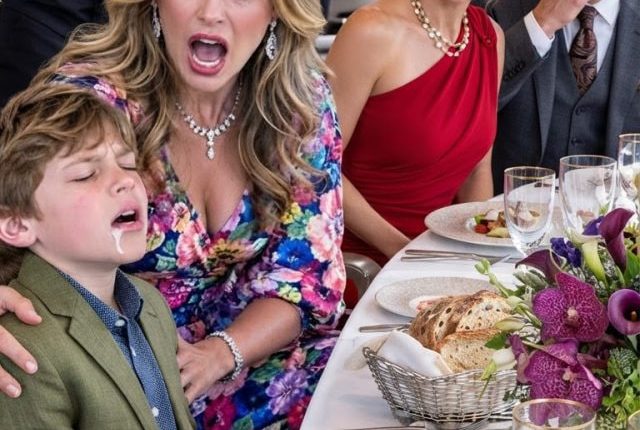
The cake was upside down in my parents’ kitchen trash can. For a few seconds, my mind refused to understand what I was seeing. Pink buttercream clung to a crumpled paper towel. Delicate sugar flowers I had shaped by hand were crushed beneath wet coffee grounds, chicken bones, and a greasy takeout container. One silver fondant crown rested against the black plastic liner as if someone had placed it there deliberately. Behind me, children were laughing in the backyard. Paper streamers rustled against the fence, and someone had restarted the music after it cut out. They were waiting for me to bring out the cake.
My daughter, Emma, was waiting. She had turned five that afternoon. “What happened?” My voice sounded small and strange inside the bright kitchen. My older brother, Ryan, stood beside the counter with one hand wrapped around a glass of iced tea. He wore an expensive pale-blue shirt with the sleeves folded neatly at his elbows. His polished shoes looked absurd against the old linoleum floor. He glanced at the trash can, then at me. “Oh,” he said. “That.” My chest tightened. “Did you throw Emma’s cake away?” Ryan took a slow drink. Ice clicked against the glass. “It was taking up the whole counter.”
I stared at him. “We were about to sing.” He shrugged. I moved closer, lowering my voice because I could hear Emma’s sneakers tapping on the back steps. “That cake took me nearly seven hours.” Ryan’s mouth curved into a lazy smile. “You’re a caterer, Claire. You make cakes all the time.” “I made it for your niece.” “And I’m sure she’ll survive without it.” The back door opened. Emma stepped into the kitchen wearing the paper crown she had decorated that morning. One side had already bent from the heat, and glitter sparkled across her brown curls. She looked past me toward the counter, expecting to see the cake.
Instead, she saw the trash can. Her smile disappeared. “Mommy?” I turned quickly, but it was too late. She had seen the pink frosting smeared across the garbage. She had seen the little sugar horse I had made because she loved stories about princesses riding through forests. “Why is my cake in there?” she whispered. Ryan sighed as though her sadness was an inconvenience. “It was too much cake for a little kid,” he said. Emma looked at him. “But it was my birthday cake.” Something cold moved across his face. Not anger. Not even embarrassment. Contempt.
He leaned against the counter and said, “You weren’t worth wasting an expensive cake on anyway.” The room went completely silent. I heard the refrigerator humming. I smelled coffee, dish soap, and the faint sweetness of ruined vanilla frosting. Outside, someone called Emma’s name, unaware that her birthday had just split in half. Her lower lip trembled. I had spent most of my life swallowing my anger around Ryan. I had smiled through his insults, excused his selfishness, and pretended not to notice when my parents treated his smallest accomplishment like a national holiday.
But there are moments when something inside you stops bending. This was mine. I crouched and lifted Emma into my arms. Her hands locked around my neck. “We’re going home,” I told her. My mother, Diane, rushed into the kitchen just as I grabbed Emma’s backpack from a chair. “What’s going on?” I pointed at the trash. She looked inside, frowned, then turned to Ryan. “Did you do that?” He rolled his eyes. “It was an accident.” “It wasn’t,” I said. My mother’s face changed—not into anger at Ryan, but fear that I might create a scene. “Claire, please don’t overreact. We can buy cupcakes.”
Emma buried her face against my shoulder. My father appeared in the doorway behind her. “What happened now?” “Ryan threw away Emma’s cake,” I said. “Then told her she wasn’t worth it.” Dad pressed his lips together. For one second, I thought he might defend us. Instead, he looked at his watch. “Guests are outside,” he muttered. “Let’s not turn this into a family disaster.” I laughed once, because if I didn’t, I might have screamed. “The disaster already happened.”
I carried Emma through the backyard while everyone watched. The bright balloons, plastic tablecloths, and untouched gift bags blurred together. A few relatives tried to stop me, but I kept moving. Ryan didn’t follow. My parents didn’t either. By the time I strapped Emma into her car seat, she had stopped crying. That somehow hurt worse. She sat silently, holding the bent paper crown in both hands. As I drove away, my phone rang through the car speakers. It was my mother. I let it ring. The city lights were beginning to come on when Emma finally spoke. “Mommy?” “Yes, sweetheart?”
“Did Uncle Ryan throw it away because I’m bad?” My fingers tightened around the steering wheel. “No,” I said. “He threw it away because he made a cruel choice.” “Does he hate me?” I swallowed hard. “What he thinks does not decide what you’re worth.” She leaned her head against the window and closed her eyes. At a red light, my phone buzzed with an email notification. The subject line read: Final Wedding Schedule Approval—Ryan Bennett and Vanessa Hale. I stared at it until the light changed. Ryan had forgotten something important. His dream wedding did not belong entirely to him.
### Part 2
By the time we reached my apartment, Emma was asleep. I carried her upstairs with one arm under her knees and the other around her back. Her cheek rested against my shoulder, warm and damp from dried tears. The paper crown was still clutched in one hand. Inside, our apartment smelled faintly of cinnamon from the candles I had burned the night before while decorating her cake. Half-inflated balloons floated near the ceiling. A stack of wrapped presents sat beside the couch because I had planned to let her open them after the party.
I laid her in my bed instead of her own. She barely stirred when I removed her shoes. For several minutes, I sat beside her and listened to her breathe. Then I went into the kitchen, opened my laptop, and stared at the wedding email again. My name was Claire Bennett. I was twenty-seven years old, a single mother, and the owner of Bennett & Bloom Events, a boutique event-planning and catering company I had built from nothing. My family described my work differently. To them, I “decorated parties.”
They ignored the corporate contracts, the luxury fundraisers, the private galas, and the staff members who depended on me for their paychecks. They ignored the years when I worked fourteen-hour days while raising Emma. They ignored the fact that I had paid off my business loans early and moved us into a safer neighborhood without asking anyone for help. Ryan, on the other hand, worked in sales for a regional real estate firm and changed his job title every time he introduced himself. To our parents, that made him a businessman.
He was six years older than me, and for as long as I could remember, the family revolved around his moods. When Ryan made the high school baseball team, my parents hosted a dinner for thirty people. When I earned a full scholarship, Dad nodded and asked whether I planned to choose a practical major. When Ryan bought a used luxury car, Mom posted photographs online for a week. When I signed my first major corporate client, she asked whether I could provide free appetizers for her book club. After Emma was born, the difference became harder to ignore.
Ryan referred to her as “the kid” instead of using her name. My parents remembered every detail of his career but regularly forgot Emma’s school events. They loved her in the shallow, convenient way people love a child when loving her requires nothing. Still, I kept trying. I brought food to holidays. I planned anniversaries. I paid for family dinners when Ryan somehow forgot his wallet. I told myself that generosity might eventually earn the affection they gave him freely. Then Ryan became engaged to Vanessa Hale.
Continue Reading HERE

Vanessa came from a wealthy family with old connections across the city. Her father owned several commercial properties. Her mother chaired charity committees and could make or destroy a social invitation with one phone call. Ryan became unbearable almost immediately. Every conversation turned into a performance about Vanessa’s family, their money, their homes, and the kind of people who attended their parties. He started correcting my parents’ table manners and complaining that our childhood neighborhood looked “depressing.” The wedding became his full-time obsession.
He and Vanessa wanted the Whitmore Country Club, the most exclusive venue in the area. The problem was that its prime weekend dates were reserved years in advance. That was where I came in. The club’s owner, Eleanor Whitmore, had been one of my most loyal clients for nearly four years. I handled the club’s corporate dinners, charity auctions, and several private events for its board members. We trusted each other. Three months earlier, my mother had appeared at my office with red eyes and a trembling voice.
“Please help your brother,” she had begged. “Vanessa’s family expects this venue. It could affect everything.” I should have said no. Instead, I called Eleanor. I placed the reservation under my company’s corporate partnership rate. I guaranteed the contract personally, securing a prime Saturday that another family had recently released. The arrangement saved Ryan more than fifteen thousand dollars in fees and bypassed a waiting list that normally stretched beyond two years. He never thanked me.
At the family dinner after the venue was confirmed, Ryan raised his glass and announced, “Some doors open when you know the right people.” He smiled toward Vanessa’s parents. He did not mention me. I closed the email and opened the contract file stored in my company records. The guarantee clause was exactly where I remembered it. If my business withdrew its endorsement before the final service period, the club could terminate the discounted agreement and require the couple to reapply at the standard rate, subject to availability. My phone buzzed. Ryan had sent me a message.
Stop being dramatic. Bring Emma back. Mom already bought grocery-store cupcakes. A second message followed. And don’t ruin the rest of the weekend. We need to discuss the wedding seating chart tomorrow. I read both messages twice. Then I looked through the bedroom doorway at Emma sleeping beneath my quilt, still wearing the shirt with a glittering number five across the front. My anger became quieter. Sharper. I opened a new email addressed to Eleanor Whitmore. I did not mention the cake. I did not complain about my family. I kept the message professional.
Due to a personal and ethical conflict, Bennett & Bloom Events must withdraw its corporate endorsement and financial guarantee for the Bennett-Hale wedding reservation, effective immediately. I read the sentence one final time. Then I pressed send. A reply arrived twelve minutes later. Eleanor had written only three lines. I understand. I will instruct our contracts department to proceed. Given the circumstances surrounding the original exception, the couple will need to qualify independently. I shut the laptop. For the first time that night, I could breathe. Then I noticed one final message from my mother.
You will regret embarrassing your brother. I turned my phone facedown. She still believed Ryan was the person being embarrassed. By morning, she would understand how wrong she was.
### Part 3
My phone began vibrating at exactly eight the next morning. It rattled across the nightstand, stopped, then started again before I could reach it. My mother’s name flashed across the screen. Emma was still asleep beside me, curled around a stuffed rabbit. I carried the phone into the hallway and closed the bedroom door. “Hello?” “Claire, thank God.” My mother sounded as though someone had been taken to the hospital. Her breathing came in shallow bursts, and I could hear my father speaking in the background. “You need to call the country club immediately,” she said. I leaned against the wall. “Why?”
“You know why.” “Say it.” There was a pause. “The Whitmore Club canceled Ryan and Vanessa’s contract. They sent a formal notice this morning. They said your company withdrew its endorsement.” “That’s correct.” My mother sucked in a sharp breath. “How could you do this to your own brother?” I looked toward the bedroom door. “How could he look at a five-year-old child and tell her she wasn’t worth her own birthday cake?” “It was one stupid comment.” “It was a choice.” “He was frustrated.” “He threw her cake into the trash.” “He said it was blocking the counter.”
I almost admired how quickly she had arranged his lies into an excuse. “Mom, I saw where the cake was. It was crushed under garbage. That wasn’t an accident.” “Even if he did it on purpose, you cannot destroy a wedding over cake.” I closed my eyes. “It isn’t about cake.” “It is exactly about cake!” she shouted. “You are punishing the entire family because your feelings were hurt.” “My feelings?” “Yes, Claire. Yours. Emma is five. She’ll forget this in a week.” I went completely still. That sentence erased the last piece of doubt I had been carrying.
My mother was not confused. She was not trapped between two children. She had made a decision, just as Ryan had. Emma’s pain mattered less than his comfort. I spoke quietly. “Honestly, I don’t care what happens to his wedding.” The line went silent. Then my mother exploded. She accused me of jealousy. She said I had always resented Ryan because he was more successful. She said Vanessa’s family would think we were trash. She said my selfishness could damage relationships my brother had spent years building. I listened until she ran out of breath.
Then I said, “You should have thought about family before defending someone who humiliated my daughter.” I hung up. The phone rang again almost instantly. This time it was Ryan. I let it ring twice before answering. “What did you do?” he shouted. There was no greeting. No apology. No mention of Emma. I poured coffee into a mug and watched the steam curl toward the ceiling. “I withdrew my company’s guarantee.” “Fix it.” “No.” “Claire, I’m serious.” “So am I.” “The club says our discounted contract no longer applies. They want us to reapply at the full rate, and they won’t even guarantee the date.”
“That sounds like something you should discuss with them.” “They said the original reservation was made as a professional courtesy to you.” “It was.” “Then call Eleanor and tell her this was a misunderstanding.” “It wasn’t.” Ryan’s breathing became louder. “You are doing this because of a cake.” “I’m doing this because I finally understand what my professional connections mean to you.” “What is that supposed to mean?” “You treat my career like a joke until you need it. You treat Emma like an inconvenience until you need me to pretend we’re a loving family.” “Oh, spare me the speech.” There he was.
The real Ryan had returned. For several seconds, neither of us spoke. Then his voice changed. The arrogance faded, replaced by something thinner. “Vanessa’s parents are going to lose their minds.” “That is not my problem.” “You don’t understand. Her mother already sent the invitations to their entire circle. Her father told clients about the club. If we lose that venue, it makes us look—” He stopped. “Poor?” I asked. “Unreliable.” “You mean ordinary.” “Claire, please.” It was the first time I had heard him use that word with me. Not because he was sorry. Because he was cornered. I took a sip of coffee.
“Did you mean what you said to Emma?” “What?” “That she wasn’t worth an expensive cake.” He groaned. “I was irritated. Kids cry about everything.” “That is not an answer.” “Fine. No, I didn’t mean it.” “Why did you throw the cake away?” “I told you, it was in the way.” “Why was it underneath coffee grounds?” Silence. I waited. Finally, he said, “You always make everything about her.” My grip tightened around the mug. “She’s my daughter.”
“And this wedding is the biggest event our family has ever had. Yesterday was supposed to be our final planning weekend, but everyone was running around celebrating a kid’s birthday like it was some royal occasion.” The truth settled between us. He had not destroyed the cake because it was in the way. He had destroyed it because, for one afternoon, a child had received attention he believed belonged to him. I said, “Your wedding is no longer connected to my company.” “You’re going to regret this.” “No, Ryan. I regret helping you in the first place.” I ended the call.
Ten minutes later, an unfamiliar number appeared on my screen. I almost ignored it. Then a woman’s voice said, “Claire, this is Vanessa.” She sounded calm, but I could hear something brittle underneath. “I need you to tell me exactly what happened yesterday.”