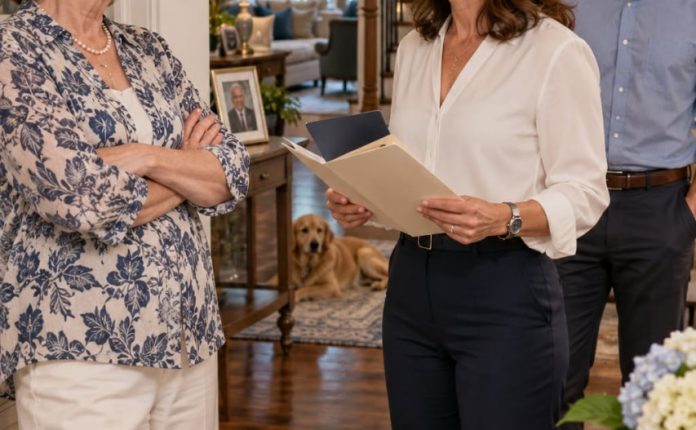
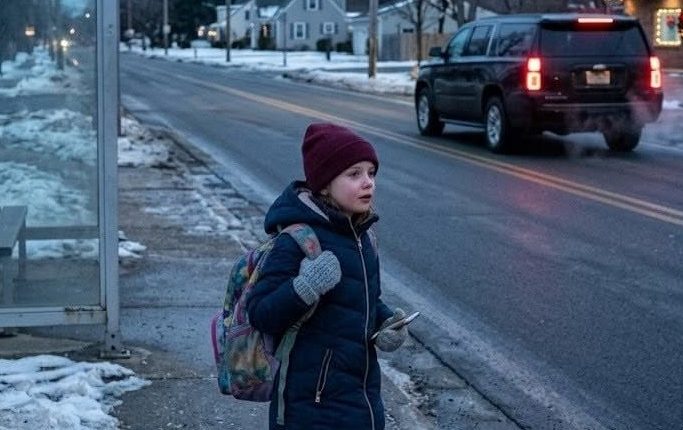
Miriam returned to the hospital under police protection later that morning.
Her son, Leonard, had served on the Vale Children’s Trust board for twelve years. According to Detective Ortiz, Leonard had helped create the shell companies used to siphon money from the charity.
Ethan had not invented the scheme.
But he had perfected it.
He had used his position as a financial adviser to connect Leonard with contractors, accountants, and property managers. When irregularities appeared, they buried them beneath new loans, false invoices, and forged authorizations.
My father’s company had become their largest channel.
At first, Dad had approved several consulting agreements because Ethan told him the money supported expansion projects.
By the time he discovered the truth, millions had passed through his accounts.
He could expose the scheme, but doing so would also destroy the company he had spent his life building.
Worse, my signature appeared on several documents.
Dad feared I would be charged.
So he investigated quietly.
Miriam had been doing the same.
She had trusted her son long after the evidence pointed toward him, just as I had trusted Ethan.
That was what she meant when she said she wanted to stop me from making the same mistake.
The day after she was rescued, I entered her room.
Two officers stood outside.
Miriam looked smaller in the hospital bed than she had in the wheelchair. Bruises darkened her wrists where the ropes had been tied.
“You found the cabinet,” she said.
“Yes.”
“And Daniel?”
“He’s awake sometimes.”
She closed her eyes with relief.
I sat beside her.
“Why didn’t you go to the police sooner?”
“I did.”
“What happened?”
“My son convinced them I was developing dementia.”
Her voice was bitter but controlled.
“He arranged medical evaluations. He moved money from my accounts. He told the board I was unstable. Every time I accused him, he used my fear as proof that I was confused.”
“I’m sorry.”
“Do not be sorry for me. I raised him.”
“You didn’t raise him to do this.”
She looked at me.
“Did you raise your daughter to lie?”
“No.”
“Has she ever lied?”
“Of course.”
“Then you understand. Parents plant seeds, but children still choose what they become.”
I thought of my father.
For years, he had blamed himself whenever Rachel or I suffered. When my first business failed, he said he should have taught me more about risk. When my mother died and I stopped eating, he said he should have noticed sooner.
Now I wondered whether he was lying in the ICU blaming himself for introducing Ethan to his company.
“Miriam,” I said, “what exactly happened the night Dad fell?”
She looked toward the window.
“I was on the telephone with him.”
My breath caught.
“He called to tell me he had copied the final documents,” she continued. “He said he was going to meet Detective Ortiz the next morning. Then someone entered the house.”
“Ethan.”
“I heard Daniel say his name.”
“What else did you hear?”
“An argument. Ethan accused him of destroying your family. Daniel said the family had already been destroyed; you simply did not know it yet.”
Tears filled my eyes.
“Then there was a struggle. A crash. Daniel stopped speaking.”
“Did Ethan know you were on the phone?”
“Not at first.”
“What happened?”
“I kept calling Daniel’s name. Ethan picked up the phone.”
She swallowed.
“He asked who I was.”
“What did you say?”
“Nothing. I ended the call.”
“But he traced it.”
“Yes.”
That explained why Miriam had been taken.
She reached for my hand.
“Nora, your father’s last clear words before the fall were about you.”
“What did he say?”
“He said, ‘You will not put my daughter in prison for your crimes.’”
I bent forward, covering my mouth as a sob escaped.
Dad had risked everything to protect me.
And I had told him my marriage mattered more than his warning.
Miriam squeezed my fingers.
“Do not punish yourself with the last angry words you spoke to him.”
“How did you know?”
“Because every family has last angry words. We simply do not know they are the last until silence comes.”
She looked toward the door.
“My husband died after an argument. He wanted me to expose Leonard. I told him I would not destroy our son over accounting mistakes. He left the house, suffered a heart attack in his car, and never returned.”
“I’m sorry.”
“For nine years, I believed my words killed him. They did not. His heart stopped. My guilt merely used the argument as a weapon.”
She leaned closer.
“Your father knew you loved him. Love is larger than one telephone call.”
I carried those words back to the ICU.
Dad had improved enough for the breathing tube to be removed, though speaking exhausted him. His left side remained weak, and the doctors warned that his recovery would be long.
When he saw me, he tried to smile.
I sat beside him and began crying.
“Don’t,” he whispered hoarsely.
“I’m sorry.”
“Nora.”
“I should have listened.”
He lifted his right hand a few inches.
I leaned closer so he could touch my cheek.
“You came,” he said.
“Too late.”
“You came.”
Those two words broke me.
I lowered my head against his shoulder carefully, avoiding the wires and bruises.
“I told you my marriage was more important.”
“It was your marriage,” he whispered. “It should have been important.”
“You were trying to save me.”
“I was trying to find facts.”
“You could have died.”
He closed his eyes.
“For a while,” he said, “I thought I had.”
I laughed through my tears because that was exactly the kind of thing Dad would say: dry, honest, and almost inappropriate.
Then his expression became serious.
“Lily?”
“She’s safe with Rachel.”
“Ethan?”
“In custody.”
Dad looked away.
Despite everything, I saw sadness in his face.
“You liked him once,” I said.
“I wanted to.”
“Why didn’t you tell me sooner?”
“Needed proof.”
“You could have trusted me.”
“I did trust you.”
“No, you tried to protect me.”
“Same thing to fathers.”
“It isn’t.”
He considered that.
“No,” he admitted. “It isn’t.”
We sat in silence.
Finally, he whispered, “I was ashamed.”
“Of what?”
“I signed the first agreements. I brought Ethan into the company. I thought he was smart. I thought giving him responsibility might bring us closer.”
“That was not a crime.”
“I ignored things I should have questioned.”
“Because he was family.”
Dad looked at me.
“Yes.”
The investigation expanded rapidly.
Ethan was charged with financial fraud, identity theft, conspiracy, kidnapping, assault, and obstruction of justice. Leonard Vale faced many of the same charges.
The second man involved in Miriam’s kidnapping was arrested three days later at an airport.
Reporters gathered outside the hospital and our home. News channels displayed photographs of Ethan in handcuffs beside old family pictures taken from social media.
They called him a respected financial adviser.
A devoted father.
A charming fraudster.
A criminal mastermind.
None of those descriptions felt complete.
The man who forged my signature was also the man who stayed awake all night when Lily had pneumonia.
The man who left my father bleeding on a basement floor was also the man who once drove four hours to bring Dad a replacement part for his truck.
For weeks, I searched our memories for a clean line separating the husband I loved from the criminal I feared.
There was none.
That was the hardest truth.
Evil did not always enter a family wearing a stranger’s face.
Sometimes it kissed you goodbye in the morning.
Sometimes it packed your daughter’s lunch.
Sometimes it remembered your mother’s birthday and held you when you cried.
That did not make the evil less real.
It made accepting it more painful.
Two weeks after Ethan’s arrest, I received a request from his attorney.
Ethan wanted to see me.
Every instinct told me to refuse.
But I needed one answer.
I met him in a secured room at the county detention center.
A glass partition separated us. Ethan wore a gray uniform. He had lost weight, and dark circles surrounded his eyes.
For several seconds, neither of us picked up the telephone receiver.
Then he lifted his.
I lifted mine.
“You look tired,” he said.
The familiarity of the comment made my stomach turn.
“So do you.”
“How’s Lily?”
“She’s safe.”
“Does she ask about me?”
“Yes.”
“What do you tell her?”
“The truth in words a nine-year-old can understand.”
His jaw tightened.
“You’re turning her against me.”
“No. Your choices did that.”
“I never wanted her involved.”
“You threatened her.”
“I needed Ortiz to hesitate.”
“You used your daughter as leverage.”
“I knew Rachel’s house was protected by cameras. I knew no one would reach Lily.”
“You did not know that.”
He looked down.
“I’m sorry.”
I had imagined his apology many times.
In some versions, I screamed.
In others, I cried.
Now I felt strangely calm.
“Did you ever love me?” I asked.
His head lifted.
“Of course.”
“Do not answer automatically.”
“I loved you.”
“While forging my name?”
“I told myself the money would eventually become ours.”
“It belonged to a children’s charity.”
“It belonged to wealthy people hiding behind a charity.”
“And my father’s company?”
“I was trying to keep it growing.”
“You mortgaged properties without permission.”
“To cover earlier losses.”
“You created the losses.”
“At first, I thought I could return everything.”
“That is what every thief says after being caught.”
He flinched.
I continued.
“Did you push my father?”
“No.”
“Did you leave him bleeding?”
His eyes closed.
“Yes.”
“Why?”
“I needed the drive.”
“You searched while he was unconscious.”
“I thought he had hidden the only copy.”
“For eleven minutes.”
“I called the ambulance.”
“After eleven minutes.”
“I panicked.”
“My father could have died.”
“I know.”
“You started a fire in the hospital.”
“I told someone to create a distraction. I did not know how.”
“You held a knife against me.”
“I wasn’t going to use it.”
“You do not get credit for crimes you almost committed.”
He pressed one hand against the glass.
“Nora, I know you hate me.”
“I don’t.”
The answer surprised him.
It surprised me too.
“I wish I hated you,” I said. “Hatred would be easier. I loved you. Part of me may always love the person I believed you were.”
“I am still that person.”
“No. You are everything you chose to do.”
“That isn’t fair.”
“It is the fairest thing I have learned.”
His eyes filled with tears.
“What happens to us?”
“There is no us.”
“Eleven years cannot disappear.”
“They won’t. I will carry them. So will Lily. But carrying the past is not the same as returning to it.”
He pressed his forehead against the glass.
“I was trying to give you security.”
“You took away every place I felt safe.”
He began crying then.
Not dramatically.
Not as a performance.
Quiet tears moved down his face.
For one dangerous moment, I wanted to comfort him.
My body remembered loving him even after my mind understood what he had done.
I placed my free hand against my chest.
Then I thought of my father’s letter.
The shame belongs to the person who betrayed trust, not to the person who offered it honestly.
“I hope someday you tell yourself the truth,” I said. “Not for me. For Lily.”
I put down the receiver.
As I stood, Ethan struck the glass with his palm.
“Nora!”
I did not turn around.
Dad spent six weeks in the hospital and another three months in rehabilitation.
He had to learn to walk with a cane. His left hand never fully regained its strength, and certain words continued to escape him when he was tired.
He hated needing help.
The first time I assisted him into the shower, he refused to look at me.
“I changed your diapers,” he muttered. “This is revenge.”
I laughed so hard I almost dropped the towel.
Slowly, life returned in unfamiliar forms.
Dad moved into the downstairs bedroom of my house. Lily decorated the walls with photographs and drawings. Murphy slept outside his door every night as though assigned to guard him.
Rachel visited daily.
Miriam visited once a week after she recovered.
She and Dad spent hours discussing the investigation, arguing over who had been more foolish.
“You trusted your son,” Dad told her.
“You trusted your son-in-law,” she replied.
“Mine was technically less related.”
“Coward.”
Their friendship became one of the strangest and most beautiful things to emerge from the disaster.
The Vale Children’s Trust was restructured under independent oversight. Seized assets were returned, and several unfinished clinics received funding to reopen.
Mercer Community Development survived, though barely.
Dad sold two properties and stepped down as chief executive. He appointed a longtime project manager to lead the company and required every financial decision to pass through an outside auditing firm.
My forged signatures were formally recognized as fraudulent.
I was not charged.
Still, I struggled to sign my own name for months.
Every form reminded me that someone had studied my handwriting closely enough to imitate it.
I changed banks, passwords, locks, and phone numbers.
I filed for divorce.
I also began seeing a therapist, although I resisted at first.
“I’m not falling apart,” I told her during our first session.
She smiled gently.
“Therapy is not only for people falling apart. Sometimes it is for people forced to rebuild.”
Lily’s pain was harder.
She loved her father.
Children do not stop loving someone because adults reveal terrible facts.
At night, she asked questions I could not answer.
“Did Daddy love me?”
“Yes.”
“Then why did he scare you?”
“Because loving someone does not always stop a person from making selfish or dangerous choices.”
“Is he a bad person?”
“He did very bad things.”
“That’s not what I asked.”
I looked at her small, serious face.
“I think people are more complicated than good or bad,” I said. “But what he did was wrong, and we have to stay safe.”
“Can I miss him?”
“Yes.”
“Will that make Grandpa sad?”
“No.”
“Will it make you sad?”
“Sometimes.”
She began to cry.
“I don’t want to hurt you.”
I pulled her into my arms.
“You are not responsible for managing my feelings. You can love your father and still be angry. You can miss him and still know he hurt us. Your heart is allowed to hold more than one truth.”
I was speaking to myself as much as to her.
The criminal trial began fourteen months later.
Ethan pleaded guilty before I had to testify in open court.
His attorney said the plea was intended to spare Lily additional trauma.
Perhaps that was true.
Perhaps the evidence simply made a conviction inevitable.
He received a lengthy prison sentence.
Leonard received longer.
Miriam attended every hearing.
On the day her son was sentenced, she sat beside me in her wheelchair, wearing the same lavender cardigan she had worn when she first approached me in the hospital.
When the judge finished speaking, Leonard turned toward her.
“Mother,” he called.
Miriam’s hands tightened around the arms of her chair.
For a moment, I thought she might respond.
Instead, she looked straight ahead.
Outside the courthouse, she began shaking.
I knelt beside her.
“You did the right thing,” I said.
“That does not make it painless.”
“No.”
“He is still my son.”
“I know.”
She looked at me.
“And Ethan is still Lily’s father.”
“Yes.”
“We survive impossible things,” she whispered, “but we do not survive them unchanged.”
Three years after the night in the ICU, my father and I returned to his old house for the last time.
He had decided to sell it.
The basement had been repaired, cleaned, and repainted, but Dad stopped at the top of the stairs.
“You don’t have to go down,” I said.
“Yes,” he replied. “I do.”
He held the railing with his right hand and descended carefully.
I stayed beside him.
At the bottom, he looked toward the place where he had fallen.
For a long time, neither of us spoke.
Then he walked behind the furnace.
The hidden cabinet remained bolted to the wall, its door open and empty.
Dad touched it.
“I thought this would protect you,” he said.
“It did.”
“It nearly got us killed.”
“It also exposed the truth.”
He shook his head.
“I should have come to you.”
“Yes.”
He glanced at me.
I smiled slightly.
“You don’t have to forgive yourself by pretending you made every perfect choice.”
“When did you become so wise?”
“Expensive therapy.”
He laughed.
Then I took the brass key from my pocket.
I had carried it with me since the night Miriam gave it to me.
Dad looked at it.
“Keep it,” he said.
“I don’t need it anymore.”
“Maybe that’s why you should keep it.”
“For what?”
“To remember that locked things can be opened.”
I closed my fingers around the key.
Upstairs, Lily called that the real estate agent had arrived.
Dad and I climbed slowly back toward the light.
The house sold to a young couple expecting their first child. They loved the workshop, the large kitchen, and the maple tree in the backyard.
Before handing over the keys, Dad showed them the basement cabinet.
“What was it for?” the husband asked.
Dad looked at me.
“Things I should have shared sooner,” he said.
The couple laughed, assuming he was joking.
We did not explain.
That evening, our family gathered at my house.
Rachel brought food. Miriam brought a pie she claimed to have baked, though the grocery label remained attached to the bottom of the box.
Dad sat at the head of the table.
Lily told us about a school project.
Murphy waited beneath her chair for dropped pieces of chicken.
There was an empty place in the room where Ethan might have been.
I no longer pretended not to feel it.
Loss did not vanish simply because the person lost had caused the wound.
After dinner, Dad and I sat on the porch.
The sunset spread orange light across the street.
“You know,” he said, “when I was in the ICU, I could hear more than people thought.”
I turned toward him.
“What did you hear?”
“You apologizing.”
My throat tightened.
“You heard that?”
“Some of it.”
“I thought you were unconscious.”
“So did I.”
“What else?”
He looked toward the fading light.
“I heard Ethan outside the room.”
“Before the fire?”
“Earlier. First night.”
“What did he say?”
“Couldn’t understand everything. He stood near the bed when you went for coffee.”
A cold feeling moved through me despite the warm evening.
“Dad, why didn’t you tell the police?”
“Because I wasn’t sure it happened. Thought it might have been a dream.”
“What did he say?”
Dad’s voice became quiet.
“He said, ‘You should have trusted me to take care of them.’”
I waited.
“Then he said, ‘Now she’ll lose both of us.’”
I looked down at my hands.
For years, I had wondered whether Ethan felt remorse during those first hours.
Perhaps he did.
But even his remorse had centered on what he believed was being taken from him.
“He was wrong,” Dad said.
“About what?”
“You didn’t lose both of us.”
I leaned my head against his shoulder.
“No,” I said. “I didn’t.”
Across the street, porch lights came on one by one.
Inside, Lily laughed at something Miriam said.
The sound drifted through the open window.
My father covered my hand with his.
His grip was weaker than it had once been.
But it was warm.
It was alive.
I thought about the night Miriam had stopped me beside the vending machine.
Go home tonight—and make sure your husband doesn’t know.
At the time, I believed she was sending me toward the destruction of my life.
In truth, she had sent me toward what remained after the destruction.
My father’s letter.
My own courage.
The daughter who needed me to choose safety over appearances.
The truth I had been afraid to see.
I had spent years believing a strong family was one that never broke.
I understood now that strength was something else.
Strength was telling the truth about what had broken us.
It was refusing to inherit someone else’s shame.
It was allowing grief and love to exist together without confusing either one for permission to return.
It was opening a locked cabinet even when you feared what waited inside.
It was walking away from someone you still remembered loving.
It was sitting beside your father after angry last words and accepting that love had heard everything beneath them.
The machines in the ICU had not sounded heroic.
But the people who survived that room taught me that heroism rarely sounded the way we expected.
Sometimes it was a whisper from an elderly woman in a wheelchair.
Sometimes it was a trembling hand trying to write two letters.
Sometimes it was a child asking whether she was allowed to miss her father.
Sometimes it was an old man climbing basement stairs one careful step at a time.
And sometimes it was a woman who finally understood that trusting the wrong person did not make her foolish, weak, or guilty.
It only made her human.
I still keep the brass key in the top drawer of my desk.
Not because there is anything left to unlock.
But because my father was right.
Locked things can be opened.
Secrets.
Doors.
Evidence.
Grief.
Even a life that once seemed sealed forever inside betrayal can open again.
And when it does, the first thing that enters is not always forgiveness.
Sometimes it is simply light.