PART 4 — THE WOMAN IN THE RED COAT
Three months after the airport arrest, I saw Olivia again.
She was waiting outside Evelyn’s office wearing a red wool coat and no makeup.
Without the sunglasses, diamonds and carefully staged confidence, she looked younger.
And far more tired.
Her attorney stood beside her.
“We need to speak,” Olivia said.
“I have nothing to say to you.”
“I have something you need to hear.”
Evelyn opened the conference-room door.
“Then say it through counsel.”
We sat opposite one another.
Olivia kept her hands folded tightly on the table.
The bracelet she had worn at the airport had been returned to me weeks earlier.
I had not worn it.
Every time I looked at it, I saw her smiling against my husband’s shoulder.
“I’m accepting a cooperation agreement,” Olivia began.
“That is between you and the government.”
“Victor hid more money.”
My expression did not change.
“He always hid more.”
“He has an account in Liechtenstein.”
Evelyn glanced at Olivia’s attorney.
“Has this been disclosed to investigators?”
“Yes,” he answered. “We are providing complete documentation.”
Olivia pushed a small notebook across the table.
It contained account numbers, passwords and transaction dates.
“Victor told me the account belonged to an investor,” she said. “It contains over three million dollars.”
“Stolen from whom?” I asked.
“You. The company. Two other clients.”
“Why tell me?”
“Because he planned to blame me for everything.”
I almost smiled.
“What did you think he was planning to do to me?”
Olivia lowered her eyes.
“At first, he said you would receive a generous settlement.”
“From money he stole from me?”
“I didn’t ask enough questions.”
“You asked plenty. The messages prove that.”
Her cheeks reddened.
“I told myself your marriage was already over. Victor said you were cold. That you humiliated him. That you treated him like an employee.”
“And that justified stealing my passport?”
“No.”
“Drugging my tea?”
She looked up sharply.
“I didn’t know he was going to do that.”
“You wrote that I would sleep through everything.”
“He told me you took medication every night.”
“I did not.”
“I know that now.”
Her voice cracked.
For one moment, I saw something resembling regret.
Not innocence.
Not yet.
But regret.
Olivia continued.
“The night before the flight, Victor called me from the garage. He said he had added something to your tea so you wouldn’t interfere. I told him that was insane.”
“Did you call the police?”
“No.”
“Did you call me?”
“No.”
“Did you cancel the flight?”
“No.”
She looked down again.
“I was afraid.”
“You were afraid of losing the money.”
“Yes.”
The honesty silenced the room.
Olivia wiped her eyes.
“I knew he was using you. I did not understand that he was also using me.”
“You believed you were special.”
“Yes.”
“So did I once.”
That was the only kindness I could offer her.
Olivia explained that Victor had proposed two months before the planned escape.
The ring cost nearly seventy thousand dollars.
He purchased it using funds transferred through Meridian.
He promised her a villa near Lisbon and control of a new investment company.
But the ownership documents placed everything in Victor’s name.
After their arrest, Olivia discovered he had prepared statements claiming she created Meridian and managed every transfer.
If the plan failed, she would take the blame.
“He told me we were partners,” she whispered.
“Victor does not have partners,” I said. “He has shields.”
The notebook led investigators to the foreign account.
They recovered most of the money.
Olivia also surrendered recordings she had made secretly during the final weeks of the affair.
She had begun to distrust Victor before their attempted escape.
One recording changed the entire case.
Victor and Olivia were inside the Back Bay apartment.
Olivia asked what would happen if the sedative made me ill.
Victor answered casually.
“Then she wakes up sick. Maybe she spends a day in the hospital. By then, we’ll be gone.”
“And if she doesn’t wake up?”
There was a long pause.
“Then no one will be asking her about signatures.”
When Agent Ruiz played the recording for me, I felt every sound disappear from the room.
Until that moment, part of me had continued searching for a lesser explanation.
Perhaps Victor only wanted me asleep.
Perhaps he had not considered the dosage.
Perhaps the cruelty of his words was performance.
But he had considered the possibility that I might die.
And he had left anyway.
The medication in the tea was not enough to guarantee death, but combined with alcohol or certain health conditions, it could have caused respiratory distress.
Victor knew I sometimes drank wine before bed.
That night, I had not.
The charges against him expanded.
He now faced allegations related to administering a controlled substance, identity theft, passport misuse, wire fraud, conspiracy and attempted financial exploitation.
His attorney requested a plea agreement.
The government offered one that required Victor to admit the fraud, surrender all stolen assets and accept a substantial prison sentence.
He refused.
Victor believed a jury would sympathize with him.
He believed he could explain everything.
That had always been his greatest weakness.
He mistook his ability to charm a room for the ability to change facts.
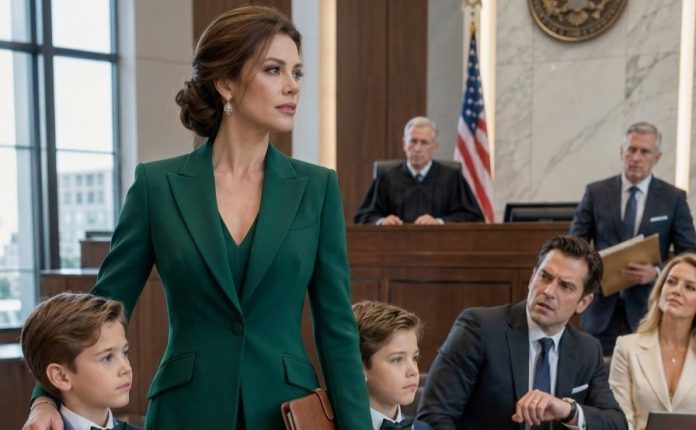
The divorce hearing took place before the criminal trial.
Victor appeared by secure video.
His face had changed.
The smooth tan was gone.
His hair was longer.
He had lost weight.
But the old arrogance returned when he saw me.
His attorney argued that Victor had contributed significantly to the company’s public growth and therefore deserved compensation.
Evelyn presented the prenuptial agreement.
The judge confirmed its validity.
Then came the property claims.
Victor sought an interest in the house.
Evelyn presented the trust documents and original deed.
He demanded half the investment portfolio.
The records showed that it came from my inheritance and remained separately managed.
He requested spousal support.
Evelyn submitted evidence of the theft.
Finally, Victor argued that I had hidden assets.
That accusation required him to disclose the source of his knowledge.
He referred to an account ending in 4482.
Evelyn smiled.
The account was not mine.
It was a controlled account established by investigators during the operation.
Victor’s knowledge of it proved that he had accessed confidential financial systems after claiming he was uninvolved.
His own divorce petition connected him to another attempted theft.
The judge granted the divorce.
I kept the house, the company and my protected assets.
Victor received his legitimate personal belongings and the balance of one checking account.
It contained $1,842.
Eleven years of marriage ended with the tap of a judge’s pen.
I expected grief.
Instead, I felt something loosen inside my chest.
Outside the courthouse, snow had begun to fall again.
The same kind of quiet snow that covered the lawn on the night Victor fled.
Evelyn stood beside me.
“How do you feel?”
“Like someone opened a window.”
She smiled.
My phone vibrated.
It was a message from an unknown number.
You think this is over?
I recognized Victor’s style immediately.
Investigators later traced the message to a prepaid phone smuggled into the detention center.
Victor had contacted me in violation of a court order.
The message strengthened the government’s argument that he could not accept boundaries.
But it also told me something more important.
Victor was afraid.
Not of prison.
Not yet.
He was afraid because the life he had stolen was continuing without him.
PART 5 — THE TRIAL
The criminal trial began eleven months after the airport arrest.
By then, Langley Biotech had recovered nearly eighty percent of the stolen funds.
The company had also received approval for a treatment platform my research team had worked on for seven years.
Victor had once told investors that the platform was his idea.
At trial, his attorney described him as a dedicated executive trapped in a deteriorating marriage.
The defense admitted that Victor had transferred money but claimed he believed he possessed authority to do so.
The forged signatures, they argued, were administrative shortcuts.
The affair was irrelevant.
The passport had been packed accidentally.
The sedative came from a shared household supply.
Each explanation sounded almost possible when examined alone.
That was the strategy.
Separate the pieces.
Make every act look small.
The prosecution placed them together.
Thomas testified about the unauthorized payments.
Naomi explained the shell companies and hidden loans.
Bank officials described the forged trust documents.
A handwriting expert identified repeated differences between my signature and Victor’s copies.
Agent Ruiz presented the passport, encrypted drives and cash recovered at the airport.
Then Olivia testified.
She entered the courtroom in a plain navy suit.
Victor watched her with an expression I recognized.
It was the look he used when someone had disappointed him by becoming independent.
Olivia admitted to the affair.
She admitted receiving gifts purchased with stolen funds.
She admitted helping create Meridian and ignoring obvious evidence of fraud.
Her cooperation agreement required complete honesty.
The prosecutor displayed the airport photograph.
Olivia stood beside Victor wearing my bracelet.
“Why were you smiling?” the prosecutor asked.
“Because I believed we had won.”
“What did winning mean?”
“Leaving the country with the money before Claire could stop us.”
Victor’s attorney attacked her credibility.
“You lied to Mrs. Langley.”
“Yes.”
“You helped conceal transfers.”
“Yes.”
“You accepted expensive gifts.”
“Yes.”
“You are testifying to reduce your own punishment.”
“Yes.”
“Then the jury should believe you are suddenly honest?”
Olivia looked toward Victor.
“No. They should believe the recordings.”
The courtroom remained silent.
The prosecution played Victor’s statement about the tea.
Then another recording.
In it, Victor described how he would handle me after the theft.
“She’ll call crying. I’ll tell her she authorized everything. Claire doubts herself when people stay calm. Give me ten minutes and I can make her apologize for accusing me.”
A few jurors looked toward me.
I kept my face still.
Victor had been right about the old Claire.
For years, he had used calmness as a weapon.
He raised one eyebrow, lowered his voice and waited for me to question my own memory.
But the woman sitting in court no longer doubted what she had heard.
When it was my turn to testify, Victor stared directly at me.
The prosecutor asked how we met.
“At a medical-technology conference. Victor was working in public relations.”
“Did he found Langley Biotech?”
“No.”
“Did he own the company?”
“No.”
“Did you authorize the payments to Meridian?”
“No.”
“Did you authorize him to take your passport?”
“No.”
“Did you consent to consuming the medication found in your tea?”
“No.”
The prosecutor displayed his message.
Goodbye, useless woman! I’ve stripped you of all your assets!
“How did you feel when you received this?”
“Hurt.”
“Afraid?”
“For a moment.”
“Why did you laugh?”
Victor shifted in his seat.
I looked at the jury.
“Because the message showed he still did not understand what he had stolen.”
The prosecutor waited.
“What had he stolen?”
“Money. Jewelry. Documents. Years of my life.”
“And what had he failed to steal?”
“My company. My home. My identity. My ability to tell the truth.”
Victor’s attorney approached for cross-examination.
He asked whether our marriage had become unhappy.
“Yes.”
“Were you resentful about my client’s relationship with Ms. Marsh?”
“Yes.”
“Did you cooperate with investigators to create an account Mr. Langley attempted to access?”
“Yes.”
“So you set a trap.”
“I protected assets he was already trying to steal.”
“You wanted him arrested.”
“I wanted him stopped.”
“You remained in the house with him while gathering evidence.”
“Yes.”
“Why not simply leave?”
“Because he had forged my name, taken company funds and prepared to blame me. Leaving would not have ended that.”
The attorney held up the teacup photograph.
“You claim you switched the cups.”
“I did.”
“No one witnessed you do it.”
“No.”
“Then the medication may have been intended for Mr. Langley.”
Victor looked suddenly alarmed.
I answered calmly.
“Victor prepared the cup and placed it on my side of the bed. He watched me pretend to drink it. Then he whispered that I never saw his plan coming.”
The attorney tried another approach.
“Mrs. Langley, would it be accurate to say that you controlled the majority of wealth in the marriage?”
“Yes.”
“And you enjoyed that control.”
“No. I enjoyed building something valuable.”
“Did my client feel overshadowed?”
“You would need to ask him.”
“Did you minimize his contributions?”
“I gave him a senior position, a generous salary, restricted shares, access to our home and my complete trust.”
“And then you took everything from him.”
“No.”
I looked at Victor.
“He exchanged everything for a suitcase he never got to carry onto the plane.”
The defense called Victor.
It was a mistake.
He spoke well at first.
He described himself as an ambitious husband who had helped transform a small laboratory into a recognized company.
He claimed I had become cold and controlling after my father’s death.
He said the Meridian payments supported legitimate expansion.
He denied drugging me.
Then the prosecutor began asking about specific documents.
Victor blamed accountants.
He blamed Thomas.
He blamed Olivia.
He blamed administrative staff.
He blamed me.
He claimed his messages were jokes.
The airport photograph was an emotional mistake.
The cash was for travel.
My passport had fallen into his luggage.
The forged signatures were completed with my verbal consent.
The foreign account belonged to investors whose names he could not remember.
After two hours, the charming executive disappeared.
What remained was an angry man furious that anyone expected his stories to agree with one another.
The prosecutor played his recording.
“Why build something when you can take it?”
Victor said the statement was sarcasm.
She played another.
“If Claire doesn’t wake up, no one will be asking her about signatures.”
Victor claimed he was intoxicated.
She displayed his message calling me useless.
Victor said he was hurt.
Then the prosecutor asked one final question.
“Mr. Langley, can you identify a single person responsible for your conduct other than yourself?”
Victor opened his mouth.
For once, no answer came.
The jury deliberated for less than six hours.
Guilty on wire fraud.
Guilty on conspiracy.
Guilty on identity theft.
Guilty on passport misuse.
Guilty on unlawful administration of a controlled substance.
Guilty on multiple related financial charges.
Victor showed no emotion until the judge ordered him taken into custody pending sentencing.
Then he turned toward me.
“You’d be nothing without me,” he shouted.
The officers pulled him back.
I stood.
For eleven years, I had allowed Victor to define my quietness as emptiness.
Now more than forty people watched him being removed from the courtroom while I remained exactly where I was.
“No, Victor,” I said.
“You were nothing without what you took from me.”
PART 6 — WHAT REMAINED
Victor was sentenced three months later.
The judge considered the scale of the fraud, his attempt to flee, the use of my passport, the sedative and his refusal to accept responsibility.
Before sentencing, he was allowed to address the court.
He apologized to the investors.
He apologized to the company’s employees.
He apologized to Olivia’s family.
Then he looked at me.
“Claire and I both made mistakes,” he said. “I hope one day she acknowledges her role in destroying our marriage.”
That was as close as he came to remorse.
The judge sentenced him to more than fourteen years in federal prison, followed by supervised release.
He was ordered to pay restitution and surrender all property connected to the crimes.
Olivia received a much shorter sentence because of her cooperation, followed by probation and financial restitution.
Peter Marsh pleaded guilty to helping operate Meridian.
The hidden accounts were closed.
The stolen money returned piece by piece.
But recovery was not as simple as numbers returning to a balance sheet.
For months, I woke whenever I heard a zipper.
I stopped drinking tea.
I checked the locks three times each night.
At company dinners, I sometimes looked toward the largest chair and expected Victor to be sitting there, speaking over me.
Trauma does not always arrive screaming.
Sometimes it moves into ordinary objects.
A cup.
A suitcase.
An airport photograph.
Evelyn encouraged me to see a therapist who specialized in coercive relationships and financial abuse.
At first, I resisted.
“I survived,” I told her.
“That doesn’t mean you have to survive it alone.”
So I went.
I learned that Victor’s theft had begun long before the first unauthorized transfer.
He stole credit for my work.
He stole confidence from my decisions.
He stole peace from rooms he was not even occupying.
Every time he called me useless, he was not describing me.
He was training me to accept less.
One afternoon, six months after the trial, a package arrived from federal evidence storage.
Inside was the diamond tennis bracelet Olivia wore at the airport.
My father had given it to me when Langley Biotech received its first major investment.
“You built something people believe in,” he told me.
I had worn it at my wedding.
Victor later gave it to Olivia as though it belonged to him.
I held the bracelet beneath the kitchen light.
Then I placed it back in its box.
The following week, I donated it to a charity auction supporting women rebuilding their lives after financial abuse.
It sold for more than its original value.
The money funded emergency legal assistance for twelve women.
That felt like ownership.
Not keeping something locked away.
Choosing what it became next.
Langley Biotech continued growing.
We removed Victor’s image from the company website and replaced the executive portrait wall with a timeline of researchers, technicians and patients who had contributed to our work.
Thomas became permanent chief financial officer.
Naomi joined the audit committee.
We established strict controls preventing any executive—married to the founder or not—from accessing accounts without independent review.
At the first annual meeting after Victor’s conviction, I stood before our employees.
For years, I had allowed Victor to deliver the opening speech.
He was better at performance.
I was better at truth.
“This company survived,” I told them, “because it was never built by one person. It survived because people noticed what did not look right, asked difficult questions and refused to protect a powerful man from accountability.”
Afterward, a young laboratory assistant approached me.
“My mother’s husband controls all her money,” she said quietly. “I think he has accounts she doesn’t know about.”
I gave her Evelyn’s card.
That conversation led to the creation of the Claire Langley Financial Safety Initiative.
The program offered confidential accounting reviews, legal referrals and emergency planning for people whose partners used money as a form of control.
I hesitated to place my name on it.
Evelyn disagreed.
“He used your name to commit fraud,” she said. “You are allowed to use it to help people.”
Two years after the airport arrest, I received a letter from Victor.
It was six pages long.
He described prison.
He complained about his health.
He blamed Olivia for testifying.
He blamed his attorney for losing.
He blamed the judge for making an example of him.
Near the end, he wrote:
Despite everything, I still believe we could have been extraordinary together. You had the ideas, but I had the courage to make people see them. Perhaps when I am released, we can discuss what was lost.
I sat at my kitchen table holding the letter.
Once, those words might have shaken me.
He had the courage.
He made people see me.
He was the reason the world noticed my work.
That was the story Victor had repeated until even I sometimes believed it.
But the world had not stopped noticing after he disappeared.
The company had not collapsed.
Investors had not fled.
I had not become invisible.
Victor’s greatest fear had never been losing me.
It was discovering that I remained whole without him.
I did not answer the letter.
I placed it in the fireplace.
The pages curled inward as the flames reached his name.
That December, on the third anniversary of his attempted escape, snow began falling shortly after midnight.
I stood at the same bedroom window where I had watched Victor pack his suitcase.
The room had changed.
His closet had become a reading alcove.
The heavy furniture he chose had been replaced.
The safe behind our anniversary photograph was gone.
So was the photograph.
At 2:37 a.m., I opened the original airport message on my phone.
Victor smiling.
Olivia wearing my bracelet.
Goodbye, useless woman! I’ve stripped you of all your assets!
For years, I wondered why he sent it.
He could have escaped quietly.
He could have waited until landing.
But Victor needed me to know he had won.
Stealing the money was not enough.
He wanted to imagine me awake, frightened and powerless.
He needed an audience for my destruction.
Instead, his message became evidence.
The photograph showed the stolen bracelet.
The airport location confirmed his attempt to flee.
The time stamp connected him to the pending transfer.
His own words helped prove intent.
Victor’s final act of cruelty had helped convict him.
I looked at the message one last time.
Then I deleted it.
Not because I wanted to forget.
Because I no longer needed to carry it.
At 2:45 a.m., I made myself a cup of tea.
For the first time since that night, I drank it without fear.
I carried it to the window and watched the snow cover the lawn.
Victor had called me useless because he measured every person by what he could take from them.
He thought love was access.
Marriage was ownership.
Trust was an unlocked door.
He believed stripping away my money would reveal an empty woman beneath it.
But when the accounts were frozen, the lies exposed and the marriage ended, I discovered something Victor had never understood.
My assets were not the house, the company or the numbers inside a bank account.
They were my judgment.
My work.
My name.
My ability to begin again without asking permission.
At two o’clock in the morning, Victor had left our bedroom believing he was escaping with my entire life inside his suitcase.
He never realized that everything truly valuable was still standing at the window, watching him go.