Then his older brother, Nathan, who had always stayed away from family chaos, asked to meet me at a coffee shop near the courthouse. I nearly refused, but Claire agreed as long as I recorded the conversation.
Nathan looked drained when he arrived. He was forty-two, broad-shouldered, with Daniel’s same gray eyes but none of Daniel’s polished charm. He sat across from me and left his coffee untouched.
“I’m sorry,” he said.
I waited.
He swallowed. “I should’ve warned you years ago.”
That made me listen.
Nathan looked down at his hands. “After Dad died, Mom drained his life insurance in fourteen months. Then she took out cards in my name. I was twenty-six. Daniel knew. He told me paying it off would keep the peace.”
“Did you pay it?”
“Some. Then I cut them off. Mom told everyone I abandoned her during grief.” His jaw tightened. “Daniel stayed because he liked being the favorite. He’d smooth things over, then benefit from whatever money she pulled in.”
I sat there, feeling the structure of my marriage shift into something uglier and much clearer.
“He was never trapped by her,” I said.
Nathan shook his head. “No. He was her partner when it suited him.”
That sentence became part of my deposition.
By the time the first hearing came, Margaret had exchanged her silk robe for a navy dress and a neck scarf, looking like a mistreated grandmother from a daytime courtroom show. Daniel wore a gray suit. He tried to meet my eyes across the courtroom, but I kept mine on the judge.
Their attorney claimed the situation was “a heated family dispute” and that I had “weaponized the justice system during an emotional marital conflict.”
Claire stood slowly.
She did not raise her voice. She did not have to.
She began with the emergency room photographs. The courtroom monitor showed the deep bruise along my ribs, the swelling on my wrist, and the red mark across my side where the bat had struck.
Margaret stared down at the table.
Then Claire played Daniel’s voicemail.
We’re married. It’s our money.
The judge’s face hardened.
Then came the financial records.
There were forged authorizations. False invoices. Transfers routed through accounts Margaret controlled. Credit applications using my Social Security number. A digital trail from Daniel’s laptop into my business email. A signed delivery receipt for a luxury watch bought with one of the cards in my name and shipped to Margaret’s address.
Margaret’s attorney objected twice.
The judge overruled him twice.
When Detective Morales testified, he described the file box. He described the bat. He described Daniel trying to delete documents while officers entered the house.
Daniel finally seemed smaller than I remembered.
For years, I had confused his softness with kindness. His quiet voice, his dislike of confrontation, his habit of placing a hand on my shoulder and saying, “Let’s not make this bigger than it has to be.” In that courtroom, I realized Daniel had not been gentle. He had been calculating. He used calm the way Margaret used tears.
The judge granted the full protective order. Daniel was forbidden from contacting me. Margaret was forbidden from contacting me. Both were ordered to stay away from my home, my clinics, and my staff. The criminal case moved forward separately, but the civil court froze assets connected to the fraudulent transfers.
Outside the courthouse, reporters were waiting because Margaret’s arrest had become local news. “Prominent dentist allegedly defrauded by husband and mother-in-law” made an easy headline. Margaret tried to shield her face with a folder. Daniel walked behind her, pale and furious.
I walked out with Claire on one side and Nathan on the other.
A reporter called, “Dr. Carter, do you have any comment?”
I stopped.
For the first time in days, I took a breath that did not feel like it might tear me open.
“Yes,” I said. “I trusted the wrong people. Now I trust the evidence.”
That was all.
The plea offers arrived three months later.
Margaret pleaded guilty to aggravated assault and receiving stolen property. Her age did not protect her. Her tears did not protect her. Her friends’ letters about charity bake sales did not protect her. She received jail time, probation, restitution, and a permanent criminal record that destroyed her social status overnight.
Daniel resisted longer. He believed he was too charming for consequences. He believed the court would view him as a husband trapped between two difficult women. But digital records do not admire charm. Bank logs are not moved by dimples. Forged signatures do not soften because a man lowers his voice.
Eventually, he pleaded guilty to identity theft, forgery, and attempted obstruction. In the divorce settlement, he lost any claim to my clinics, my premarital properties, and the house I had bought. His car was repossessed once I stopped paying the loan. His professional license investigation began soon after, because fraud does not look good in real estate.
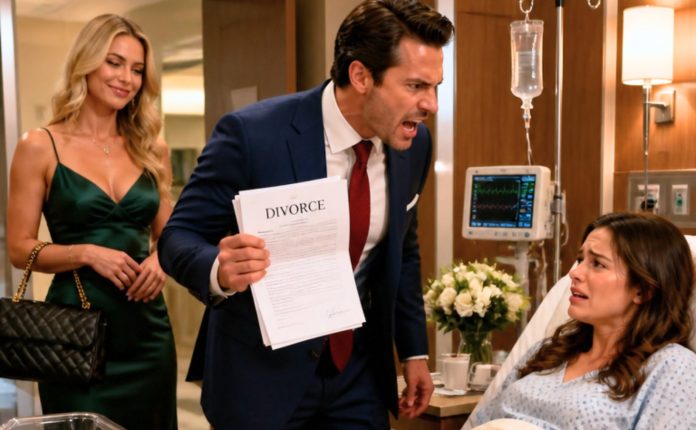
The last time I saw him was at the final divorce hearing.
He had lost weight. His suit sagged around his shoulders. When we passed in the hallway, he whispered, “Was it worth it?”
I stopped.
There were a hundred answers I could have given. I could have named the cracked ribs, the forged debt, the years of being treated like a machine built to dispense comfort and cash. I could have told him about the nights I slept sitting upright because lying down hurt too much. I could have described the shame of realizing my husband had watched his mother swing a bat at me and still expected me to pay for her vacation.Parenting books
Instead, I said, “Yes.”
Then I entered the courtroom and signed my name back into freedom.
Six months later, Margaret’s house was sold to cover part of the restitution order. The brick colonial with the renovated plumbing, imported tile, and sunroom I had paid for went to a young couple with twins. I hoped they filled it with sounds that had nothing to do with greed.
Daniel moved into a small apartment outside Dayton. Nathan told me Daniel tried to reconnect with him, but Nathan refused. Margaret blamed everyone except herself until the very end of sentencing, when the judge asked whether she understood the damage she had caused.
Margaret said, “I was under financial stress.”
The judge replied, “You were under entitlement.”
That sentence stayed with me.
I sold the marital house and bought a smaller one near my main clinic. It had a white kitchen, wide windows, and no guest room for relatives who mistook generosity for weakness. On my first night there, I stood in the quiet with a paper cup of takeout soup and realized nobody was coming to demand money. Nobody was waiting in another room, rehearsing guilt. Nobody was going to tell me I was overreacting to my own pain.
My ribs healed.
My wrist healed.
The part of me that had kept paying for peace needed longer.
But healing arrived in practical forms. New locks. New passwords. New accounts. New mornings without Daniel’s careful sighs. New evenings when my phone stayed silent. I returned to work, and my patients noticed my smile had changed. Not bigger. Not smaller. Just honest.
One afternoon, almost a year after the assault, an envelope came from the county restitution office. Inside was the first payment recovered from Margaret’s seized assets. It was nowhere near what she owed me. Not even close.
But I held that check and thought about the night she lifted the bat.
She had expected pain to make me compliant.
Daniel had expected silence to make me controllable.
They both calculated wrong.
I deposited the check, drove home, and placed the receipt in a folder labeled HALE/CARTER CASE — CLOSED.
Then I cooked dinner, opened my back door, and let the evening air drift through my quiet house.
For the first time in years, every dollar in my account belonged to me.
And so did every breath.