I was halfway through adjusting my tie in the hallway mirror, tugging it loose and straightening it again like the ritual might settle the sudden, sharp nerves that had been prickling at my skin all afternoon. Piano recital nights were always like this, a strange mix of forced pride and domestic chaos, rushing around the house while pretending everything was perfectly calm. My phone buzzed in my pocket, and I almost ignored it, assuming it was my wife reminding me about the camera batteries or the programs we had left on the kitchen island. When I saw Lily’s name on the screen, my chest tightened because she was only eight years old and she was supposed to be upstairs getting into her lace dress, not sending me messages from the quiet of her room.
“Dad, help with my zipper. Just you. Close the door.” The words sat there on the screen, carefully chosen and far too deliberate for a kid who usually typed in a flurry of half-sentences and bright emojis. I stared at the screen for a second longer than necessary, a quiet, freezing unease spreading through me that I couldn’t yet explain to myself. I knocked twice on her bedroom door before opening it slowly, already rehearsing a lighthearted joke about how zippers were my sworn enemy and that we were going to be late for her big debut. “Hey kiddo,” I said softly, stepping inside, “your mom’s way better at this than I am, should I grab her?”
Lily didn’t answer right away, and that heavy, thick silence was the first real crack in the night’s facade. She was standing near the window, still dressed in her everyday jeans and a faded T-shirt, with no sign of the expensive recital dress anywhere in the room. Her phone was clenched in her small hand so tightly her knuckles had gone pale, and her face looked washed out, like she’d been holding onto something far too heavy for a child to carry alone. “I lied about the zipper, Dad,” she whispered, her voice barely there, thin and fragile in a way that made the hair on my arms stand up in an instinctive, protective alert.
Every instinct in my body screamed that the world was about to change, but I forced my tone to stay gentle and grounded, the way you do when you’re trying not to startle a wounded animal. “Okay,” I said slowly, crouching down to her level, “what’s going on?” She swallowed hard and looked at the closed door, making sure we were truly alone before she made her move. “Dad, I need you to see something,” she said, “but you have to promise not to freak out.” I nodded, giving her a promise I already knew I might not be able to keep once the truth was revealed. She turned around slowly, her movements careful and practiced, and lifted the back of her shirt.
The room seemed to tilt on its axis, my vision narrowing until all I could see were the marks on her pale skin. Purple and yellow bruises covered her lower back and ribs, overlapping in a pattern that was unmistakable and gut-wrenching. They weren’t random accidents; they were the dark, haunting shape of handprints. Someone had grabbed her with enough force to leave a permanent map of their cruelty on her body. I felt something inside me snap, a surge of heat and pressure that made it hard to breathe, but I locked it down with a cold, iron will because Lily was watching my face for a reaction.
“How long, Lily?” I asked quietly, my voice sounding like it was coming from someone else entirely. “Three months,” she said, her voice cracking as she finally let the first tear fall. “Since February, when you started working the Saturday shifts.” She told me how Grandpa Roger said it was “discipline” because she didn’t sit still enough during the long, silent dinners at their house. She told me how Grandma would sit in the next room, humming to herself, saying that if Lily just behaved better, none of it would be necessary. The “vicious cycle” of their “old-fashioned” cruelty had been hidden right under my nose for an entire season.
But then came the part that truly shattered the foundation of my life. “Mom knows,” Lily said softly, her eyes fixed on the carpet. “I told her last month.” I felt cold then, a deep, spreading frost that had nothing to do with the temperature of the room. “She said I was exaggerating,” Lily continued, her tears spilling over now, “she said Grandpa is just from a different time and that I’m being too sensitive about his temper.” My wife, Claire, had witnessed the “calculated betrayal” of our own child and had chosen to dress it up as a family tradition to save her own comfort.
I stood up, my mind working with a clinical, lethal precision I hadn’t used since my days in the service. “Listen to me,” I said, meeting her eyes with a fierce intensity, “I need you to trust me right now.” She nodded quickly, wiping her face with her sleeve. “We’re not going to the recital,” I told her, “we’re leaving, just you and me, and I’m going to handle this.” I watched her face crumple with a mix of relief and terror. “But Mom will be mad,” she whispered. “I know,” I replied, “but your safety is the only thing that matters in this house anymore.”
I told her to pack a bag with her tablet, her favorite stuffed elephant, and a change of clothes while I stepped into the hallway to make the call that would start the “devastating legal and public reckoning”. I called my sister, Vanessa, a veteran social worker who knew exactly how to navigate the darkness. “Is she safe?” Vanessa asked the second she heard my voice. “No,” I said, “I’m bringing her to you now.” Vanessa didn’t ask for details; she just told me to get there and that she would start the official process immediately. The “house of cards” Claire’s family had built was about to meet a hurricane.
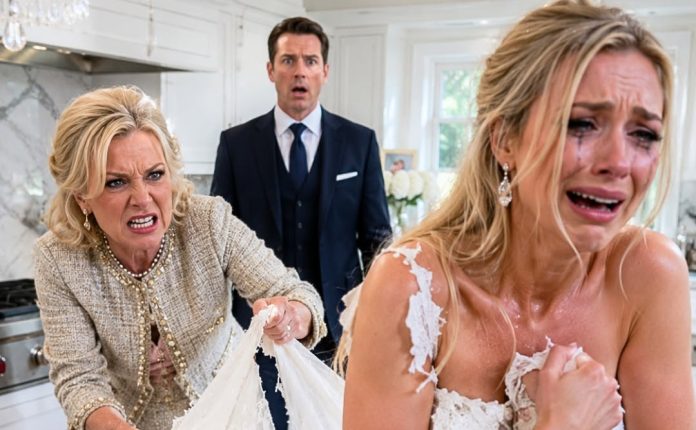
When we walked downstairs, Claire was in the kitchen, humming along to the radio while arranging an expensive cheese plate for the post-recital party. She looked up and frowned when she saw Lily wasn’t in her lace dress. “Sweetheart, we need to leave in ten minutes,” she said, her voice sharp with the fake cheer she used to mask the cracks in our lives. “Change of plans,” I said evenly, my voice like a serrated blade. “Lily and I are skipping the recital. We’re leaving.” Claire’s smile froze in place, a glitch in her carefully curated reality that made her look like a stranger.
“What are you talking about?” Claire snapped, stepping forward to block our path to the front door. “My parents are already at the school auditorium waiting for us.” I looked at her, seeing the “unending lies” reflected in her eyes, and I realized our marriage had been a “sacred fracture” for a long time. “I know what Roger did,” I said, and the silence that followed was so heavy it felt like the walls were closing in. Claire’s face didn’t show shock; it showed a calculated, cold annoyance. “You’re making a scene out of nothing,” she hissed, her voice low so the neighbors wouldn’t hear.
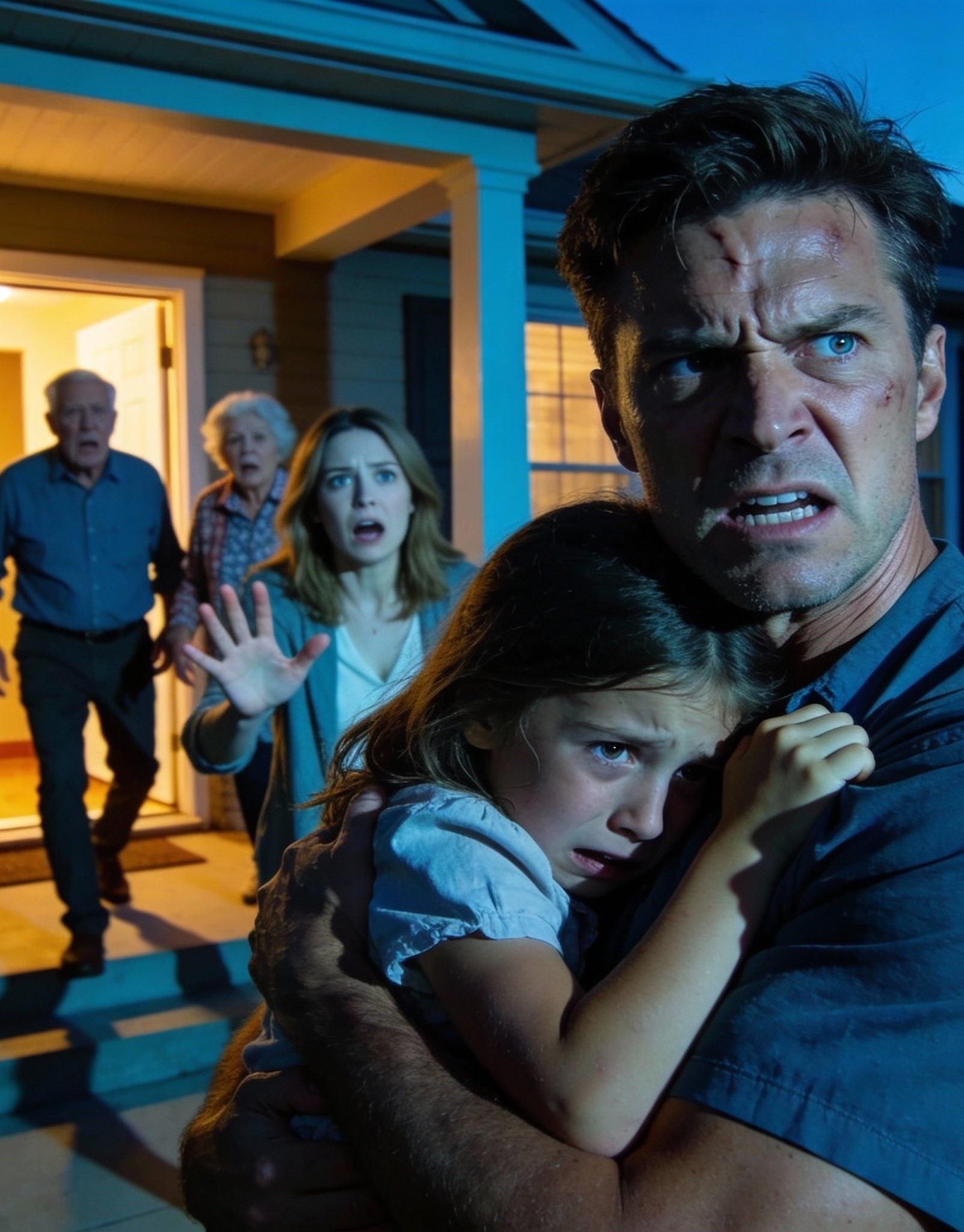
“Move, Claire,” I said, my voice dropping to a register that finally made her look afraid. “You chose your parents’ reputation over your daughter’s ribs. You don’t get to have a say in where she goes anymore.” She tried to grab Lily’s arm, but I stepped between them, a wall of fury that she couldn’t hope to breach. We walked out the door and didn’t look back, leaving the jazz music and the half-finished cheese plate behind in that house of secrets. As I pulled the truck out of the driveway, I saw Claire standing on the porch, her phone already out, likely calling her father to warn him the truth had escaped.
The weeks that followed were a blur of depositions, forensic exams, and the slow, agonizing process of seeing the “total destruction” of the Wilson family name. Roger wasn’t just a grandfather; he was a man who used his status to hide a legacy of violence that went back decades. My sister Vanessa worked tirelessly to ensure the evidence was documented with surgical precision, leaving no room for their lawyers to spin the “unending lies” they tried to sell in court. We watched as the “pillars of the community” were stripped of their titles and their dignity, one hearing at a time.
Claire tried to play the victim, telling the court she was also a “product of her upbringing,” but the judge saw through the “calculated betrayal” of a mother who let her child be a punching bag. The “shattered remains” of our old life were scattered across the local news, but for Lily and me, it felt like we were finally breathing air that wasn’t poisoned. We moved to a small cottage by the sea, a place where the only sounds at night were the waves and the quiet hum of Lily practicing her piano because she wanted to, not because she had to perform for a monster.
I look at Lily now, six months later, and I see a child who has finally learned that her voice has power and that her father will always be her shield. The divorce was a “blessing in disguise”, a necessary ending that allowed us to find a truth that was actually worth living. Roger is behind bars, and Claire is an outcast in the city she once tried so hard to impress with her beige furniture and perfect recitals. We are starting over, brick by honest brick, building a life where the zippers are never a metaphor for a secret that can’t be told.
The music Lily plays now is different—it’s clear, bold, and free of the hesitation that used to haunt her notes. We are whole, we are safe, and we are finally, truly home in the light of our own truth. I realized that the “fury of a father” isn’t just about the anger; it’s about the absolute, unwavering commitment to the light. Everything brought us exactly where we were meant to be, in a place where the shadows are gone and only the beauty remains. We stand together in the sun, two survivors who turned a night of horror into a lifetime of freedom and peace.