You still remembered the sound of the rain on the kitchen window the Tuesday Ethan Cole decided your body was a family resource. He did not ask softly, and he did not sit down like a husband who loved you. He stood there with his arms crossed, jaw locked, eyes iced over, as if tenderness was a weakness he’d already fired from the room. “If you love this family,” he said, “prove your loyalty,” and the words hit with the bluntness of a slammed door. His mother, Margaret, had end stage kidney failure, and the doctors had said a transplant was urgent. Ethan told you you were the “perfect match” like he was reading off a spreadsheet, not speaking to a person. He did not say please, and he did not say thank you, because in his world those were optional when power felt guaranteed. You felt something inside you flinch, not from fear, but from the realization that he was already treating you like you had no choice.
You tried to talk yourself into believing this was what marriage meant, the hard parts, the sacrifices, the vows in the fine print. Six years together had trained you to swallow discomfort and call it compromise, even when his silence lasted weeks. You and Ethan had no children yet, partly by timing and partly by the way he always seemed to keep the future on a leash. When you hesitated, he stepped closer and lowered his voice the way people do when they want the threat to sound private. “If you say no,” he warned, “don’t expect me to look at you the same,” and your stomach turned as if your worth lived in his gaze. You pictured Margaret in a hospital bed, pale and frail, and you hated yourself for picturing her as the victim while you were the one being cornered. You nodded anyway, because you were tired, because you were scared of what he would do if you didn’t, because you still believed love might be something you could earn. Later you lay awake listening to the rain, hearing the phrase “prove your loyalty” repeat like a judge’s gavel in your skull. By morning, your consent felt less like a decision and more like a signature you’d been bullied into writing.
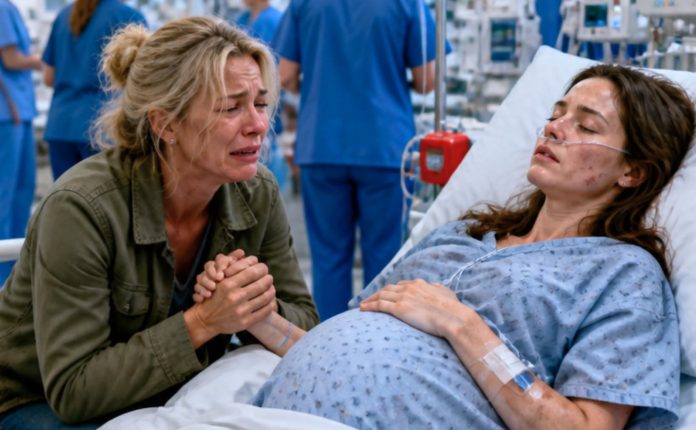
The hospital smelled like antiseptic and false calm, the kind that tries to convince you everything is under control. Fluorescent lights buzzed overhead while nurses moved with practiced gentleness that made your throat ache. You changed into a thin gown and stared at your own knees, suddenly aware of how vulnerable skin looks under clinical lighting. Forms piled up on your lap, pages of language that made your body sound like property being transferred. You signed anyway because Ethan had scheduled everything, and the schedule seemed to carry more authority than your heartbeat. A nurse taped an ID band to your wrist and asked if you had any last questions, and you almost laughed because your last question was whether your marriage had ever been real. You tried to steady your breathing by counting ceiling tiles, but each inhale felt too sharp, too shallow, too borrowed. Then the door opened, and the room’s air changed instantly, like a storm had stepped inside. Your eyes lifted, expecting your husband, and what you saw made your blood go cold.
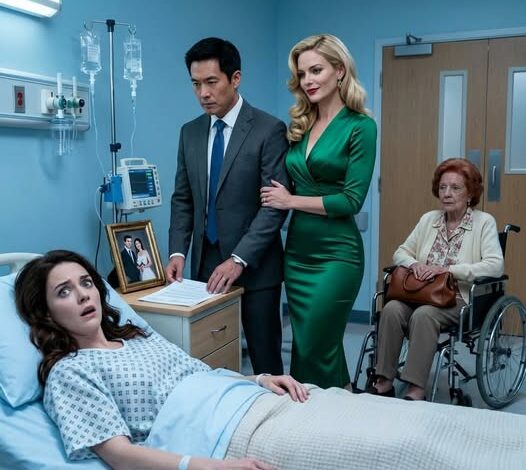
Ethan walked in dressed like he was heading to a business meeting, clean and composed, not a man about to thank his wife for saving his mother. On his arm was a woman in a tight red dress, glossy hair, flawless makeup, and a smile that landed on you like an insult. She looked around the room as if the hospital were a stage and she’d been invited to watch the final act. Behind them, a nurse pushed Margaret in a wheelchair, and Margaret’s frailty looked rehearsed, her eyes sharp enough to cut glass. Ethan didn’t pull up a chair, didn’t kiss your forehead, didn’t even pretend to be conflicted. He set a folder on your bedside table like he was dropping off paperwork at reception. “Divorce papers,” he said flatly, and for a second you honestly thought you’d misheard him because cruelty that clean feels unreal. The woman in red let out a soft laugh, like timing was your flaw, not his betrayal.
Your mouth opened, but your voice couldn’t find its way out, trapped behind shock and the sour taste of humiliation. “Now?” was all you managed, and Ethan’s expression didn’t move an inch. “You’ll still donate,” he said, as if the surgery were a contract you couldn’t cancel, as if your organs were already stamped with his last name. Margaret cleared her throat and murmured, “It’s for the family,” and there was no gratitude in her tone, only entitlement with a pulse. The woman in red leaned closer and smiled at you like you were being replaced in a job interview. You looked at the folder, at the line waiting for your signature, and the absurdity of it made the room tilt. Ethan turned slightly, already halfway out of the moment, already convinced you would comply because compliance was what you always did. Something quiet and fierce rose in your chest, not rage exactly, but clarity, and it felt like waking up after years of