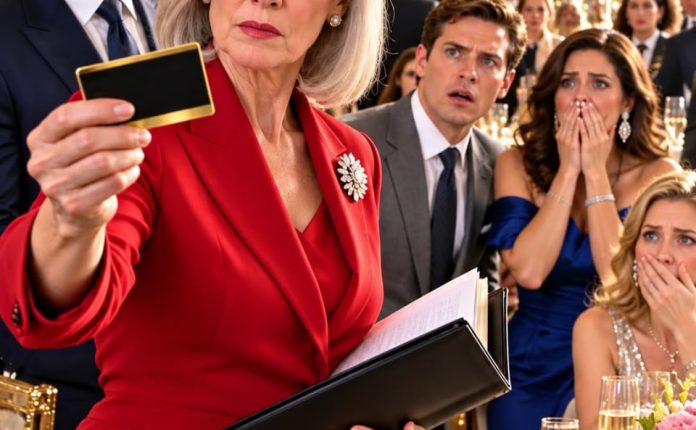
“Mom, why are you making this difficult?”
Adam said it before I had finished asking whether he wanted to have dinner with me on Mother's Day.
Or rather, I heard him say it in the background.
Vanessa was holding his telephone.
I stood at my kitchen counter with an envelope beneath my hand. Inside was the photograph Ruth had sent of our mother at twenty-seven, leaning against a bicycle outside a house neither of us remembered.
I had been planning to show Adam the photograph over dinner.
For several seconds, I did not answer.
“Is he talking to me?” I asked.
Vanessa moved the telephone. I heard fabric brush against the microphone.
“We already have plans, Margaret.”
“I called three weeks early.”
“Yes, and we already have plans.”
Her voice remained pleasant. That was something she did well. She could make rejection sound like information from a receptionist.
“I thought we might go somewhere together. Nothing elaborate.”
“We're celebrating with my parents. It's really a family occasion.”
I looked at the photograph beneath my fingers.
My mother's face had faded slightly at one edge. She was laughing at whoever held the camera.
“Am I not family?”
A little breath came down the line.
“Don't be dramatic.”
Behind her, Adam asked where his keys were.
I almost said his name.
Instead, I asked Vanessa to have him call me when he had a moment.
“Of course.”
The call ended.
He did not call that afternoon. He did not call the next day, either.
By the following weekend, I had supplied him with explanations he had not bothered to offer himself.
Work was busy. Married people had competing obligations. Graham and Celeste Price liked their celebrations organized well in advance.
Perhaps Adam had assumed I would understand.
Understanding had become my most expensive habit.
I was sixty-eight years old, and I had spent thirty-five of those years loving a person whose silence I could still interpret as an accident.
My husband, Edward, would have recognized the problem sooner.
He had loved Adam as fiercely as I did, but he never confused love with the obligation to make every consequence disappear.
“Let him answer the question,” he used to tell me.
Not harshly. Usually while drying a plate I had already dried once.
“Otherwise you'll spend your life having both sides of the conversation.”
Edward had been gone four years.
Sometimes I still turned toward the other side of the bed before remembering there would be no answer there.
Mother's Day morning arrived with low sunlight on the bedroom carpet.
I checked my telephone before I put on my glasses.
There was a message from Ruth.
Thinking of you. Call whenever you like.
There were two promotional emails, a weather alert, and a photograph from a neighbor of the tulips we had planted along the fence.
Nothing from Adam.
At eleven, I made tea.
At noon, I reheated soup.
At one, I stopped pretending the telephone was merely lying nearby.
I carried it upstairs and left it on the dresser while I showered.
When I came back, the screen was still dark.
I had intended to spend the evening at home. There was a book beside my chair, and I could have made an omelet.
Then I opened the wardrobe and saw my navy suit.
Edward had liked that suit. He said the color made my eyes look as though I had already spotted the flaw in somebody's argument.
I took it off the hanger.
The pearl brooch was in its small velvet box.
He had given it to me after our first profitable year at Bellavita, when the restaurant finally earned enough that we could repair the leaking roof without postponing a supplier payment.
The brooch was modest by Celeste Price's standards.
To me, it contained a year of early mornings, late invoices, and Edward eating burnt test batches with a hopeful expression.
I pinned it to my lapel.
Then I called Bellavita.
Sofia answered.
“Good afternoon, Mrs. Whitmore.”
“Would you have room for one person this evening?”
“For you, certainly.”
“A small table, please. Somewhere quiet.”
There was a brief pause.
“Would you like the upstairs room?”
“No. Just an ordinary table.”
She did not ask why.
That was one reason I trusted her.
Bellavita occupied a downtown Boston building with narrow upper windows and a stone doorway that had once looked far grander than anything we could afford.
Edward first saw it on a wet Thursday.
I remembered standing beside him while he peered through glass clouded with old adhesive.
“You can see a restaurant in there?” I asked.
“I can see three tables near the window.”
“And the rest?”
“We'll get to the rest.”
People later told the story as though Edward had simply imagined a beautiful dining room and made it happen.
They left out the woman who negotiated the lease.
They left out the payroll book balanced at midnight on the kitchen table.
They left out the calls to suppliers when a delivery arrived short, the conversations with anxious employees, and the loan application rewritten because the bank preferred my husband's name at the top.
I did not resent Edward for the abbreviated version.
He corrected it whenever he heard it.
“Margaret built the part that kept the lights on,” he would say.
After his death, I kept a controlling interest in Whitmore Hospitality, the company that owned Bellavita.
Professional managers ran the daily operation. Daniel Mercer handled finance. I attended meetings, reviewed the business, and let the people we hired do their work.
I was not a secret owner.
My name appeared where it should. Anyone sufficiently interested could discover my connection.
But I did not walk through the dining room introducing myself to strangers as the person who could dismiss their waiter.
Most evenings, I was simply a woman ordering dinner.
Adam knew that history.
He had spent afternoons doing homework at an office desk above the kitchen. Edward had taught him to polish glasses by holding them against the light.
At sixteen, he complained about washing dishes.
At twenty, he told a university friend that his parents owned a restaurant, although he preferred to describe his father as the founder.
I had let that pass.
I had let too many things pass.
That Sunday, a server named Maya led me to a table near the wall.
The dining room smelled of warm bread, tomatoes, and the lemon peel somebody had expressed over a drink at the bar.
A little boy at the next table had drawn a picture for his grandmother. She held it carefully above her plate while he explained why her hair was purple.
Across the room, a young mother tried to eat with a sleeping baby against her shoulder.
I sat down.
Maya removed the unused place setting without making a ceremony of it.
“Would you like sparkling or still?”
“Sparkling.”
She brought the bottle and asked whether I wanted to hear the specials.
For the first time that day, somebody asked me a question whose answer did not require me to apologize.
I ordered pasta with mushrooms and a small salad.
While I waited, I looked at the flowers on the table.
They were white tulips, their stems bending toward the window.
I remembered the year Edward put tulips in the dining room because roses had become absurdly expensive before Mother's Day.
A customer complained.
Edward told her the tulips were less predictable.
Later, in the kitchen, he admitted that unpredictable flowers had saved us nearly two hundred dollars.
I smiled at the memory.
The pasta arrived hot enough to fog my glasses when I leaned over the plate.
I ate slowly.
At first, every laugh from another table seemed to land directly beside me. Then the room became a room again.
I noticed that the kitchen was sending out dishes steadily despite the holiday crowd.
A young server helped an older guest move a chair without interrupting the woman's story.
Sofia crossed the room, spoke to a couple waiting for their dessert, and returned with fresh coffee herself.
The place was working.
That gave me a satisfaction loneliness could not entirely take away.
Maya offered another piece of bread.
“Yes, please.”
When she set it beside me, she said, “It's just come out.”
Such a small kindness.
I looked down until my expression settled.
After coffee, I asked for the bill.
Eighty-six dollars.
I used my personal card, as I generally did when I came in as a guest. The Founder's Reserve account was available for approved entertaining and particular expenses, but I had never considered dinner an excuse to blur the books.
Maya brought the receipt.
I added a tip, thanked her, and tucked my copy into my handbag.
The telephone remained silent.
I stood, checked that the brooch was secure, and made my way toward the entrance.
Adam was coming through the doorway.
For one foolish instant, I thought he had come to find me.
He held the door while Vanessa entered behind him.
Then Graham and Celeste followed.
Six other relatives crowded into the small vestibule, talking over one another.
I recognized Vanessa's uncle Leon and his wife, Rebecca. A cousin named Nina was carrying a bouquet wrapped in paper.
The others I knew by sight from the wedding.
Ten people, altogether.
My son saw me and stopped smiling.
“Mom?”
He looked past my shoulder.
“What are you doing here?”
“Having dinner.”
“Here?”
“Yes, sweetheart. Here.”
Vanessa looked toward the table I had left.
The second chair was empty. Maya was already clearing my coffee cup.
“Alone?” Vanessa asked.
“Tonight, yes.”
“How depressing.”
She said it lightly enough to invite agreement.
Celeste adjusted her handbag.
“Some mothers find it very difficult to let their children have their own lives.”
I looked at Adam.
He was straightening a cuff that did not need straightening.
I waited.
Not long. Just long enough for him to say something ordinary and decent.
She invited us. We couldn't make it.
Or, Mom, happy Mother's Day.
He said neither.
Graham checked his watch.
“Our table is ready, I believe.”
“I hope you enjoy yourselves,” I said.
Nina looked as though she might speak, but Celeste had already begun directing people toward the hostess desk.
I turned away.
There are humiliations you can carry home without letting anyone see how much they weigh.
I thought this would be one of them.
My hand had reached the door handle when Adam spoke behind me.
“The membership number is 000147. Margaret Whitmore. You can charge everything to her account.”
I went still.
Sofia answered him.
“That's a Founder's Reserve account, sir. We require the account holder's authorization.”
“I have it.”
Paper rustled.
“I’m her son.”
Vanessa laughed softly.
“Mother's getting forgetful. She doesn't understand financial arrangements very well anymore.”
I had heard her use that tone before.
At Christmas, when I corrected the date of a family trip.
At a birthday lunch, when she claimed I had agreed to buy a piece of furniture for them.
I had mistaken those remarks for carelessness.
Now I stood with my hand suspended beside the door.
Graham leaned toward Sofia.
“We're finalizing the private reception. Thirty-eight thousand dollars. Her membership covers the arrangement.”
Thirty-eight thousand.
Not a dinner bill.
Not an absentminded misunderstanding over who had offered to pay for dessert.
A planned reception.
I turned far enough to see the document Adam had placed on the desk.
At the bottom was my signature.
I knew the way the last stroke of my surname lifted. I knew the narrow loop in the W and the slight compression where I ran out of space.
I also knew I had never signed that paper.
For a moment, the room seemed to become unusually precise.
I saw the loose thread on Adam's cuff.
I saw a drop of rain on Graham's polished shoe.
I saw Sofia keep both hands away from the payment terminal.
Anger did not make me loud.
It made me attentive.
I returned to the desk.
“Before you process anything, Sofia, may I see that authorization?”
Adam rolled his eyes.
“Mom, don't make a scene.”
I smiled.
It was not a happy smile.
It was the expression I had used years earlier when a contractor assured me an invoice was correct and I already had the duplicate in my hand.
“Sofia?”
“Of course, Mrs. Whitmore.”
Adam placed his palm on the document.
“There isn't any need.”
Sofia looked at his hand.
“Please let the account holder examine it.”
“She'll get confused.”
The words came out too quickly.
I looked at him.
“Remove your hand, Adam.”
He glanced at the relatives behind him, laughed once, and lifted his palm.
Last Tuesday.
That was the date printed beside the signature.
Last Tuesday, I had been in Portland with Ruth.
We had spent the afternoon at her kitchen table sorting photographs while rain struck the windows.
I had sent Adam a picture of us holding the photograph of our mother.
He had replied with a thumbs-up.
The document before me stated that I had signed it in Boston.
“Where did you get this?”
“You gave it to me.”
“On Tuesday?”
“Yes.”
“I was in Portland.”
Vanessa touched his sleeve.
“You came back tired, Margaret. Perhaps you're mixing things up.”
I did not look at her.
“Adam. Where did you get this?”
His eyes shifted toward Graham.
“You said we could use your account.”
“No.”
“You've said that before.”
“For a particular dinner, years ago. While your father was alive. That is different from signing this.”
Graham cleared his throat.
“This is routine paperwork. I don't think we need to embarrass everyone over it.”
“Whose reception?”
He hesitated.
“My business launch.”
“When?”
“June fourteenth.”
“How many guests?”
“Eighty.”
“And you believed I had offered thirty-eight thousand dollars?”
“Adam said you were happy to support us.”
I read the authorization.
Private dining. Event expenses. Changes to correspondence. Permission for Adam to act on my behalf without obtaining separate approval.
At the bottom was an email address.
Adam's address.
I had spent the winter receiving fewer statements than usual.
Vanessa had encouraged me to make the account paperless. She said it would save me from sorting envelopes.
When I asked about missing correspondence, Adam said restaurant systems were always behind.
I had made a note to ask Daniel.
Then I had gone to Portland, and the question had drifted under other things.
Now it rose to the surface with uncomfortable clarity.
“Sofia, keep this document as it is.”
Adam reached toward it.
“It's mine.”
“It's a document bearing my name that you gave the restaurant.”
Sofia moved it behind the desk.
“Do you authorize the reservation, Mrs. Whitmore?”
“No.”
She closed the folder, wrote a note on its cover, and set it aside.
Graham's jaw tightened.
“Perhaps a more senior manager could sort this out.”
“Sofia is the manager,” I said. “She has understood the situation perfectly.”
Vanessa folded her arms.
“You don't understand how these memberships work.”
I looked at Adam again.
He knew what the Founder's Reserve was.
It had been established when Bellavita expanded, a small group of accounts linked to the people who had financed and built the original business. It offered priority reservations and approved billing arrangements.
It did not turn any relative who knew six digits into an authorized spender.
And mine had never been an ordinary customer account.
Its expenses flowed into my personal owner ledger.
I could have explained that to Vanessa.
Instead, I asked Sofia to call Daniel Mercer.
“Our finance director?” she asked.
“Yes.”
She picked up the desk telephone.
Graham watched her.
“Why would he take your call on a Sunday evening?”
I moved the paper farther from Adam's reach.
“Because the matter concerns his employer.”
Something altered in my son's face.
Not understanding. He already understood.
Recognition that I had decided to say it aloud.
Sofia stepped briefly into the office adjoining the reception area.
Behind us, somebody applauded a birthday dessert.
The sound made our silence more uncomfortable.
Celeste leaned toward Vanessa.
“What exactly is she talking about?”
Vanessa gave Adam a sharp look.
He spoke without meeting my eyes.
“My parents were involved in opening the restaurant.”
“Involved?” I said.
“Mom.”
“Your father and I founded the company that owns it. I remain its controlling shareholder.”
Nobody answered.
Graham looked toward the brass plaque on the wall beside the staircase.
Edward Whitmore and Margaret Whitmore.
It had been there for years.
People rarely read what they do not expect to matter.
Vanessa's hands dropped from her arms.
Celeste looked at my brooch, then at the document, as though the two objects had changed value in front of her.
I had not become a different woman in the last thirty seconds.
I was still the mother they had left out of Mother's Day.
That was the part I wanted Adam to understand.
Money had made them attentive. It had not made their earlier behavior acceptable.
Sofia returned.
“Daniel is joining by telephone. Would you prefer the office?”
“Yes. Please.”
Graham immediately moved toward the doorway.
I held up a hand.
“Adam can come in. Sofia, too.”
“This concerns my event.”
“It concerns my account. Your reservation will remain pending.”
Vanessa stepped beside Adam.
“We're married. I should be there.”
“You can wait.”
She looked at him.
For once, he did not support her.
The office was small, with a desk, two guest chairs, and shelves holding reservation binders.
A framed photograph of the staff stood beside the computer.
I closed the door.
Daniel's voice came through the speaker.
“Margaret? Sofia says someone presented an authorization.”
“Adam presented it.”
There was a pause.
“All right.”
“I did not sign it. Please suspend third-party access to my reserve account and preserve its correspondence and transaction records.”
“Immediately.”
Adam sank into a chair.
“Can we talk before you do that?”
“We are talking.”
“You're treating this like a crime.”
“What would you call signing somebody else's name to spend thirty-eight thousand dollars?”
He stared at the carpet.
Daniel asked Sofia to scan the document to him.
She placed it carefully on the scanner.
“No new charges have been posted tonight,” she said. “I held the booking because the requested amount was unusual.”
“Thank you,” I said.
“I thought you should confirm it yourself.”
She spoke to me, but Adam heard.
That mattered.
He had arrived confident that employees would be easier to pressure than his mother.
Daniel asked a few practical questions.
When had the document been presented? What expense did it cover? Was any original identification attached?
Adam said he did not have to answer.
“You don't have to answer me tonight,” Daniel replied. “We still need to preserve what the restaurant received.”
I appreciated his restraint.
There was no lecture, no theatrical threat.
Just the business taking care of its records.
Then Daniel said he was opening the account history.
“I want to establish whether this was an isolated request.”
Adam lifted his head.
“It was.”
Daniel did not respond immediately.
I watched my son instead of the telephone.
His right thumb scraped at a rough patch beside his nail. He had done that as a child when waiting for a teacher to explain what she already knew.
“How long has account correspondence gone to Adam's address?” I asked.
Daniel clicked through something.
“The change was entered in February.”
“I didn't approve that.”
“There's a signed request attached.”
“Another one?”
“Yes.”
Adam leaned forward.
“You wanted less paperwork.”
“I wanted fewer catalogues. I did not ask you to redirect financial statements.”
“You always complain about envelopes.”
“That does not make them yours.”
Sofia remained standing beside the scanner, hands loosely clasped.
I knew she would rather have been managing the dining room.
I also knew leaving her alone with my son had almost cost me thirty-eight thousand dollars.
“Please check all charges since February,” I told Daniel.
He asked for a moment.
Outside the office, a laugh rose and stopped abruptly.
I imagined Vanessa waiting beside her father, supplying explanations that grew less useful as the minutes passed.
Adam rubbed his forehead.
“I was going to tell you about the reception.”
“When?”
“When the details were settled.”
“After I paid?”
“No.”
“Before the guests arrived?”
“Mom, you're making it sound—”
“Finish the sentence.”
He did not.
For the first time that evening, I felt the full force of what had happened.
The humiliation in the doorway was something I might have forgiven without being asked.
This required planning.
He had found my account number, obtained my signature, changed where statements went, and carried the result into a restaurant where he knew I had standing.
He had relied on my generosity.
He had also relied on my embarrassment.
A woman insulted in public might prefer to leave quickly.
A mother might hesitate to contradict her son.
A widow might doubt her memory if enough younger people spoke confidently around her.
He had counted on all three.
Daniel came back.
“There are three settled private-dining charges we need to review.”
Adam closed his eyes.
“Dates?”
Daniel read them out.
One in February. One in March. One in April.
“Amounts?”
“Two thousand six hundred. Three thousand one hundred fifty. Three thousand six hundred fifty.”
I wrote them on a blank notepad Sofia handed me.
Nine thousand four hundred dollars.
Already charged.
Already carried into the personal ledger I had trusted Adam not to interfere with.
“What were they?”
“Private tastings and hospitality dinners associated with Mr. Price's proposed launch,” Daniel said.
I looked at Adam.
He said, “They weren't just for us.”
I put the pen down.
“Who else?”
“People Graham needed to meet. Potential clients.”
“Did you tell them I was paying?”
“No.”
“Did you tell them the restaurant was paying?”
His silence answered a different question.
Daniel spoke again.
“Margaret, the first authorization references a second attachment. It appears to be intended as broader financial authority.”
I sat straighter.
“What kind?”
“A document described as a power of attorney. I'm not determining its validity. We should have counsel examine it.”
I had never given Adam power of attorney.
When Edward died, I had reviewed my arrangements with Claire Bennett, the lawyer who had worked with us for years.
Ruth was the person designated to help if I could not manage my affairs. There were safeguards. Adam knew that, because I had explained it to him.
“Please send the attachment to Claire,” I said.
Adam stood.
“No.”
It was the first honest sound he had made all evening.
Sofia looked toward the door.
“Adam,” I said, “sit down.”
He remained standing.
“That document doesn't mean anything. It was just something they needed for the file.”
“Who prepared it?”
“Nobody was trying to take anything.”
“Nine thousand four hundred dollars has been taken.”
“I would have paid it back.”
“With what?”
He swallowed.
Daniel's computer made a faint chime.
“I've sent the records securely to Claire.”
Adam looked at the telephone as though it had betrayed him.
I thought of the boy who used to bring me permission slips at the last possible moment, expecting my signature to make a deadline vanish.
This was no permission slip.
This was my name placed beneath authority I had never given.
And the form did not stop at dinners.
Daniel read the relevant wording carefully.
“The document purports to authorize action concerning personal finances and interests held through Whitmore Hospitality.”
My son had not merely offered his wife's family an expensive evening.
He had brought a paper claiming the right to act for me in the company Edward and I had spent our lives building.
I looked at him.
He could no longer tell me I was confused.
The account history was on the screen. The forged pages were in Sofia's hands. Daniel had preserved the records.
“Was this the only place you used it?” I asked.
Adam opened his mouth.
Then he looked away.
END PART 1