### Part 7
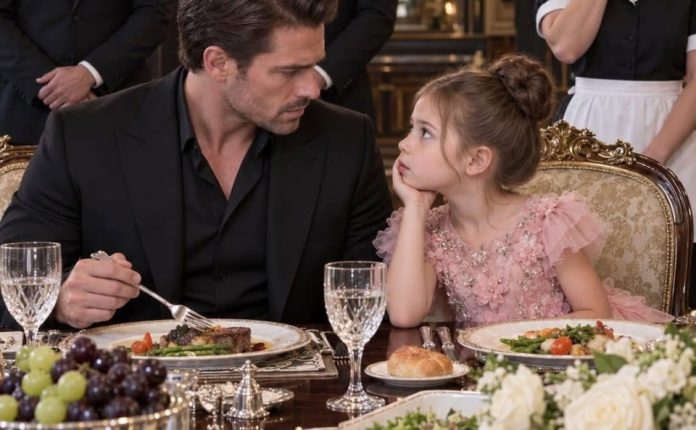
My parents arrived the next morning without Brooke. My father carried a leather folder. My mother looked smaller than she had at dinner, dressed in plain slacks instead of the tailored outfits she wore to the club. Aaron took Lily to the park so I could speak freely. We sat in the same dining room where everything had begun. No candles burned this time. No polished serving dishes sat between us. The table was bare except for three cups of coffee that none of us touched. My father placed the folder in front of me. “Your sister has made poor financial decisions.”
“That is an elegant way to describe falsifying my signature.” “She panicked.” “She planned the request six weeks ago.” My mother stared at her hands. “Grant’s investments failed,” she said. “They borrowed against the vacation property. They were trying to maintain the children’s routine.” “By stealing from a trust?” “She intended to repay it.” “With what?” Neither answered. My father cleared his throat. “If this becomes a legal matter, the scandal will affect Ava and Connor.” “Brooke should have considered them.” “You could handle it privately.” “I am handling it through counsel.”
My mother’s eyes filled. “Emma, please. We already lost the club. We’ve changed doctors. Your father returned the car. Mark is closing his office. Isn’t that enough?” “This is not about making everyone suffer until I feel satisfied.” “It certainly looks that way,” Dad said. “It is about no longer rescuing adults who mistreat my child.” He leaned back. “You keep making this about Lily.” The sentence hung in the room. I looked at him carefully. “It is about Lily.” “She will recover from a joke.” “She asked if she was broken.” “Children say dramatic things.”
“So do frightened adults when their bills arrive, apparently.” His face hardened. My mother whispered, “Richard.” But I was finished protecting him from the truth. “You did not come here to apologize. You came here because Brooke may face consequences, and because your lifestyle changed.” “That isn’t true.” “Then tell me one thing about Lily’s diagnosis.” He stared at me. “When was she diagnosed?” Silence. “What type of hearing loss does she have?” He looked toward my mother. “What is the name of her audiologist?” Neither knew.
“What sound did she hear clearly for the first time after receiving the device?” My mother began crying. I thought of Lily standing under the oak tree outside the clinic, looking upward because she could hear leaves moving in the wind. “You don’t know her,” I said. “You know that she is six. You know that she has a visible device. You know it might attract questions from people at your club. That is the full extent of your interest.” “We can learn,” Mom whispered. “You could have learned before mocking her.” “I didn’t mock her.”
“You called her hearing aid unfortunate and asked whether it could be hidden.” “I was worried about how people would treat her.” “You showed her exactly how people might treat her.” My father opened the leather folder. Inside was a typed proposal. He slid it toward me. The document outlined a “family reconciliation agreement.” I would restore selected payments, continue tuition through the end of the academic year, and handle Brooke’s trust violation privately. In return, the family would attend a hearing-loss awareness session and issue Lily a written apology.
For several seconds, I could not speak. “You made a contract?” “We wanted a practical solution,” Dad said. “You are offering to become decent people in exchange for money.” “That is not what it says.” “It is exactly what it says.” I pushed the folder back. “There will be no payments. Brooke will repay every dollar of unauthorized expenses associated with the trust request. My lawyers will determine whether further action is necessary. You will not contact Lily until she is old enough to decide whether she wants a relationship with you.” My mother covered her mouth.
“You’re cutting us off?” “Financially, yes. Personally, I am creating distance.” “For how long?” she asked. “I don’t know.” My father stood. “You will regret this when you realize money cannot replace family.” I stood too. “You’re right. Money cannot replace family. For six years, I used money to pretend I had one.” He left without another word. My mother remained by the table. Before following him, she looked toward the hallway where Lily’s school photograph hung. “I am sorry,” she said. It was the first apology that sounded real. But real apologies do not automatically reopen locked doors.
### Part 8
Brooke was not prosecuted, but that was not the same as being protected. On Marissa’s advice, we required her to sign a formal acknowledgment of the unauthorized request, relinquish all access to the trust, and repay the administrative and legal costs caused by her actions. The record would remain available if she ever attempted anything similar again. Grant sold their vacation property. Ava and Connor transferred to the local public school. Brooke described it to relatives as a temporary choice, but the tuition bills stopped arriving, and temporary became permanent.
Mark closed his consulting company before the bank could force the decision. He accepted a management position at a regional logistics firm, the sort of job he had once called “safe and uninspired.” Six months later, I heard through a mutual acquaintance that he was doing well. He had regular hours, health insurance, and actual coworkers instead of a company built around the performance of success. My parents adjusted more slowly.
Dad bought a used sedan and stopped talking about cars at dinner parties. Mom switched to doctors covered by her insurance and discovered that competent care did not require a private waiting room. They moved from the expensive townhouse into a smaller condominium. Their lives did not collapse. They simply became responsible for them. As for me, I redirected the monthly amount I had once spent maintaining their comfort. EchoBridge created the Clear Horizons Foundation, which provided hearing devices, classroom support, and summer programs for children whose families could not afford specialized care. The foundation also trained teachers to recognize early signs of hearing loss, especially in students who had been labeled inattentive or shy.
I told the board I wanted the first summer camp built near a lake. Lily had heard water lapping against a dock for the first time during a family trip, and she had stood perfectly still for nearly a minute, listening. At home, she changed too. The first weeks after the dinner were difficult. She sometimes covered her hearing aid with her hair. Once, before a birthday party, she asked whether she should leave it in the car. Aaron knelt in front of her. “Does it help you hear?” “Yes.” “Does it belong to you?” “Yes.”
“Then anyone who has a problem with it has a problem they can carry by themselves.” She wore it to the party. By spring, she had decorated the casing with a tiny silver star. Her classmates thought it was beautiful. One boy asked whether it gave her super-hearing, and Lily patiently explained that it helped with some sounds but did not allow her to listen through walls. She began speaking more in class. She joined a children’s theater group. Onstage, she stood beneath bright lights and delivered her lines clearly while Aaron gripped my hand in the audience.
My mother mailed letters for several months. The first contained explanations. The second contained apologies. The third contained no request at all. I read them but did not respond. Brooke sent a long email claiming she had changed. She wrote that losing Westbrook, the property, and her social circle had forced her to reconsider what mattered. I believed hardship had changed her circumstances. I did not yet believe it had changed her character.
Mark apologized once without asking for money. I thanked him for the apology and told him I was not ready for a relationship. He accepted that, which was more growth than I had expected. A year after the dinner, Lily brought home an art project titled “The People Who Hear Me.” She had drawn herself in the center with the blue hearing aid visible against her brown hair. Aaron stood on one side. I stood on the other. Around us were her teacher, her audiologist, two school friends, our dog, and several children she had met at the foundation’s summer camp. There were no grandparents.
No aunt. No uncle. I studied the picture for a long time. “Is this our family?” I asked. Lily considered the question. “It’s the people who listen when I talk.” Her answer was simple, but it held more wisdom than anything my parents had taught me. That evening, I placed the picture in a frame in my office. For years, I had believed love meant solving problems quietly. I had confused generosity with loyalty and endurance with forgiveness. I had paid bills, rescued businesses, funded schools, and protected reputations because I thought family was something I could preserve through effort.
But money had never held us together. It had only hidden how little respect existed underneath. I did not forgive Brooke. I did not restore the payments. I did not return to family dinners where cruelty could be dismissed as humor and silence could be mistaken for peace. My parents occasionally saw photographs of Lily through mutual friends. Perhaps one day, when she was older, she would choose to speak with them. That decision would belong to her, not to guilt, money, or tradition.
On the first anniversary of the dinner, our foundation delivered its ten-thousandth hearing device to a child who needed one. After the small ceremony, Lily ran into my office wearing her yellow cardigan, now almost too small for her arms. She pressed a button on her hearing aid and smiled. “Mom, listen.” Outside, rain had begun tapping against the windows. “I hear it,” I said. She shook her head. “No. Listen closer.” Beyond the rain, children were laughing in the foundation’s courtyard. Lily laughed with them and pulled me toward the door.
My old family had worried that her hearing aid would reflect badly on them. They had been right about one thing. It revealed them perfectly. And once I finally heard the truth, I never lowered the volume again.